Cannes: The appallingly ugly AI-generated imagery only highlights the project’s flimsy reason to exist.

Cannes: The appallingly ugly AI-generated imagery only highlights the project’s flimsy reason to exist.
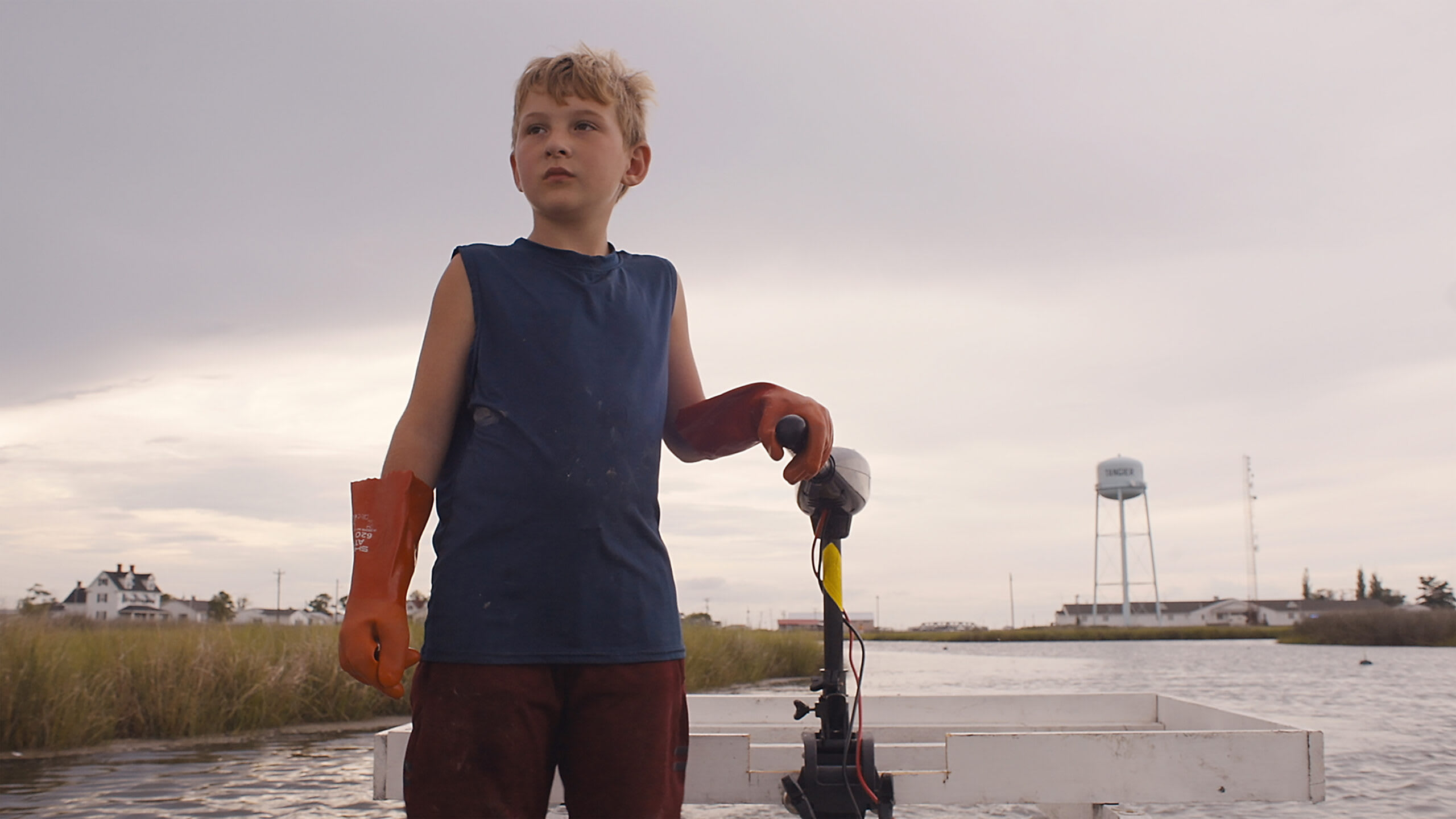
Nearly a decade after making his feature debut as a co-director of Albert Maysles’s final documentary, In Transit, David Usui finally went solo for this hidden gem of a film. Been Here Stay Here is a mostly observational portrait of a conservative, religious island community enduring under threat of climate change that they believe is God and nature’s will. Usui follows crabbers and oystermen, tour guides and churchgoers, elders and children in their lives on Tangier Island, located smack dab in the middle of the Chesapeake Bay. It’s a place that has lost two-thirds of its land to rising sea levels over the last 200 years.
Nonfics is a reader-supported publication. To receive new posts and support my work, consider becoming a free or paid subscriber.
That time span doesn’t make it seem like the problem is completely the fault of humans, but this isn’t a film dealing with details on the science or cause of the situation. It’s driven by the people, who are driven by their faith. Usui uses a few tricks to deliver more than mere people watching and landscape cinematography. He captures another documentary crew interviewing locals, snagging some of those discussions for his own film. He also introduces a young pastor focused on climate change through a Christian perspective in order to present that conversation between differing factions and generations. For another layer, the film includes a sprinkling of archival footage of life on the island from half a century ago.
Been Here Stay Here is a beautiful and serene documentary that may lull us toward a shared acceptance of our fates. The score by James William Blades is epically soothing. Every shot composed by Usui and Peter Steusloff is stunning and full of grace. I couldn’t help but be reminded of montages in disaster movies of people in their daily routines just before the cataclysmic events wipe them out, even if the looming calamity here isn’t as immediately life-threatening or destructive. It’s more of a pleasantly provocative stopover in a virtual journey of land and time.

You can’t make this up.
Ruben Östlund’s next film, “The Entertainment System Is Down,” won’t screen at this year’s Cannes Film Festival, but a new documentary, “Ruben,” is hitting the Cannes market.
Directed by Sigge Eklund, the film aims to explore Östlund’s pursuit of a record-setting third Palme d’Or with “The Entertainment System Is Down,” which is currently in post-production and targeting a Cannes premiere next year. A very humble man he is.
Production on “Ruben” began in 2023, shortly after Östlund returned from the Oscars, where “Triangle of Sadness” received three nominations. Eklund continued filming through the Budapest shoot of “The Entertainment System Is Down” in early 2025, capturing behind-the-scenes moments as well as interviews with cast members including Keanu Reeves, Kirsten Dunst, and Daniel Brühl.
The documentary will conclude once Östlund’s latest feature premieres — probably at next year’s Cannes Film Festival. What are the actual odds he wins a third straight?
Eklund, a longtime friend of Östlund, said the documentary focuses heavily on the psychological burden that comes with artistic ambition and expectation. One scene reportedly shows the director sitting at his computer beneath his two Palme d’Or trophies, struggling to begin a new project while feeling the weight of his own legacy.
Östlund hasn’t been shy about stating that “the goal with the next film is to win another [Palme d’Or],” which would mark the first time in history that a director has accomplished that feat.
Östlund also said he wants “The Entertainment System Is Down” to provoke the most walkouts in Cannes history. “And I think it’s going to be more provocative than any violent, any disturbing content,” he added.

Exclusive: In an excerpt from “Documentary Now!: Fourth Edition (Revised and Expanded)” — the upcoming companion book to IFC’s acclaimed series — “Peter Bogdanovich” (not the real one) looks back on the landmark documentary “Kunuk the Hunter” (also not real) and its 1985 exposé, “Kunuk Uncovered” (you get it).
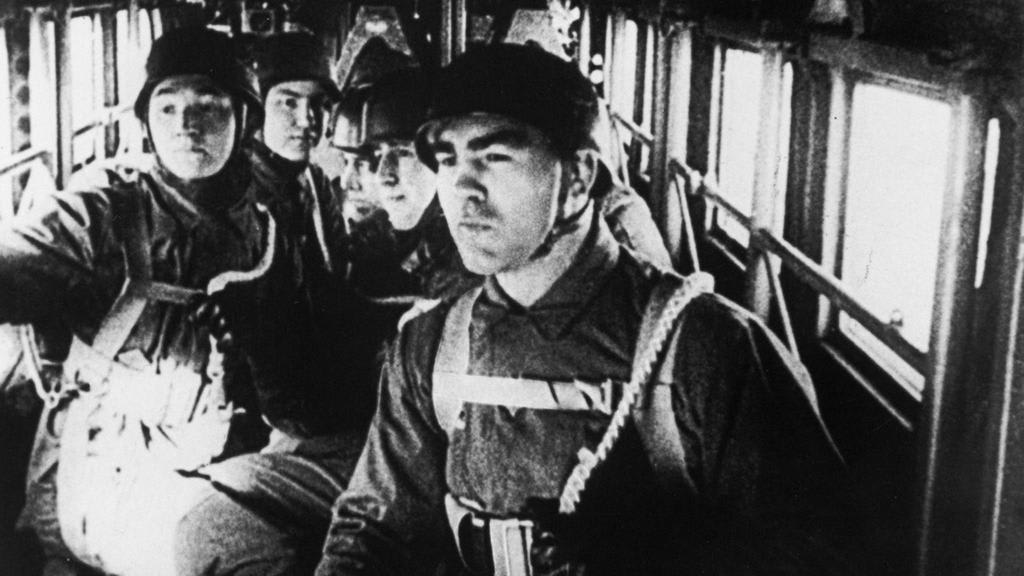
The Oscars took 14 ceremonies to introduce an award devoted exclusively to documentaries. The addition was only a matter of time after the Academy of Motion Picture Arts and Sciences had nominated a documentary at their first event, awarded a documentary at their third, and saw seven short documentaries win over the next decade, all in various other existing categories. Finally, in 1942, the first Academy Award for Best Documentary (Short Subject) was given to Churchill’s Island, selected from a pool of 11 nominees.
While the Oscars would have likely created a documentary category eventually, we can probably thank World War II for the timing of its debut. Nonfiction shorts and newsreels were showing audiences the scope of the conflict, with some propaganda films specifically aimed at garnering Americans’ support for the Allied powers. One year earlier, the Academy even nominated the British documentary London Can Take It!, about the English capital’s resilience during the Blitz, in the Best Short Subject (One-Reel) category. (It didn’t win.)
By the time of the next Academy Awards, the U.S. had entered World War II, plenty of Hollywood actors and filmmakers had enlisted (some, including James Stewart and John Ford, had already done so even earlier), and the industry as a whole was more focused on what it could do for the war effort. The Oscars were nearly cancelled following the attack on Pearl Harbor, but the Academy went ahead with a less glitzy ceremony. Some attendees chose to wear their military uniforms to the event instead of the usual formal attire.
Nonfics is a reader-supported publication. To receive new posts and support my work, consider becoming a free or paid subscriber.
The war wasn’t the only thing on the minds of the guests at the 14th Academy Awards, however. That year is remembered today more for the Best Actress rivalry between sisters Joan Fontaine and Olivia de Havilland, the disappointing “near-washout” (as Variety called it) of Orson Welles and Citizen Kane, and the celebration of Walt Disney and Fantasia with special honors. Still, there was a rousing, pro-aggression speech given by former Republican presidential candidate Wendell Willkie and an appearance by the Chinese Ambassador to the United States, Dr. Huh Shih.
The prewar U.S. military was on display in several of the year’s nominees, including Best Special Effects winner I Wanted Wings and Best Cinematography contender Dive Bomber. These movies were made with the support of the U.S. Army Air Corps and the U.S. Navy, respectively, and the latter actually captured real military activity during filming. Still, the majority of nominees depicting World War II specifically could be found in the new documentary-only category.
The Oscars took 14 ceremonies to introduce an award devoted exclusively to documentaries. The addition was only a matter of time after the Academy of Motion Picture Arts and Sciences had nominated a documentary at their first event, awarded a documentary at their third, and saw seven short documentaries win over the next decade, all in various other existing categories. Finally, in 1942, the first Academy Award for Best Documentary (Short Subject) was given to Churchill’s Island, selected from a pool of 11 nominees.
While the Oscars would have likely created a documentary category eventually, we can probably thank World War II for the timing of its debut. Nonfiction shorts and newsreels were showing audiences the scope of the conflict, with some propaganda films specifically aimed at garnering Americans’ support for the Allied powers. One year earlier, the Academy even nominated the British documentary London Can Take It!, about the English capital’s resilience during the Blitz, in the Best Short Subject (One-Reel) category. (It didn’t win.)
By the time of the next Academy Awards, the U.S. had entered World War II, plenty of Hollywood actors and filmmakers had enlisted (some, including James Stewart and John Ford, had already done so even earlier), and the industry as a whole was more focused on what it could do for the war effort. The Oscars were nearly cancelled following the attack on Pearl Harbor, but the Academy went ahead with a less glitzy ceremony. Some attendees chose to wear their military uniforms to the event instead of the usual formal attire.
Nonfics is a reader-supported publication. To receive new posts and support my work, consider becoming a free or paid subscriber.
The war wasn’t the only thing on the minds of the guests at the 14th Academy Awards, however. That year is remembered today more for the Best Actress rivalry between sisters Joan Fontaine and Olivia de Havilland, the disappointing “near-washout” (as Variety called it) of Orson Welles and Citizen Kane, and the celebration of Walt Disney and Fantasia with special honors. Still, there was a rousing, pro-aggression speech given by former Republican presidential candidate Wendell Willkie and an appearance by the Chinese Ambassador to the United States, Dr. Huh Shih.
The prewar U.S. military was on display in several of the year’s nominees, including Best Special Effects winner I Wanted Wings and Best Cinematography contender Dive Bomber. These movies were made with the support of the U.S. Army Air Corps and the U.S. Navy, respectively, and the latter actually captured real military activity during filming. Still, the majority of nominees depicting World War II specifically could be found in the new documentary-only category.
The Oscars took 14 ceremonies to introduce an award devoted exclusively to documentaries. The addition was only a matter of time after the Academy of Motion Picture Arts and Sciences had nominated a documentary at their first event, awarded a documentary at their third, and saw seven short documentaries win over the next decade, all in various other existing categories. Finally, in 1942, the first Academy Award for Best Documentary (Short Subject) was given to Churchill’s Island, selected from a pool of 11 nominees.
While the Oscars would have likely created a documentary category eventually, we can probably thank World War II for the timing of its debut. Nonfiction shorts and newsreels were showing audiences the scope of the conflict, with some propaganda films specifically aimed at garnering Americans’ support for the Allied powers. One year earlier, the Academy even nominated the British documentary London Can Take It!, about the English capital’s resilience during the Blitz, in the Best Short Subject (One-Reel) category. (It didn’t win.)
By the time of the next Academy Awards, the U.S. had entered World War II, plenty of Hollywood actors and filmmakers had enlisted (some, including James Stewart and John Ford, had already done so even earlier), and the industry as a whole was more focused on what it could do for the war effort. The Oscars were nearly cancelled following the attack on Pearl Harbor, but the Academy went ahead with a less glitzy ceremony. Some attendees chose to wear their military uniforms to the event instead of the usual formal attire.
Nonfics is a reader-supported publication. To receive new posts and support my work, consider becoming a free or paid subscriber.
The war wasn’t the only thing on the minds of the guests at the 14th Academy Awards, however. That year is remembered today more for the Best Actress rivalry between sisters Joan Fontaine and Olivia de Havilland, the disappointing “near-washout” (as Variety called it) of Orson Welles and Citizen Kane, and the celebration of Walt Disney and Fantasia with special honors. Still, there was a rousing, pro-aggression speech given by former Republican presidential candidate Wendell Willkie and an appearance by the Chinese Ambassador to the United States, Dr. Huh Shih.
The prewar U.S. military was on display in several of the year’s nominees, including Best Special Effects winner I Wanted Wings and Best Cinematography contender Dive Bomber. These movies were made with the support of the U.S. Army Air Corps and the U.S. Navy, respectively, and the latter actually captured real military activity during filming. Still, the majority of nominees depicting World War II specifically could be found in the new documentary-only category.

The live concert film shot in 3D made $20.1 million globally but only $7.5 million domestic.
Nearly a decade after making his feature debut as a co-director of Albert Maysles’s final documentary, In Transit, David Usui finally went solo for this hidden gem of a film. Been Here Stay Here is a mostly observational portrait of a conservative, religious island community enduring under threat of climate change that they believe is God and nature’s will. Usui follows crabbers and oystermen, tour guides and churchgoers, elders and children in their lives on Tangier Island, located smack dab in the middle of the Chesapeake Bay. It’s a place that has lost two-thirds of its land to rising sea levels over the last 200 years.
Nonfics is a reader-supported publication. To receive new posts and support my work, consider becoming a free or paid subscriber.
That time span doesn’t make it seem like the problem is completely the fault of humans, but this isn’t a film dealing with details on the science or cause of the situation. It’s driven by the people, who are driven by their faith. Usui uses a few tricks to deliver more than mere people watching and landscape cinematography. He captures another documentary crew interviewing locals, snagging some of those discussions for his own film. He also introduces a young pastor focused on climate change through a Christian perspective in order to present that conversation between differing factions and generations. For another layer, the film includes a sprinkling of archival footage of life on the island from half a century ago.
Been Here Stay Here is a beautiful and serene documentary that may lull us toward a shared acceptance of our fates. The score by James William Blades is epically soothing. Every shot composed by Usui and Peter Steusloff is stunning and full of grace. I couldn’t help but be reminded of montages in disaster movies of people in their daily routines just before the cataclysmic events wipe them out, even if the looming calamity here isn’t as immediately life-threatening or destructive. It’s more of a pleasantly provocative stopover in a virtual journey of land and time.
Nearly a decade after making his feature debut as a co-director of Albert Maysles’s final documentary, In Transit, David Usui finally went solo for this hidden gem of a film. Been Here Stay Here is a mostly observational portrait of a conservative, religious island community enduring under threat of climate change that they believe is God and nature’s will. Usui follows crabbers and oystermen, tour guides and churchgoers, elders and children in their lives on Tangier Island, located smack dab in the middle of the Chesapeake Bay. It’s a place that has lost two-thirds of its land to rising sea levels over the last 200 years.
Nonfics is a reader-supported publication. To receive new posts and support my work, consider becoming a free or paid subscriber.
That time span doesn’t make it seem like the problem is completely the fault of humans, but this isn’t a film dealing with details on the science or cause of the situation. It’s driven by the people, who are driven by their faith. Usui uses a few tricks to deliver more than mere people watching and landscape cinematography. He captures another documentary crew interviewing locals, snagging some of those discussions for his own film. He also introduces a young pastor focused on climate change through a Christian perspective in order to present that conversation between differing factions and generations. For another layer, the film includes a sprinkling of archival footage of life on the island from half a century ago.
Been Here Stay Here is a beautiful and serene documentary that may lull us toward a shared acceptance of our fates. The score by James William Blades is epically soothing. Every shot composed by Usui and Peter Steusloff is stunning and full of grace. I couldn’t help but be reminded of montages in disaster movies of people in their daily routines just before the cataclysmic events wipe them out, even if the looming calamity here isn’t as immediately life-threatening or destructive. It’s more of a pleasantly provocative stopover in a virtual journey of land and time.