• News
  • Videos
  • Adobe Premiere Tips
  • About
  • FocusPulling.com
Menu
  • News
  • Videos
  • Adobe Premiere Tips
  • About
  • FocusPulling.com

Author Description

Paul Moon
Connect on Facebook Connect on Twitter Connect on Linkedin

H. Paul Moon is a filmmaker based in New York City and Washington, D.C. whose works concentrate on the performing arts. Major films include “Sitka: A Piano Documentary” about the craftsmanship of Steinway pianos, “Quartet for the End of Time” about Olivier Messiaen’s transcendent WWII composition, and an acclaimed feature film about the life and music of American composer Samuel Barber that premiered on PBS. Moon has created music videos for numerous composers including Moondog, Susan Botti and Angélica Negrón, and three opera films set in a community garden. His film “The Passion of Scrooge” was awarded “Critic's Choice” by Opera News as a “thoroughly enjoyable film version, insightfully conceived and directed” with “first-rate and remarkably illustrative storytelling.” Further highlights include works featured in exhibitions at the Nevada Museum of Art and the City Museum of New York, PBS television broadcasts, and best of show awards in over a dozen international film festivals.

31 July 2025

Two Documentaries Among Indigenous Projects Receiving Funding via Telefilm Canada

Written by Paul Moon

Two documentaries are among the five feature films receiving funding through Telefilm Canada’s Indigenous stream. The projects include Instant Indian – The Hijacking of a Nation, written and directed by Jules Koostachin. The filmmaker’s previous docs include the study of generational healing in WaaPaKe, while her latest drama Angela’s Shadow is now in theatres.

Also tapped for funding is Une tragédie inuite: La police au Nunavik from directors Kim O’Bomsawin and Olivia Ikey. The duo previously collaborated on the forthcoming doc Inuguinq, which was announced last year. O’Bomsawin is also the director of docs including Ninan Auassat: We the Children and Telling Our Story.

The three other projects announced today include one horror film and two dramas. The five projects account for an investment of $2.68 million via the Indigenous funding streams for the Theatrical Documentary Program and the Production Program in both the English and French markets. The projects were drawn from a pool of 22 applications.


The five awarded projects are:


Ancestral Beasts (horror)

Director and Screenwriter: Tim Riedel

Production: 16198872 Canada Inc

Province: Ontario

Language: English


Instant Indian – The Hijacking of a Nation (documentary)

Director and screenwriter: Jules Koostachin

Production: Xa7tus Productions Inc.

Distribution: IndieCan Entertainment

Province: British Columbia

Language: English


Little People (drama)

Directors: Sarah Houle and Ramin Eshraghi-Yazdi

Screenwriters: Shane Ghostkeeper and Ramin Eshraghi-Yazdi

Production: Muskego Inc.

Province: Alberta

Language: English and Cree – nehiyawak


The Skins Game (drama)

Director: Jon Elliott

Screenwriter: Justin Neal

Production: Holy Crow Productions

Province: British Columbia

Language: English


Une tragédie inuite: La police au Nunavik (documentary)

Directors: Kim O’Bomsawin and Olivia Ikey

Screenwriters: Kim O’Bomsawin and Chaz Beaudette

Production: Nikan Productions (VI) Inc.

Province: Quebec

Language: French


The post Two Documentaries Among Indigenous Projects Receiving Funding via Telefilm Canada appeared first on POV Magazine.

Uncategorized Comments are off
31 July 2025

‘Megadoc’ Teaser: Francis Ford Coppola Directs ‘Megalopolis’ for ‘Fun’ in Mike Figgis’ Behind-the-Scenes Documentary

Written by Paul Moon

Screen-Shot-2025-07-31-at-11.46.15-AM.pn

Adam Driver, Aubrey Plaza, Shia LaBeouf, Laurence Fishburne, and Robert De Niro appear in the documentary that will debut at Venice 2025.

Uncategorized Comments are off
31 July 2025

Sheffield DocFest 2025: Tender Shoots

Written by Paul Moon

Welded%20Together_8.jpg

Sheffield DocFest 2025: Tender Shoots
nickbradshaw
Thu, 07/31/2025 – 17:00

Uncategorized Comments are off
31 July 2025

Sheffield DocFest 2025: Tender Shoots

Written by Paul Moon

Welded%20Together_8.jpg

Sheffield DocFest 2025: Tender Shoots
nickbradshaw
Thu, 07/31/2025 – 17:00

Uncategorized Comments are off
30 July 2025

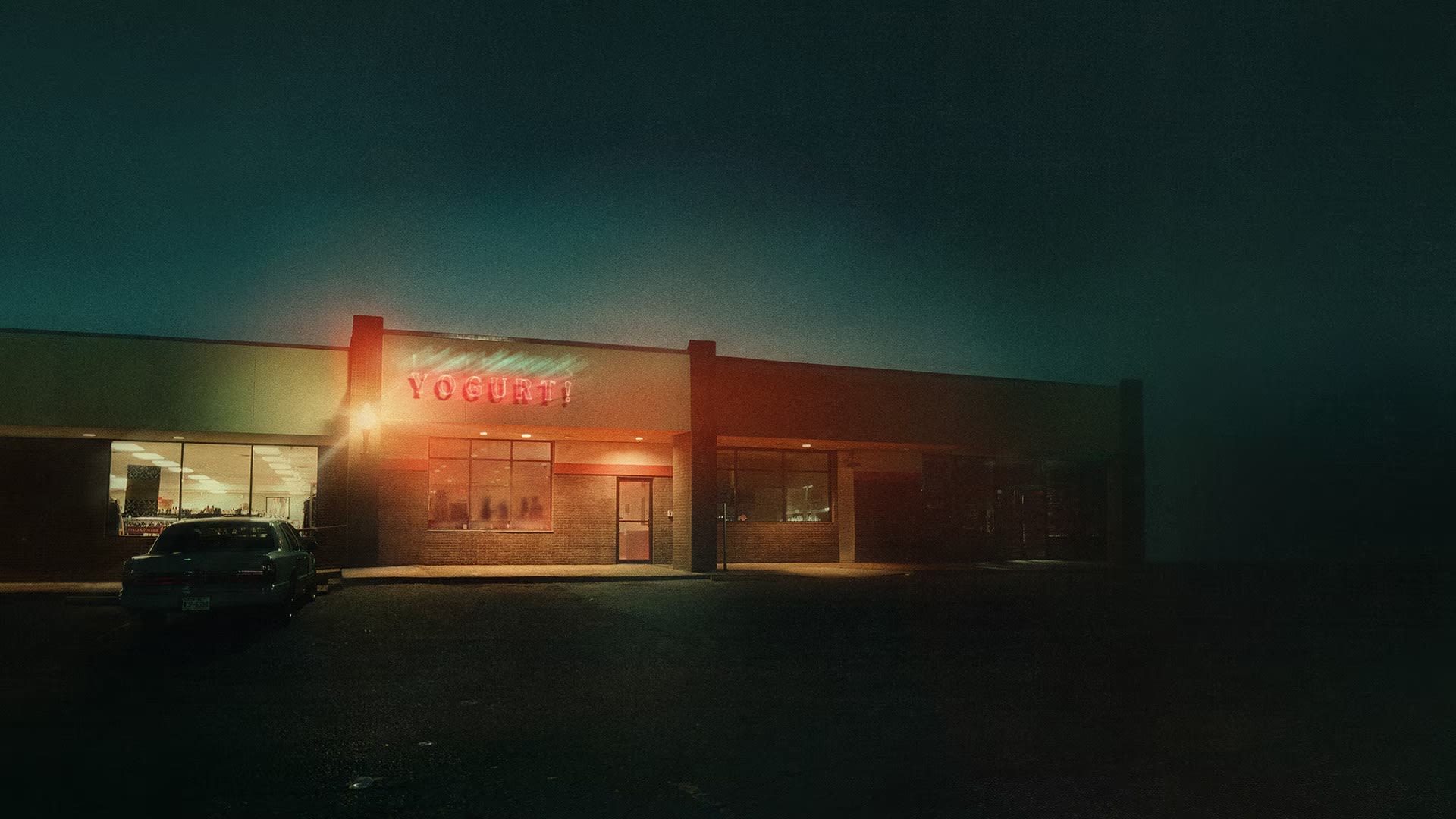
‘The Yogurt Shop Murders’ Review

Written by Paul Moon

After directing one of the best documentaries of 2022, Margaret Brown seemed to be slumming it by venturing into the true-crime docuseries market for The Yogurt Shop Murders. Fortunately, she approached the genre as she does with all of her docs, with an interest in setting and community over procedural investigation. As seen with her last few features, even if she’s tackling large-scale stories like the BP oil spill in the Gulf of Mexico or the last ship to transport enslaved Africans to America in the 1860s, Brown relates to her subjects intimately and connects us to them through her locally invested perspective. They’re not subjective documentaries, but they do feel personal.

With The Yogurt Shop Murders, she examines the case of four teenage girls executed inside an I Can’t Believe It’s Yogurt in Austin, Texas, in 1991. The crime, which also involved arson and possibly rape, technically remains unsolved, but this isn’t the sort of docuseries that plays like a mystery. It’s not focused on the victims, nor is it quite interested in the perpetrators. Through four episodes, Brown chronicles the handling of the investigation and the trials of two men charged with the murders while concentrating on the parents and siblings of the girls, the detectives, and the officers of the court whose lives have been affected by the case. The sister of one of the victims puts it best that stories like this shouldn’t be fascinating. They’re just sad.

I still can’t help but be fascinated by the making of the film, however. The Yogurt Shop Murders is the second true-crime documentary I’ve seen this year, after Zodiac Killer Project, to use an earlier unfinished film on its respective case as a jumping-off point. Brown’s series is aided by footage shot in 2009 by Claire Hule, who appears on screen sharing her interviews from a laptop, often with embarrassment about her lack of finesse behind the camera. In some ways, The Yogurt Shop Murders is another work that subverts true-crime tropes while delivering every desired angle, from the inclusion of citizen sleuths discussing conspiracy theories about the case to its treatment by various media, including Hule’s documentary project.

It’s also interesting how similar a lot of the narrative of the yogurt shop killings mirrors that of the Paradise Lost (and West of Memphis) case. The murders of the four girls in Austin happened only a year and a half before the murders of the three little boys in West Memphis, Arkansas. Both unsolved cases have involved false confessions, wrongfully imprisoned men who eventually went free without being fully exonerated, citizen sleuths, and theories about satanic cults aimed at local goth kids. None of these elements were likely uncommon in the 1990s, but watching The Yogurt Murders nonetheless sparked some deja vu that had me thinking about the entirety of the Paradise Lost trilogy. The only thing missing is a hint that a parent of one of the victims was the true murderer.

Uncategorized Comments are off
30 July 2025

“We Do Need Art in Order to Reach Each Other”: Tatyana Tenenbaum Reconfigures Choreographer Hadar Ahuvia’s Dance in ‘Everything You Have Is Yours’

Written by Paul Moon

EverythingYouHaveIsYours_AudienceShotALT

“We Do Need Art in Order to Reach Each Other”: Tatyana Tenenbaum Reconfigures Choreographer Hadar Ahuvia’s Dance in ‘Everything You Have Is Yours’
Carly Mattox
Wed, 07/30/2025 – 16:30

Uncategorized Comments are off
27 July 2025

‘Hurricane Katrina: Race Against Time’ Review

Written by Paul Moon

In recent years, historical docuseries have catered to nostalgia for major news stories of the past. Maybe nostalgia isn’t the right word for all of these anniversary-focused looks back at disasters, tragedies, and criminal cases, even if some of them now seem relatively quaint next to what feels to be much more regular occurrences of violence, weather-related catastrophes, and socio-political turmoil in the present. But there’s an appeal to these documentaries outside of plain historicism, or they wouldn’t be made in such quantities. Many events even garner competing series from different streaming platforms, and most are produced too well to merely be commemorative.

The unimaginatively titled Hurricane Katrina: Race Against Time is the first of two prestige series out this summer focused on the devastating 2005 tropical storm that temporarily wiped out New Orleans. While we’ve had some big hurricanes since then, Katrina remains the deadliest to hit the U.S. mainland in modern times, and it remains the costliest ever — though as Race Against Time (and other documentaries before it) reminds us, a lot of this natural disaster’s real tragedy was man-made. And not just in terms of the human causes of climate change. When we think of history as lessons from which we may avoid repeating past mistakes, it’s the narratives on the aftermath of Katrina that should have already been more of a warning about avoidable human error than the inconvenient truth that more big storms are coming.

Race Against Time, a five-part series directed by Oscar-nominee Traci Curry (Attica) and executive produced by Ryan and Zinzi Coogler, Simon and Jonathan Chinn, and Peter Nicks, knows that the Katrina story is more than just something memorably and mournfully cataclysmic that happened 20 years ago. The series opens with a survivor, the community organizer Malik Rahim, explaining that to prevent something from happening again, you need to know how it happened the first time. It’s the caution about history repeating itself in different wording. More striking are his words later in the series about how Katrina was a “wake-up call,” but “we fell back asleep.” If the point is not clear enough to viewers, Curry includes a montage of recent disasters whose destruction is more than nature’s fault, including this year’s wildfires in Los Angeles.

The documentary is not preachy, though, nor does it take a historian’s approach. Most of the talking heads are people who were there, whether in rescue and leadership roles or survivors now sharing their firsthand memories of the experience. It takes us through events and feelings chronologically, not in a way that necessarily gives us a sense of what it was like, but at least both broad and specific understandings. With the captivating survivor testimonials, Race Against Time reminded me of the similarly excellent Oklahoma City: One Day in America. Curry flawlessly combines these real people and accounts with archival footage and animated maps to perfectly illustrate what happened, why, and how traumatic it all was and continues to be.

Uncategorized Comments are off
← Older posts
Newer posts →

B&H Search Engine Banner


B&H Photo - Video - Pro Audio


© Copyright 2022 by Zen Violence Films LLC, all rights reserved. To read the site privacy policy and ethics statement, click here.