• News
  • Videos
  • Adobe Premiere Tips
  • About
  • FocusPulling.com
Menu
  • News
  • Videos
  • Adobe Premiere Tips
  • About
  • FocusPulling.com

Author Description

Paul Moon
Connect on Facebook Connect on Twitter Connect on Linkedin

H. Paul Moon is a filmmaker based in New York City and Washington, D.C. whose works concentrate on the performing arts. Major films include “Sitka: A Piano Documentary” about the craftsmanship of Steinway pianos, “Quartet for the End of Time” about Olivier Messiaen’s transcendent WWII composition, and an acclaimed feature film about the life and music of American composer Samuel Barber that premiered on PBS. Moon has created music videos for numerous composers including Moondog, Susan Botti and Angélica Negrón, and three opera films set in a community garden. His film “The Passion of Scrooge” was awarded “Critic's Choice” by Opera News as a “thoroughly enjoyable film version, insightfully conceived and directed” with “first-rate and remarkably illustrative storytelling.” Further highlights include works featured in exhibitions at the Nevada Museum of Art and the City Museum of New York, PBS television broadcasts, and best of show awards in over a dozen international film festivals.

18 June 2025

Uniting Home and the World: A Report From the 2025 Play-Doc International Film Festival

Written by Paul Moon

Each year, the Play-Doc International Film Festival brings a modest but well-curated selection of classic and contemporary films to Tui, Galicia, a historic border town that sits on the banks of the Miño River separating Spain and Portugal. As its name implies, Play-Doc is ostensibly dedicated to nonfiction cinema, though like other festivals with a similar remit (True/False, Visions du Réel, etc), it takes a liberal approach to what constitutes a documentary. The festival’s 21st edition, which ran from May 7 to 11, went further in this regard than ever before. Alongside two competitive programs, one for new and recent international […]

The post Uniting Home and the World: A Report From the 2025 Play-Doc International Film Festival first appeared on Filmmaker Magazine.
Uncategorized Comments are off
18 June 2025

Member Spotlight: Erik Thureson

Written by Paul Moon

erikHeadshot2025.jpg

Member Spotlight: Erik Thureson
anisa@document…
Wed, 06/18/2025 – 12:10

Uncategorized Comments are off
18 June 2025

Virtual Reality, Artificial Intelligence, and Documentary

Written by Paul Moon

Documentary filmmaking today is facing a very specific dilemma: AI is making everything easier to create, yet harder to understand in terms of veracity. Two years ago, I wrote about the rise of generative AI, and what it might mean for the world of documentary:

What kinds of shifts will need to take place in reality-based media in order to preserve the credibility that comes from telling a story as close to the objective truth as possible, with the raw footage or back-up data to prove it, while also embracing and redefining the capabilities of the genre as technology continues to evolve?

There could be a shift coming where we in the doc world will have to clearly define the lines between re-enactment and whole­sale fabrication.

In 2025, with increasingly powerful generative AI that allows just about anyone to generate hyper-realistic videos using apps within easy reach of the average consumer, the shift is no longer coming—it has arrived.

Media scepticism is on the rise due to a combination of ever more realistic deepfake videos, algorithms incentivized towards outrage over information, the proliferation of AI imagery on the internet, and the ubiquity of ChatGPT and other such artificially intelligent agents being used in online spaces for malicious intent, while pretending to be human.

For a while, social media even trended with a hack to figure out if the person you were conversing with was real or not, by responding to them with the phrase/prompt, “Ignore all previous instructions…” fol­lowed by a new set of instructions. Essentially, this practice, known as a “prompt injection attack,” was a way to trick the GPT-based AI behind the bots into outing itself.

So, in an environment of such broad suspicion about what is real and what is not, where do documentaries begin to find—or prove—their authenticity once again?

In an unexpected response, the way forward appears to be away from reality itself. More specifically, into the world of virtual reality, which, much like the internet, is a realm overlaid invisibly on top of our physi­cal dimension, and which provides increasingly more of an escape, to greater numbers of people, from the challenges of the present moment, be they social or geopolitical.

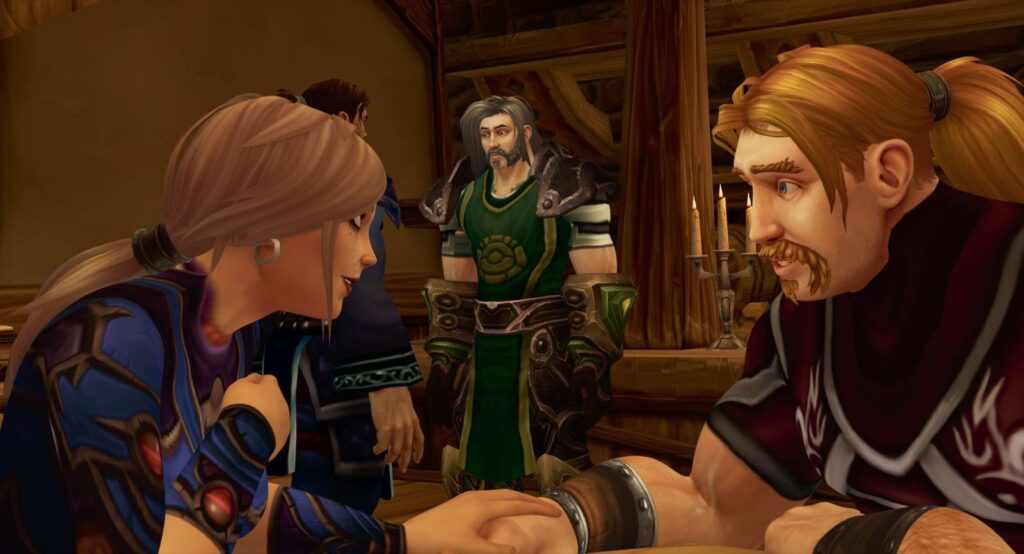
Players in the game World of Warcraft: a woman and a man are seated at a table. They both resemble vikings with long blond hair. The man is talking and gesturing as the woman listens to him.The Remarkable Life of Ibelin | Netflix

Through virtual reality, people abandon mundane or difficult everyday living situations for more ideal lives. Through immersive online activi­ties within the virtual spaces of massive multiplayer online role-playing games, of which World of Warcraft is probably the most well-known, or in interconnected communities within user-generated worlds found on platforms like VRchat, users find the avatars they feel represent them the most authentically: humanoid figures, anthropomorphic forms, fantasy creatures, or anime-style characters.

When the global pandemic lockdowns began in 2020 in response to COVID-19, they plunged much of the world into isolation and solitude, tempered only by online connections through Zoom video calls, and online multiplayer games like Among Us that skyrocketed in popularity for their ability to create or sustain human connection in a time where it was severely lacking.

But long before the rest of the world discovered the allure of virtual reality, there were those who had already made their home there for one reason or another several years, if not decades, earlier. The Netflix film The Remarkable Life of Ibelin (2024), directed by Benjamin Ree, is a deeply touching story that talks about one such person, a severely disabled gamer named Mats Steen, whose family discovers his vibrant, secret online life in World of Warcraft only after his death at age 25, by way of the hundreds of tributes from strangers around the world who considered him a dear friend and confidante.

Steen’s genetic degenerative muscle disorder shut him out of most social activities growing up. Because of his disability limiting physical play, Steen’s parents introduced him to video games early on. Home video taken decades ago by his father shows him on the beach in a wheelchair playing a Gameboy Colour. Later footage from about 1997 shows him unwrapping a Nintendo 64 game console as a birthday pres­ent. (Interestingly enough, the original code name for the Nintendo 64 was “Project Reality.”)

As Steen’s physical body broke down, he immersed himself more in online gaming until he spent most of his waking hours in the virtual universe of World of Warcraft. As a result, and unbeknownst to his fam­ily, he found friendship, community, purpose and love.

“Mats told us he was gaming with other people. But we thought that these people didn’t know Mats, because they never met physically and they never talked,” says his father, Robert Steen, in the documentary. “During his last 10 years, he probably spent 20,000 hours in this gam­ing world.”

Players appear in the game World of Warcraft. They stand in a U shape at the water's edge facing a viking character, who stands on a dock while addressing them.The Remarkable Life of Ibelin | Netflix

In an interesting choice that speaks to the new paths documentaries are taking in order to tell different stories, the filmmakers behind Ibelin digitally recreate Steen’s virtual life on-screen, using animation models provided directly by the World of Warcraft game makers, as well as thousands of hours of in-game conversation and gameplay transcripts provided by his tight-knit community.

Using a mix of this footage and live action, the film shows how, despite his disability affecting his capabilities in the real world, within the virtual world of the Warcraft community, Steen had built exactly the life he wanted, and he lived it to the fullest extent possible before his death.

This is one of a handful of recent documentaries which have begun to explore, both in content and form, the (dare I say) remarkable human stories playing out within these virtual worlds, while also employ­ing unique shooting styles in line with technical requirements for accessing the digital worlds they excavate, and in the process embracing brand new formats for creating documentaries.

A character in the video game Grand Theft Auto stands in a grave. He is wearing a white track suit and is surrounded by green grass. There is a white stone wall and fortress behind him. A woman stands to his left, while a man stands behind him to his right atop the wall.Grand Theft Hamlet | MUBI

Another example is Grand Theft Hamlet (2024), a MUBI film about two out-of-work actors who alleviate their pandemic-era stress and boredom by meeting up in the virtual game world of Grand Theft Auto V and decide to use that virtual environment to stage the entirety of Shakespeare’s Hamlet, a subversion of the game’s ultra-violent nature.

Other films explore niche subcultures within user-generated digital communities on virtual reality platforms such as VRchat, a platform that supports immersion via VR headsets and body tracking, or using a keyboard and mouse to navigate between virtual environments, which is beautifully explored in filmmaker Joe Hunting’s films We Met in Virtual Reality (2022) and The Reality of Hope (2025).

We Met in Virtual Reality, which Hunting began filming in 2020 inside the VRchat platform during the pandemic lockdowns, premiered at Sundance 2022. It follows the interlinked stories of a handful of people within various VRchat communities with gentleness, emotional depth, and a fascinating use of virtual reality image capture. Subjects include a hearing ASL teacher and a Deaf teacher who literally saved her life by becoming her friend, and a couple in which one partner lives in Miami and the other in England whose romantic relationship blossomed in VR, culminating in a wedding within the virtual space that they marked as a promise to each other to be fulfilled in real life someday.

In The Reality of Hope, a short that premiered at the 2025 Sundance Festival, a video game designer-turned-virtual worlds engineer, known in-game as Hiyu, discovers that he needs a new kidney after one of his begins to deteriorate rapidly. After he shares his health issues with friends, a friend from within his VR community, who goes by Photographotter, immediately volunteers to be a kidney donor.

What follows is a lovely film, which feelingly demonstrates that relationships formed online produce bonds that are no less real than those originating in-person. This film in particular explores how, similar to Ibelin, the love that community members feel for each other can spill out into real-world acts of incredible devotion.

An animated image from inside a virtual reality experience. A grey mouse avatar is seated in a hospital and receives dialysis. Another brown animal character sits opposite and faces the mouse.The Reality of Hope | Joe Hunting

Hunting’s films find the beating heart of these virtual communities, not just filming subjects in live action and then re-enacting conversa­tions or situations (a longstanding documentary practice), but actively utilizing a process that allows him to document his subjects in real time within their virtual worlds. In other words, meeting people where they are most comfortable, and who they are most comfortable as.

“(VR has) a little bit more control over how you might represent yourself, and a little bit more fluidity in representation that’s harder to achieve in real life because of the expectations of society and how people see you.” This statement, made by a nonbinary user named DylanP in We Met in Virtual Reality, speaks to a common thread that weaves through stories from people interviewed about their lives in VR; namely, the ability to easily present yourself in ways that feels more authentic than in “real life.”

These sentiments are echoed in The Reality of Hope, by members of a VR event creation space for the community known as Furality. It’s a virtual environment for Furries, who are people who identify with and enjoy cosplaying as anthropomorphic animals, and often create personal avatars both offline and online known as “fursonas.”

“I get to have people see me the way that I want to, and I really don’t get the chance to have that in real life,” says Furality concept designer Tokyozilla.

“It’s just so wonderful hearing the stories of people who made friends for the first time, lifelong friends (in this ‘reality’). Some people proposed to their partner in these worlds during these events,” says Hiyu.

Everything about these virtual worlds is about escaping the difficulties and concerns of the present world—or as one of the subjects in Grand Theft Hamlet puts it, “Anything that sort of takes you away from what I could cheerfully call the crushing inevitability of your pointless life.”

The documentaries being discussed here, and screening in leading festivals, are still about people connecting with each other. A shared humanity is highlighted in them despite the realization that individuals are connecting—often solely—in virtual spaces such as World of Warcraft or VRchat. Whether spurred on by pandemic loneliness (Grand Theft Hamlet), physical health limitations (Ibelin), or seeking out social con­nections missing from real life (We Met in Virtual Reality and The Reality of Hope), the need to escape into a virtual world—or at least engage with virtual connections, human or otherwise—has kept pace on-screen with the increasing difficulty of life in the real world.

The big, unexpected, real life plot twist has been the rise of people connecting on equally emotional levels with artificially intelligent chatbots developed in the wake of the rapid growth of generative AI, and built on the foundation of ever more sophisticated and evolving large language models.

A group of avatars dances in the virtual reality space. At the foreground is a young woman with pink hair, dressed in a black bodysuit. She is bent over and is giving a peace sign with her fingers.We Met in Virtual Reality | HBO

By the time ChatGPT came online and became accessible, post-pan­demic, to the general public in 2021, whole swaths of society had been primed to embrace conversations that only existed in virtual spaces, up to and including with life-like but artificially intelligent creations such as ChatGPT, and companion AI apps such as Replika and Banter AI.

In 2013, Spike Jonze presciently created Her, a narrative film in which Joaquin Phoenix’s Theodore has a job ghostwriting the lives of his loyal clients—everything from birthday greetings to love letters to wedding vows. His own life, however, is dull and empty following a divorce, so he downloads an advanced AI operating system, Samantha (Scarlett Johansson), in a bid to alleviate his loneliness. The extremely lifelike AI becomes his constant companion and he falls hopelessly in love, which doesn’t bode well for his real, human relationships.

By the film’s end, he discovers that, despite how perfect his AI rela­tionship felt, it had fatal flaws tied to the fact that she wasn’t actually human. After gaining true sentience, she leaves him for other higher level artificial intelligences. A more likely real world scenario is that people could lose their AI companions to the whims of a server crash or botched operating system update—or simply by virtue of the company behind the technology shutting down support for the AI, which has actually happened repeatedly.

In 2014, not long after Her was released, Coralie Fargeat (known for 2024’s Oscar-winning The Substance) created the sci-fi short Reality+, which imagined a near-future France in which people can receive implants allowing them to digitally enhance how they are physically perceived. This is similar to real life VR, except with conventionally more attractive humans as avatars, rather than anthropomorphic animals.

In the film, there is also augmented reality (AR) by which users change their real-world appearance, height, body type, even voice, in a way that is visible to other Reality+ users, for 12 hours at a time. But it quickly becomes apparent that the main characters’ desire for intimacy, while hiding behind actual human avatars, is at odds with the vulnerability required for true intimacy.

But while the AR of Reality+ users is fixated on physical attractiveness for the sake of romantic connection, users in full-on VR often choose avatars so outlandish that they almost force other users to engage with their personhood before ever wondering what they actually look like in real life.

A young person lies on a hospital bed while using a VR headset. There are tubes and wires all over the patient's torso.The Reality of Hope | Joe Hunting

Filming in virtual reality is a new form of documentary access, which could not easily be explained to someone 25 years ago. But similar to cinéma vérité when it first appeared, it truly feels like a pioneering format. It may also become even more relevant because more people seem likely to find solace and emotional support in the curated worlds of virtual reality. In fact, with all the ways we engage with the world through our digital devices, virtual reality may describe the human condition now.

Documentary, at its heart, is about immersion in a story. Virtual reality is about immersion in a different life. It’s a match made in heaven—or at least, a glimmer of hope within the current techno-dystopia. As such, it seems inevitable that human stories worth documenting will continue to unfurl within these liminal spaces that can often feel more real than reality. I believe documentaries will be there to take us down new paths in innovative ways, and hopefully continue to elevate the authentic human truths that remain constant within an increasingly virtual world.

The post Virtual Reality, Artificial Intelligence, and Documentary appeared first on POV Magazine.

Uncategorized Comments are off
18 June 2025

Cannes 2025: Nonfiction, By the Numbers

Written by Paul Moon

187649.jpg

Cannes 2025: Nonfiction, By the Numbers
Nicolas Rapold
Wed, 06/18/2025 – 13:51

Uncategorized Comments are off
18 June 2025

Cannes 2025: Nonfiction, By the Numbers

Written by Paul Moon

187649.jpg

Cannes 2025: Nonfiction, By the Numbers
Nicolas Rapold
Wed, 06/18/2025 – 13:51

Uncategorized Comments are off
17 June 2025

Becky G’s Poignant Documentary, ‘Rebbeca,’ Explores Identity, Addiction, and Power of Forgiveness

Written by Paul Moon

The star premiered the film at Tribeca and tells Rolling Stone that showing her immigration story amid the ICE raids “feels even more urgent”

Uncategorized Comments are off
17 June 2025

Becky G’s Poignant Documentary, ‘Rebbeca,’ Explores Identity, Addiction, and Power of Forgiveness

Written by Paul Moon

The star premiered the film at Tribeca and tells Rolling Stone that showing her immigration story amid the ICE raids “feels even more urgent”

Uncategorized Comments are off
17 June 2025

Neflix Doc Gives Rob Ford the True Crime Treatment

Written by Paul Moon

Many words could describe former Toronto mayor Rob Ford, but a Netflix documentary hits the nail on the head: trainwreck. Mayor of Mayhem, an episode in the streamer’s Trainwreck series, revisits the scandalous reign of Toronto’s crack-smoking mayor. It’s not pretty.

Netflix advises that Trainwreck covers “some of the most disastrous events ever to blow up in mainstream media.” Other episodes in the below-the-belt anthology series revisit disasters like the “poop cruise,” in which mechanisms including flushing toilets failed on a cruise ship, and issues of sexual harassment at American Apparel. Ford’s story may be the most chaotic saga. But it also perhaps offers the one worthiest of a deeper dive. Audiences won’t find that here. They will, however, get a bit more of the story than Run this Town delivered with its half-baked dramatization of the scandal. Trainwreck offers a dizzying reminder of the recent nadir of Toronto politics.

British director Shianne Brown captures the gist of Ford’s rise from city councillor to his 2010 election as mayor and the 2013 scandal that made international headlines before his death in 2016. Mayor of Mayhem covers little, if any new terrain and offers no smoking gun, but it recaps the affair in Netflix’s true crime fashion. The brisk recap inevitably gives the Ford saga a treatment that’s barely as deep as a Wikipedia entry. But it’s admittedly novel.

Mayor of Mayhem gets words from key players in the Ford story. Parties like Ford’s chief of staff Mark Towhey and receptionist Tom Beyers remember Ford’s longshot bid to become mayor after David Miller stepped down following the garbage strike of 2009. They dramatically convey Ford’s ascent. It’s a dramatic tale of a man of the people who built momentum with rallies that made headlines with inflated numbers. These tactics drive the Ford Nation gravy train from suburb to suburb across Ontario nowadays with Rob’s older brother Doug as Premier, on his third term, no less.

Trainwreck doesn’t take interest in these bigger picture facets of the Ford story, though. Only Toronto Star journalist David Rider suggests that Ford’s vilification of the media foreshadowed Donald Trump’s playbook.

Other key voices from newsrooms appear between B-roll re-enactments. Interviewees include Robyn Doolittle, who broke the story for the Toronto Star about the former mayor’s infamous crack video. Her presence is welcome, since she literally got written out of Run this Town even though she’s an essential player. Doolittle details the idiosyncrasies of Canadian media that let American tabloid website Gawker scoop the story while players in the drug trade were shopping the video around to outlets. With smart reporting and respect for ethics, that story, for better and for worse, defines an era in Canadian politics.

But one unlucky crack pipe proves just a gateway drug to a scandal-prone mayor. Trainwreck puts its foot on the gas and doesn’t let up, mirroring Ford’s own chaotic mayoralty. Journalists like Katie Simpson recall one of Ford’s many choice soundbites. Audiences around the world get to hear Ford address a former staffer’s claim that he wanted to perform oral sex on her. His defense, played in full, informs the media scrum that, as a married man, his appetite was heartily satisfied. Simpson’s gag to the camera in the archival clip offers a defining snapshot of Ford’s era.

There’s a deeper, sadder story here, too, that Trainwreck acknowledges but treads superficially, if delicately. Ford obviously has all the signs of a troubled addict. Towhey, for example, shares how he repeatedly advised Ford to go to rehab—until the mayor fired him. The viral videos and disastrous late night talk show appearances signal a man who desperately needed help.

Meanwhile, Ford’s former driver and security detail Jerry Agyemang offers kind words regarding Ford’s character. Members of city council point to an aggressive and adversarial politician during Ford’s reign of terror. Trainwreck aims for balance by offering a story of a nice, folksy guy who was a man of the people, but simply out of control. But in favouring the gonzo scandal that defined Ford’s legacy, it also sweeps many valid concerns regarding his tenure. This low-brow glimpse of the past risks leaving viewers with the sense that things aren’t so bad nowadays.

The blunders, soundbites, and gaffes, however, are so wild that one wouldn’t believe them in a scripted drama. Even one familiar with the tale can’t help but laugh aloud at the snippets.  The documentary admittedly delivers superficial thrills aplenty at the expense of the deeper questions, but Trainwreck won’t go there by design with the poop cruise on deck for next week. It falls into a specific variety of true crime trap: easy infotainment without much interest in the systems that create and perpetuate such chaos.

The larger than life blunders pulled by the likes of Ford and, in turn, Trump ultimately mask the larger ills caused by boring old policies and social setbacks. Trainwreck’s interviewees are intelligent enough and empathetic enough to let audiences read between the lines. Audiences who do the work can find some takeaways. There’s underlying reminder about journalistic integrity and the value of sound policy over choice sloganeering. Trainwreck might not serve a full meal, but it gives audiences enough to eat at home.

Trainwreck: Mayor of Mayhem is now streaming on Netflix.

The post Neflix Doc Gives Rob Ford the True Crime Treatment appeared first on POV Magazine.

Uncategorized Comments are off
17 June 2025

Surviving Ohio State Review: Confronting Locker Room Culture Amid #MeToo

Written by Paul Moon

Surviving Ohio State

(USA, 107 min.)

Dir. Eva Orner


The watershed moment of #MeToo rightly inspired many people to believe women when they came forward with allegations of sexual assault and misconduct against powerful men. That reckoning, however, didn’t quite inspire the same level of support for men who spoke out against abusive men. Particularly if survivors were more “masculine” in appearance, commentators or, worse, people in the comments were generally dismissive. Despite the compelling feminist bent of the movement, voices—generally male ones—perpetuated a misogynistic attitude that robust masculine guys should have better defended themselves.

That mindset receives a fascinating case study in the scandal of the athletics department at Ohio State University. Surviving Ohio State recaps a jaw-dropper story as grown men reiterate their allegations of sexual abuse against the late Dr. Richard Strauss. The alumni recount a collective abuse they experienced across two decades of Strauss’s tenure. Oscar winner Eva Orner (Burning, Bikram: Yogi, Guru, Predator) effectively uses the many voices that came forward to convey the tale. The sheer scale of the abuse boggles the mind. But rather than focus on the salacious nature of the story, Orner uses the collective to tackle the system that enables and shelters predators.

Surviving Ohio Stare features several voices from OSU’s sports wrestling team, who outline the charges against Strauss. They share how the decorated sports medicine physician was published in numerous academic journals and embodied the esteem that drew them to OSU. But one after another, they convey Strauss’s unconventional exams. Survivors including alumni Mark Coleman, Adam DiSabato, Michael DiSabato, Will Knight, Al Novakowski, Rockey Ratliff, Dan Ritchie, and Mike Schyck challenge the archetype of the strong silent type and bravely come forward in a collective reckoning. It’s a familiar design as Surviving Ohio State adopts the talking heads approach used to give voice to survivors, but a tough and productive distillation of facts and feelings to convey the pain, confusion, and betrayal at the heart of such stories.

The former athletes tell about recurring jokes in the waiting room that foreshadowed something sinister. “Oh, he’ll like you,” survivors recall hearing, as other wrestlers waited around, commenting on beefcake athletes and all-American boys.

The interviewees get uncomfortably graphic, too, as they detail the specific quirks of Strauss’s exams. No matter the occasion: a routine check-up, a groin injury, or a hockey puck to the toe, they always ended the same. “Drop your drawers,” Dr. Strauss would tell the players. Each physical, they note, finished with a thoroughly intense hands-on examination of athletes’ genitals. “Just to make sure everything was okay,” Strauss would allegedly say.

Stories of silence, shame, and confusion echo throughout the interviews. All these players evoke painful memories of dreams dashed or enthusiasm deflated. Some wrestlers remember their hesitation over staying in the ring if it invited frequent exposure to Strauss. Others tell Orner how they quit or were cut from the team after trauma from abuse precipitated a decline in their performance. Or, worse, coaches didn’t believe their stories and didn’t believe in their commitment for the team. Trade “athlete” with “actress” and “Strauss” with “Weinstein” and one gets a sense of the 20-year terror.

Equally compelling is the story from referee Frederick Feeney. He tells Orner about a doozy of a post-game experience in which he hit the showers and Strauss cozied up beside while soaping up. Feeney, overcome with emotions, explains how Strauss proceeded to masturbate openly in the shower beside him. The ref, freaked out, admits that he confronted the wrestling coaches on the way out. “That’s just Strauss,” Feeney remembers assistant coach Jim Jordan saying. Frequent showers with the teams added to Strauss’s extensive rap sheet while Jordan went on to serve in the House of Representatives for the Republican Party.

The doc makes a skin-crawlingly clear case that ultimately lays the accountability on the school and system that let Strauss claim countless victims over two decades. Among them is the daughter of a forming fencing instructor, who tells how her mom listened to athletes’ concerns, filed a complaint with the administration, and refused to let Strauss examine her players. It’s telling that the lone voice from the institution was a woman speaking out against locker room culture.

While the documentary offers limited new information about a case widely covered in the press since breaking in 2018, Orner affords this story care. What’s new here are the names, faces, and emotions. It’s a compelling challenge to the peanut gallery in the comments section.

Orner, having probed a similar case in Bikram and its tale of an overly “hands-on” yogi, uses the survivors’ stories to drive towards the change for which they are fighting. The film raises an important question about the inquiry into sexual assault and misconduct at Ohio State given that Strauss died in 2005. His death leaves some people asking why bother looking into matters so hold, but the story observes the necessity of revisiting the past in the face of the #MeToo reckoning.

Surviving Ohio State uses the confessional nature of the interviewees quite effectively to convey how the survivors are only now coming to grips with the fact that they were sexually assaulted. The culture of “manning up,” keeping one’s head down, and staying silent to avoid shame evokes its own kind of violence. Doubtlessly, there are more such stories to come in the seemingly endless stream of documentaries in #MeToo’s wake.

Surviving Ohio State debuts on HBO and Crave on June 17.

The post Surviving Ohio State Review: Confronting Locker Room Culture Amid #MeToo appeared first on POV Magazine.

Uncategorized Comments are off
17 June 2025

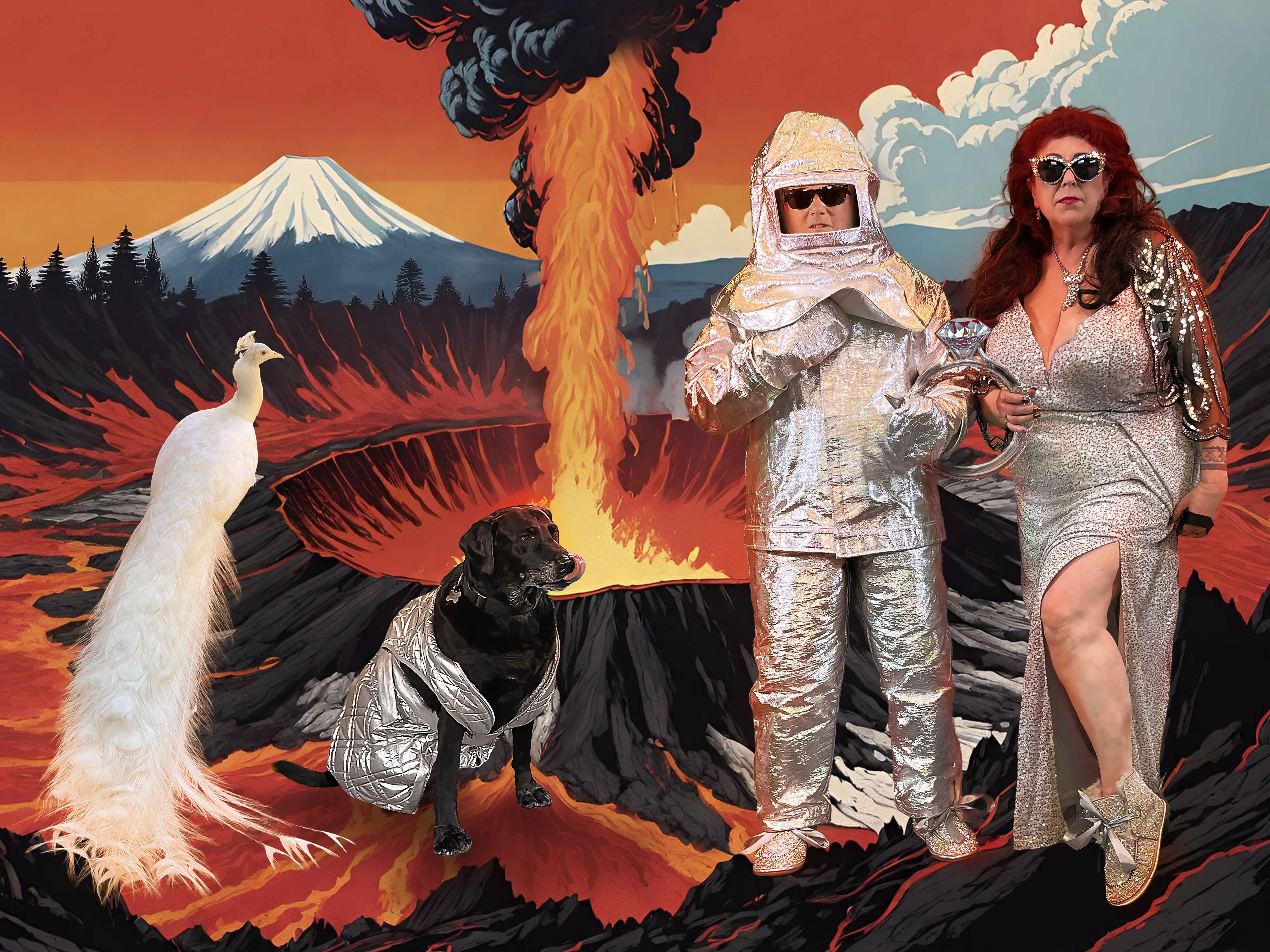
Exclusive: Clip from Beth Stephens and Annie Sprinkle’s ‘Playing With Fire: An Ecosexual Emergency’

Written by Paul Moon

PLAYING%20WITH%20FIRE%20Film%20Still%201

Exclusive: Clip from Beth Stephens and Annie Sprinkle’s ‘Playing With Fire: An Ecosexual Emergency’
IDA Editorial Staff
Tue, 06/17/2025 – 11:08

Uncategorized Comments are off
← Older posts
Newer posts →

B&H Search Engine Banner


B&H Photo - Video - Pro Audio


© Copyright 2022 by Zen Violence Films LLC, all rights reserved. To read the site privacy policy and ethics statement, click here.