
After directing one of the best documentaries of 2022, Margaret Brown seemed to be slumming it by venturing into the true-crime docuseries market for The Yogurt Shop Murders. Fortunately, she approached the genre as she does with all of her docs, with an interest in setting and community over procedural investigation. As seen with her last few features, even if she’s tackling large-scale stories like the BP oil spill in the Gulf of Mexico or the last ship to transport enslaved Africans to America in the 1860s, Brown relates to her subjects intimately and connects us to them through her locally invested perspective. They’re not subjective documentaries, but they do feel personal.
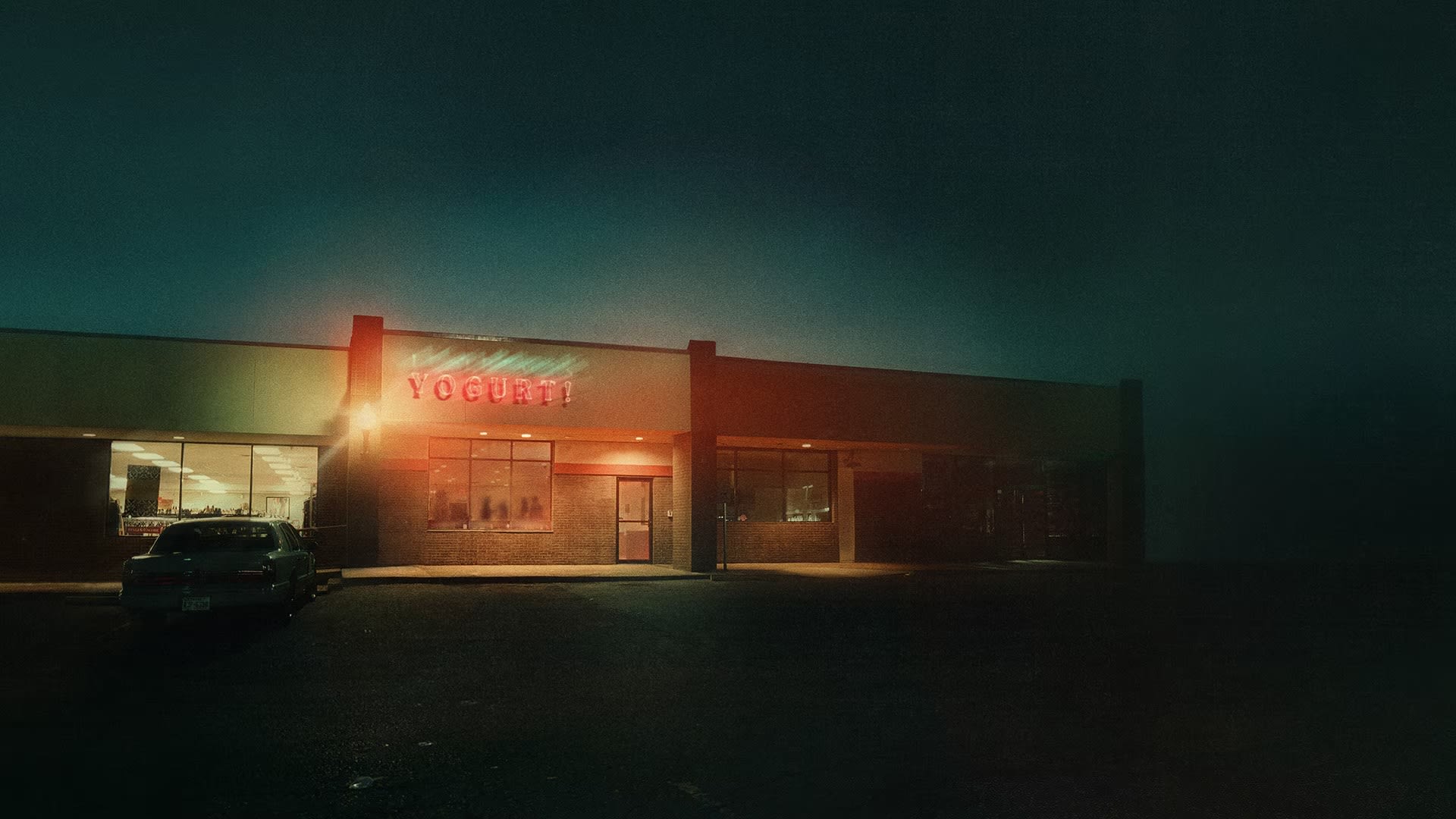
With The Yogurt Shop Murders, she examines the case of four teenage girls executed inside an I Can’t Believe It’s Yogurt in Austin, Texas, in 1991. The crime, which also involved arson and possibly rape, technically remains unsolved, but this isn’t the sort of docuseries that plays like a mystery. It’s not focused on the victims, nor is it quite interested in the perpetrators. Through four episodes, Brown chronicles the handling of the investigation and the trials of two men charged with the murders while concentrating on the parents and siblings of the girls, the detectives, and the officers of the court whose lives have been affected by the case. The sister of one of the victims puts it best that stories like this shouldn’t be fascinating. They’re just sad.
I still can’t help but be fascinated by the making of the film, however. The Yogurt Shop Murders is the second true-crime documentary I’ve seen this year, after Zodiac Killer Project, to use an earlier unfinished film on its respective case as a jumping-off point. Brown’s series is aided by footage shot in 2009 by Claire Hule, who appears on screen sharing her interviews from a laptop, often with embarrassment about her lack of finesse behind the camera. In some ways, The Yogurt Shop Murders is another work that subverts true-crime tropes while delivering every desired angle, from the inclusion of citizen sleuths discussing conspiracy theories about the case to its treatment by various media, including Hule’s documentary project.
It’s also interesting how similar a lot of the narrative of the yogurt shop killings mirrors that of the Paradise Lost (and West of Memphis) case. The murders of the four girls in Austin happened only a year and a half before the murders of the three little boys in West Memphis, Arkansas. Both unsolved cases have involved false confessions, wrongfully imprisoned men who eventually went free without being fully exonerated, citizen sleuths, and theories about satanic cults aimed at local goth kids. None of these elements were likely uncommon in the 1990s, but watching The Yogurt Murders nonetheless sparked some deja vu that had me thinking about the entirety of the Paradise Lost trilogy. The only thing missing is a hint that a parent of one of the victims was the true murderer.