Alex Gibney’s two-part, four-hour Musk, an “incisive look” at “the wealthiest, and most unchecked, man on the planet,” opens this fall

Alex Gibney’s two-part, four-hour Musk, an “incisive look” at “the wealthiest, and most unchecked, man on the planet,” opens this fall
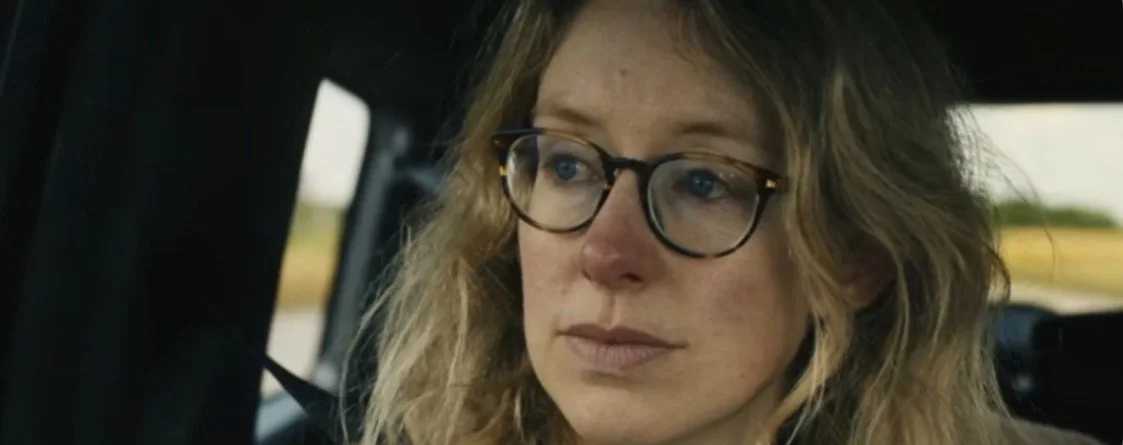
A24 has rolled out the trailer for “You Can See Everything,” the Nathan Fielder and Lance Oppenheim documentary that went from total secret to the most talked-about title at Telluride in a single night.
The 174-minute film, which centers on Elizabeth Holmes, arrived alongside its Telluride premiere to wild reactions. Now, with a New York Film Festival screening upcoming, and a firm release date locked in, the campaign is officially underway.
The trailer is every bit as unnerving as the earlier teaser: deeply disquieting, with strange lighting, extreme close-ups, and odd eye contact, all made more uncanny by the fact that this is apparently the real Holmes. Her presence is unsettling, especially her wide-eyed stare and a single tear she seems to shed on command. I recommend reading as little as possible about this film as it apparently has many surprises in store for the viewer.
The setup is as strange as anything Fielder has attempted. According to the NYFF synopsis, the film was made in secret over four years, beginning when Holmes and her partner, William “Billy” Evans, invited Fielder into their home to live with them and start recording just 34 days before her incarceration. The couple profess her innocence, and the festival’s description teases the question of whether it’s all an elaborate ruse — or something even stranger.
“I don’t have anything to deceive you on,” Holmes tells Fielder in the trailer. “Of course I’m not deceiving you. I’m engaging with you as a human being. Why would I deceive you? There’s no reason for me to do that.”
A24 reportedly greenlit the film with no guarantee it would ever be released and didn’t announce it until the night it premiered at Telluride.That Telluride unveiling paid off. The film became an instant sensation, drawing strong buzz, enthusiastic reviews and immediate Oscar talk, and it currently sits at 95 on Metacritic. Fielder himself seems no less baffled than audiences. At the post-screening Telluride Q&A, moderated by Emma Stone, he said he still doesn’t quite know what he went through, and that the question of why Holmes and Evans wanted him there messed with his head.
There’s also the matter of what, exactly, this film is. Some have suggested roughly half the runtime is documentary and the other half is …something else entirely, prompting questions about whether it qualifies as a full-fledged doc. A24, for its part, has asked me to refer to the film as a “documentary” rather than a “hybrid.”
A24 has set an October 16 theatrical release. The film is also a key piece of the distributor’s awards push. A24 appears intent on campaigning hard, with a potential Oscar slate that also includes “The Debut,” “The Invite,” and “Club Kid.”

Streaming service also to host docs on Martin Mull, Maria Bamford, and ‘SCTV’ in October
Streaming service also to host docs on Martin Mull, Maria Bamford, and ‘SCTV’ in October
IDA Statement On the Paramount–Warner Bros. Discovery Settlement
dominicwillsdon
Tue, 09/22/2026 – 12:29
IDA Statement On the Paramount–Warner Bros. Discovery Settlement
dominicwillsdon
Tue, 09/22/2026 – 12:29
Go down a wormhole in this documentary on master of deadpan humor Norm Macdonald, whose life and career were uncompromising yet full of contradictions.
Watch on Netflix: https://www.netflix.com/title/81611105
About Netflix:
Netflix is one of the world’s leading entertainment services offering TV series, films, games and live programming across a wide variety of genres and languages. Members can play, pause and resume watching as much as they want, anytime, anywhere, and can change their plans at any time.
Norm: The Tale of Norm Macdonald | Official Trailer | Netflix
Go down a wormhole in this documentary on master of deadpan humor Norm Macdonald, whose life and career were uncompromising yet full of contradictions.
Watch on Netflix: https://www.netflix.com/title/81611105
About Netflix:
Netflix is one of the world’s leading entertainment services offering TV series, films, games and live programming across a wide variety of genres and languages. Members can play, pause and resume watching as much as they want, anytime, anywhere, and can change their plans at any time.
Norm: The Tale of Norm Macdonald | Official Trailer | Netflix
I watched the Raygun doc on Netflix this weekend.1 It was fine. The story — its characters, world and stakes — has a lot going for it, and it was competently made.
But even though it was eminently watchable, it was hard for me to watch, because I wanted to make that film, damn it. I tried!!! I even met with Rachael Gunn in person, after sending what I thought was my most persuasive letter. (It clearly was not that persuasive. I’m sharing it today, along with two other initial outreach letters — so you can judge for yourself.)
I can think of at LEAST 5 films from the past 2 years in this same category of “didn’t get past initial request for access.”
Access — usually to the same people everyone else wants access to — is the coin of the realm in documentary.
It probably matters a lot more than “good ideas” or “good filmmaking” or whatever else I tend to prioritize. And I genuinely don’t know if I’m aggressive or cocksure or persistent enough for this part of my job. Even the words “get access” I find vaguely distasteful and distressing.
I think I always knew this, and that’s why my first 3 features involved protagonists I did not need to get access to at all. Our Nixon was constructed entirely from archival material, and most of the principal characters were dead. The protagonist of Nuts! had been dead for more than 70 years. And The Pain of Others was made entirely from YouTube videos its subjects had already chosen to share publicly. In all of those films, I didn’t need the main subjects to say yes.
Or maybe I’m just being hard on myself and my hit rate is about as good as anyone’s.
In any case, I tend to simply “take no for an answer” most of the time. If someone says no off the bat, I usually say, “okay!” It’s very rare that I would even ask a 2nd time. If I had persisted with any of these and not just treated the first no as the end of the story, who knows if things might have turned out differently. But that wasn’t what I wanted to do, for reasons I’ll explain.
Then there’s the question of what kind of monster would even consider pitching some “take” on another person’s story. How much of an expert on someone would you feel you need to be in order to feel confident enough to approach that person to say, hey, please let me make a feature documentary about you?
I personally feel like that should be a really high bar! Putting myself in their shoes: I wouldn’t want to be harassed by some know-nothing who couldn’t be bothered to do their homework in exchange for asking for something so BIG and potentially LIFE-DEFINING. I think the decision to subject one’s self to being, well, a subject, is a big one.
But in reality, most pitches fail, so I have to pitch constantly, all while juggling multiple projects and trying to pay the bills. I can’t spend the months and months I would like to spend researching every detail and considering every angle before making the big ask. (Obviously, none of that work is ever paid.) I have found my own balance with this, but I am never sure it’s the right balance, or the ideal one, or the one most likely to lead to success.
Back around Christmas, I hinted at some outreach I was crafting. I wanted to persuade Lynda Barry and Matt Groening to let me make a film about their friendship, and I decided that pitching two artistic geniuses required more than an email (especially in the age of LLMs).
So I made an elaborate handmade package. That didn’t work either, but it’s way too beautiful to just sit in a drawer. I’m sharing that today, and the story of what happened with it.
And then there was what I jokingly refer to as my white whale: Stephen King. I pretty much knew I would fail. First of all, if he ever participates in a doc (and: why would he?), he can get literally any director on the planet to direct it. But there was no lifetime in which I wasn’t going to at least try to see if I could make a film about the only artist that’s mattered to me in every decade of my life.
Imagine writing for an audience of one of the best living writers who is also your favorite artist probably of your whole life! NO PRESSURE PENNY. I ended up liking what I wrote, though, and the process of writing it revealed something to me.
Even when outreach doesn’t produce a film, writing it forces you to discover whether you truly see a film there — and whether you’re willing to spend years making it.
I watched the Raygun doc on Netflix this weekend.1 It was fine. The story — its characters, world and stakes — has a lot going for it, and it was competently made.
But even though it was eminently watchable, it was hard for me to watch, because I wanted to make that film, damn it. I tried!!! I even met with Rachael Gunn in person, after sending what I thought was my most persuasive letter. (It clearly was not that persuasive. I’m sharing it today, along with two other initial outreach letters — so you can judge for yourself.)
I can think of at LEAST 5 films from the past 2 years in this same category of “didn’t get past initial request for access.”
Access — usually to the same people everyone else wants access to — is the coin of the realm in documentary.
It probably matters a lot more than “good ideas” or “good filmmaking” or whatever else I tend to prioritize. And I genuinely don’t know if I’m aggressive or cocksure or persistent enough for this part of my job. Even the words “get access” I find vaguely distasteful and distressing.
I think I always knew this, and that’s why my first 3 features involved protagonists I did not need to get access to at all. Our Nixon was constructed entirely from archival material, and most of the principal characters were dead. The protagonist of Nuts! had been dead for more than 70 years. And The Pain of Others was made entirely from YouTube videos its subjects had already chosen to share publicly. In all of those films, I didn’t need the main subjects to say yes.
Or maybe I’m just being hard on myself and my hit rate is about as good as anyone’s.
In any case, I tend to simply “take no for an answer” most of the time. If someone says no off the bat, I usually say, “okay!” It’s very rare that I would even ask a 2nd time. If I had persisted with any of these and not just treated the first no as the end of the story, who knows if things might have turned out differently. But that wasn’t what I wanted to do, for reasons I’ll explain.
Then there’s the question of what kind of monster would even consider pitching some “take” on another person’s story. How much of an expert on someone would you feel you need to be in order to feel confident enough to approach that person to say, hey, please let me make a feature documentary about you?
I personally feel like that should be a really high bar! Putting myself in their shoes: I wouldn’t want to be harassed by some know-nothing who couldn’t be bothered to do their homework in exchange for asking for something so BIG and potentially LIFE-DEFINING. I think the decision to subject one’s self to being, well, a subject, is a big one.
But in reality, most pitches fail, so I have to pitch constantly, all while juggling multiple projects and trying to pay the bills. I can’t spend the months and months I would like to spend researching every detail and considering every angle before making the big ask. (Obviously, none of that work is ever paid.) I have found my own balance with this, but I am never sure it’s the right balance, or the ideal one, or the one most likely to lead to success.
Back around Christmas, I hinted at some outreach I was crafting. I wanted to persuade Lynda Barry and Matt Groening to let me make a film about their friendship, and I decided that pitching two artistic geniuses required more than an email (especially in the age of LLMs).
So I made an elaborate handmade package. That didn’t work either, but it’s way too beautiful to just sit in a drawer. I’m sharing that today, and the story of what happened with it.
And then there was what I jokingly refer to as my white whale: Stephen King. I pretty much knew I would fail. First of all, if he ever participates in a doc (and: why would he?), he can get literally any director on the planet to direct it. But there was no lifetime in which I wasn’t going to at least try to see if I could make a film about the only artist that’s mattered to me in every decade of my life.
Imagine writing for an audience of one of the best living writers who is also your favorite artist probably of your whole life! NO PRESSURE PENNY. I ended up liking what I wrote, though, and the process of writing it revealed something to me.
Even when outreach doesn’t produce a film, writing it forces you to discover whether you truly see a film there — and whether you’re willing to spend years making it.