“we often think of narrative as a temporal art, experienced in time like music, but it’s visual, too;
a story’s as much garden as song.”
— Jane Alison
In my 20s, two women — Maria and Branda — were my most important creative mentors. Maria made me believe I could be an artist in the first place, and Branda taught me how to collaborate and execute as a filmmaker.
Coincidentally (or is it???), each of my mentors had a beautiful country garden I was blessed to spend much time in. Maria’s romantic flower garden was a place of contemplation and daydreaming, and Branda’s massive vegetable garden was one of industry and collaborative abundance.
Their gardens taught me things, too — though I didn’t know that was happening at the time. Today I’m going to share some storytelling lessons I am still learning from the gift of gardening they gave me.
Comings, Goings & News
-
Last week, Gabriel and I accepted the Zelda Penzel “Giving Voice to the Voiceless” Award at the Hamptons Int’l Film Festival for Wild Inside.
-
I’ll be at the Virginia Film Festival later this month to accept the Chronicler Award.
1. The shape of the space establishes some rules before you ever put a plant in it.
One of the things I learned about planting in those rambling upstate gardens was to arrange plants in drifts of odd numbers. Three of something, five of something. When I started to have gardens of my own — back when I still lived in rural places — I remember it, and that rule worked. I brought the rule with me to the one I am tending to now — I am a condo sublettor these days, but I get to garden, so who cares who owns what — and found… it did not work!
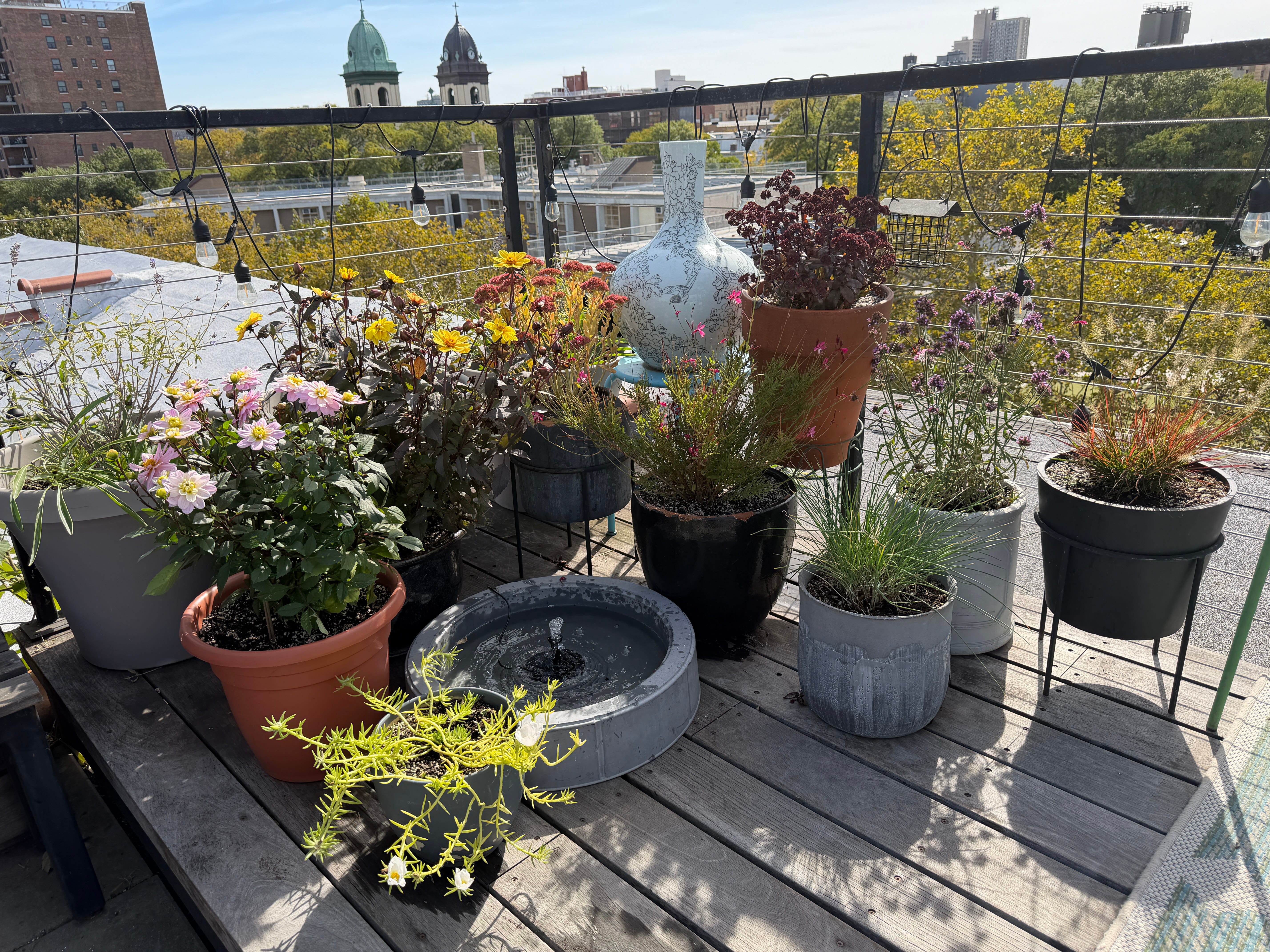
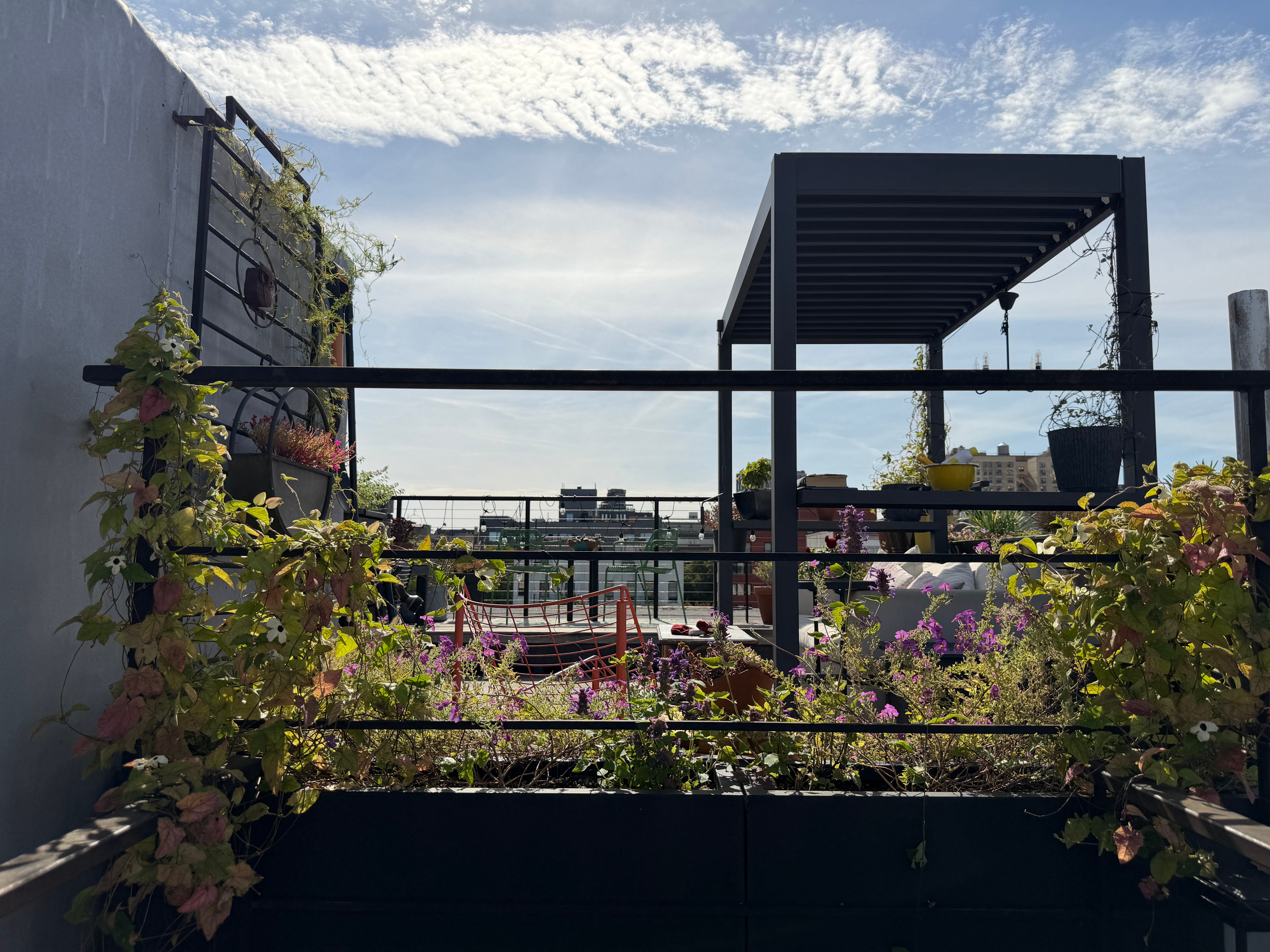
I am on year 3 of this new garden — a rectangular, small urban rooftop — which is defined by straight lines, narrow borders, and all the hardscaping gives it an inescapable formality to the overall effect. By the second year of trying to plant in “drifts,” I realized the space demanded something different from what I was trying to do with it.
It took me a while to see this, partly because I thought I had already learned the rule. And I had! It was a good rule… for a different garden.
So now I plant more things in singles or in pairs, repeating them along a narrow space or using them to flank the edges of a border. I had to stop remembering what a garden was supposed to look like long enough to look at my actual garden.
2. Make a plan. Leave room for life.
Y’all know I love a plan!! I spend weeks and months making schematics for my garden, buying new plants, scheduling it all out, etc. But in the end: the plan is a trellis, not a cage.
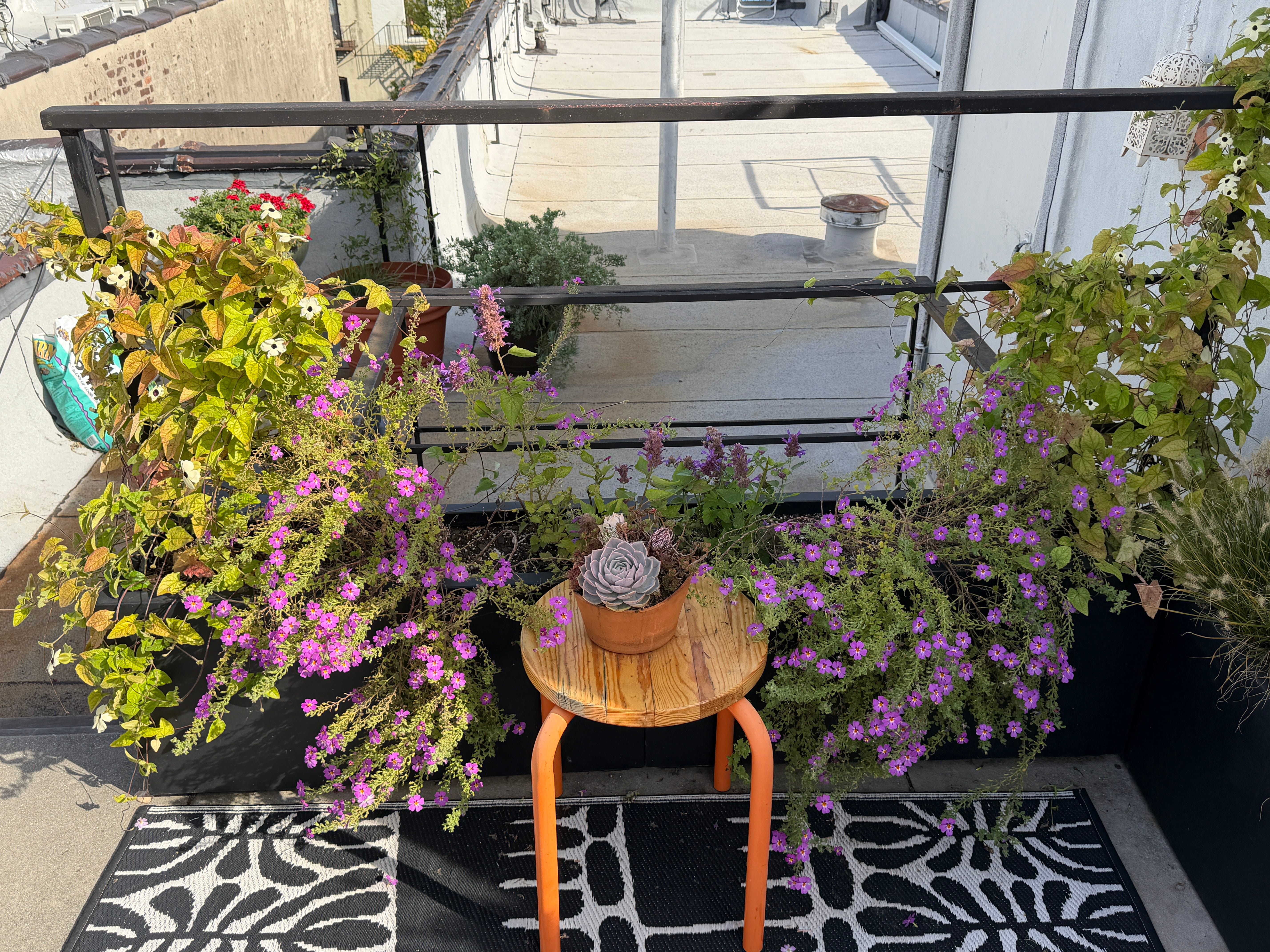
The garden never follows the plan exactly! This year, I planted two salvias in matching, beautiful pots. One flopped, so I cut it back to nothing; the other grew into a beautiful tall dome. And as I type this, I’m looking at two landscape verbenas, planted symmetrically. One is covered in beautiful soft spilling white flowers. The other has… none, and is about half the size!
In the end, there is still plenty of symmetry, but each plant gets to do its own thing inside my rigid little rules. If I wanted perfect symmetry, I’d paint it on the wall with rulers. The garden is alive! I want it to be alive! The garden should always surprise me!
3. Step back while you prune.
Today I was pruning a catmint. I got riiiiiiiiiiight up close to it and became veeeeeeeeery absorbed in cutting out all the nasty yellow and brown leaves. I was having a blast: This bit can go. That bit can go. Look at me, improving this plant. Master gardener over here!
Then I stepped back and realized that I had completely destroyed its beautiful natural shape (not to mention how I rendered it totally out of balance with its mate). I was making one great decision after another… without checking what those decisions were doing to the plant.
So: step back, while you’re working, definitely before you’re done. Step back from the plant and look at the whole garden. Walk around it. Look from different angles. Look for the second-order effects of the changes.
I left the catmint alone for now. Tomorrow I’ll look at it again. Sometimes the best cut is no cut at all! (At least in digital editing, you can hit Undo. No such luck with my poor mangled catmint. Though she’ll grow back stronger, with more flowers, so it’s all good. The garden forgives.)
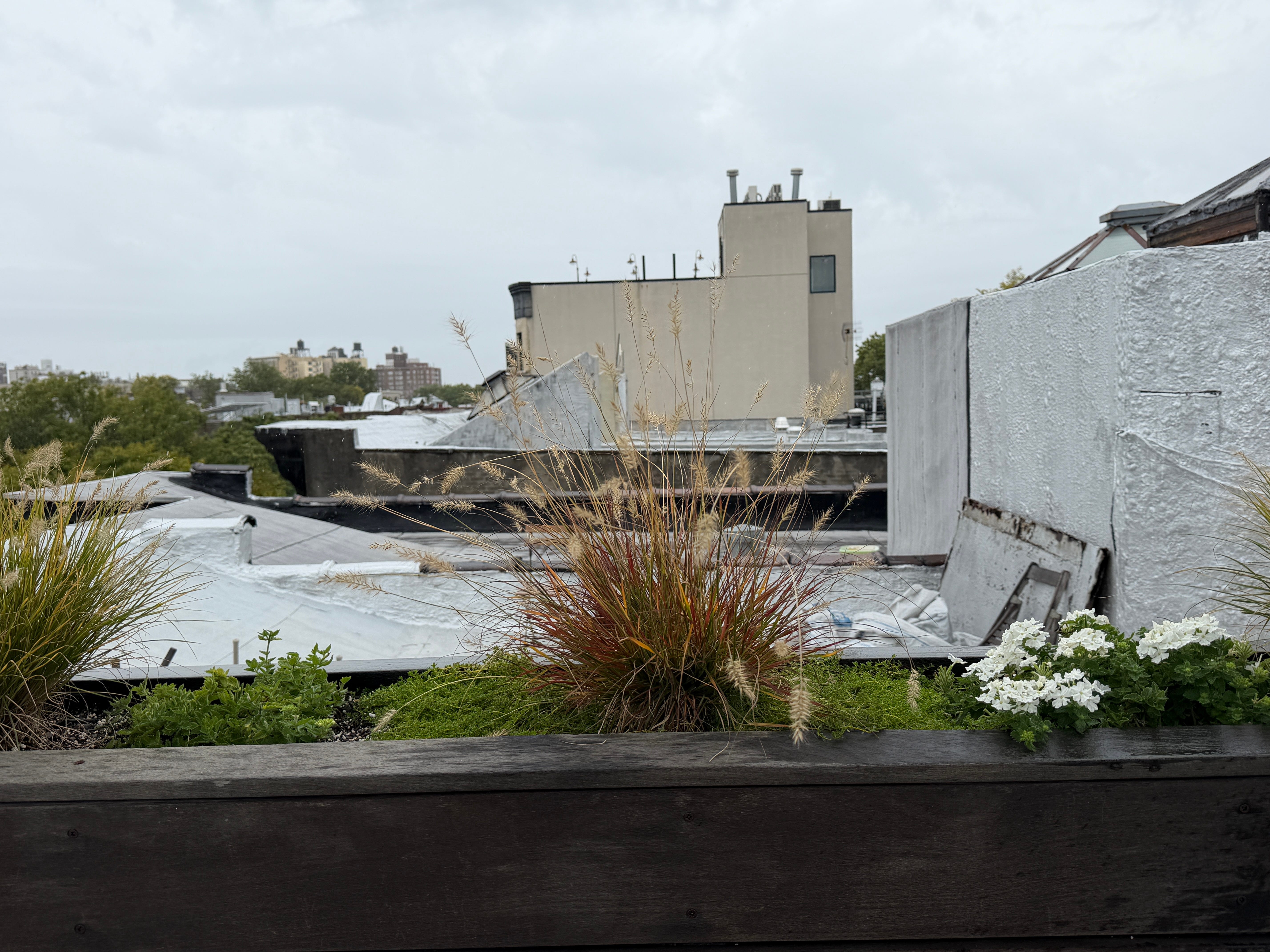
4. Not every plant has the same job.
When I first started gardening, I’d go to the store and get whatever was shouting WOW that day. This led to an ugly, garish garden with no balance.
I keep thinking about an observation about why AI writing feels so exhausting (I read it somewhere, and now cannot find it): its tendency to treat every sentence as though it has the same job. Every sentence is a polished little performance. But how does one sentence lead to the next? Where is the idea building? Where is the rhythm?
My climbing Blaze Rose is the star of her bed from June to November. She’s big, she’s showy, and frankly, she’s expensive (but worth it!). I’m organizing the whole bed around her, hello! The plants around her have to play a supporting role.
Under the rose, I have a common garden thyme. (Actually I have 2x because: symmetry!!) When the thyme blooms in midsummer, it makes this gorgeous carpet of sparkling little white flowers covering a mass of dainty, glossy dark green leaves. Like snowflakes in midsummer. It’s beautiful in its own right.
But the thyme has a much shorter blooming time than the rose. (That’s part of the reason it’s not the star.)
Thyme… over time.
Metaphors be with you.
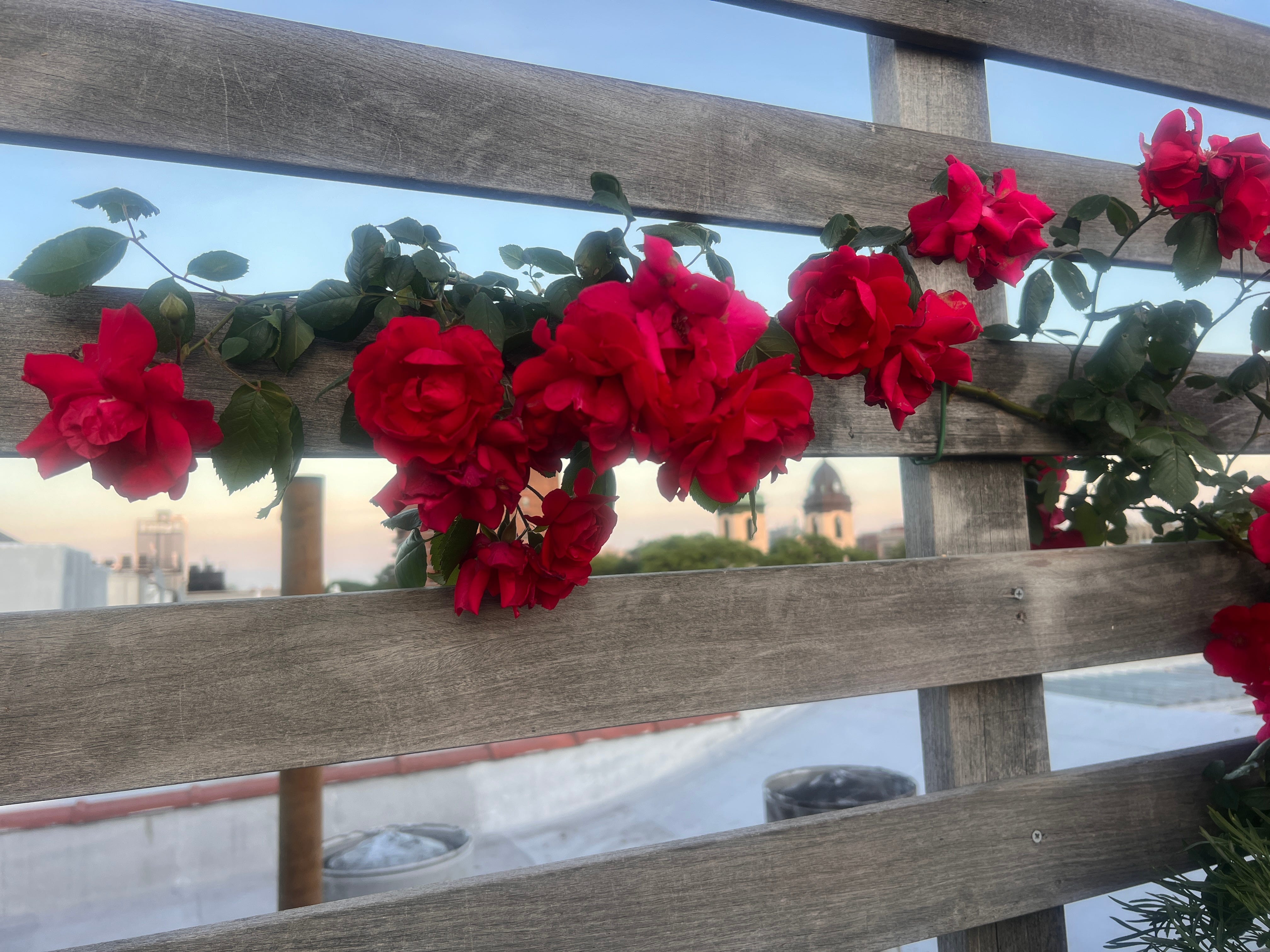
5. Compose in time as well as space.
As we saw with thyme/time, the question of what each plant contributes is also a question of when. What comes first? What overlaps? What follows? I’m arranging an experience that unfolds over time.
In April and May, it’s the tulips that have their star turn in that same bed as the rose. Like the thyme, their bloom is brief, only a few weeks — but unlike the thyme, they’re ridiculously showy. The tulips are insanity when they’re happening.
You can stand in one spot and look at the garden — the embedded photos are all from this weekend, for example, just to give a snapshot — but gardening is about coming back and standing in it over time, as the growing season passes. You don’t take it all in at once.
Three weeks ago, I planted fall ephemerals (crocuses) in any empty spots around the garden — and they’re blooming now! They’ll have their little moment in the last act of the garden this year, maybe only a few glorious days. I never want to miss a day of my garden because there’s always something happening.
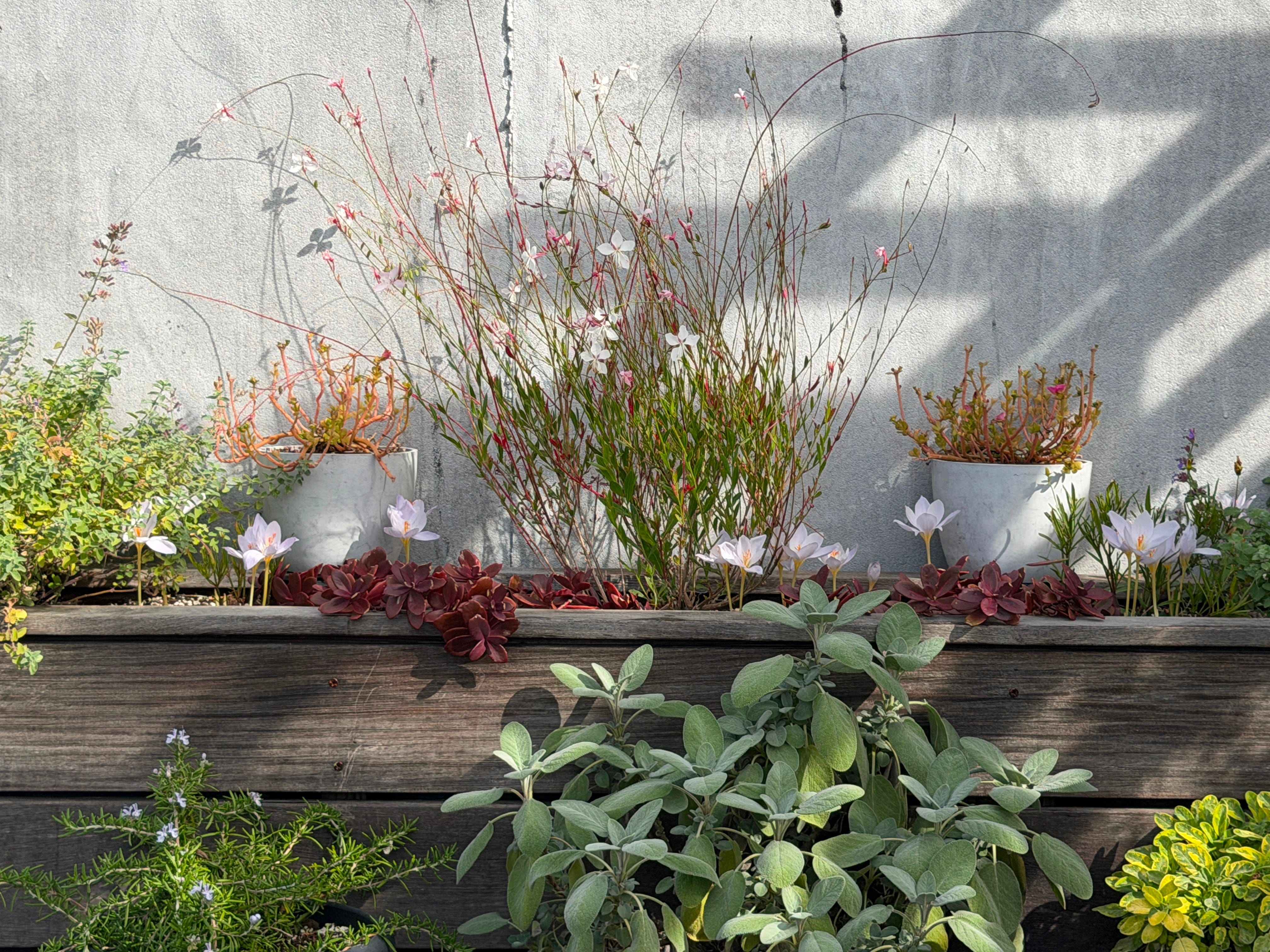
Autumn is an underrated time in the garden. Some things start to fade away, but others reach their full glory, and you begin to dream of next year’s garden. What will you bring back, what will you change, what losses will present themselves and what new things will be possible only then.
Maria died earlier this year.
I’ve been heartbroken, and I’ve been thinking about her all the time. Thinking about how she taught me, in my fragile early 20s, to daydream: to have enough faith in myself to go alone into the studio and play around and see what might come, to take inspiration from the creative freedom of kids, and to see that artistic process itself has intrinsic value.
The last time I wrote Maria, I sent her a picture of the moonflowers I’d planted because they reminded me of the ones she planted in her own garden 25 years ago. I couldn’t believe, back then, that just tossing those humble, tiny seeds in the garden could lead to such magnificence. Moonflowers?! Have you see/smelled/touched a moonflower!?!
Later, in Branda’s garden, I learned a lot more about gardening mechanics: about pruning, harvesting, weeding, watering. At the same time, I was learning the nuts and bolts of editing in her attic, and learning how to work with a team and execute at a higher level. I learned that spending many hours locked into an interesting editing problem, then going into the garden to harvest cucumbers and tomatoes for lunch, was my idea of heaven.
I saw Branda a few months ago, at the world premiere of Wild Inside in Central Park, one of the biggest nights of my artistic career. It was a blessing to see her there that night and reflect on all that she taught me, and the gift of gardening bestowed on me by both of these women.