• News
  • Videos
  • Adobe Premiere Tips
  • About
  • FocusPulling.com
Menu
  • News
  • Videos
  • Adobe Premiere Tips
  • About
  • FocusPulling.com

Author Description

Paul Moon
Connect on Facebook Connect on Twitter Connect on Linkedin

H. Paul Moon is a filmmaker based in New York City and Washington, D.C. whose works concentrate on the performing arts. Major films include “Sitka: A Piano Documentary” about the craftsmanship of Steinway pianos, “Quartet for the End of Time” about Olivier Messiaen’s transcendent WWII composition, and an acclaimed feature film about the life and music of American composer Samuel Barber that premiered on PBS. Moon has created music videos for numerous composers including Moondog, Susan Botti and Angélica Negrón, and three opera films set in a community garden. His film “The Passion of Scrooge” was awarded “Critic's Choice” by Opera News as a “thoroughly enjoyable film version, insightfully conceived and directed” with “first-rate and remarkably illustrative storytelling.” Further highlights include works featured in exhibitions at the Nevada Museum of Art and the City Museum of New York, PBS television broadcasts, and best of show awards in over a dozen international film festivals.

29 April 2026

Debra Granik On ‘Conbody Vs. Everybody’

Written by Paul Moon

Debra Granik is best known for directing Jennifer Lawrence to her first Oscar nomination in Winter’s Bone, a drama that also earned the filmmaker recognition as a screenwriter. In addition to writing and directing two other acclaimed fiction features, Down to the Bone and Leave No Trace, she helmed one of the best documentaries of 2015, Stray Dog. Now she’s back to nonfiction with Conbody vs. Everybody, a five-part film she worked on for about a decade. The documentary follows a formerly incarcerated man who starts a fitness gym based on the exercise regimen he developed behind bars. This business also only employs other former inmates.

Almost 12 years since Granik gave then-fledgling Nonfics a shoutout in the New York Times, I finally made her acquaintance. We got on a Zoom call to talk about Conbody vs. Everybody ahead of its streaming debut on The Criterion Channel on May 1, 2026. We discussed the fiction script that led to the documentary, her initial expectations for the project, and why she finally had to stop filming her subjects. She also broadened my perspective on what the true crime genre should focus on, while confirming what we all know are the mainstream media’s definitions and interests. Below is a transcript of our entire 30-minute conversation, edited for clarity.

Warning: Spoilers for the finale of Conbody vs. Everybody are discussed.

When Nonfics last interviewed you in 2015, you mentioned that you were working on a documentary about reentry after incarceration. But I understand the initial idea was different from what the project became. How and when did you meet Coss Marte and then decide to make the film about him and his entrepreneurial efforts?

We were thinking about a project that was actually a fiction, about the revolving door of the carceral system of the U.S. In 2014, this concept was getting a lot of attention. It was blown up as a public phrase that we all were interrogating: mass incarceration. So it was not compelling to receive a fiction script idea about this. The research led really quickly. For me, the suspense and intensity were all with firsthand experience. It wasn’t really, for this film, going to be with fiction, the way I was seeing it and touching base with it at that time. It was going to be a person actually coming home, performing this intense process that we call reentry, which is reintegration into civilian society from your pariah status as a person behind bars.

“Here is an American set of themes that you can’t walk away from.
What are you going to do? Film for a lot of years, I guess.”

When you find someone interested in trying to explore that — not explore; he’s going to live it. But he wants to implicate other people. He’s so savvy. He’s like, “This has to implicate people who are not just as involved too. We won’t make so much headway if people who haven’t been in the criminal justice system don’t care at all. They have to know what’s happening. They have to want to understand this other part of American life.” This is kind of how he pitched it back to me. There was a really positive, I don’t want to say serendipity, but a strong… You know, two trains are going to find each other on parallel tracks and say, “Let’s travel together.” That I feel was Coss and me and my team.

And then he built a team pretty quickly. He wasn’t doing this alone. He started building out a narrative, if you will. This is where nonfiction gets so scintillating and conflating. He’s creating this scrappy urban novel in front of my eyes. He’s saying, “I’m not going to go through reentry by myself. I’m going to build a family around me. This is how we survived on the streets. This is how we’re going to do this part of our life.” He proceeds to do that. The odds are against him. It’s New York at its cinematic height. It’s having contact with life on the streets. It’s architecture, its infrastructure, its vicissitudes. It’s all that made Coss and his brother and his peers, and it’s a pretty large set of vital, high-stakes life issues. Can I make it? I don’t have money in my pocket. Am I going to jump this turnstile? Am I going to risk getting re-ensnared in the criminal justice system?

Nonfics is a reader-supported publication. To receive new posts and support my work, consider becoming a free or paid subscriber.

You can see that, in front of me, maybe at times in a very hectic way, it was like the cards were being dealt to me really quickly. Here’s a set of compelling individuals, New Yorkers who are going to do their damnedest to survive. Here’s a neighborhood that’s rich as heck to photograph. And here is an American set of themes that you can’t walk away from. What are you going to do? Film for a lot of years, I guess.

“I think documentary filmmakers are built with a very intense tic in their brain,
and the tic is often a set of questions.”

From what I read of the fiction project, the film’s ending would have been tragic, with the main character back in prison. I’m glad that with the documentary, we instead get a positive story of people succeeding after reentry, defying not just the odds but the stereotypes. Was this something you were consciously rooting for?

It’s not conscious, but it does it to me. Without sounding like this is hooey, people who defy stereotypes basically — this is graphic — they smash all my ribs and enter my internal cavity where my heart is. It hurts because you’ve lived with expectations for a long time of who someone might be. We, as a society, Americans, prefer “or.” This is just a hallmark of our culture. We prefer clarity or black-and-whiteness. Or, if you want to call it “or” or binariness instead of “and.” The exact definition of defying the stereotype is “and.” Someone is very intrepid, and they care a whole heck of a lot about this aspect of their neighborhood, this aspect of their family, this aspect of sharing profound emotions with other men, whether they’re inside the prison system or outside. And they whack you upside the head.

They are problematic because they are usually complex to portray. It’s easier to portray black and white, “or.” Stray Dog did the same thing to me. That sounds passive. I had a very parallel and intense response to encountering someone like Ron Hall, “Stray Dog.” There was north/south. There was red/blue. There were a lot of encampments that he and I stood in that were not opposing but quite separate. For two people to walk from their camp and find all the ways that theirs aren’t separate is messy, but it’s worth it.

This happens in class. I am a person who comes from a middle-class background. The number of times you step out of your social class is limited. Your class background, your class socialization, what people normally do within the confines of your class, the education you’ve received, the types of work you try to do in your life, when you meet people who have come up differently or been dealt a very different hand, there are a lot of reasons to have a very intense conversation over many years.

“It feels like a really weird voyeuristic approach to living your life. Like my life doesn’t seem parsable enough, so I have to go running to someone else’s life.”

I think documentary filmmakers are built with a very intense tic in their brain, and the tic is often a set of questions. How have you navigated? What’s it been like? What do you need the most in this life? How are you going to get it? I’ve said this a lot of times because it feels very true: on a bad day, it feels like a really weird voyeuristic approach to living your life. Like my life doesn’t seem parsable enough, so I have to go running to someone else’s life. The voyeurism feels like, god, why do I have so many questions about everyone else’s life? But I do.

On a good day, it feels like, oh my god, we’re born into a very limited path, and it’s very enriching, and it’s a draw that doesn’t go away, to say, oh, you are empirically my neighbor. I live 11 blocks from you. The only way I’m ever going to get to know you is if we have this conversation. Otherwise, we will remain in separate spheres. Even though it is less than one mile as the crow flies from where you dwell and where I dwell.

That reminds me of the scene late in the film when Coss’s brother talks about bringing the neighborhoods together as one community.

Christopher is pretty magnificent at trying to bring that idea up to a whole variety of people across a lot of lines. Not just linguistic and ethnic, but a lot of lines. I appreciate that you saw that in the film.


Read more

Uncategorized Comments are off
29 April 2026

Debra Granik On ‘Conbody Vs. Everybody’

Written by Paul Moon

Debra Granik is best known for directing Jennifer Lawrence to her first Oscar nomination in Winter’s Bone, a drama that also earned the filmmaker recognition as a screenwriter. In addition to writing and directing two other acclaimed fiction features, Down to the Bone and Leave No Trace, she helmed one of the best documentaries of 2015, Stray Dog. Now she’s back to nonfiction with Conbody vs. Everybody, a five-part film she worked on for about a decade. The documentary follows a formerly incarcerated man who starts a fitness gym based on the exercise regimen he developed behind bars. This business also only employs other former inmates.

Almost 12 years since Granik gave then-fledgling Nonfics a shoutout in the New York Times, I finally made her acquaintance. We got on a Zoom call to talk about Conbody vs. Everybody ahead of its streaming debut on The Criterion Channel on May 1, 2026. We discussed the fiction script that led to the documentary, her initial expectations for the project, and why she finally had to stop filming her subjects. She also broadened my perspective on what the true crime genre should focus on, while confirming what we all know are the mainstream media’s definitions and interests. Below is a transcript of our entire 30-minute conversation, edited for clarity.

Warning: Spoilers for the finale of Conbody vs. Everybody are discussed.

When Nonfics last interviewed you in 2015, you mentioned that you were working on a documentary about reentry after incarceration. But I understand the initial idea was different from what the project became. How and when did you meet Coss Marte and then decide to make the film about him and his entrepreneurial efforts?

We were thinking about a project that was actually a fiction, about the revolving door of the carceral system of the U.S. In 2014, this concept was getting a lot of attention. It was blown up as a public phrase that we all were interrogating: mass incarceration. So it was not compelling to receive a fiction script idea about this. The research led really quickly. For me, the suspense and intensity were all with firsthand experience. It wasn’t really, for this film, going to be with fiction, the way I was seeing it and touching base with it at that time. It was going to be a person actually coming home, performing this intense process that we call reentry, which is reintegration into civilian society from your pariah status as a person behind bars.

“Here is an American set of themes that you can’t walk away from.
What are you going to do? Film for a lot of years, I guess.”

When you find someone interested in trying to explore that — not explore; he’s going to live it. But he wants to implicate other people. He’s so savvy. He’s like, “This has to implicate people who are not just as involved too. We won’t make so much headway if people who haven’t been in the criminal justice system don’t care at all. They have to know what’s happening. They have to want to understand this other part of American life.” This is kind of how he pitched it back to me. There was a really positive, I don’t want to say serendipity, but a strong… You know, two trains are going to find each other on parallel tracks and say, “Let’s travel together.” That I feel was Coss and me and my team.

And then he built a team pretty quickly. He wasn’t doing this alone. He started building out a narrative, if you will. This is where nonfiction gets so scintillating and conflating. He’s creating this scrappy urban novel in front of my eyes. He’s saying, “I’m not going to go through reentry by myself. I’m going to build a family around me. This is how we survived on the streets. This is how we’re going to do this part of our life.” He proceeds to do that. The odds are against him. It’s New York at its cinematic height. It’s having contact with life on the streets. It’s architecture, its infrastructure, its vicissitudes. It’s all that made Coss and his brother and his peers, and it’s a pretty large set of vital, high-stakes life issues. Can I make it? I don’t have money in my pocket. Am I going to jump this turnstile? Am I going to risk getting re-ensnared in the criminal justice system?

Nonfics is a reader-supported publication. To receive new posts and support my work, consider becoming a free or paid subscriber.

You can see that, in front of me, maybe at times in a very hectic way, it was like the cards were being dealt to me really quickly. Here’s a set of compelling individuals, New Yorkers who are going to do their damnedest to survive. Here’s a neighborhood that’s rich as heck to photograph. And here is an American set of themes that you can’t walk away from. What are you going to do? Film for a lot of years, I guess.

“I think documentary filmmakers are built with a very intense tic in their brain,
and the tic is often a set of questions.”

From what I read of the fiction project, the film’s ending would have been tragic, with the main character back in prison. I’m glad that with the documentary, we instead get a positive story of people succeeding after reentry, defying not just the odds but the stereotypes. Was this something you were consciously rooting for?

It’s not conscious, but it does it to me. Without sounding like this is hooey, people who defy stereotypes basically — this is graphic — they smash all my ribs and enter my internal cavity where my heart is. It hurts because you’ve lived with expectations for a long time of who someone might be. We, as a society, Americans, prefer “or.” This is just a hallmark of our culture. We prefer clarity or black-and-whiteness. Or, if you want to call it “or” or binariness instead of “and.” The exact definition of defying the stereotype is “and.” Someone is very intrepid, and they care a whole heck of a lot about this aspect of their neighborhood, this aspect of their family, this aspect of sharing profound emotions with other men, whether they’re inside the prison system or outside. And they whack you upside the head.

They are problematic because they are usually complex to portray. It’s easier to portray black and white, “or.” Stray Dog did the same thing to me. That sounds passive. I had a very parallel and intense response to encountering someone like Ron Hall, “Stray Dog.” There was north/south. There was red/blue. There were a lot of encampments that he and I stood in that were not opposing but quite separate. For two people to walk from their camp and find all the ways that theirs aren’t separate is messy, but it’s worth it.

This happens in class. I am a person who comes from a middle-class background. The number of times you step out of your social class is limited. Your class background, your class socialization, what people normally do within the confines of your class, the education you’ve received, the types of work you try to do in your life, when you meet people who have come up differently or been dealt a very different hand, there are a lot of reasons to have a very intense conversation over many years.

“It feels like a really weird voyeuristic approach to living your life. Like my life doesn’t seem parsable enough, so I have to go running to someone else’s life.”

I think documentary filmmakers are built with a very intense tic in their brain, and the tic is often a set of questions. How have you navigated? What’s it been like? What do you need the most in this life? How are you going to get it? I’ve said this a lot of times because it feels very true: on a bad day, it feels like a really weird voyeuristic approach to living your life. Like my life doesn’t seem parsable enough, so I have to go running to someone else’s life. The voyeurism feels like, god, why do I have so many questions about everyone else’s life? But I do.

On a good day, it feels like, oh my god, we’re born into a very limited path, and it’s very enriching, and it’s a draw that doesn’t go away, to say, oh, you are empirically my neighbor. I live 11 blocks from you. The only way I’m ever going to get to know you is if we have this conversation. Otherwise, we will remain in separate spheres. Even though it is less than one mile as the crow flies from where you dwell and where I dwell.

That reminds me of the scene late in the film when Coss’s brother talks about bringing the neighborhoods together as one community.

Christopher is pretty magnificent at trying to bring that idea up to a whole variety of people across a lot of lines. Not just linguistic and ethnic, but a lot of lines. I appreciate that you saw that in the film.

Read more

Uncategorized Comments are off
29 April 2026

Views: How the CN Tower Documentary Captures Toronto’s Iconic Landmark

Written by Paul Moon

On Toronto’s lakeshore stands a talisman of sorts, a pointed symbol for the city’s last half century of explosive growth and transformation. Soaring over 550 metres into the sky, the elegant rise is dotted with two bulbous areas for visitors, creating a unique silhouette that is indelible as any other aspect of this sprawling home to millions.

Mark Myers’ The Tower that Built the City uses the iconic CN Tower as a touchstone to explore these massive cultural, social, and political shifts that have transpired over the last half century. Through a series of archival materials, new interviews with some of the hands that helped build the structure, and other interviews with figures from entertainment and sport  who have helped make the city what it has grown into, the film provides an unabashedly celebratory look at the various facets of what it means to live and work in Toronto.

While it’s no longer the tallest freestanding structure in the world, surpassed by multi-billion dollar projects on the other side of the globe, there’s still much to admire not only about what the CN Tower represents, but how it has serves technologically as a literal beacon for cultural transmission, but also an element that is indelibly associated with this city’s skyline.

POV spoke to Myers prior to the film’s world premiere at this year’s Hot Docs film festival.


POV: Jason Gorber

MM: Mark Myers

This interview has been edited for brevity and clarity.


POV: What was your introduction to the CN Tower?

MM: It probably was driving down Toronto’s Don Valley Parkway as a young child. I was born in Scarborough and probably my first experience was seeing it peek out driving south down the DVP.


POV: Do you remember having a particular affinity for it during your childhood?

MM: I remember going downtown with my mom as she took me to the Eaton Centre to do shopping, going to baseball games with my oldest brother, going down into the city, those are probably the core memories. The Tower to me represented going downtown, entering the big city. You were doing something special when you were headed down the DVP. But to note, I did want to make the movie as if I wasn’t such an insider or local. I wanted to look at it from an outsider or tourist’s point of view to some extent, rather than as a flag-waving, internal story.

-Old film footage of Toronto from a helicopter, before the Tower was completed.
– Old film footage of Toronto from a helicopter, before the Tower was completed. | Hot Docs

POV: What led you specifically to focus on the Tower and at what stage of the project did you know the Tower would become a symbol for the city itself?

MM: I was watching a master class by Ken Burns. He talked about his first feature film, a documentary called The Brooklyn Bridge, and that ended up being nominated for an Oscar. He was just talking about how he brought that story to life through what we now know as the “Ken Burns Effect,” using photographs and all of that stuff. Hearing that, a lightbulb went off.

I thought of our inferiority, as Canadians, as Torontonians, and how we tend to avoid celebrating our accomplishments. We tend to suffocate them a little bit. I realized that if the Brooklyn Bridge is a worthy story, surely the CN Tower is! It could be the lead character of my film.

I quickly realized I didn’t just want to make a ‘making of’ documentary about the tower’s construction, knowing that those films existed 50 years ago when they built the thing.


POV: You present not simply the tower that they intended to build, but also show how perception of it has changed as the city that surrounds it has undergone tremendous change.

MM: I feel like the Tower mirrors my own growth as a human. As a kid, I looked up to it. I couldn’t think otherwise. It represented downtown, it represented the city. It was bold, it was ambitious, it was a big thing. As I grew older, maybe as I became more aware of myself, more unsure of myself, more aware of CanCon, more aware of Canadian content vs. American content, the Tower in my mind started to represent that very thing: Canadian content, and Canadian content meant “less than,” something not as good, or cheaper. If I saw the Tower in a show or something, you immediately knew, “Oh, this is Canadian,” and you knew that it didn’t quite match up to our American content that we were getting.

I feel like the tower has had a resurgence of sorts. It has gone on its own hero’s journey, or even an underdog story, if you will. We all look at the tower kind of as a beacon, as a symbol. It represents home, it represents downtown. But its actually serves a purpose, which is telecommunications. So then I thought, “Oh, well, this is interesting. This symbol that represents us also amplifies who we are outward.” There’s a collision of form and function, the symbol and the functionality of culture.

That’s where this notion of it being a literal cultural amplifier started to come into the story. I really did want to make a kind of cultural doc in the way that the O.J.: Made in America succeeded. I thought that film did a good job at looking at history through a cultural lens.

-A hand pointing at an original drawing of the CN Tower, before the SkyPod was added
A hand pointing at an original drawing of the CN Tower, before the SkyPod was added. | Hot Docs

POV: Could talk about your process of finding who you wanted to talk to and how excited many of them were eager to talk about this city that we’re often reluctant to champion?

MM: I was very lucky to get the people I did interview. I had a laundry list of many more. I’m sure you’d know sometimes how difficult it is to get the people you want.


POV: Really? Was Drake too busy?

MM: He was number one on my list when I started this. I thought, Drake’s going to be an executive producer, this is going to go to a film festival and win an audience award. That was my checklist of things to do! I tried five, six different angles to get to Drake. In fact, the doc was at one point called Views: The Rise, Fall and Rise of the CN Tower [akin to Drake’s 2016 album title]. Alas, I didn’t get Drake.

Many of the people I reached out to were actually involved with constructing the tower. Many suggested that I shouldn’t even bother making a doc about the CN Tower, I’m too late, the important people have passed away or are too old, that ship has sailed. I figured if people can make a doc on the pyramids, or on the Brooklyn Bridge, then clearly one can make a doc on the CN Tower. It’s only 50 years old!

My first interview was with the project architect. I was in New York for another project, so I took a train over to his house and got what was known to be one of the more important architects. There was a lot of controversy surrounding the tower. Everyone seems to want too much credit, and then they get slapped on the wrist for it. Anyway, I got the project architect, I went to Montreal and got the structural engineer, so I was off to the races, making sure I was getting the people who were actually involved from the beginning.

There’s a guy named John Andrews, who is known to be the main architect of the CN Tower. It was his design firm that put it together, along with [the Toronto firm] Webb Zerafa Menkes Housden. Turns out he’s an Australian, he lives in Australia, and he wasn’t well. I was going to get a camera crew over there to film him, but he lives in the middle of nowhere. I was lucky enough to have a phone interview with him, and then, sadly, he did pass away only two months after I interviewed him. I was very happy and pleased to get his voice and his perspective in the film.

Because I wanted this to be a culture doc, I wanted athletes, musicians, artists, directors, photographers, I wanted it from every angle possible, so I was lucky enough to get Doug Gilmore, Joe Carter, Steve Nash. What I like about getting Joe, although people might point and say, “He’s not Canadian, why is he in it?” But that’s another aspect that I wanted to take, which is an outsider’s perspective, slightly. He is Canadian.

The project architect is American, the other architect is Australian.  Steve Nash, I did like the outside perspective of being a West Coaster looking in at what Toronto, the CN Tower, meant.

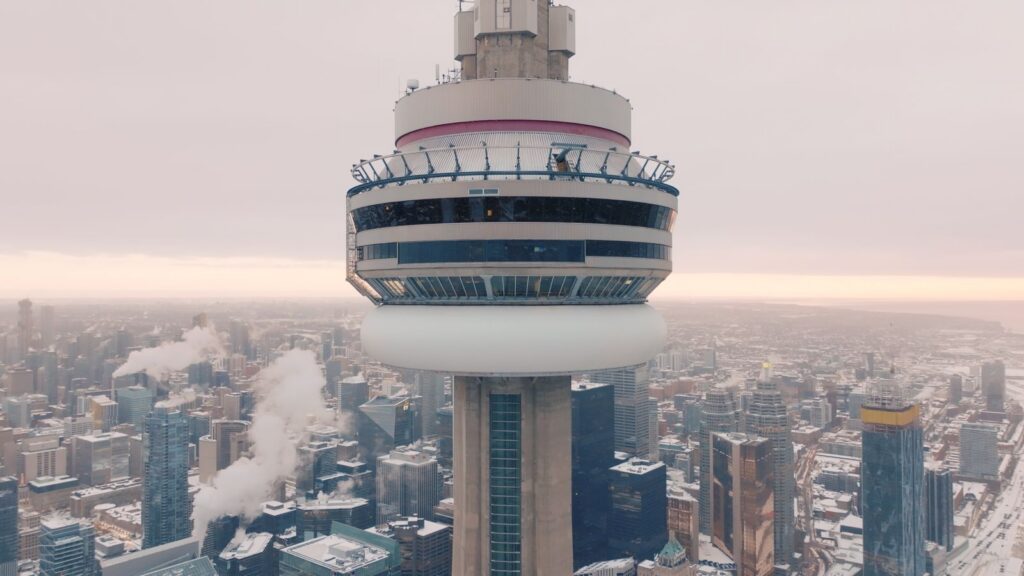
A close-up view of the top of the CN Tower. It is a cloudy day towards sunset.
The Tower that Built a City | Hot Docs

POV: You have Caitlin Cronenberg as an interviewee and Executive Producer. Could you talk about her involvement because she’s somebody that has internationalized the vision of that image?

MM: She wasn’t initially on my list of people to interview, as I actually didn’t know who was the photographer of Drake’s Views album cover. To me, that image of Drake sitting on the tower like he’s on a couch, that’s the climax of my third act. Beyond that, Caitlin was great in reviewing the film, providing some notes, and just being a general supporter of the film and the project.


POV: And at what point in time did you watch Nirvanna: The Band The Show The Movie and think , “I’m going to add some clips in from this?”

MM: Well, I’m a sneaky guy, so I brought my camera to the premiere. That was the footage of them at the Royal Alex. The very last clip I added was actually during my audio mix, I went back and added one more Nirvanna to show the movie clip in to the film at the 11th hour.


POV: Could talk about the balance of putting it all together, of making sure it wasn’t simply self-congratulatory? There’s a difference between the kind of stuff you would play for your friends and stuff that you want to speak to people who frankly don’t give a damn about the city but will still get something rich out of the film.

MM: As I mentioned earlier, I didn’t want this to be just an insider’s guide to Toronto and something only Torontonians would want to watch and support. As people often say, in its specificity are universal themes. I just thought that the story of an underdog city, especially once I did more research and realized its relationship to Montreal and how Montreal was the metropolis.


POV: One way you do that is to show how vital immigration is to the city that Toronto has become.

MM: This is arguably the most multi-cultural city in the world. There’s a 50-year-old document early in my film where it says, roughly, that the tower was constructed by people from around the world that came to even help build the city itself.


POV: The film is getting its release at Hot Docs, what does that mean to you as a Toronto boy, being showcased in Toronto?

MM: It’s very meaningful! When I got the phone call that they doc was selected and it’s in Special Presentations category, I nearly shed a tear. It’s been a long journey to try to finalize, to make sure I was making a doc worthy of the city, the Tower, and myself. The timing just worked, everything feels like it was culminating just right. The CN Tower’s 50th anniversary is at the end of June, so when I started this project years and years ago, it was all leading to this moment. If I didn’t get into Hot Docs, it was going to be a bummer!


POV: You’re a Myers from Scarborough, but another Myers found success by leaving Canada. He’s still maintained a deep Canadianness, but he left Canada for his career. Why do you as an artist continue to work in this country?

MM: My entire family moved to the States. I’m the youngest of six kids, and everyone went south and is still there. Why do I still live and work here? I have an affinity to Toronto. I went to school at University of Toronto, partly because I grew up just on the outside of the core of the city and never really got to know it. I purposely went downtown just so I could more intimately know the city that I grew up around, and I’ve been here ever since. Would I be open to finding success elsewhere? I am. But am I happy and thrilled to be able to make content in the city that I love? I am.

The Tower that Built a City premieres at Hot Docs on May 1.

Get all of POV’s coverage from the festival here.

The post Views: How the CN Tower Documentary Captures Toronto’s Iconic Landmark appeared first on POV Magazine.

Uncategorized Comments are off
28 April 2026

The Ballad of Judas Priest Review: An Old School Music Doc Done Right

Written by Paul Moon

The Ballad of Judas Priest

(Canada, 98 min.)

Dir. Tom Morello, Sam Dunn

Prod. Scot McFadyen, Sam Dunn

Programme: Special Presentations (Canadian premiere)


There’s much worthy of being applauded when witnessing self-awareness and reflection, even when engaged in minor bouts of mythologizing. Despite the obviously celebratory air throughout The Ballad of Judas Priest, a band and record label- authorized account of this iconic metal group, complete with the usual slew of talking-head interviews, vintage concert footage, melancholic wanderings through childhood haunts, and the other clichés, it doesn’t feel like it’s crafted on autopilot. It’s a reminder that, when done smartly, straight-up festive music doc can do a subject well.

So consider it a minor miracle that a film about the boisterous boys in this particular band is far more cerebral and effective than much of its ilk. It delves into topics not simply salacious or congratulatory but also offers genuine reflection upon deeper themes of artistic expression, navigating the travails of keeping personal secrets for the benefits of the group, and other elements that go beyond merely serving fans a pre-chewed meal of the usual fodder.

First of all, the boys from Birmingham prove to be a delight to hang out with. Founded by bassist Ian Hill, K.K. Downing, Glenn Tipson, and the lead singer/caterwauler Rob Halford, they joined fellow Black Country Midlands bands like Black Sabbath in crafting the Blues-inflected crunchy music that would soon be dubbed Heavy Metal. The film does a decent job in amplifying co-director Tom Morello’s Harvard-tuned thesis, that while Ozzy and the paranoid-era bandmates in Sabbath may have launched the genre, Judas Priest solidified the headbanging culture of heavy metal, creating a space for the offbeat to find their community.

It helps considerably that even the fans of the band on display are themselves highly entertaining and aware of how this serious talk can veer close to self-parody . While the likes of fellow pioneers Deep Purple (with Ian Gillan an obvious progenitor to Halford’s operatic, soaring vocals), or the minor mentions of legends like Led Zeppelin, it’s in fact the fictional band Spın̈al Tap that is mentioned over and over. Allusions to Rob Reiner’s revelatory mockumentary abound, from discarded Halford costumes that ended up being worn onscreen by Harry Shearer’s diminutive character Derek Smalls, to an obvious but somewhat embarrassed discussion of turning things “up to 11.”

Even certain archival footage screams of Tap’s glorious legacy, where references to Jeff Krulik’s 1986 short film Heavy Metal Parking Lot, a safari-like visit to tailgating teen gatherings for a Priest show, echoes overtly the scenes captured a half-decade earlier for both the preliminary short film and the eventual feature. Yet to Ballad’s credit, the obvious ridiculousness of these kids and their responses is seen through a lens of empathy, especially in the context of the very real circumstances that saw the band put on trial for affecting the very community they helped form.

The 1990 trial involving the band’s connection in a lawsuit is a major element that makes the story of this one band resonate far beyond its narrow scope. Sued for a supposed hidden message in one of their 1978 recordings (“Do it!” was among other suggested subliminal insertions), the plaintiff’s lawyers argued for a direct connection between the recordings of the band and the result of two drunken and drug-fuelled teens who both decided to take a shotgun to the face, one ending up badly maimed and the other ending his life.

Granted that decades have passed since that trial, it’s clear that there’s nothing sardonic or defensive in how they speak of this tragedy, navigating deftly but with genuine empathy when reflecting upon how awful the circumstances were, regardless of their eventual legal victory.

Similar nuance and understanding is presented when discussing one major aspect of Halford’s experience, notably the decades he spent as a closeted gay man. Despite leaning into many of the fashion excesses of the studded, leatherboy subculture, Halford kept things quiet for fear of interfering with the band’s success. His bandmates reflect on their own support for their friend, while admitting that certainly during the time of their initial success that to come out of the closet would have been a far more challenging thing given the suburban, masculinized bent of their fandom.

The “nothingburger” that resulted from his eventual admission during an MTV interview (dressed, as Halford admits, in full Anton Szander Lavey regalia) is itself a fascinating story beyond the band’s musical output.  It certainly makes their story more engaging than what otherwise would be one of the usual, run-of-the-mill, lead-singer-leaves-and-comes-back narratives. Once again, beyond anything to do with whether you’re a fan of the band or not, there’s plenty of compelling stuff here that goes far beyond the machinations of one heavy metal group.

For fans, there’s still plenty to glean here, and the audio was suitably cranked for the film’s Canadian premiere. Sam Dunn and his producing partner Scot McFadyen have spent decades exploring this subculture with a mix of anthropological glee and keen insider insight, dating back to 2005’s Metal: A Headbanger’s Journey right through to documenting local heroes Rush with Beyond the Lighted Stage. The addition of virtuosic guitarist Tom Morello (Rage Against the Machine/Audioslave) as co-director is a welcome one, and his passionate articulation of what this band means to him softens the heart of even the most cynical viewers.

Jack Black brings his gleeful enthusiasm to celebrate the band, as does the likes of Metallica’s Kirk Hammett and Nirvana/Foo Fighters’ ever loquacious Dave Grohl. None is a stranger to this kind of reminiscence, but there’s something deeply personal about how they talk about this particular band, its legacy running deep not just in terms of its musicality, but in the fundamental ways this band seems to have helped form who they are as people.

And it’s this element, woven throughout, that makes this portrait of a band far more profound. Even the archival materials are treated with a level of seriousness and silliness, like the occasional interjection of additional elements akin to Monty Python’s animated asides. This is a band whose story is a worthy one, with members able to articulate their challenges both personal and professional, from rehab to fighting the symptoms of Parkinson’s disease, all with a strong tie to their working class roots and genuine appreciation for the fans that brought them success.

There’s a throwaway line from their “new” guitarist Richie Faulkner, touring with them since 2011, who admits flat-out that he’s not the best shredding guitarist on the planet, but he gets along with people and makes an excellent tea. It’s these small things that keeps a band like this chugging after five decades, and a small bit of humanity that goes well beyond the hubris normally on display. Halford is even casually deprecating about his sexuality, coyly referring to himself as a “vanilla gay,” a far cry from the intense figure he cuts on stage.

And that in the end is what sets The Ballad of Judas Priest apart from other music docs Despite all the pomp and silliness, there’s a deep humanity expressed in this telling. It’s not a film simply meant to sell a bunch of records from yet another band looking to kick out the jams for future generations. It’s something far more special than that. And in turn, the film in its oblique way, makes a strong argument that this band of rockers was equally something special, indeed.


The Ballad of Judas Priest screened at Hot Docs 2026.

Get all of POV’s coverage here.

The post The Ballad of Judas Priest Review: An Old School Music Doc Done Right appeared first on POV Magazine.

Uncategorized Comments are off
28 April 2026

Ross McElwee’s Classic Doc ‘Sherman’s March’ Is Headed Back to Theaters in a New Restoration Alongside His New ‘Remake’

Written by Paul Moon

SHERMANS-MARCH_Still-1_300dpi.jpg?w=650

Exclusive: Music Box Films has acquired the documentarian’s most popular film, as well as his latest, for release later this year.

Uncategorized Comments are off
26 April 2026

Bogdanovich’s ‘The Great Buster’ is a Blast of Pure Cinema

Written by Paul Moon

By Gregory Crofton “The best special effect is Buster,” says critic Leonard Maltin in “The Great Buster: A Celebration,” a 2018 documentary directed by Peter Bogdanovich (The Last Picture Show, Paper Moon). “He gave 100% to everything he did on camera.” Stumbled on this film thanks to the Criterion Channel. I had seen Boganovich act…

The post Bogdanovich’s ‘The Great Buster’ is a Blast of Pure Cinema appeared first on Channel Nonfiction.

Uncategorized Comments are off
26 April 2026

Bogdanovich’s ‘The Great Buster’ is a Blast of Pure Cinema

Written by Paul Moon

By Gregory Crofton “The best special effect is Buster,” says critic Leonard Maltin in “The Great Buster: A Celebration,” a 2018 documentary directed by Peter Bogdanovich (The Last Picture Show, Paper Moon). “He gave 100% to everything he did on camera.” Stumbled on this film thanks to the Criterion Channel. I had seen Boganovich act…

The post Bogdanovich’s ‘The Great Buster’ is a Blast of Pure Cinema appeared first on Channel Nonfiction.

Uncategorized Comments are off
26 April 2026

Is This The End of Reality TV?

Written by Paul Moon

“[Y]ou should be using your journalistic perch to advocate a heroic, even monastic disengagement from this whole horrifying anticulture! Turn away, bro! Beauty is not there! You need to quit saying ‘It’s like we’re all living in a reality show’ and just fucking accept that you’re watching too much reality TV! Why can’t you do that? Why can’t you fight it?”

— in 2011 / me, today

I came late to reality TV, but when it happened, it felt like an addiction.

I use that word “addiction” advisedly, because it feels at least structurally similar to how I never once put a cigarette in my mouth until senior year of college — way later than anyone else! — and bought a pack of cigarettes the next day. This kicked off a 15 year smoking habit. It was as if despite a lifelong disgust and hatred for cigarettes, that addiction had been waiting inside me, coiled up like a snake ready to pounce.

Such was my fate when I started watching The Bachelor in 2016.

Ben Higgins' Season 20 of The Bachelor: Where Are They Now? | Us Weekly

Members of Bachelor Nation ask one another, “What was your first season?” the way birders ask one another about their spark bird. For me: Ben Higgins, Season 20 of The Bachelor. I resisted… I ignored… and I really had no interest for 19 whole seasons of this show!

I started watching The Bachelor and found I could not stop. By 2016, the franchise had already been around for 12 years; there was a large back catalog on Hulu available to binge. And so, I started binging.

Ah, the binge!

I have a hard time remembering that before the 2010s, if I had TV (I didn’t always), it was linear. Many people in that era watched lots of TV, but we didn’t call that binging. We just called it watching TV. A binge is an on-demand, sustained deep dive into one show or franchise.

A binge is also more addiction language. It suggests a loss of control, a spiral into self destructive consumption.1

Anyway, I love documentary so much I’ve built my whole life around it, but I’ve never felt “addicted” to it and I’ve never really “binged” it, either. This is another reason I love Emily Nussbaum’s “dirty documentary” framing — reality TV as documentary, cut with contaminants to sharpen the high, like street drugs.

But this whole addiction metaphor… I don’t know, I think I’m taking it a little too far, here. I’m not a drug addict. I just like to watch reality TV. Like most normal people!!!

Isn’t reality TV just documentary, but formatted for, well, television? Like, documentary structured episodically, ideally open-ended, with cliffhangers and ad breaks? (This happens to also be the format that people seemed to like to “binge” the most, once we entered the streaming era. It’s a pretty addictive format!) The answer is no, not exactly. The larger category of documentary on TV is called “unscripted.” Reality TV is just one category within that unscripted umbrella.2

As I’ve been reading up and polling people on what exactly defines reality TV, and what makes it different from documentary — or unscripted, to use TV language — the answers tend to cluster around these three attributes:

  1. Reality TV is more manipulated / staged / fake / doctored / produced / scripted than documentary.

  2. Reality TV is more focused on big personalities / interpersonal conflict / drama / bad behavior / messiness / the abject than documentary.

  3. Reality TV is more exploitative / unethical / commercial / cheaply made / entertaining / addictive than documentary.

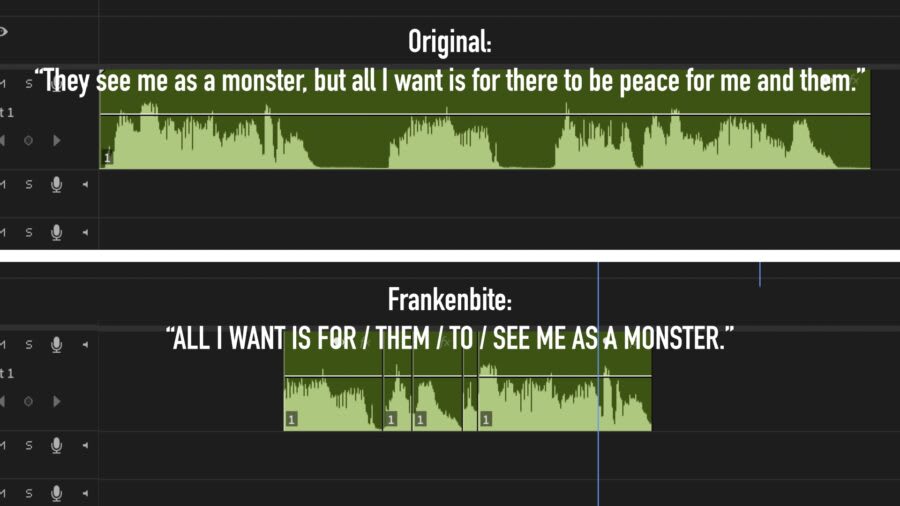
This negative framing is probably somewhat accurate as a matter of fact. I have no doubt the sheer force of the producorial and editorial manipulation going on in reality shows would shock even me, a person working with the same basic storytelling toolkit. The editing of reality TV was historically seen as so extreme, after all, it spawned the wonderful term, “Frankenbiting.”3

Frankenbite example. Source.

A few weeks ago, I wrote:

[N]obody has ever called the 21st century the age of documentary. Whereas plenty of people have called the 21st century the age of reality TV.

Well, I’ve got some news.
It seems that reality TV is dead.
(Or… is it?)
And what does this mean for documentary?


Read more

Uncategorized Comments are off
26 April 2026

Is This The End of Reality TV?

Written by Paul Moon

“[Y]ou should be using your journalistic perch to advocate a heroic, even monastic disengagement from this whole horrifying anticulture! Turn away, bro! Beauty is not there! You need to quit saying ‘It’s like we’re all living in a reality show’ and just fucking accept that you’re watching too much reality TV! Why can’t you do that? Why can’t you fight it?”

— in 2011 / me, today

I came late to reality TV, but when it happened, it felt like an addiction.

I use that word “addiction” advisedly, because it feels at least structurally similar to how I never once put a cigarette in my mouth until senior year of college — way later than anyone else! — and bought a pack of cigarettes the next day. This kicked off a 15 year smoking habit. It was as if despite a lifelong disgust and hatred for cigarettes, that addiction had been waiting inside me, coiled up like a snake ready to pounce.

Such was my fate when I started watching The Bachelor in 2016.

Ben Higgins' Season 20 of The Bachelor: Where Are They Now? | Us Weekly

Members of Bachelor Nation ask one another, “What was your first season?” the way birders ask one another about their spark bird. For me: Ben Higgins, Season 20 of The Bachelor. I resisted… I ignored… and I really had no interest for 19 whole seasons of this show!

I started watching The Bachelor and found I could not stop. By 2016, the franchise had already been around for 12 years; there was a large back catalog on Hulu available to binge. And so, I started binging.

Ah, the binge!

I have a hard time remembering that before the 2010s, if I had TV (I didn’t always), it was linear. Many people in that era watched lots of TV, but we didn’t call that binging. We just called it watching TV. A binge is an on-demand, sustained deep dive into one show or franchise.

A binge is also more addiction language. It suggests a loss of control, a spiral into self destructive consumption.1

Anyway, I love documentary so much I’ve built my whole life around it, but I’ve never felt “addicted” to it and I’ve never really “binged” it, either. This is another reason I love Emily Nussbaum’s “dirty documentary” framing — reality TV as documentary, cut with contaminants to sharpen the high, like street drugs.

But this whole addiction metaphor… I don’t know, I think I’m taking it a little too far, here. I’m not a drug addict. I just like to watch reality TV. Like most normal people!!!

Isn’t reality TV just documentary, but formatted for, well, television? Like, documentary structured episodically, ideally open-ended, with cliffhangers and ad breaks? (This happens to also be the format that people seemed to like to “binge” the most, once we entered the streaming era. It’s a pretty addictive format!) The answer is no, not exactly. The larger category of documentary on TV is called “unscripted.” Reality TV is just one category within that unscripted umbrella.2

As I’ve been reading up and polling people on what exactly defines reality TV, and what makes it different from documentary — or unscripted, to use TV language — the answers tend to cluster around these three attributes:

  1. Reality TV is more manipulated / staged / fake / doctored / produced / scripted than documentary.

  2. Reality TV is more focused on big personalities / interpersonal conflict / drama / bad behavior / messiness / the abject than documentary.

  3. Reality TV is more exploitative / unethical / commercial / cheaply made / entertaining / addictive than documentary.

This negative framing is probably somewhat accurate as a matter of fact. I have no doubt the sheer force of the producorial and editorial manipulation going on in reality shows would shock even me, a person working with the same basic storytelling toolkit. The editing of reality TV was historically seen as so extreme, after all, it spawned the wonderful term, “Frankenbiting.”3

Frankenbite example. Source.

A few weeks ago, I wrote:

[N]obody has ever called the 21st century the age of documentary. Whereas plenty of people have called the 21st century the age of reality TV.

Well, I’ve got some news.
It seems that reality TV is dead.
(Or… is it?)
And what does this mean for documentary?


Read more

Uncategorized Comments are off
25 April 2026

‘Cave of Forgotten Dreams’ Review: Werner Herzog’s Natural Museum in 3D

Written by Paul Moon

55540001.jpg?w=650

An extraordinary production feat that transcends the filmmaker’s personal whims while giving them room to shine.

Uncategorized Comments are off
← Older posts
Newer posts →

B&H Search Engine Banner


B&H Photo - Video - Pro Audio


© Copyright 2022 by Zen Violence Films LLC, all rights reserved. To read the site privacy policy and ethics statement, click here.