Safety Planning Training for Documentarians
idastaff
Wed, 05/06/2026 – 10:26

Safety Planning Training for Documentarians
idastaff
Wed, 05/06/2026 – 10:26
Safety Planning Training for Documentarians
idastaff
Wed, 05/06/2026 – 10:26
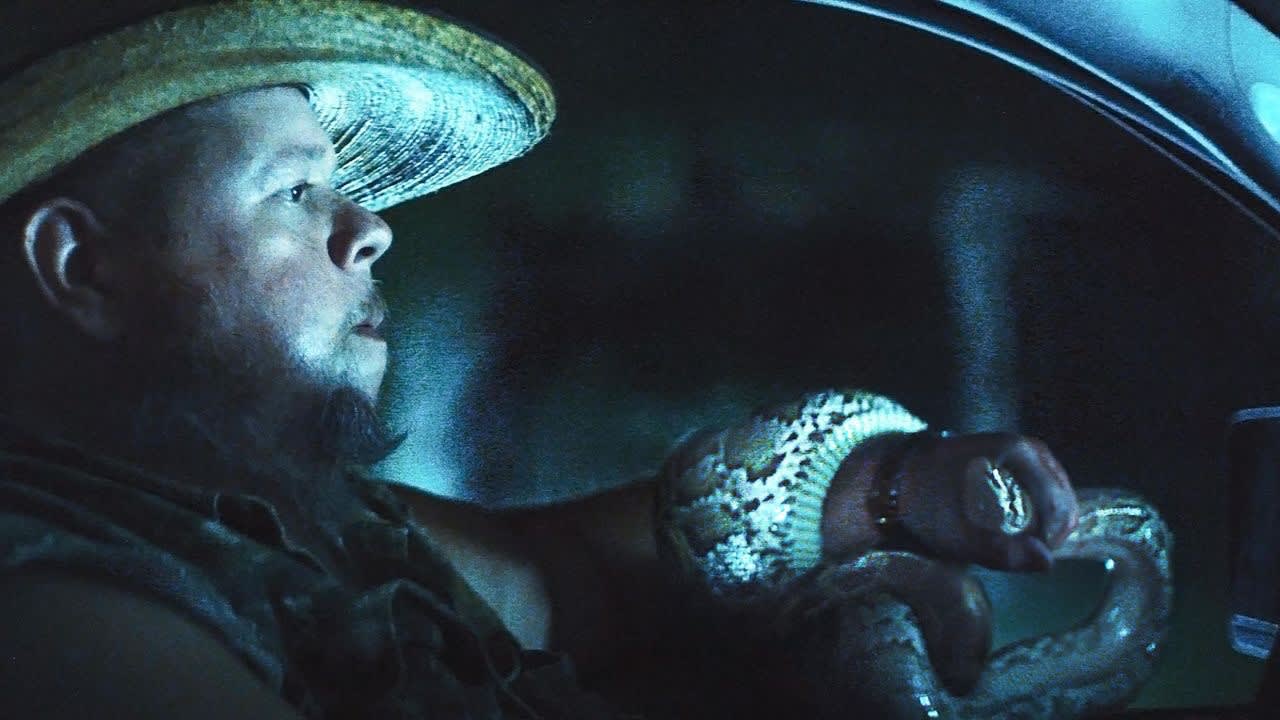
Bait-and-switch is a mostly negative term used for retail fraud, but I sometimes use it to describe documentaries that lure in audiences expecting one thing but deliver something better. Previously, I’ve used the term in my appreciations for The Queen of Versailles, No No: A Dockumentary, American Nightmare, and The Perfect Neighbor, all of which could easily draw in reality TV or true-crime aficionados with their sensational-sounding premise and then give them more depth than they’re used to. I’m adding The Python Hunt to the list since it seems like it’d be another wild showcase of “Florida Man” fodder, but it is really a complex and considerate ensemble-driven treasure. In fact, it’s one of the best documentaries of the year (to be added to our list next term).
Of course, if you’re already the sort of person who seeks out great documentaries instead of trashy delights, The Python Hunt has a lot of elements to draw you in. Visionary nonfiction auteur Lance Oppenheim produced the film and hired his longtime friend Xander Robin (Are We Not Cats) to direct it. One of its primary cinematographers, David Bolen, shot Oppenheim’s features Some Kind of Heaven and Spermworld (as well as a few of Ben Proudfoot’s shorts), so you know it’s going to look better, or at least more intently cinematographic, than most documentaries. Its editor, Max Allman, cut Oppeheim’s incredible series Ren Faire. The score is by Nick León, who isn’t known for documentaries, but his electronic music, celebrated for representing a dark Southern Florida mood, is a perfect match.
Nonfics is a reader-supported publication. To receive new posts and support my work, consider becoming a free or paid subscriber.
The documentary’s surface-level focus is the annual Florida Python Challenge, which brings people from all over the country (and some hopefuls from other parts of the world) to the Everglades for a contest promoting the (humane) slaughter of Burmese pythons. These snakes are invasive to the area, explained in a brief but mind-boggling backstory, and they are blamed for the devastation of the ecosystem and its wildlife. Robin begins by introducing some of the characters participating in the hunt, as if establishing the film as a typical competition documentary. They range in age, experience, and motives. For many, the thrill of the kill is worth more than the prize money. The all-night search for the snakes is also part of the fun, at least at first.
If that sounds appealing for its potential to shock and amuse with extraordinary scenarios and characters, you’re a good mark. And you will see your share of blood, danger, drunkenness, sexual tension, and python pithing (the last maybe not as graphically as anticipated). However, you’ll also experience a healthy debate about the competition from several sides, understand all of these properly portrayed characters’ reasons for entering or condemning the challenge, and view it all through sharp, stunning, deliberately lit visuals. Robin never sets his participants up for judgment or mockery. Even when the octogenarian hunter, Anne, is depicted regularly drinking her gin and (a minimal amount of) tonic, emphasized with insert shots, any cringe-induced laughter soon gives way to sympathy, if not empathy, for the woman.
Thanks for reading Nonfics! This post is public so feel free to share it.
The Python Hunt doesn’t conclude with a champion among its characters, or any concentration on the outcome other than its surprising kill count. Half of the people populating the film’s narrative aren’t even taking part in the main contest. Robin follows a man who was formerly employed by the state to exterminate pythons year-round, who is barred from the challenge. There are individuals in the documentary who defend against the state and its competition’s capitalization of the cultural vilification of snakes, and there are those who offer other theories on the causes of the Everglades’ ecological crisis. At times, the film veers more into the science and nature genre than audiences looking for an outrageous midnight movie will be prepared for.
I believe anyone who does arrive at The Python Hunt with certain expectations will still be more than satisfied with what they find. They shouldn’t be turned off by how smart it is; the film is not that heavy. Similar to the film’s characters, many of whom experience a different journey or reach a different destination than they assume, viewers may also go through their own arcs from beginning to end. There’s a lot of insight to be gleaned from all the varied participants. And it’s still a very entertaining film, just in a more rewarding fashion, and with a brilliant mix of style and substance. As much as I am a fan of Oppenheim’s own directorial projects, I have to admit I’m glad he had his friend helm this one, as Robin seems even more of a compassionate collaborator than curious observer when it comes to the subject matter.
Bait-and-switch is a mostly negative term used for retail fraud, but I sometimes use it to describe documentaries that lure in audiences expecting one thing but deliver something better. Previously, I’ve used the term in my appreciations for The Queen of Versailles, No No: A Dockumentary, American Nightmare, and The Perfect Neighbor, all of which could easily draw in reality TV or true-crime aficionados with their sensational-sounding premise and then give them more depth than they’re used to. I’m adding The Python Hunt to the list since it seems like it’d be another wild showcase of “Florida Man” fodder, but it is really a complex and considerate ensemble-driven treasure. In fact, it’s one of the best documentaries of the year (to be added to our list next term).
Of course, if you’re already the sort of person who seeks out great documentaries instead of trashy delights, The Python Hunt has a lot of elements to draw you in. Visionary nonfiction auteur Lance Oppenheim produced the film and hired his longtime friend Xander Robin (Are We Not Cats) to direct it. One of its primary cinematographers, David Bolen, shot Oppenheim’s features Some Kind of Heaven and Spermworld (as well as a few of Ben Proudfoot’s shorts), so you know it’s going to look better, or at least more intently cinematographic, than most documentaries. Its editor, Max Allman, cut Oppeheim’s incredible series Ren Faire. The score is by Nick León, who isn’t known for documentaries, but his electronic music, celebrated for representing a dark Southern Florida mood, is a perfect match.
Nonfics is a reader-supported publication. To receive new posts and support my work, consider becoming a free or paid subscriber.
The documentary’s surface-level focus is the annual Florida Python Challenge, which brings people from all over the country (and some hopefuls from other parts of the world) to the Everglades for a contest promoting the (humane) slaughter of Burmese pythons. These snakes are invasive to the area, explained in a brief but mind-boggling backstory, and they are blamed for the devastation of the ecosystem and its wildlife. Robin begins by introducing some of the characters participating in the hunt, as if establishing the film as a typical competition documentary. They range in age, experience, and motives. For many, the thrill of the kill is worth more than the prize money. The all-night search for the snakes is also part of the fun, at least at first.
If that sounds appealing for its potential to shock and amuse with extraordinary scenarios and characters, you’re a good mark. And you will see your share of blood, danger, drunkenness, sexual tension, and python pithing (the last maybe not as graphically as anticipated). However, you’ll also experience a healthy debate about the competition from several sides, understand all of these properly portrayed characters’ reasons for entering or condemning the challenge, and view it all through sharp, stunning, deliberately lit visuals. Robin never sets his participants up for judgment or mockery. Even when the octogenarian hunter, Anne, is depicted regularly drinking her gin and (a minimal amount of) tonic, emphasized with insert shots, any cringe-induced laughter soon gives way to sympathy, if not empathy, for the woman.
Thanks for reading Nonfics! This post is public so feel free to share it.
The Python Hunt doesn’t conclude with a champion among its characters, or any concentration on the outcome other than its surprising kill count. Half of the people populating the film’s narrative aren’t even taking part in the main contest. Robin follows a man who was formerly employed by the state to exterminate pythons year-round, who is barred from the challenge. There are individuals in the documentary who defend against the state and its competition’s capitalization of the cultural vilification of snakes, and there are those who offer other theories on the causes of the Everglades’ ecological crisis. At times, the film veers more into the science and nature genre than audiences looking for an outrageous midnight movie will be prepared for.
I believe anyone who does arrive at The Python Hunt with certain expectations will still be more than satisfied with what they find. They shouldn’t be turned off by how smart it is; the film is not that heavy. Similar to the film’s characters, many of whom experience a different journey or reach a different destination than they assume, viewers may also go through their own arcs from beginning to end. There’s a lot of insight to be gleaned from all the varied participants. And it’s still a very entertaining film, just in a more rewarding fashion, and with a brilliant mix of style and substance. As much as I am a fan of Oppenheim’s own directorial projects, I have to admit I’m glad he had his friend helm this one, as Robin seems even more of a compassionate collaborator than curious observer when it comes to the subject matter.
Most years, the first draft of our best documentaries list is a struggle. We’ve usually seen some of what will be our favorites of the year, via Sundance, but these and other strong contenders won’t be officially released until later. (We anticipate Nuisance Bear, Soul Patrol, and One in a Million, all of which we saw in January, will rank well when that happens). This year, we waited a bit to share the first pass. It’s now been a third of the way through 2026, and we’re struggling to keep the list to only a top 10.
We also decided to allow titles released through May 1, given how it fell on the calendar (ultimately, four of the titles to make the list were released in February, three in March, two in April, and two on the first of May). To see where other films rank, visit us on Letterboxd and follow us for updates to our list throughout the year. At the rate we’re going, we expect many more to be added to the upper rankings. Who knows how many of the titles below will still land in our top 26 at the end of 2026?
Most years, the first draft of our best documentaries list is a struggle. We’ve usually seen some of what will be our favorites of the year, via Sundance, but these and other strong contenders won’t be officially released until later. (We anticipate Nuisance Bear, Soul Patrol, and One in a Million, all of which we saw in January, will rank well when that happens). This year, we waited a bit to share the first pass. It’s now been a third of the way through 2026, and we’re struggling to keep the list to only a top 10.
We also decided to allow titles released through May 1, given how it fell on the calendar (ultimately, four of the titles to make the list were released in February, three in March, two in April, and two on the first of May). To see where other films rank, visit us on Letterboxd and follow us for updates to our list throughout the year. At the rate we’re going, we expect many more to be added to the upper rankings. Who knows how many of the titles below will still land in our top 26 at the end of 2026?
Most years, the first draft of our best documentaries list is a struggle. We’ve usually seen some of what will be our favorites of the year, via Sundance, but these and other strong contenders won’t be officially released until later. (We anticipate Nuisance Bear, Soul Patrol, and One in a Million, all of which we saw in January, will rank well when that happens). This year, we waited a bit to share the first pass. It’s now been a third of the way through 2026, and we’re struggling to keep the list to only a top 10.
We also decided to allow titles released through May 1, given how it fell on the calendar (ultimately, four of the titles to make the list were released in February, three in March, two in April, and two on the first of May). To see where other films rank, visit us on Letterboxd and follow us for updates to our list throughout the year. At the rate we’re going, we expect many more to be added to the upper rankings. Who knows how many of the titles below will still land in our top 26 at the end of 2026?
The Seoul Guardians
(South Korea, 71 min.)
Dir. Chul Young Cho, Shin Wan Kim, Jong Woo Kim
Prod. Sona Jo, Shin Wan Kim
Programme: World Showcase
For many South Koreans, the wounds of former president/military dictator Chun Doo-hwan’s merciless violence are a reminder of the country’s political polarisation. One such example is the Gwangju uprising of 1980, where over 200,000 civilians, including liberal students and dissidents, congregated to fight against the coup-d’état perpetrated by their conservative dictatorship and denounce their leaders’ attempts at political suppression. Attempting to sway the public, the state framed the protesters as North Korean communist sympathisers.
Upon the declaration of martial law, uprising left thousands of innocent civilians wounded and an estimated hundreds of victims murdered, although the figures remain unknown due to suppressed communication and censorship in service of the political narrative. Gwangju endures as a reminder of the power of collective democratic solidarity for those who refuse to repeat the atrocities of the past.
44 years after the Gwangju massacre, history was about to repeat itself. On December 3, 2024 conservative president Yoon Suk Yeol declared martial law in a national broadcast. In the blink of an eye, lawmakers, journalists, and civilians dashed to the national assembly to prevent another Gwangju massacre. Empowered by their cameras in their sweaty palms, the unified dissidents worked together to prevent future calamity.
In their taunt and tense documentary The Seoul Guardians, journalists turned filmmakers Jong Woo Kim, Shin Wan Kim, and Chul Young Cho encapsulate the escalating anxiety, fear, and relentless political pressure that occurred on that fateful night. Equipped with their cameras, the filmmakers and their colleagues swiftly entered the national assembly before the military and police could block access. They continuously filmed throughout the night, as they were unsure of the outcome. Condensing six-hours of unpredictable tension into a tight 70-minute runtime, the film presents a comprehensive overview of the 2024 martial law crisis from different perspectives.
Piecing together different vantage points from journalists who were documenting the events in different areas of the national assembly, The Seoul Guardians is composed from an eclectic mixture of digital footage. As an extension of the human gaze, the cameras document each passing minute. Ranging from polished high-quality images to blurry iPhone footage, the varied resolutions symbolically resemble the interconnected struggle of the people themselves. The synchronicity of the recordings represents a unified resistance against the coup d’état. Through the claustrophobic framing and kinetic montages, The Seoul Guardians simultaneously encapsulates the life or death severity of the legislative fallout.
With their film, directors Kim, Shin, and Chul aren’t looking for a clean aesthetic. Instead, the filmmakers embraces the rawness of their footage. The Seoul Guardians’ soundtrack complements the kaleidoscopic curation of the material to propel the film’s break-neck saga. The suspenseful droning score furthers the dramatic stakes with stressful crescendos that arise during pivotal turning points.
Returning to the foundation of the Gwangju massacre, The Seoul Guardians connects the events of the 1980 coup d’état with the events of the 2024 martial law crisis. Through kinetic cutting, archival footage is spliced within the narrative. Literally merging the past with the present, the implementation of the archive works most effectively when the film utilises a recurring visual motif to bridge the footage. In one of the film’s most harrowing sequences, the arrival of helicopters from the South Korean military is seamlessly intercut with archival footage of airborne militia from Doo-hwan’s dictatorship. While not all of the archival sequences bridge the past and present together as effective through match-cutting, The Seoul Guardians makes its political connection clear through its anxiety-inducing form.
Despite its remarkable vision, The Seoul Guardians still handholds its viewer through some on-the-nose narration. While the journalistic commentary adds a personal dimension to the timeline of events, the film’s strong editing overpowers the resonance of the spoken word. The narration slows down the escalating tension, detouring its compelling political saga by spelling out the film’s thesis to its audience. As a result, the documentary loses its narrative momentum amidst the political pandemonium.
As a reminder of the importance of communal unity, The Seoul Guardians is an impressive debut feature that reflects upon South Korea’s turbulent politics and history. Achieving a remarkable amount of tension and dread through its curation of footage, The Seoul Guardians is an exciting reinvention of a political thriller. Unsubtle yet commendable in its thematic linking of the past with the present, The Seoul Guardians is a remarkable piece of non-fiction cinema that transports its viewers into the relentless chaos at the scene of the 2024 martial law crisis.
The post The Seoul Guardians Review: I’ve Got Soul But I’m Not a Soldier appeared first on POV Magazine.

Ahead of the festival’s opening night world premiere of “John Candy: I Like Me,” filmmaker Hanks told IndieWire about the challenges of making a doc about someone universally beloved — and the many surprises along the way.
A compilation of Martin Scorsese’s reactions to documentary films.
Source: Siskel & Ebert
https://www.imdb.com/title/tt0090523/
Source: Criterion
https://www.criterionchannel.com
https://www.criterion.com