
When asked, “Where do you get your ideas?” Stephen King sometimes answers, “Utica.”
It’s a good joke1 because every artist knows great ideas don’t just exist out there, waiting to be purchased like batteries or discovered like a patch of land.
Really, ideas are cheap. We all have them all day long.
The coin of the realm is really the concept.
An idea arises spontaneously, just like any other thought. On the other hand, a concept is built deliberately through a series of choices and constraints. The concept ultimately contains many ideas, from the form and structure to the audience(s) being served. The concept is the organizing principle that harnesses an idea and turns it into a work of art.
The conceptualization phase — in doc filmmaking we call this “development,” which is fitting, as we develop an idea into a concept — is the most important part of the filmmaking process.
It’s also the stage where most of us, and most of our films, fail.
Winning films have winning concepts
I really enjoyed this Sonny Bunch interview with Kevin Goetz, author of Audience-ology and How to Score in Hollywood. Goetz is a researcher and data analyst who runs one of the companies that do test screenings. I was intrigued to learn they also do concept testing. It’s Goetz’s contention — and I tend to agree — that 90% of films fail at the concept stage.
Of course, we all test our concepts all the time. We do it every time we answer the question, “What are you working on?” or “What’s your film about?” We test our concepts when we crowdfund, or apply for a grant, or pitch an exec.
But I doubt most of us are any good at actually learning from these experiences, in part because the feedback we get tends to be blunted by social niceties or obscured by an anonymous process, but also because it’s all so emotional we fail to actually collect the data.
In nonfiction, sometimes we want to rush past the conceptualization phase because we think — correctly! — that when dealing with reality, a lot of this will probably get sorted out in production and in the edit. (I’ll come back to this later.) But in a tight market, I think we can all see, more than ever, the importance of a winning concept. If you’ve been pitching lately, you’ll have heard the word “bulletproof” a lot. As in: your pitch has to be literally without flaws. A pretty high bar!!!
I was thinking about all of this at SXSW, where I saw two documentaries — Cookie Queens and #Skyking — that made me mutter jealously to myself, “Damn it to hell, I wish I’d had that idea.” But of course, saying that is no better than wishing I’d gone to the ideas store in Utica. Really, what I was responding to was how each of these films successfully developed their good ideas into brilliant concepts.
Cookie Queens: A good idea, a genius concept
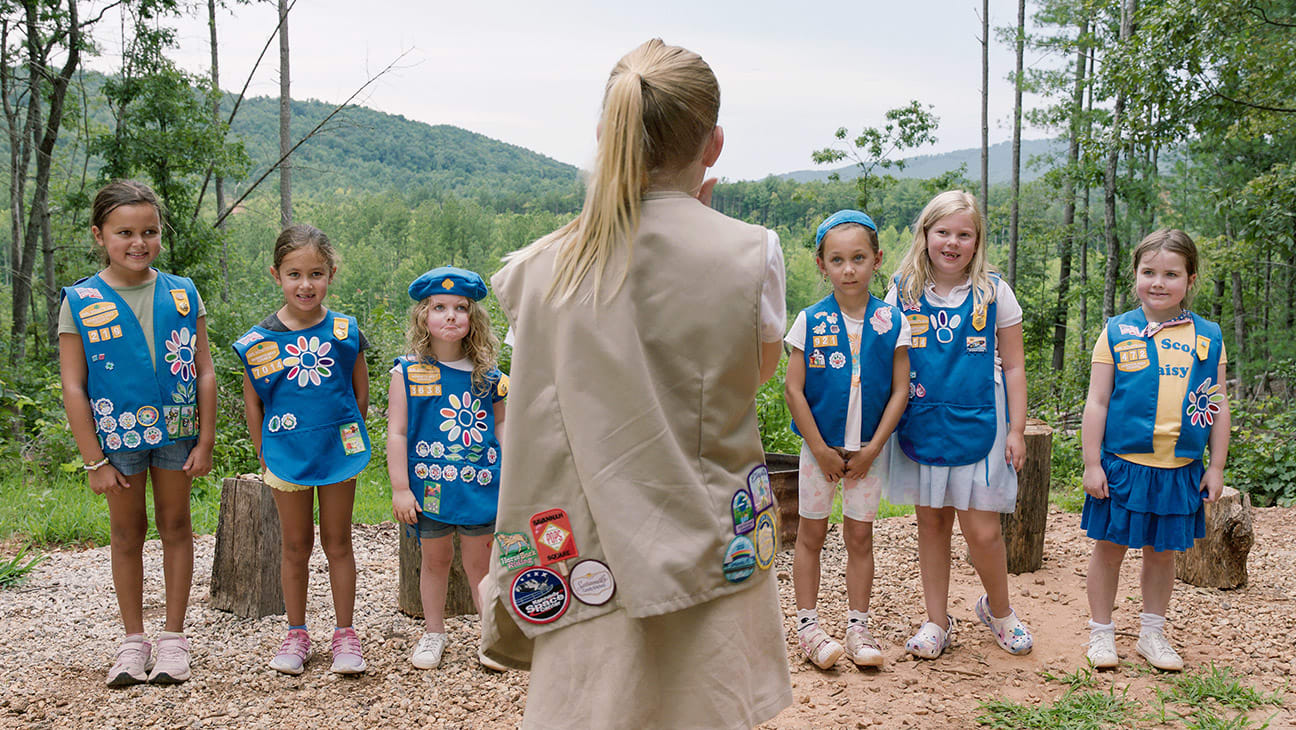
Director is known for serious social issue documentaries. She had the idea to make a film about Girl Scout cookies after her young daughters asked her to make a movie they would actually enjoy watching. This is a key part of a good concept: a sense of the audience and their needs. Alysa wanted to make something family-friendly, a film she would enjoy as much as her daughters. A lot of decisions flow from there: for example, keeping the film character-driven, as opposed to doing an exposé or history lesson on the Girl Scouts organization.
So anyway, a documentary about Girl Scout cookies. It’s a good idea!!! Everyone knows about Girl Scout cookies, for one thing, and kids are cute.
But the concept of Cookie Queens is even better: the film follows four Girl Scouts through “cookie season” — a six-week period where they sell boxes of cookies to support the organization.
Even better: each Scout has to set a specific goal for how many boxes they want to sell during cookie season. The family needs to buy that many boxes, the cost of which they are on the hook for if the Scout fails to reach their goal. So many documentaries — including some of mine, I freely admit! — lack a clear sense of stakes. Not so in Cookie Queens.
With that structure, with these stakes, we’re off. Week 1: how many cookies sold, Week 2: how many cookies sold, etc. You would have to be a pretty cold-hearted person to not root for these adorable children (and their families) once you are inside the logic of this film.
It’s a brilliant concept — I suspect it would test well, and I think it did, based on the long list of funders who supported it — but Alysa and her team also executed it brilliantly, from excellent casting to exuberant score. I’m not at all surprised it won the audience award at SXSW. Roadside Attractions is releasing it into theaters this year, and if there is any justice in this world, it should be a giant hit.

#Skyking: A good idea, a thrilling concept
Also at SXSW, I caught the world premiere of ’s #Skyking. This film is about Richard “Beebo” Russell, a 29-year-old Horizon Air ground agent who stole a plane from Seattle-Tacoma International Airport on August 10, 2018 and takes it for a tragic joyride.
This was a huge, viral news story — or so I learned; I’d personally never heard of this episode. I went to see it based on the strength of the logline, and because Patricia is a friend. I recommend going in with little knowledge if you can, because my experience in that theater was pretty fun!!! It’ll be on Hulu soon, so you can experience it for yourself.
Anyway, the idea: make a film about this viral news event. A good idea — it’s an intriguing story, with a proven audience already invested in trying to understand why Beebo did what he did.
The concept: tell the story as a high-octane action film using air traffic control audio, and alternate these action sequences with Beebo’s backstory shared by the people closest to him and to the events, all of them asking, why did he do this?
It’s a gripping psychological mystery, with great world-building, and exhilarating action sequences that had me screaming. I literally could not believe what I was seeing.
There’s also a “ticking clock” narrative device in #Skyking that rivals anything by Tom Clancy: once the plane is in the air (a few minutes into the film), we learn that Beebo has only a certain amount of fuel, which means the plane can only be in the air for a certain amount of time before it will fall from the sky. I mean… goddamn, that’s good.
#Skyking is not at all like Cookie Queens, but in both cases, the concept is strong in part because there is no question about the stakes, and the timeline of the story is crystal clear. They both have that undeniable narrative propulsion we, the audience, live for. Yes, we want to learn stuff and be challenged and be edified. We also want to be entertained and get lost in a story.
A side note: #Skyking reminded me a lot of this insanely delicious New Yorker story I happened to be reading at the same time, “The Man Who Broke Into Jail.” Both are about totally baffling crimes, and why they were committed. I absolutely loved the way that story unspools, and the psychological mystery is incredibly deep and compelling. This article reads like a movie, so surely someone optioned it already. If that person is reading this: please hire me to direct?!!! I would kill for that story!!!
Documentary conceptualization: yes ,it is challenging!
In both of these films, I’d be curious to know how much of the concept was present in development and how much evolved throughout production and post production. As I mentioned earlier, documentary is tough. Much of the concept can’t just be written on a blank page, as it might be in a novel. Instead it must be shaped by the vagaries of reality: who will give you access, how do real people react with cameras around, what actually happens, etc. This is why “development” can sometimes take years!
Two objections I have myself lodged against the primacy of concept (when I am pointlessly whining, aka my favorite hobby):
“But how can I write a concept when I don’t know will happen???”
+
“But everyone knows in documentary the real writing happens in the edit!!!”
Fair enough, true enough, etc. But I simply don’t know how you’ll get to the point of shooting and editing without a “bulletproof” concept — unless you are lucky enough to to be able to fund your movie yourself. Even in that case, you may find self-funding to be a double-edged sword; I firmly believe not having to test your ideas is its own curse.
Again: Kevin Goetz says 90% of films fails at the concept stage. I think he’s right. It’s like building a house on a faulty foundation, or planting an expensive rose bush in the wrong-ass soil, or pick your favorite analogy.
Finally: obviously even a genius concept can be ruined by poor execution. But that is a topic for another day!
Comings, Goings & News
Finally settling back home, after a few weeks of running around. Most of my crocus bulbs rotted, it’s still cold, but I still believe in, um, the promise of spring?
Audiences are really responding to Manhood — SXSW scheduled an extra “buzz” screening, which sold out like all the other screenings. I went to SXSW for the premiere because I am one of the film’s EPs, alongside verifiable legends like Sheila Nevins (Citizen Four, also Real Sex!!) and World of Wonder’s Randy Barbato and Fenton Bailey (The Eyes of Tammy Faye, also RuPaul’s Drag Race!!). Getting to see the film in its final form, with an enthusiastic crowd — that was a dream come true for me. I am biased, but I think what people are responding positively to is how the film is about a surprising topic (penis enlargement) and then it still goes places they are not expecting. The element of surprise is a powerful tool!
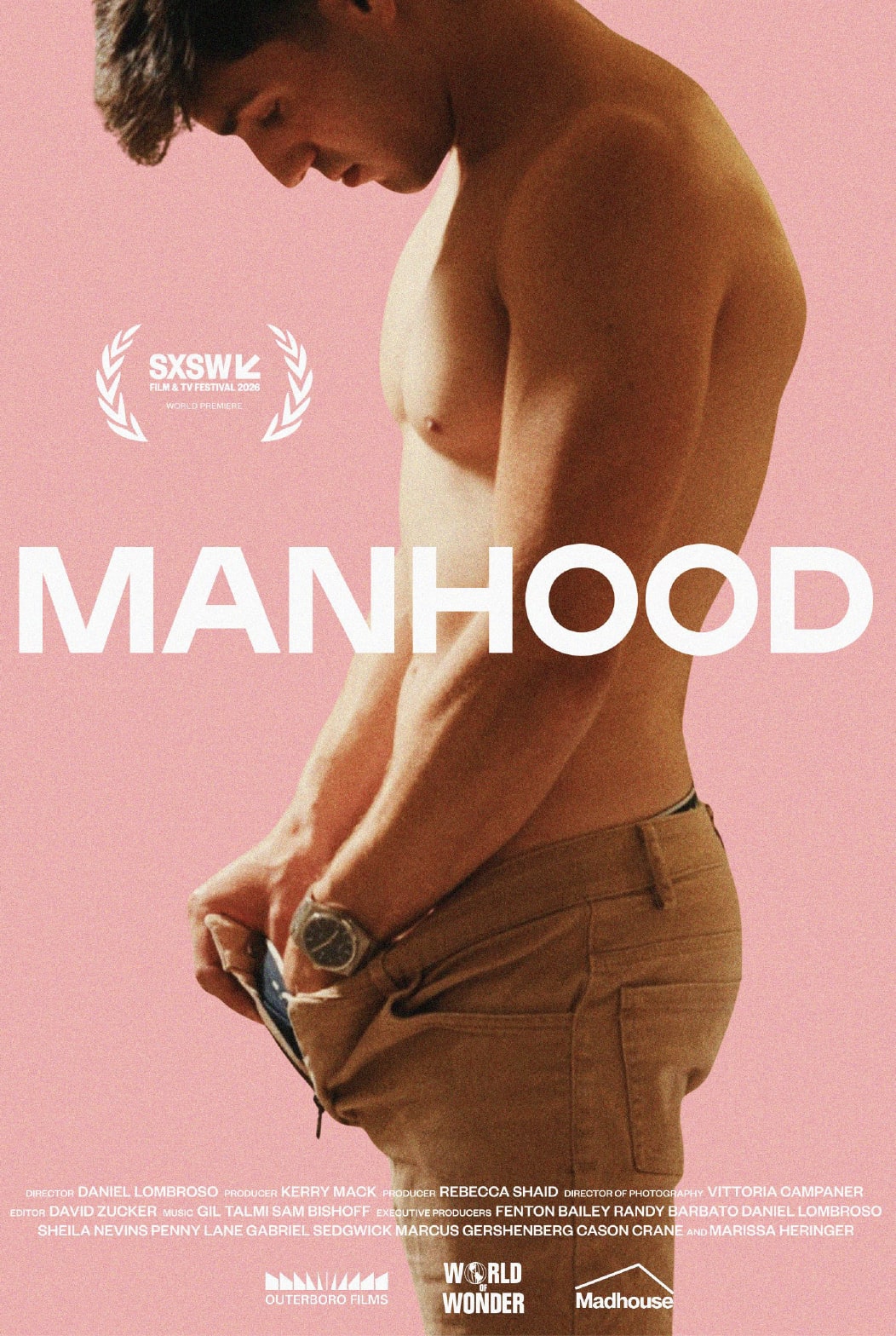
I love being surprised; I assume most people do?? I guess I have no idea. A Netflix exec told me (when turning down my pitch for Hail Satan?) “Netflix audiences don’t like to be surprised.” I doubt that’s true, but also, what do I know? Maybe I am unusually interested in being surprised.
My live chat with was rescheduled for Wednesday 1pm ET. I really enjoyed the format I did with Matt Wolf, wherein we discussed both his first film and his most recent, so I’m going to do the same with Gary. So, if you’ve never seen Helvetica (2007), now is a good time to do so.
Some topics I want to discuss with Gary:
-
How Helvetica becamse his directorial debut, after running the hugely successful and influential distributor Plexifilm
-
How he went from “a documentary about Brian Eno” (a good idea!) to the brilliant concept for Eno: a film that remakes itself anew each time it’s watched
-
How he’s mastered the art of audience development, content (and merch) creation, and self distribution, and how his Substack ties into all of that — okay, that’s a very big topic, I promise I’ll narrow it down before Wednesday! 🙂
I have read the same joke attributed to Harlan Ellison, except instead of “Utica” it’s “Schenectady.”