
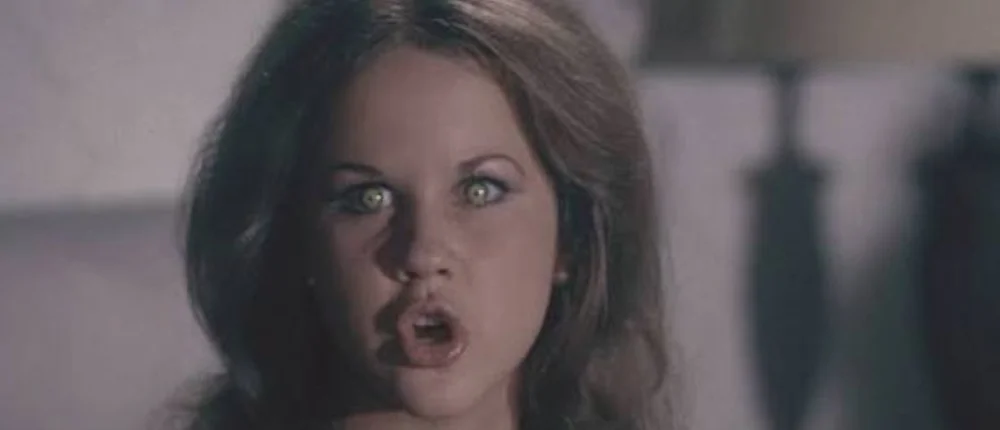
The Exorcist franchise has grown to six films, with a seventh arriving, maybe in 2027. While the series has had its highs and lows, the original 1973 classic remains untouchable in the eyes of most. “The Exorcist III” earned a dedicated cult following, but the rest of the sequels have largely been seen in a negative light.
Then there’s “Exorcist II: The Heretic.” Released in 1977, John Boorman’s follow-up was famously savaged by critics. Gene Siskel called it “the worst major motion picture I’ve seen in almost eight years,” and William Friedkin, who directed the first Exorcist, reportedly walked out of a 40-minute preview saying it was “the worst… I have ever seen, really, and that’s saying a lot.” Test audiences were similarly hostile; one screening nearly descended into chaos. Commercially, it fared no better, earning just over $30M compared to the original’s $193M.
However, what tends to go untackled is that ‘Exorcist II’ wasn’t a typical sequel. David Kittredge’s new documentary, “Boorman and the Devil,” argues that it was a bold experiment in storytelling. The film, which premiered at the Venice Film Festival, combines meticulous research with a lyrical, almost poetic sensibility. Kittredge covers the troubled production, while also placing Boorman’s vision in the context of his entire career.
And what a career he’s had. At 92, Boorman—likely retired—is the visionary behind like “Point Blank,” “Deliverance,” “Excalibur,” “Hope & Glory,” and “The General.” A true old-school master, his work continues to resonate decades later. Not ‘Exorcist II,’ which remains the black sheep of his career.
A standout element of the documentary is its recreation of mid-1970s Hollywood—the tail end of the New Hollywood era that began in 1967 with films like “Bonnie and Clyde” and culminated with “Star Wars” in 1977. Through interviews with Boorman, Linda Blair, the late Louise Fletcher, and key crew members, Kittredge delves into the film’s creative ambitions and the missteps that earned it infamy. A cleverly memorable montage captures a variety of opinions on whether Exorcist II is “good,” offering insight into its controversial legacy.
The case Kittredge makes is compelling: ‘Exorcist II’ isn’t a lazy cash-in, but a subversive, near-experimental film that challenges the formula of Friedkin’s original. Its ambitions align it with other daring, misunderstood films of the 1970s. Even Martin Scorsese expressed admiration, defending the film in a Film Comment essay:
I like the first Exorcist, because of the Catholic guilt I have, and because it scared the hell out of me; but “The Heretic” surpasses it. The movie still deserved better than it got.
Such praise contrasts sharply with the film’s critical reception, which remains harsh even today: Rotten Tomatoes scores it at 10%, with reviewers dismissing it as “silly” and “atrocious.” On IMDb, it has an atrocious 3.8/10 user score. Yet “Boorman and the Devil” invites a new perspective, showing the artistry, ambition, and human effort behind a film once written off as a disaster.
After seeing it years ago, and brushing it off as disposable, I decided to check out the film again. My honest opinion? No matter how flawed “Exorcist II: The Heretic” may be, it occupies a curious space far above most legacy sequels. A misunderstood oddity. The film’s sheer ambition and audacious narrative risks make it an endlessly fascinating rewatch. Boorman wasn’t content to simply replicate the shock value or commercial success of Friedkin’s original; he aimed for something more subversive. The film is very imperfect, but it is never boring. It stands less as a failed horror film and more as a curious artifact of 1970s New Hollywood.
“Boorman and the Devil” will screen at Beyond Fest in Los Angeles on September 24 and is seeking distribution.