
The newest Netflix documentary Unknown Number follows two teens being anonymously harassed and the surprise perpetrator who changed their lives
The newest Netflix documentary Unknown Number follows two teens being anonymously harassed and the surprise perpetrator who changed their lives
The Canon EOS C50 is here, and after spending an enjoyable but short time with it, I’m happy to share some footage and my initial findings about this new camera with you. In my opinion, this new camera is set to shake up the filmmaking market by bringing compact size, features like internal 7K 12 bit RAW recording even in 3:2 open-gate, and all at a price point we haven’t seen from Canon in their EOS cinema line before. These alone might make the camera very appealing to many. For our news article covering the release of this new camera, please head over here. Canon also announced the release of the RF 84 f1.4, a compact portrait lens (news article here), and an ultra-wide Cine-Servo zoom lens (more details here). Now, let’s dive into the Canon EOS C50 review! (Note: for the mini-doc, a pre-production EOS C50 was used)
To put it bluntly, the Sony FX3 has dominated the segment of compact, capable, well-priced cinema cameras for way too long. Now, for the first time, there is a true competitor, though the question is, is it really a better choice than the Sony FX3? Well, the Canon EOS C50 has its shortcomings, which I’ll mention in a moment, but ultimately it depends on your filming needs and style. When you consider the included features and final price, it appears to offer better value for money compared to the aging FX3.
 Canon EOS C50. Credit: CineD
It is also worth mentioning that Canon announced a firmware update for several of their cameras, most notably the EOS C400, which will now get a 3:2 open-gate recording as well. If you own an EOS C70 or C80, unfortunately, you are out of luck for now.
Before diving into talking about the camera, I hope you will take a few minutes to watch the short mini-documentary I shot in the beautiful, peaceful Kiso Valley in Japan. I took a long train ride to meet Kana, who moved from Tokyo to a village called Okua. She bought a 150-year-old house, rebuilt it, and plans on welcoming guests in the near future to experience complete, unconditional tranquility. You can follow Kana and the progress of rebuilding the house on Instagram here.
 EOS C50 other sensor modes. Credit: CineD
Canon EOS C50 in a nutshell
The EOS C50 is here, and in my opinion, Canon hit the nail on the head by bringing a very capable compact camera to the market. If only it had an EVF and IBIS, it would have been a perfect filming machine. But for now, let’s focus on what it has, not what it’s missing.
 EOS C50 top view. Credit: CineD
This is the smallest camera in Canon’s cinema line, and the big news is its new 7K full-frame sensor, paired with Canon’s trusted DIGIC DV 7 processor. This lets you use the full width and height of the sensor to record in 3:2 open-gate, shoot internal RAW at up to 7K 30P, and record full-frame up to 60p with no crop. The camera can also handle high frame rate at up to 4K/120P or even 2K at 180P. For a full list of codecs, resolutions, and frame rates, please head to our news article here.
And of course, you can take 32MP still photos with it, but the main focus here is professional filmmaking!
 Canon EOS C50 3:2 Open Gate option. Credit: CineD
Open-gate recording
Personally, I wanted Canon to offer open-gate recording, and I’m happy to see that it is finally being offered. But why is the 3:2 open gate such a big deal? Well, as far as I’m concerned, there are two main reasons. First, you can film with an aspherical lens in this format and later reframe your shot in post to fit your delivery needs, whether vertical or horizontal. And, as Canon is offering a “Marker Aspect Ratio” overlay option in the menu, it is fairly easy to decide on your framing.
 EOS C50 marker aspect ratio. Credit: CineD
 EOS C50 marker aspect ratio is set to 9×16 as an example for vertical work. Credit: CineD
Second, if you are using anamorphic lenses, you will capture the maximum possible vertical information, which is then stretched to its full width, giving that classic “cinematic look”.
 Canon EOS C50 and SIRUI IronStar anamorphic lens. Credit: CineD
Canon also lets you de-squeeze the image on the LCD and EVF for the most common ratios, like x1.3, 1.5, 1.8, and 2x out of the box. No need to wait for a future firmware update for such an elementary feature that helps with anamorphic filmmaking.
Now, like any modern camera, the EOS C50 offers a wide variety of codecs, resolutions, and frame rates. The thing is, it feels like there is a “blanket effect”: when you pull it on one end, the other side suffers. For example, if you want to record in RAW at 3:2 open-gate, digital stabilization cannot be activated. But why is it not available when filming in a compressed codec?
 Image magnification will not work in high frame-rate mode. Credit: CineD
Another example? When filming in 4K/120p, you cannot use magnification to check focus, which is not ideal when working with manual lenses. There are more examples like this, but overall, once you adjust to working around some of these limitations, this camera is a joy to use.
 The top XLR audio handle is included in the camera kit. Credit: CineD
I would also like to highlight a few more things:
Like with any other Canon camera, the images it produces are simply gorgeous. On top of that, the camera comes with a top XLR handgrip, wisely included by Canon, so that the audio side of your production is not neglected.
 The active cooling fan is working well! Credit: CineD
I worked with the camera outdoors for many hours in very hot temperatures and didn’t experience any issue with overheating.
As I’m not a DP who uses camera cages, I really appreciate that the camera body has four connecting points. That allowed me to easily attach the Kinefinity Eagle HDMI viewfinder directly.
 Connecting the Kinefinity HDMI Eagle EVF was easy without a cage, thanks to the supporting holes. Credit: CineD
The dual-gain base ISO is also very handy, with values of 800 and 6400.
Last but not least, yes, the camera comes with a shutter angle option, so you don’t have to worry about adjusting shutter speed settings when changing frame rates. The same goes for clear scan, which helps eliminate flicker when adjusting to different screen frequencies.
How does the camera stand against the competition, namely the Sony FX3?
The EOS C50 outperforms the Sony in almost every way, except stabilization, since the FX3 sensor itself is stabilized. And for photographers, the Sony FX3 does have a mechanical shutter.
Other than that, the Canon camera comes in cheaper than the Sony, offers higher recording resolutions, has internal 12-bit RAW recording, and, most noticeably, a 3.2 open-gate option.
Don’t get me wrong. The Sony FX3 is a proven working horse that has done great since it was first introduced more than four years ago. But with this Canon release (and upcoming near-future camera releases), Sony will have to act soon if they want to maintain their lead.
 Canon EOS C50 inouts/outputs. Credit: CineD
What the new Canon is really missing is an EVF and IBIS. Hopefully, Canon will consider making a small EVF that can connect directly to the camera. As for stabilization, I don’t want to go into the digital vs. IBIS debate, but it would be great if digital stabilization worked in 3:2 open-gate when filming in XF-HEVC S YCC422 10 bit. (In other modes, the digital stabilization will work well.)
 Adobe Premiere’s latest edition cannot read the Canon RAW open-gate files. Credit: CineD
Please note that, at the time of recording this video, unlike DaVinci Resolve, the latest version of Adobe Premiere cannot properly read open-gate RAW files. This meant I had to convert all my footage to ProRes, knowing I’d lose the flexibility in adjusting clips, but for now, it is what it is.
At least, when recording in RAW, the camera offers the possibility to record proxies on the second card. But remember that “blanket” effect I mentioned? Switch to open-gate XF-HEVC S, and recording proxies at a lower resolution or bit rate is not available.
Needless to say, the camera is also supported by various Canon apps, and of course, if you are into camera-to-cloud workflows, that is possible too; frame.io is supported.
 Equipment used for filming the mini-documentary, together with the Canon EOS C50. Credit: CineD
Final thoughts
The Canon EOS C50 is one of the most likable and capable cameras I have tested recently. Its physical size is just right, the included XLR top handle is a bonus for professional work, and looking at the overall features it offers (for the price), I’m sure that Canon has a winner here!
Of course, we will also test the camera in our lab when a production model becomes available.
 On location with the Canon EOS C50 while making the review. Credit: Kana Suzuki/CineD
What do you think about the new Canon EOS C50? Does this camera sound interesting enough to give it a closer look? Please share your thoughts with us in the comment section below
The Journey of ‘Unwritten’ reveals the inspiration behind Bedingfield’s 2004 track and highlights its lasting impact
The Journey of ‘Unwritten’ reveals the inspiration behind Bedingfield’s 2004 track and highlights its lasting impact
The Balloonists
(USA/UK/Austria, 86 min.)
Dir. John Dower
Programme : TIFF Docs (World premiere)
People have dreamed of circumnavigating the globe since Jules Verne’s fiction adventure books of the late 1800s’ brought the idea to life. However, his most famous novel Around the World in 80 Days, fantastical as it was, remained grounded in the reality that air travel of any kind was unlikely to be achieved in that era. He had previously imagined extended aviation travel in Five Weeks in a Balloon but, again due to the constraints of contemporary reality, confined it to crossing a continent. Although these were mere tales, the ideas stuck in people’s minds, and inventors were attempting to make air travel possible.
It wasn’t long before the ability to fly was successfully achieved by the Wright brothers on December 17, 1903. Advancements in aviation technology quickly followed until people could not only travel by air between countries but also look up to the heavens to wonder where else they could go.
Even after the mid-1900s’ space race resulted in the first men walking on the moon in 1969, there was still one aviation challenge that had not been successfully achieved. It took another three decades for anyone to complete the goal of flying around the world nonstop in a hot air balloon. In 1999, the unlikely duo of Swiss explorer Bertrand Piccard and British flight instructor Brian Jones were the first to succeed.
In The Balloonists, director John Dower concentrates on the stiff competition to realize this dream. Many, including billionaire media mogul Richard Branson, were furiously working to claim the prize. Dower’s strategy in the film is wise. With its narrower focus, the documentary is better able to absorb the viewer into the suspenseful action adventure that lies at the heart of the story. It’s not that attempts prior weren’t an interesting part of this aviation history. It’s that this concentrated approach makes for a tighter and livelier film.
In the film, Swiss explorer Bertrand Piccard was the driving force behind this duo’s efforts. In fact, his eventual partner in this venture, Brian Jones, was content to live peacefully in England with his wife, giving flying lessons together. But a whirlwind of events sucked him up into Piccard’s obsession.
As a child, Piccard was greatly inspired by the moon landing and, having descended from a successful line of explorers, one could say it was in his blood. His grandfather, Auguste, was the first person to enter the stratosphere in a hot-air balloon in 1931. Three decades later, Jacques, Bertrand’s father, successfully went deeper than anyone prior into the Mariana Trench in a bathyscaphe.
As a result of this family history, the internationally renowned Piccards were guests at the Apollo rocket launches. Little Bertrand was hooked and his imagination caught fire. Knowing that there was still one last aviation challenge and perhaps feeling some internal pressure to live up to this family legacy, the adult Piccard set out to claim his place in history.
The film seamlessly weaves together a treasure trove of archival footage. From news footage to the actual recordings in the craft as they made their journey, Dower lithely switches between interviews that occurred in the past and the more recent ones that he conducted as he made his film. The filmmaker also uses the well documented attempt of others who were competing for this coveted title to light a fire at the film’s core.
Personalities shine in The Balloonists, even within the framework of simple interviews. Piccard is the flashier driven one, while Jones is chatty enough, albeit with his shy smile and a hint of reticence about being in the spotlight. They are an odd couple, and as the film elaborates upon Piccard’s attempts to achieve his goal with others and his often-stubborn refusal to listen to his colleagues, it becomes clear that The Balloonists is also a heartwarming and charming buddy film, even a fun rocky-road movie at times.
There is a lot of tension and emotion in this documentary, some expressed in the actual footage from their trip but much of it is emanating from the film’s core, from the graphic nature of this treacherous trip. The audience is privy to much pathos, frustration and, surprisingly, even humour. Dower succeeds in creating an edge of your seat action adventure in his recreation of the first trip around the globe in a hot air balloon, as intense as anything Jules Verne himself could have imagined. The Balloonists will no doubt be a hit with audiences.
The Balloonists screens at TIFF 2025.
Read more about the film in our interview with John Dower.
Get more coverage from this year’s festival here.
The post The Balloonists Review: A Heartwarming Buddy Comedy and Adventure Doc appeared first on POV Magazine.

TIFF: If you already loved John Candy, this doc will make you love him even more. If you were born after his time, it will be a lovely introduction. But the film lacks the editorial discipline to truly shine.
The Tale of Silyan
(North Macedonia, 81m)
Dir. Tamara Kotevska
Programme: TIFF Docs (North American premiere)
Tamara Kotevska’s The Tale of Silyan is a marvel of symbiotic artistry. The filmmaker, best known for the Academy Award nominated documentary Honeyland, gracefully crafts another deftly poetic meditation on humanity’s inextricable bond with the natural world. What’s exciting is how skillfully she intertwines an ancient folk tale about a stork with the real-life struggles of a subsistence farmer in modern day North Macedonia. Kotevska transforms an observational documentary into an enchanting experience of love and healing, and ultimately, an emblem of resilience.
As the film begins, a voiceover relates the seventeenth century Macedonian folk tale of a young man, Silyan, who becomes a stork after his father curses him for not wanting to work on the family farm. As in many parts of Europe, storks hold a mythical place in North Macedonian culture, and the country has one of the largest populations. Not only are they believed to bring luck (and babies!) but they are intricately connected with the farming process.
This ancient legend forms the backbone of the film and progresses alongside the chronicle of Nikola, the jovial patriarch of a farming family. In her structuring of the film, Kotevska draws out the themes of migration and environmental change that come into play.
Nikola’s life on the farm is somewhat idyllic. His loving wife, Jana, is always by his side in the fields. They are often like teenagers in love as they play there between tasks. Unlike Nikola’s son, who fled the farming life and the country to seek a different, supposedly easier life, his daughter, Ana, and her family remain loyal. The son does not appear in the film, although his presence hangs ominously throughout. But Ana’s toddler daughter is adorably getting into everything around the household, so her presence seems to temper any of the pain that lingers.
Everything changes after the family is unable to sell their crops due to strict government regulations. With the country’s economy suffering, the government has imposed tight restrictions that are particularly difficult for the farmers. Nikola and his neighbours pose for the camera with their bountiful yet apparently unsellable produce after being rejected at the market. The viewer watches as these food items instead go to landfills to rot and fill the bellies of the storks.
The famers protest in the street to no avail, and we watch the family worry about getting by. Farming is proving to be unsustainable for them, as it has for a great many others. Ana and her family decide to move to Germany to seek paying jobs. When Jana has to go as well, to look after the child, Nikola is left alone. He refuses to sell the land he has worked on all his life for the low prices that people are offering. He bands together with his best friend, another abandoned patriarch, to fight off the loneliness.
The continuing saga of Silyan the stork’s woes has been intercut throughout developments in Nikola’s life. In the tale, he too is lonely and longs for a reunion with his father, especially after he migrates south for the winter and returns. Kotevska achieves greatly nuanced and profound connections using an editing strategy that is quite rigorous at times but in fact functions to make developments in each story act as a mirror of or accent on the other. To the film’s credit, it is never overly heavy handed, always subtle. Her strategy suggests more than it declares.
A great deal of the film’s emotional power stems from the cinematography, with shots carefully composed as if plucked from a fantasy world. Cinematographer/ producer Jean Dakar showcases his own interest in environmental and sociopolitical issues in the ways that he fixes his gaze on both the avian and human subjects in the film. Not just an observer, his framing of both bird and farmer is carefully crafted. He is not always going for realism in what he captures; he is instead adding an impressionistic look to this often-fable-like story. He treats the people and the natural world with great sensitivity.
Kotevska and Dakar elevate the experience of an observational documentary beyond conveying everyday realities. They impart ancient, universal truths beyond the film’s events. The genius of this documentary is how it makes something improbable like a fairytale come to life and make sense in a modern context.
The Tale of Silyan screens at TIFF 2025.
Get more coverage from this year’s festival here.
The post The Tale of Silyan Review: Birds of a Feather Doc Together appeared first on POV Magazine.
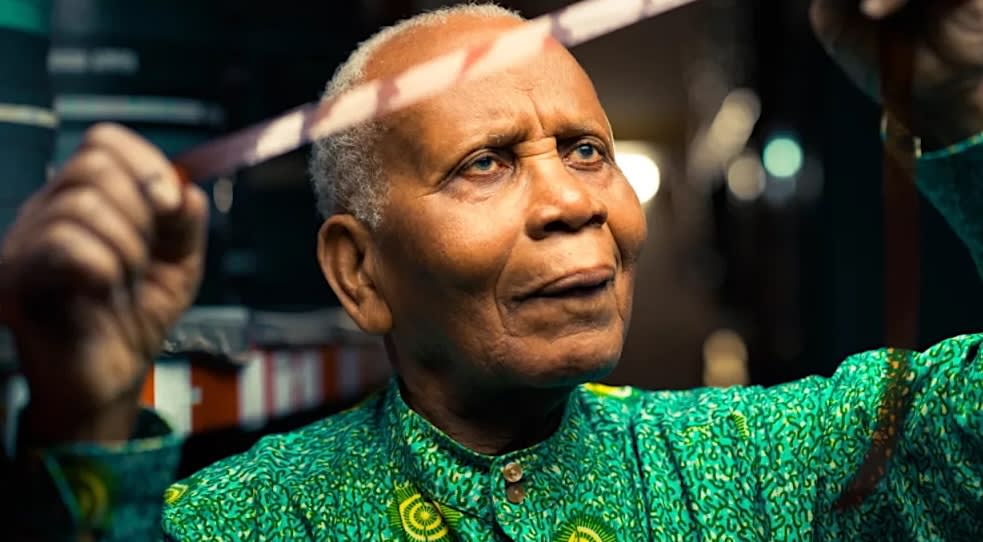
Ben Proudfoot has made a name for himself as a director of documentary shorts, winning Academy Awards for his films The Queen of Basketball and The Last Repair Shop (co-directed with Kris Bowers), and earlier earning a nomination for A Concerto is a Conversation (also with Bowers). All of this within the last five years. One of his multiple films from last year, The Turnaround (co-directed with Kyle Thrash), was the only short to make my list of the best documentaries of 2024. It was only a matter of time before he’d make the leap to features, and his debut in that category, The Eyes of Ghana, is, fortunately, exactly what you should expect it to be: another joyous film showing his love for people and their passions.
With The Last Repair Shop, Proudfoot and Bowers gave us a love letter to music education. His and Thrash’s The Turnaround is a love letter to sports fandom. Now he has made a love letter to the power of cinema. If you’re not familiar with Proudfoot’s work, your expectations for The Eyes of Ghana may differ. It’s not a deep examination of post-colonial Ghana, nor a history lesson about its first prime minister, Kwame Nkrumah. It’s not even the complete story of the discovery of a treasure trove of surviving films that had been thought destroyed after Nkrumah’s government was overthrown by the military. All of those things are part of the documentary, but as firstly a portrait of 93-year-old Ghanaian filmmaker Chris Hesse, it’s a lighter affair than, say, Concerning Violence or even Soundtrack to a Coup d’Etat.
Hesse was the personal cinematographer for Nkrumah, who believed in the importance of film as a tool for independence. The medium could be used by Africans to represent themselves more truthfully and tell their own stories outside the Western gaze and colonial motives. Hesse provided the Ghanaian leader with a dynamic platform for his campaign to unite Africa. He accompanied Nkrumah around their new nation as it gained independence from Britain, overseas to the United Nations, and to Harlem for a celebration of his continent’s American descendants. He captured footage of meetings with John F. Kennedy, Nikita Khrushchev, Fidel Castro, and Queen Elizabeth, with whom Nkrumah is seen dancing. He filmed speeches made to other African leaders. In many cases, particularly on foreign trips, Hesse was the only Black cameraman present. Later, he documented the coup that changed everything.
Nonfics is a reader-supported publication. To receive new posts and support my work, consider becoming a free or paid subscriber.
Now he instructs a new generation of filmmakers in Ghana, ensuring the country’s cinematic legacy continues. While most of the documentary focuses on close-ups of Hesse as he tells his story and charms the audience, one of his mentees, Anita Afonu, is also a supporting subject representing that future of Ghanaian cinema (watch her own short documentary on the history of film in Ghana, Perished Diamonds, here). Another character in the film is “Mr. Addo,” a projectionist at an old outdoor theater that we see restored for an event premiering Hesse’s reclaimed films. Addo and his movie house are additional relics employed to recall the heyday of Ghanaian cinema. He’s also another one of Proudfoot’s passionate; his love of film exhibition is heartfelt.
Where The Eyes of Ghana might have been stronger, albeit while becoming a different documentary altogether in the process, pertains to some of the questions raised directly or indirectly through its narrative. “What was so dangerous about those films that they had to be destroyed?” Afonu asks. Other than them portraying a politician no longer favored and wished to be wiped away, the answer isn’t explicitly given. Also, for a prime minister whose power is recognized to have been abused, how can we be sure Hesse’s films weren’t as much propaganda as record? This documentary and Hesse both maintain a respectable vagueness on certain matters. In a classroom scene, one of his students requests a more concrete statement on whether his work shows proof that Nkrumah was a “good” person. Hesse says it does not because it’s for the viewer to watch and judge if Nkrumah was “right” or “wrong,” “angel” or “satan.” He also affirms that he was always objective in his filming and editing.
Proudfoot’s short documentaries deal in feelings more than information, and The Eyes of Ghana is no different, just longer. The emotional effect is again aided by a sweeping and sentimental score by Bowers (best known now for his Oscar-nominated music for The Wild Robot). It plays at full volume and for full impact over montages of film strips feeding through projectors, volunteers working on the refurbishment of Mr. Addo’s theater, faces of audience members in attendance watching Hesse’s recovered old films, and extended shots of Hesse in tears viewing his own work for the first time in over half a century, in its new preserved digital form. What this documentary lacks in weight and substance, it makes up for in warmth and fervor, ultimately entertaining with positivity and grace.
Thanks for reading Nonfics! This post is public so feel free to share it.
Plenty of documentaries sell serious illuminations, but too few leave us smiling so brightly, infected with the contagious euphoria of their spirited subjects. We need more nonfiction works, no matter their length, like The Last Repair Shop and The Eyes of Ghana, that move and excite us by sharing others who’ve been moved and excited. Does this one occasionally feel like an extended short or compilation of multiple short-film-worthy morsels (Mr. Addo’s part definitely could have been spun off into a brief piece of its own and been just as potent)? I’ve long claimed the distinction between documentary shorts and features is that the former should be more of a profile spotlighting a person or thing, and the latter follows their story, and The Eyes of Ghana seems to fall more into that first definition. Still, it doesn’t dismiss the fact that, as a whole, it’s a poignantly satisfying evolution of Proudfoot’s interests and aesthetic.
This review of The Eyes of Ghana was written during the film’s debut at the 2025 Toronto International Film Festival.
Ben Proudfoot has made a name for himself as a director of documentary shorts, winning Academy Awards for his films The Queen of Basketball and The Last Repair Shop (co-directed with Kris Bowers), and earlier earning a nomination for A Concerto is a Conversation (also with Bowers). All of this within the last five years. One of his multiple films from last year, The Turnaround (co-directed with Kyle Thrash), was the only short to make my list of the best documentaries of 2024. It was only a matter of time before he’d make the leap to features, and his debut in that category, The Eyes of Ghana, is, fortunately, exactly what you should expect it to be: another joyous film showing his love for people and their passions.
With The Last Repair Shop, Proudfoot and Bowers gave us a love letter to music education. His and Thrash’s The Turnaround is a love letter to sports fandom. Now he has made a love letter to the power of cinema. If you’re not familiar with Proudfoot’s work, your expectations for The Eyes of Ghana may differ. It’s not a deep examination of post-colonial Ghana, nor a history lesson about its first prime minister, Kwame Nkrumah. It’s not even the complete story of the discovery of a treasure trove of surviving films that had been thought destroyed after Nkrumah’s government was overthrown by the military. All of those things are part of the documentary, but as firstly a portrait of 93-year-old Ghanaian filmmaker Chris Hesse, it’s a lighter affair than, say, Concerning Violence or even Soundtrack to a Coup d’Etat.
Hesse was the personal cinematographer for Nkrumah, who believed in the importance of film as a tool for independence. The medium could be used by Africans to represent themselves more truthfully and tell their own stories outside the Western gaze and colonial motives. Hesse provided the Ghanaian leader with a dynamic platform for his campaign to unite Africa. He accompanied Nkrumah around their new nation as it gained independence from Britain, overseas to the United Nations, and to Harlem for a celebration of his continent’s American descendants. He captured footage of meetings with John F. Kennedy, Nikita Khrushchev, Fidel Castro, and Queen Elizabeth, with whom Nkrumah is seen dancing. He filmed speeches made to other African leaders. In many cases, particularly on foreign trips, Hesse was the only Black cameraman present. Later, he documented the coup that changed everything.
Nonfics is a reader-supported publication. To receive new posts and support my work, consider becoming a free or paid subscriber.
Now he instructs a new generation of filmmakers in Ghana, ensuring the country’s cinematic legacy continues. While most of the documentary focuses on close-ups of Hesse as he tells his story and charms the audience, one of his mentees, Anita Afonu, is also a supporting subject representing that future of Ghanaian cinema (watch her own short documentary on the history of film in Ghana, Perished Diamonds, here). Another character in the film is “Mr. Addo,” a projectionist at an old outdoor theater that we see restored for an event premiering Hesse’s reclaimed films. Addo and his movie house are additional relics employed to recall the heyday of Ghanaian cinema. He’s also another one of Proudfoot’s passionate; his love of film exhibition is heartfelt.
Where The Eyes of Ghana might have been stronger, albeit while becoming a different documentary altogether in the process, pertains to some of the questions raised directly or indirectly through its narrative. “What was so dangerous about those films that they had to be destroyed?” Afonu asks. Other than them portraying a politician no longer favored and wished to be wiped away, the answer isn’t explicitly given. Also, for a prime minister whose power is recognized to have been abused, how can we be sure Hesse’s films weren’t as much propaganda as record? This documentary and Hesse both maintain a respectable vagueness on certain matters. In a classroom scene, one of his students requests a more concrete statement on whether his work shows proof that Nkrumah was a “good” person. Hesse says it does not because it’s for the viewer to watch and judge if Nkrumah was “right” or “wrong,” “angel” or “satan.” He also affirms that he was always objective in his filming and editing.
Proudfoot’s short documentaries deal in feelings more than information, and The Eyes of Ghana is no different, just longer. The emotional effect is again aided by a sweeping and sentimental score by Bowers (best known now for his Oscar-nominated music for The Wild Robot). It plays at full volume and for full impact over montages of film strips feeding through projectors, volunteers working on the refurbishment of Mr. Addo’s theater, faces of audience members in attendance watching Hesse’s recovered old films, and extended shots of Hesse in tears viewing his own work for the first time in over half a century, in its new preserved digital form. What this documentary lacks in weight and substance, it makes up for in warmth and fervor, ultimately entertaining with positivity and grace.
Thanks for reading Nonfics! This post is public so feel free to share it.
Plenty of documentaries sell serious illuminations, but too few leave us smiling so brightly, infected with the contagious euphoria of their spirited subjects. We need more nonfiction works, no matter their length, like The Last Repair Shop and The Eyes of Ghana, that move and excite us by sharing others who’ve been moved and excited. Does this one occasionally feel like an extended short or compilation of multiple short-film-worthy morsels (Mr. Addo’s part definitely could have been spun off into a brief piece of its own and been just as potent)? I’ve long claimed the distinction between documentary shorts and features is that the former should be more of a profile spotlighting a person or thing, and the latter follows their story, and The Eyes of Ghana seems to fall more into that first definition. Still, it doesn’t dismiss the fact that, as a whole, it’s a poignantly satisfying evolution of Proudfoot’s interests and aesthetic.
This review of The Eyes of Ghana was written during the film’s debut at the 2025 Toronto International Film Festival.