• News
  • Videos
  • Adobe Premiere Tips
  • About
  • FocusPulling.com
Menu
  • News
  • Videos
  • Adobe Premiere Tips
  • About
  • FocusPulling.com

Author Description

Paul Moon
Connect on Facebook Connect on Twitter Connect on Linkedin

H. Paul Moon is a filmmaker based in New York City and Washington, D.C. whose works concentrate on the performing arts. Major films include “Sitka: A Piano Documentary” about the craftsmanship of Steinway pianos, “Quartet for the End of Time” about Olivier Messiaen’s transcendent WWII composition, and an acclaimed feature film about the life and music of American composer Samuel Barber that premiered on PBS. Moon has created music videos for numerous composers including Moondog, Susan Botti and Angélica Negrón, and three opera films set in a community garden. His film “The Passion of Scrooge” was awarded “Critic's Choice” by Opera News as a “thoroughly enjoyable film version, insightfully conceived and directed” with “first-rate and remarkably illustrative storytelling.” Further highlights include works featured in exhibitions at the Nevada Museum of Art and the City Museum of New York, PBS television broadcasts, and best of show awards in over a dozen international film festivals.

30 September 2026

‘NAZA’ Review

Written by Paul Moon

One of the scariest lines I’ve heard spoken in a movie in a long time (and I might be paraphrasing) comes early on in Yuval Abraham and Rachel Szor’s sophomore documentary feature, NAZA: “Having AI decide who lives and dies is better than the person whose friend was killed by Hamas last week.” While there’s some truth to the fact that the latter option is problematic — emotions shouldn’t vengefully drive decisions in war — the former is even worse because there’s no humanity there at all.

It was already bad enough when drones made killing so impersonal. But that’s the way it’s gone with technology for ages. From swords to muskets to sniper rifles to tanks to missiles to drones, advancements in weaponry have often further distanced the militaries from their targets, removing another level of human connection. But leaving it up to computers with their algorithmic reasoning really eliminates any concerns about emotions getting in the way, for better or worse. If you were terrified as I was with the cyber warfare presented in Alex Gibney’s Zero Days, imagine if we had today’s AI when that film was made a decade ago.

Nonfics is a reader-supported publication. To receive new posts and support my work, consider becoming a free or paid subscriber.

In retrospect, that statement in NAZA seems like a brief, minor comment for the film, which is Abraham and Szor’s follow-up to their Oscar-winning feature debut, No Other Land. But it lingers throughout as you’re watching, hearing from many anonymous former Israeli military personnel disclosing strategies and procedures behind the attacks on Gaza since the October 7 massacre. In addition to revelations about AI use, they divulge dystopian levels of surveillance at play (at times it made me recall Laura Poitras’s Citizenfour) and the genocidal rationale behind how many civilian casualties are permitted for every one intended mark — the film’s title comes from an acronym for a Hebrew term translating to “collateral damage” that the Israeli government uses to dehumanize its victims in Gaza even more, as abstract figures.

Some of these obscured and vocally altered documentary participants sound regretful. Others don’t seem to care what they’ve been a part of. Another admits that what they’re doing correlates to the Holocaust (giving additional dark irony to a shot of an ad for a Claude Lanzmann tribute). But it’s difficult to tell how they all feel. Unlike the violent perpetrators presented in films like Joshua Oppenheimer’s The Act of Killing and The Look of Silence, or the more hands-off defense secretaries of Errol Morris’s The Fog of War and The Unknown Known, among countless other comparisons, the interviewees in NAZA don’t show their faces, so we don’t see their expressions, whether they’re apathetic or full of remorse. We don’t even hear their true voices, though I think the tone of the speech is theirs. They’re as removed from us, as far as human connection is concerned, as their victims were from them. Maybe there’s a point there, even if the anonymity was a necessity rather than a choice, but it feels counter to the gist of the documentary overall.

Thanks for reading Nonfics! This post is public so feel free to share it.

Share

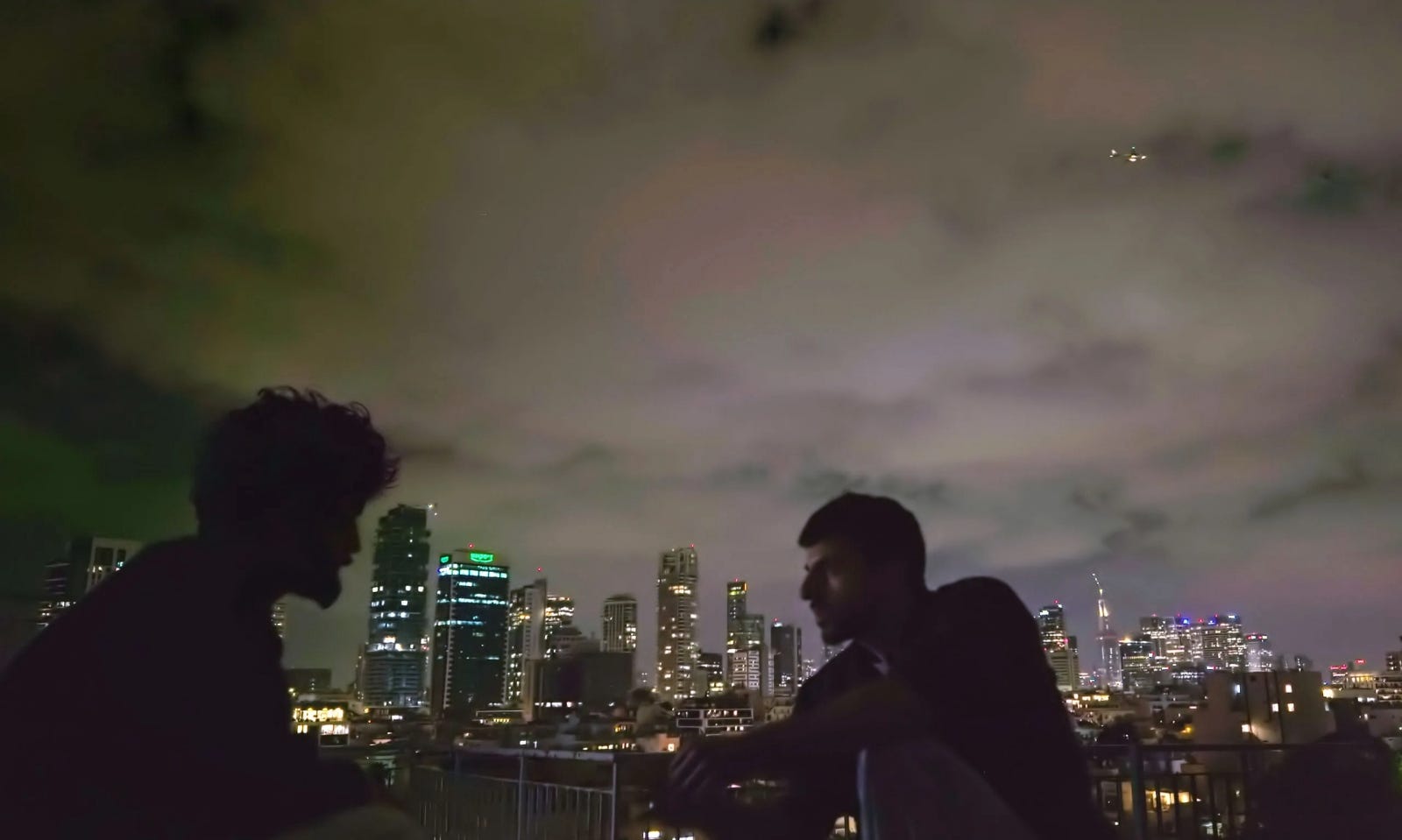
Another visual motif carries more analogical weight. Between the testimonials, which consist of Abraham on screen talking to the film’s participants in shadow one by one on rooftops at night, the documentary cuts to closer shots of the buildings in the background. Is this to make the audience think about the buildings that are discussed as targeted and flattened by Israeli strikes? We see people in the windows of these buildings, but never their faces either. Do they correlate to the faceless, innocent civilian Palestinians killed without a care for who or how old or young they were? NAZA has a consistent style that may be more circumstantial than anything. At its core, the documentary is about information, not the people providing it.

If this were a film about these documentary participants being genocide participants, it would be letting them off the hook somewhat. Abraham tells one of his interview subjects, who confesses he and others have thought they were participating in genocide, but no longer, that they already did. There’s no excusing them. But also no identifying them. It’s a film, rather, about the casualties and those in mourning for them. We are shown some of them — fathers crying, searching for children in rubble, and kids’ legs sticking out of leveled buildings. I wish we were shown even more of this horrifying imagery. It’s also a film about the way the world is going with war and AI, and that should be a terrifying gateway for viewers over here to see, or at least mainly hear, what’s already going on over there.
Uncategorized Comments are off
30 September 2026

‘NAZA’ Review

Written by Paul Moon

One of the scariest lines I’ve heard spoken in a movie in a long time (and I might be paraphrasing) comes early on in Yuval Abraham and Rachel Szor’s sophomore documentary feature, NAZA: “Having AI decide who lives and dies is better than the person whose friend was killed by Hamas last week.” While there’s some truth to the fact that the latter option is problematic — emotions shouldn’t vengefully drive decisions in war — the former is even worse because there’s no humanity there at all.

It was already bad enough when drones made killing so impersonal. But that’s the way it’s gone with technology for ages. From swords to muskets to sniper rifles to tanks to missiles to drones, advancements in weaponry have often further distanced the militaries from their targets, removing another level of human connection. But leaving it up to computers with their algorithmic reasoning really eliminates any concerns about emotions getting in the way, for better or worse. If you were terrified as I was with the cyber warfare presented in Alex Gibney’s Zero Days, imagine if we had today’s AI when that film was made a decade ago.

Nonfics is a reader-supported publication. To receive new posts and support my work, consider becoming a free or paid subscriber.

In retrospect, that statement in NAZA seems like a brief, minor comment for the film, which is Abraham and Szor’s follow-up to their Oscar-winning feature debut, No Other Land. But it lingers throughout as you’re watching, hearing from many anonymous former Israeli military personnel disclosing strategies and procedures behind the attacks on Gaza since the October 7 massacre. In addition to revelations about AI use, they divulge dystopian levels of surveillance at play (at times it made me recall Laura Poitras’s Citizenfour) and the genocidal rationale behind how many civilian casualties are permitted for every one intended mark — the film’s title comes from an acronym for a Hebrew term translating to “collateral damage” that the Israeli government uses to dehumanize its victims in Gaza even more, as abstract figures.

Some of these obscured and vocally altered documentary participants sound regretful. Others don’t seem to care what they’ve been a part of. Another admits that what they’re doing correlates to the Holocaust (giving additional dark irony to a shot of an ad for a Claude Lanzmann tribute). But it’s difficult to tell how they all feel. Unlike the violent perpetrators presented in films like Joshua Oppenheimer’s The Act of Killing and The Look of Silence, or the more hands-off defense secretaries of Errol Morris’s The Fog of War and The Unknown Known, among countless other comparisons, the interviewees in NAZA don’t show their faces, so we don’t see their expressions, whether they’re apathetic or full of remorse. We don’t even hear their true voices, though I think the tone of the speech is theirs. They’re as removed from us, as far as human connection is concerned, as their victims were from them. Maybe there’s a point there, even if the anonymity was a necessity rather than a choice, but it feels counter to the gist of the documentary overall.

Thanks for reading Nonfics! This post is public so feel free to share it.

Share

Another visual motif carries more analogical weight. Between the testimonials, which consist of Abraham on screen talking to the film’s participants in shadow one by one on rooftops at night, the documentary cuts to closer shots of the buildings in the background. Is this to make the audience think about the buildings that are discussed as targeted and flattened by Israeli strikes? We see people in the windows of these buildings, but never their faces either. Do they correlate to the faceless, innocent civilian Palestinians killed without a care for who or how old or young they were? NAZA has a consistent style that may be more circumstantial than anything. At its core, the documentary is about information, not the people providing it.

If this were a film about these documentary participants being genocide participants, it would be letting them off the hook somewhat. Abraham tells one of his interview subjects, who confesses he and others have thought they were participating in genocide, but no longer, that they already did. There’s no excusing them. But also no identifying them. It’s a film, rather, about the casualties and those in mourning for them. We are shown some of them — fathers crying, searching for children in rubble, and kids’ legs sticking out of leveled buildings. I wish we were shown even more of this horrifying imagery. It’s also a film about the way the world is going with war and AI, and that should be a terrifying gateway for viewers over here to see, or at least mainly hear, what’s already going on over there.
Uncategorized Comments are off
30 September 2026

Three of His Wives Died Mysteriously. Did Thomas Randolph Kill Them?

Written by Paul Moon

Netflix’s new documentary The Widower tackles the two decades of investigative work that finally put him behind bars

Uncategorized Comments are off
30 September 2026

Three of His Wives Died Mysteriously. Did Thomas Randolph Kill Them?

Written by Paul Moon

Netflix’s new documentary The Widower tackles the two decades of investigative work that finally put him behind bars

Uncategorized Comments are off
30 September 2026

How to Watch ‘Unmasking a Monster: Aileen Wuornos’ on Investigation Discovery Without Cable

Written by Paul Moon

The three-hour ID documentary revisits the life and crimes of the serial killer, using AI to recreate her likeness

Uncategorized Comments are off
30 September 2026

How to Watch ‘Unmasking a Monster: Aileen Wuornos’ on Investigation Discovery Without Cable

Written by Paul Moon

The three-hour ID documentary revisits the life and crimes of the serial killer, using AI to recreate her likeness

Uncategorized Comments are off
29 September 2026

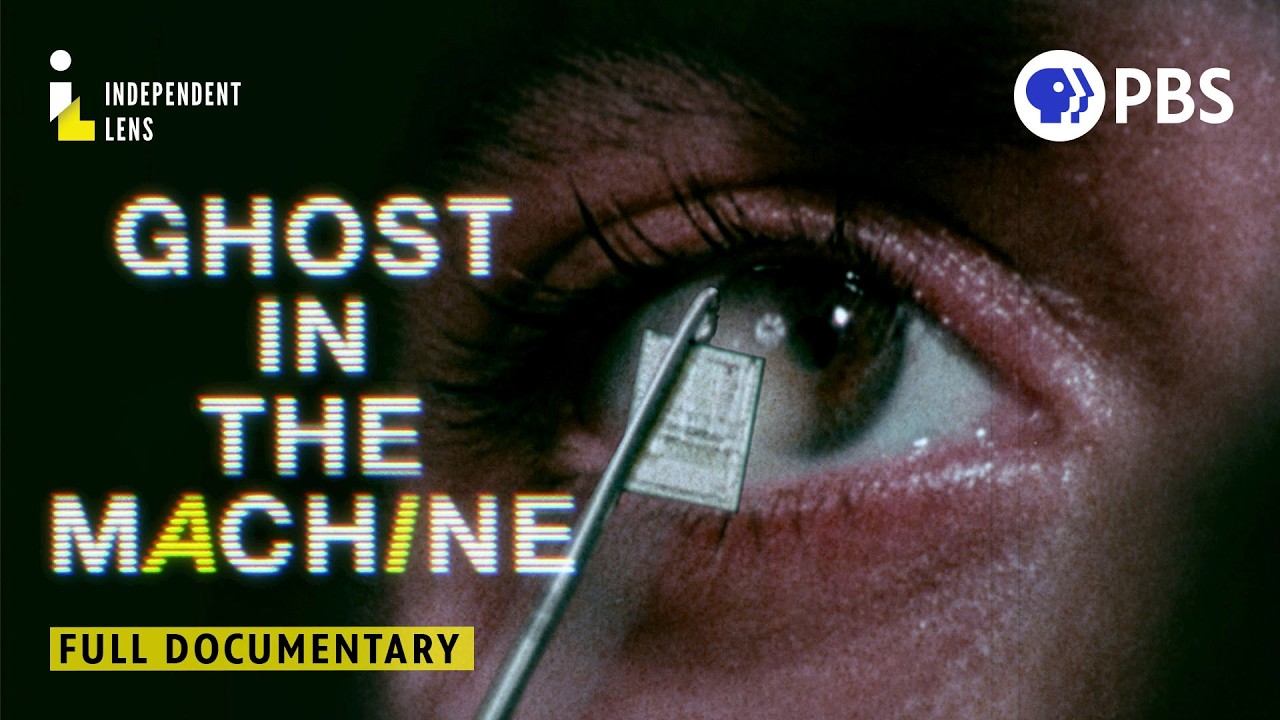
GHOST IN THE MACHINE (WHAT IS AI?)

Written by Paul Moon

ghost-in-the-machine-what-is-ai.jpg

“Ghost in the Machine,” directed by Valerie Veatch Artificial intelligence is now part of everyday life. But what forces created it? “Ghost in the Machine” traces the origins of “AI” and excavates the cultural, political, and philosophical drivers behind a worldwide “AI” boom. Stream anytime on the PBS app https://www.pbs.org/independentlens/

The post GHOST IN THE MACHINE (WHAT IS AI?) appeared first on Channel Nonfiction.

Uncategorized Comments are off
27 September 2026

How to fuck around and find out

Written by Paul Moon

How good is that doc idea, really?

It’s an uncomfortable question to ask about a project you’re already excited about.
But trust me: it only gets more uncomfortable the more you’ve invested in it.

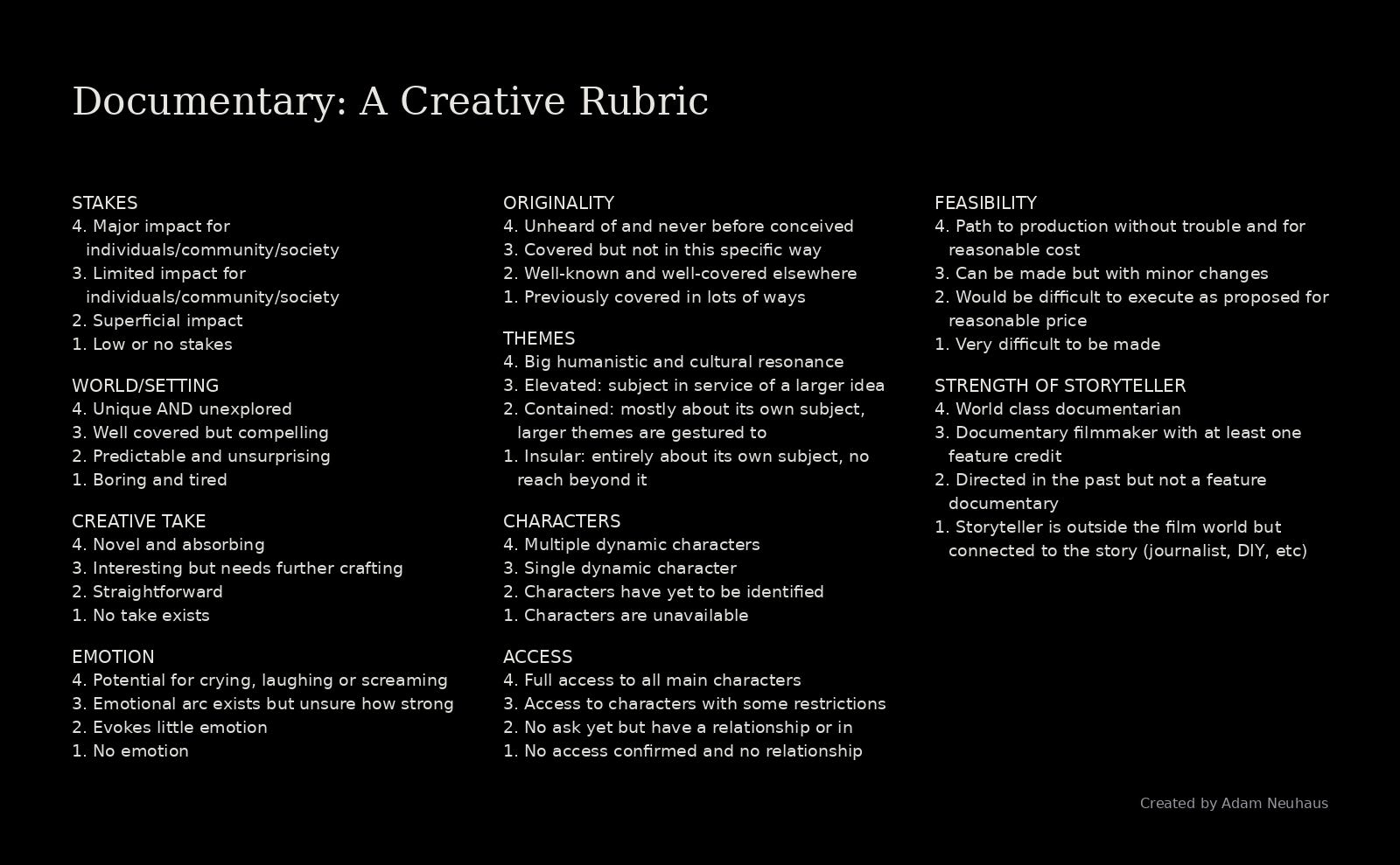
That’s why I love this practical evaluation rubric that Adam (The Nonfiction Hotlist) shared with Kathleen Lingo. They go through it in detail in this post. If you’ve got a documentary going — at any stage! — I strongly recommend using the rubric to “kick the tires” on it (as Kathleen put it).

Adam’s rubric.

Adam said, “The reason I score things on paper is that I’m actually a romantic — I [follow] my gut. A lot of what I follow is instinct, what lights me up. But it’s also good, in the morning light, to run an idea past that initial excitement.”

It’s good to be honest with ourselves that NO MATTER HOW HARD YOU WORK ON SOMETHING, IT MIGHT NEVER HAVE BEEN THAT GOOD OF AN IDEA IN THE FIRST PLACE.

As I’ve written before, that’s why it’s important to keep generating ideas — as many as possible — so you can try to brutally separate the wheat from the chaff. It’s also why I wrote this piece about how to develop an idea and pressure-test it until you can begin to evaluate it clearly.

But the obvious problem is that we can’t answer all these questions during development — or sometimes even well into production, or even post. Without significant investment, you just… kind of can’t know what you’ve got.

You want to make a film whose outcome you can’t fully predict. You need a way to investigate it without spending money you don’t have, exhausting your team, or promising a film you cannot deliver.

In other words: you have to fuck around to find out.
But how can you afford to do that, and manage the risk?

I have a few answers.

Find out what you don’t know

Use Adam’s rubric to identify the dimensions you can’t answer yet, then figure out what you can do to get closer to answers. Is the question whether you can secure access to particular people and places? Is the uncertainty more around your creative take, or the form of the film, or the story structure? What would help you find out?

Diagnosing the uncertainty and taking concrete steps to investigate it: this is what we call development!

Dealing with these uncertainties in documentary is incredibly frustrating. It is difficult to get people to invest money into a film when there are so many questions about what will happen with it. But it’s also difficult to bear the costs alone of so much finding out.

Lower the costs of experimentation

I am brutal with my own ideas in development because, for me, the cost of starting production is relatively high. (I am not a camera person, and I can’t even record sound reliably well! These are real skills, and we’re not all good at everything. And I’m not big on asking people to work for free. C’est la vie.)

What I can do is spend my own time researching, writing, editing pre-existing material, and thinking about story structure, story worlds, and characters. I can work on access and pitching. I can bumble around and see what turns up for “just” the opportunity cost of using my own time.

I spent months trying to figure out how to tell the history of Hollywood using only closing credits sequences. I spent a year trying to make a Norma McCorvey documentary, and more than a year on Larry Norman. None of these ideas turned into films, though I spent hundreds and hundreds of hours on them. I could afford that time because I had — at that time — an academic career, access to small pots of development money, and good research skills.

Maybe you don’t have the particular advantages that allowed me to experiment— I don’t really anymore either (lol) —but I bet you have others!

The creative process — even on films that actually happen, unlike my previous examples — involves a lot of inefficiency, wasted time, ideas that turn out not to work, and legit dead ends. The trick is to make space for that process in your work, however you can, without putting too much at risk in the process.

If you’re starting out and can learn to shoot and record sound yourself, that’s one VERY GOOD WAY to keep the cost of trying a new idea low.

If you can find someone to fund a defined development phase, that’s another way. A few days of filming, a trip to work on access, or some archival research might tell you a great deal without requiring you to commit to making the entire film.

The two buzziest docs out there right now — at least, in my little world — are probably The History of Concrete and You Can See Everything. Without having any inside information about how these highly experimental and therefore risky films came to be, I can still infer a bit about how they navigated uncertainty and risk differently. John Wilson has a process where he shoots everything himself, keeping the costs of production very low. (He said the production of this film was around $20,000.) This allows him great freedom to explore and meander around — a process he has put to great use in his career! On the other hand, it is reported that the Nathan Fielder / Lance Oppenheim / Elizabeth Holmes documentary cost $8 million to make. The important other context on this film is it is apparently bonkers bananas and goes places you can never imagine — in other words, there’s no way the team knew exactly what they were pitching at the outset. Obviously, that team was able to convince their financiers to spend a huge amount of money for them to fuck around and find out. Two paths. (Realistically, only one is available to most of us, she says, with no bitterness or jealousy whatsoever!)

You’ve got to figure out — one way or another — how to finance your own fucking around and finding out.

Know which risks are worth taking

The biggest downside to all of my harping on about how important it is to really interrogate whether an idea is worth pursuing is that it makes it seem like everything has to like, obviously and definitely work from the get-go. That could NOT be further from my own perspective — although I’m sure many people who actually invest in movies would say, uhh, yeah, no duh, we are not interested in funding your creative risks, sorry.

For my part: I’m not suggesting you stop taking creative risks. I am certain that a film with NO risk at all at its core is going to be BOOOOOOORING. Often, the joy of a great film is seeing a maker pull something off that is difficult, or a “tough sell,” or that you actually didn’t think would work! (Again, see The History of Concrete and You Can See Everything).

Do be honest about what the risks are, and why they are exciting to you, why they are worth taking — and how the film can actually bear the cost if those risks don’t pay off.

I remember when I was pitching Our Nixon and several decision makers — all of whom knew way more than me!!! — were adamant that my proposed all archival approach would never work and that I would need a narrator. I understood what they meant about the risk they knew I was taking on, but I felt it was a risk worth taking, and that that was what would make the film special and not just another Nixon movie. I was able to just keep editing until I was better able to express that it really would work — just for the cost of my own time.

You don’t want to eliminate every uncertainty just because it makes the project hard to score on a rubric. Again: BOOOOORING. But who is being asked to shoulder that risk?

At some point you may be obligated to deliver

There is a point where “let’s fuck around and see what happens” stops being a sufficient plan. Perhaps someone has given you a bunch of money. Perhaps you’ve hired people, made promises, booked shoots. Perhaps you’ve quit your job to make the film and your rent check now depends on finishing it. In any case, if you really launch into the film, you’ll probably have obligations. You can’t always responsibly decide that the experiment was interesting but didn’t turn into a movie, then wander off to the next idea.

At this stage, if you are COMMITTED, your job is to decide which open questions are still worth pursuing, which dead ends you need to leave behind, and what film you can deliver with the resources you have left.

You can’t promise anyone a great film. You can take seriously the promises you made. That’s why I want as much freedom as possible to fuck around early, when I can still afford to find out that an idea isn’t working. The more other people — and my own livelihood — are depending on the film, the less casually I can accept the risk of failure.

I think the trick is to create enough space to fail before failure becomes something you can’t afford. How you do that is up to you.

Comings, Goings & News

  • The ever-evolving and ever-ambitious force of nature James Belfer has launched a new Blu-ray label called Video Visions. “I found it imperative not just to help films get made and seen, but also to preserve and archive them,” James said in a statement. “Movies have been disappearing digitally for years. But to quote Guillermo del Toro, ‘If you own a great 4K HD, Blu-ray, DVD, etc., of a film or films you love… you are the custodian of those films for generations to come.’” In a fun twist (for me personally), Video Visions will open a storefront in the tiny upstate town of Chatham, where I was inspired to write this quasi-elegy for physical media. I’m proud to say I’ll have two films on this label—Nuts! and Our Nixon. Follow Video Visions on IG.

  • Wild Inside’s 60-day theatrical window is soon coming to a close. Thank you to everyone who came out, bought a ticket, left a review on Letterboxd, etc. We did great!

  • Now we have a few months to play film festivals, so if you’re a festival programmer interested in the film, please reach out! We’ll continue to list upcoming screenings at FlacoDocumentary.com and on our Instagram. A few highlights: I’ll be in Charlottesville for the Virginia Film Festival, where I’ll accept their Chronicler Award, and Wild Inside will be the Opening Night Gala in Hot Springs! Sadly, I won’t be at that latter one, but David and Jackie will be.

  • I’ve just wrapped the first two days of production in Salt Lake City on a brand-new top-secret project. Based on those two days, it’s gonna be a banger. I’ll be deep in production over the next few months. Can’t wait to tell you more!

Uncategorized Comments are off
← Older posts
Newer posts →

B&H Search Engine Banner


B&H Photo - Video - Pro Audio


© Copyright 2022 by Zen Violence Films LLC, all rights reserved. To read the site privacy policy and ethics statement, click here.