The “Elvis” director is framing his next ode to Presley as more than a documentary, more than a concert film, and unlike anything audiences have ever seen.

The “Elvis” director is framing his next ode to Presley as more than a documentary, more than a concert film, and unlike anything audiences have ever seen.
Documentary filmmaker Ken Burns reveals the surprising origin story of his signature still photo animation technique in a new GQ interview, sharing how a chance meeting with Steve Jobs in 2002 led to a deal that would put the effect on every Mac computer, while explaining the filmmaking philosophy that made the approach so influential in the first place.
Few techniques have become as synonymous with documentary filmmaking as the Ken Burns Effect. The approach of panning and zooming across still photographs to create cinematic movement from static archival material has influenced generations of filmmakers and found its way into virtually every editing application on the market. In this revealing interview, Burns explains why a 33-second zoom convinced him that meaning accrues through duration, how he treats every photograph as a master shot, and shares the hilarious story of telling Steve Jobs he does not do commercial endorsements.
Watch the interview with Ken Burns below from 04:49 to hear about the origins of the “Ken Burns Effect” and his unique story with how Steve Jobs immortalized it.
Ken Burns stands among the most influential documentary filmmakers in American cinema history. His career spans more than five decades, beginning with “Brooklyn Bridge” in 1981, which earned an Academy Award nomination and established the visual language he would refine across landmark works including “The Civil War,” “Jazz,” “Baseball,” “The War,” “The Vietnam War,” and most recently “The American Revolution.”
What distinguishes Burns from other documentarians is his commitment to bringing archival photographs to life. Rather than treating still images as static illustrations, Burns approaches them as raw material for cinematic storytelling, combining deliberate camera movement with complex sound design, period music, and first-person narration performed by actors. By the time his team reached “The American Revolution,” battle sequences built from historical paintings might feature 150 audio tracks creating immersive environments where sound travels across the stereo field.
 Ken Burns speaks at the gala ceremony for the inaugural Library of Congress Lavine/Ken Burns Prize for Film, October 17, 2019. Photo by Shawn Miller/Library of Congress.
Note: Privacy and publicity rights for individuals depicted may apply.
The technique that would eventually carry Burns’ name originated during “Brooklyn Bridge” production in the early 1980s. Working in the pre-digital era meant relying on animation stands where each frame had to be manually repositioned. Twenty-four frames produced one second of footage, so a 10-second zoom required 240 individual captures with precise adjustments between each.
Burns wanted to execute a 33-second zoom into the only existing portrait of John Roebling, the visionary engineer who designed the Brooklyn Bridge. The animation studio technician thought he had lost his mind.
“Are you kidding? Nobody’s gonna look at a 30-second zoom in on somebody. Are you outta your mind?” Burns recalls being told.
But Burns persisted. Accompanied by author Kurt Vonnegut reading about Roebling’s extraordinary genius, the extended move draws viewers progressively into the subject’s eyes, creating intimacy that brief exposure could never achieve. “And it works. You can see there’s a great quote read by Kurt Vonnegut, the writer, about how unbelievably genius John Roebling was. And you’re just looking at him and getting at his eyes, and it does work.”
Burns’ approach goes far beyond simple pans and zooms. He treats every still photograph as a master shot containing within it the potential for long shots, medium shots, close-ups, tilts, pans, reveals, and detail inserts. The technique aims to wake up archival images so viewers believe they are witnessing reality.
“You’re looking at it and believing it’s real, but also listening to it,” Burns explains. “Are the troops tramping? Are the cannon firing? Is the bat cracking? Is the crowd cheering? All of those questions you’re asking.”
This layered approach combines deliberate camera movement with elaborate sound design. The goal is transforming archival photographs into something approaching the experiential quality of live-action footage, engaging viewers emotionally rather than simply presenting historical documents.
 Demonstration of the Ken Burns effect settings in Final Cut Pro, demonstrated on a DJI press image.
Burns frames his technique within a broader philosophy about attention and meaning in filmmaking. “Your eye can visually pick up something at a 48th of a second,” he explains. “If I did one frame out of 24 of that tree and showed you just 1/48 of a second, you’d say tree, and you’d know it. Meaning requires something else.”
The distinction is between recognition and understanding. Physiological perception happens instantaneously, but emotional engagement requires sustained attention. “Just because you can physiologically read that tree, doesn’t mean it has any meaning. So sometimes looking at a tree for five seconds, and then 10, and then something happens, you force it.”
Burns extends this principle beyond individual shots to life itself. “All meaning, for everybody, accrues in duration. The work that you’re proudest of, the relationships you care most about have benefited from your sustained attention. And that’s really one of the big things that we have.”
He cites advice from veteran New York editor Jerry Michaels as the only filmmaking law he has found universally true: “A shot lasts as long as it lasts.”
The technique’s journey from professional craft to mainstream recognition took an unexpected turn in November 2002. “I got a call from Steve Jobs and I went, ‘Oh yeah, right.’ But it was,” Burns recounts. Jobs invited him to Apple headquarters in Silicon Valley.
At that December meeting, engineers demonstrated a new feature allowing users to pan and zoom across digital photographs with music accompaniment. Jobs explained that every Mac shipping from January 2003 onward would include this capability. Then came the unexpected proposal: Apple wanted to call it “The Ken Burns Effect.”
“I don’t do commercial endorsements,” Burns replied immediately.
“What?” Jobs responded, clearly not expecting resistance.
The two retreated to Jobs’ office to negotiate. Over the following hour, they reached an arrangement where Apple provided Burns with hardware and software valued at more than a million dollars, which he largely donated. “I do admit that one or two computers stayed, ’cause everybody was saying, ‘Ken, we do need a computer. Let’s be not like stone age,’” Burns admits.
Burns is gracious but clear about the distinction between Apple’s implementation and his documentary approach. “It saved, I have to tell you, millions of vacations, and memorial services, and weddings, and bar mitzvahs and stuff like that as a way to organize and tell a little story,” he acknowledges. But he describes the consumer feature as “a pale version” of the elaborate craft his team employs.
 Where the meeting between Ken Burns and Steve Jobs probably took place: the former Apple headquarters, the “Infinite Loop campus” in Cupertino, California. Image credit: InvadingInvader – Own work, CC BY-SA 4.0
Modern editing applications now include automated Ken Burns-style effects, but Burns remains adamant about what distinguishes craft from convenience. The automated approach lacks the human eye that establishes intentional framing choices.
“There’s some generational thing,” Burns observes. “So I’m always yelling… Not yelling, but I’m saying, ‘That’s a zoom to nowhere. Where are you going? What are you looking at?’ Because there’s a drift in but it seems to be heading towards your elbow not your face.”
Every camera move across a photograph requires conscious decisions about starting position, ending position, and the journey between them. The filmmaker must understand what the audience should see and feel at each moment. Without that intentionality, the effect becomes aimless movement rather than visual storytelling.
“I’m always trying to redirect and try to insist on a human intelligence behind the choice of the starting frame and the ending frame on these zooms,” Burns explains.
The Ken Burns Effect has become so ubiquitous that its origins in painstaking documentary craft can easily be forgotten. For filmmakers working with archival material, Burns’ approach offers both technical methodology and philosophical foundation: every photograph contains a story waiting to be revealed through deliberate movement and sustained attention. What techniques do you use to bring still images to life in your documentary work?
Featured image credit: Ken Burns still from GQ video / Steve Jobs photo by Matthew Yohe, CC BY-SA 3.0
If there was one prominent theme for documentaries in 2025, it was the importance of journalists. Not just the professionals, but the citizen-activist variety as well. Also, several documentaries this year proved that some stories are adequately covered only thanks to the convenience of cell phones and body cams in war zones, prisons, and other dangerous locations (such as Florida) today.
As we saw with this year’s Critics Choice Documentary Awards nominees, many of the best documentaries of 2025 depended on found footage rather than original material. At a time when images are becoming less and less trustworthy, that trend may not continue, or maybe it needs to, so that filmmakers can help with verifying, mediating, and interpreting these images.
Anyway, I’m not here to make guesses about the future of documentary. I’m here to look back at the past 12 months of documentary releases. Below are my picks for the 25 best documentaries of the year. These are the films and series I haven’t been able to stop thinking about and won’t anytime soon. A few titles included in past drafts of this list have fallen off, so check back on our midyear version for more.
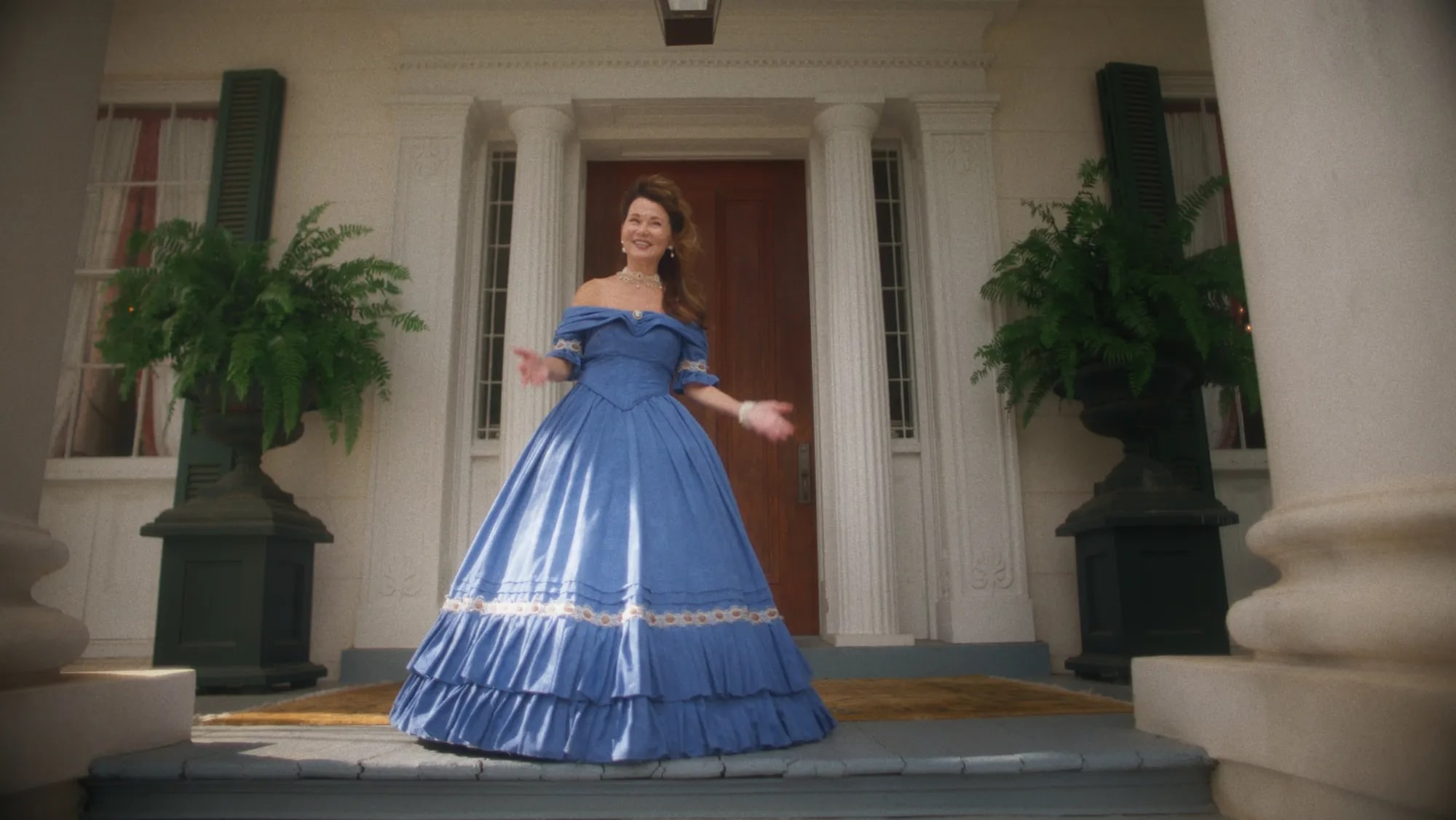
We had to wait seven years for a sophomore feature from Suzannah Herbert, and I hope this one won’t go as underappreciated as her 2018 underdog sports documentary, Wrestle (co-directed by Lauren Belfer). Natchez is a film that hits differently, more cerebrally than empathically. What starts seemingly as a curious look at one Mississippi town’s legacy regarding slavery winds up as a deeper exploration of how history should be represented, especially when it comes to humanity’s mistakes.
By the end of this uniquely photographed documentary, Natchez’s past is anything but a black or white issue (or, not just a black and white issue, if we’re talking race) as Herbert bursts bubbles filled with expectations and stereotypes. Its pacing and character elements reminded me of Lance Oppenheim’s documentaries, while its attitude and approach make it a good pairing with Donal Mosher and Michael Palmieri‘s The Gospel of Eureka. Yet I found it more thought-provoking and resonant, maybe because I have a complicated personal relationship with the South that has become even more complex since I moved here. I’d love to watch it with my neighbors.
Natchez (which had an awards-qualifying run last month) officially opens theatrically on January 30, 2026.
Chronicling a story that’s like a real-life It’s a Mad Mad Mad Mad World (with a touch of Willy Wonka and the Chocolate Factory), Gold & Greed: The Hunt for Fenn’s Treasure was the first truly addictive binge of the year, as far as docuseries go. Across three episodes, it recaps the search for and eventual discovery of a chest of gold and gems hidden in the Rocky Mountains by a wealthy art dealer. The series is full of mystery, adventure, and heart, and despite having an open-and-shut narrative, there are still enough vague and continuing bits to leave viewers with much to ponder and discuss.
Beyond just being a riveting yarn, Gold & Greed excels in the portrayal of its varied characters (also like It’s a Mad Mad Mad Mad World). The docuseries highlights a handful of players in the game, plus the titular gamemaster, Forrest Fenn, and treats them all with respect as it shares their complete arcs. They all provide, rather than are used for, genuinely intriguing, emotional, amusing, and/or incredible moments. It’s the most purely entertaining docuseries released this year.
Gold & Greed: The Hunt for Fenn’s Treasure is streaming on Netflix.
Nonfics is a reader-supported publication. To receive new posts and support my work, consider becoming a free or paid subscriber.
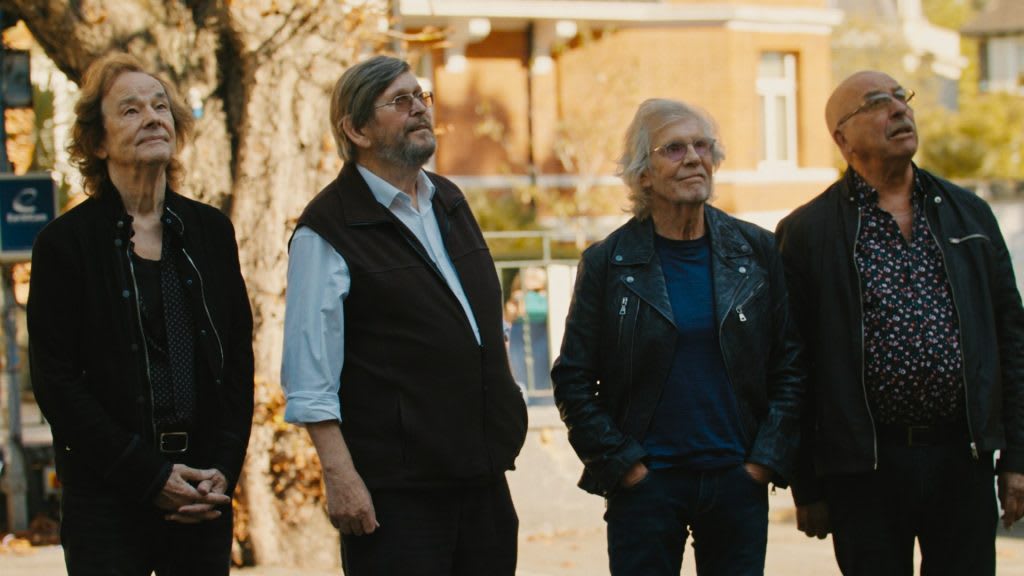
This was a great year for music documentaries, with a few more to come on this list. The top-grossing documentary of the year so far, Becoming Led Zeppelin, would be represented here if I included a few more entries. It’s an impressive work, if not as original as others ranked higher. Take Hung Up On a Dream: The Zombies Documentary as an example of one that took me by surprise. Directed by Robert Schwartzman (yet another Coppola family member making films; he also produced the number 10 pick below), this documentary is partly behind the music and partly, and more compellingly, kind of a lengthy epilogue to one band’s heyday.
Due to its most affecting element, the post-fame life of The Zombies singer Colin Blunstone, Hung Up on a Dream does for vocalists what Hit So Hard: The Life and Near Death of Patty Schemel does for drummers. Singers are at least often frontpersons for their groups, but especially if they’re not songwriters, they can be expendable components. Becoming Led Zeppelin gets into the strange identity of vocalists as well, though only in the pre-Led Zeppelin years. I could see members of Led Zeppelin having a similar post-existence had they disbanded early on, as The Zombies did. Regarding this documentary, it warmed my heart in its showcase of Blunstone and the other band members, who still get along beautifully decades after initially breaking up.
Hung Up on a Dream: The Zombies Documentary is available to rent digitally.
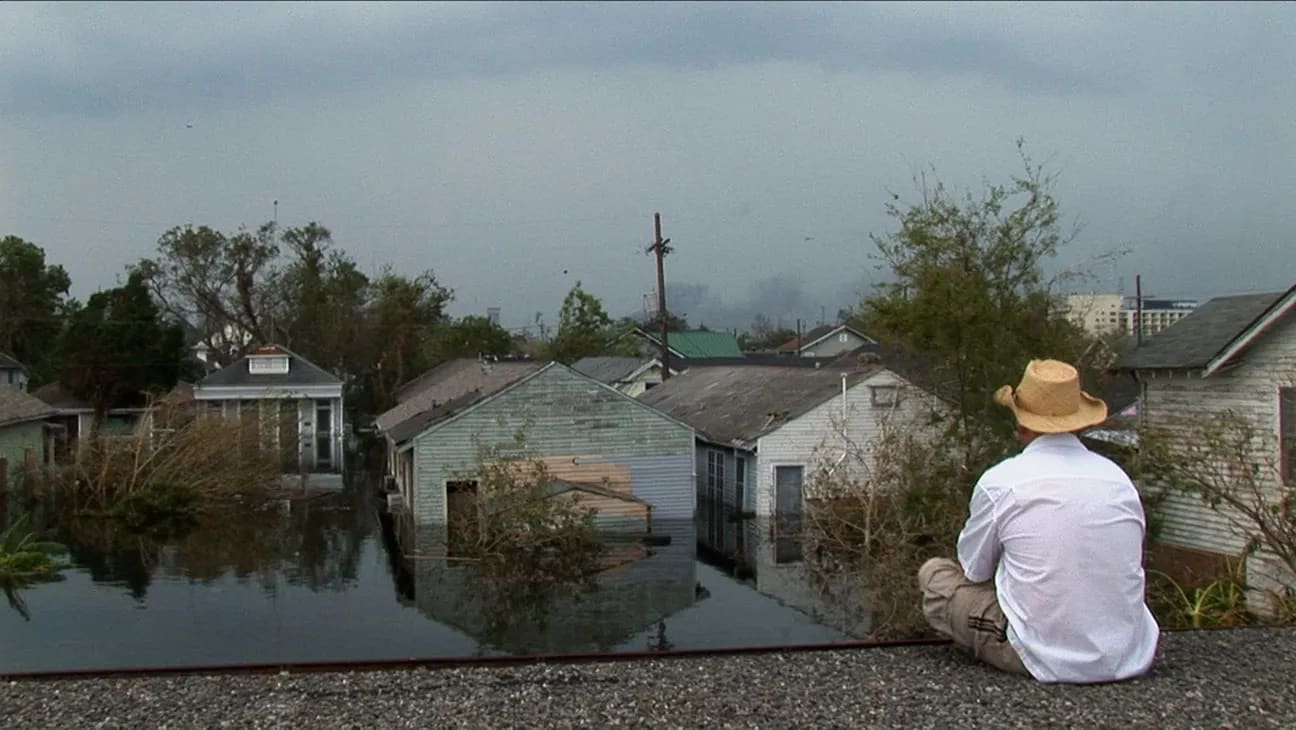
Despite having one of the worst titles of the year, Hurricane Katrina: Race Against Time managed to stand out among this year’s obligatory nostalgia-driven anniversary-targeting histories. Not just compared to the plethora of other Katrina-focused films and series, but also above fellow National Geographic releases, particularly those in the consistently commendable One Day in America franchise (of which Oklahoma City Bombing: One Day in America deserves an honorable mention here).
Directed by Oscar-nominated filmmaker Traci Curry (Attica), this five-part documentary devotes a brief amount of time to the natural aspect of the disaster in relation to the broader story of Katrina’s immediate and long-term aftermath. It’s not just a look back at events of 20 years ago. It’s a warning for today, and while not necessarily serendipitous or surprising, the series turned out to be more relevant than perhaps intended, given the governmental gutting happening at the time of its release. That it never feels preachy, thanks in part to its interest in personal stories rather than analytical hindsight, is as laudable as is its impeccable storytelling.
Hurricane Katrina: Race Against Time is available to stream on Hulu and Disney+.
A few of my favorite documentaries of the year come across as almost too neatly narrativized to trust as nonfiction. Most of these are character-driven works, like Liza Mandelup’s Caterpillar, which is odd since usually these types of documentaries are more open-ended, as is life. Still, some situations are predictable going in. That’s the case with this film’s premise involving a risky cosmetic medical procedure. It doesn’t make their stories any less compelling, however, maybe since it makes their participants even more intriguing as subjects.
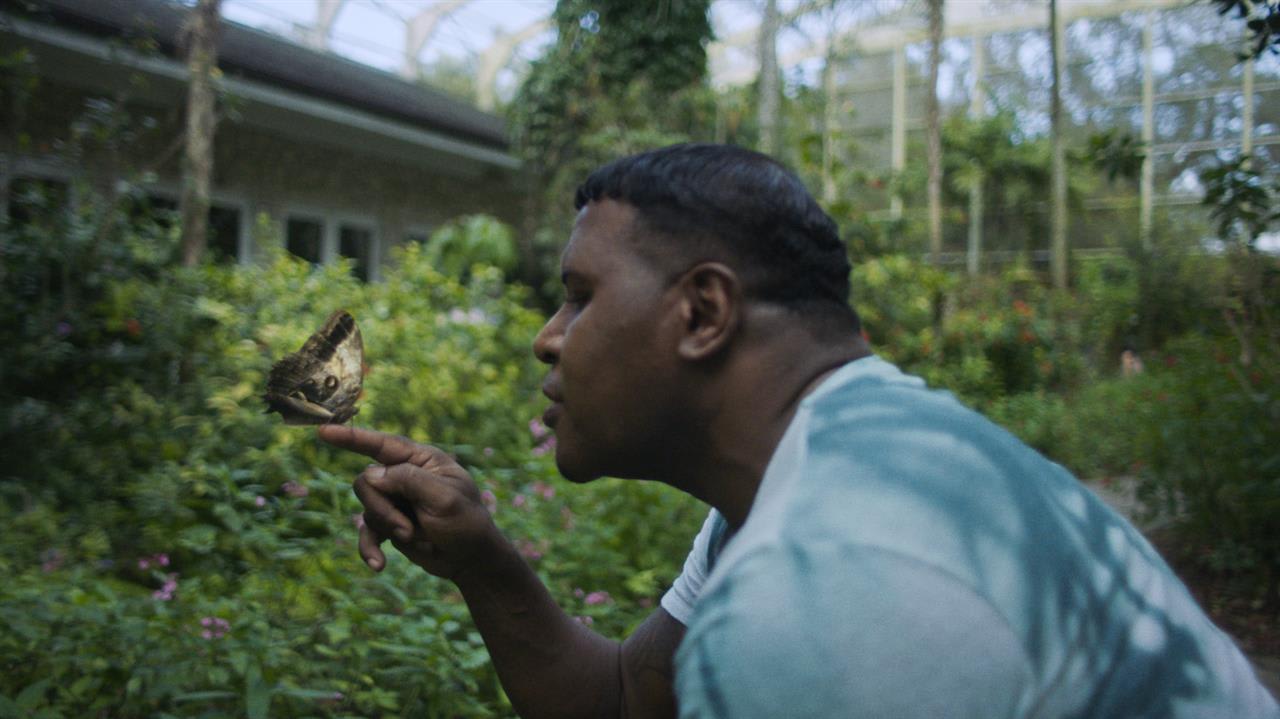
The film follows one man’s pursuit of beauty and confidence through physical change, specifically the permanent alteration of his eye color. Mandelup documents his life beforehand, his trip to India to have the procedure done, and his life afterward, including the pros and cons of his metamorphosis. It’s a sad story on the surface level and even sadder with the consideration that David, the character at the center of Caterpillar, is not uncommon in his desire to become a butterfly in this personal-image-driven era of social media culture.
Caterpillar is available to rent digitally.
If there was one prominent theme for documentaries in 2025, it was the importance of journalists. Not just the professionals, but the citizen-activist variety as well. Also, several documentaries this year proved that some stories are adequately covered only thanks to the convenience of cell phones and body cams in war zones, prisons, and other dangerous locations (such as Florida) today.
As we saw with this year’s Critics Choice Documentary Awards nominees, many of the best documentaries of 2025 depended on found footage rather than original material. At a time when images are becoming less and less trustworthy, that trend may not continue, or maybe it needs to, so that filmmakers can help with verifying, mediating, and interpreting these images.
Anyway, I’m not here to make guesses about the future of documentary. I’m here to look back at the past 12 months of documentary releases. Below are my picks for the 25 best documentaries of the year. These are the films and series I haven’t been able to stop thinking about and won’t anytime soon. A few titles included in past drafts of this list have fallen off, so check back on our midyear version for more.
We had to wait seven years for a sophomore feature from Suzannah Herbert, and I hope this one won’t go as underappreciated as her 2018 underdog sports documentary, Wrestle (co-directed by Lauren Belfer). Natchez is a film that hits differently, more cerebrally than empathically. What starts seemingly as a curious look at one Mississippi town’s legacy regarding slavery winds up as a deeper exploration of how history should be represented, especially when it comes to humanity’s mistakes.
By the end of this uniquely photographed documentary, Natchez’s past is anything but a black or white issue (or, not just a black and white issue, if we’re talking race) as Herbert bursts bubbles filled with expectations and stereotypes. Its pacing and character elements reminded me of Lance Oppenheim’s documentaries, while its attitude and approach make it a good pairing with Donal Mosher and Michael Palmieri‘s The Gospel of Eureka. Yet I found it more thought-provoking and resonant, maybe because I have a complicated personal relationship with the South that has become even more complex since I moved here. I’d love to watch it with my neighbors.
Natchez (which had an awards-qualifying run last month) officially opens theatrically on January 30, 2026.
Chronicling a story that’s like a real-life It’s a Mad Mad Mad Mad World (with a touch of Willy Wonka and the Chocolate Factory), Gold & Greed: The Hunt for Fenn’s Treasure was the first truly addictive binge of the year, as far as docuseries go. Across three episodes, it recaps the search for and eventual discovery of a chest of gold and gems hidden in the Rocky Mountains by a wealthy art dealer. The series is full of mystery, adventure, and heart, and despite having an open-and-shut narrative, there are still enough vague and continuing bits to leave viewers with much to ponder and discuss.
Beyond just being a riveting yarn, Gold & Greed excels in the portrayal of its varied characters (also like It’s a Mad Mad Mad Mad World). The docuseries highlights a handful of players in the game, plus the titular gamemaster, Forrest Fenn, and treats them all with respect as it shares their complete arcs. They all provide, rather than are used for, genuinely intriguing, emotional, amusing, and/or incredible moments. It’s the most purely entertaining docuseries released this year.
Gold & Greed: The Hunt for Fenn’s Treasure is streaming on Netflix.
Nonfics is a reader-supported publication. To receive new posts and support my work, consider becoming a free or paid subscriber.
This was a great year for music documentaries, with a few more to come on this list. The top-grossing documentary of the year so far, Becoming Led Zeppelin, would be represented here if I included a few more entries. It’s an impressive work, if not as original as others ranked higher. Take Hung Up On a Dream: The Zombies Documentary as an example of one that took me by surprise. Directed by Robert Schwartzman (yet another Coppola family member making films; he also produced the number 10 pick below), this documentary is partly behind the music and partly, and more compellingly, kind of a lengthy epilogue to one band’s heyday.
Due to its most affecting element, the post-fame life of The Zombies singer Colin Blunstone, Hung Up on a Dream does for vocalists what Hit So Hard: The Life and Near Death of Patty Schemel does for drummers. Singers are at least often frontpersons for their groups, but especially if they’re not songwriters, they can be expendable components. Becoming Led Zeppelin gets into the strange identity of vocalists as well, though only in the pre-Led Zeppelin years. I could see members of Led Zeppelin having a similar post-existence had they disbanded early on, as The Zombies did. Regarding this documentary, it warmed my heart in its showcase of Blunstone and the other band members, who still get along beautifully decades after initially breaking up.
Hung Up on a Dream: The Zombies Documentary is available to rent digitally.
Despite having one of the worst titles of the year, Hurricane Katrina: Race Against Time managed to stand out among this year’s obligatory nostalgia-driven anniversary-targeting histories. Not just compared to the plethora of other Katrina-focused films and series, but also above fellow National Geographic releases, particularly those in the consistently commendable One Day in America franchise (of which Oklahoma City Bombing: One Day in America deserves an honorable mention here).
Directed by Oscar-nominated filmmaker Traci Curry (Attica), this five-part documentary devotes a brief amount of time to the natural aspect of the disaster in relation to the broader story of Katrina’s immediate and long-term aftermath. It’s not just a look back at events of 20 years ago. It’s a warning for today, and while not necessarily serendipitous or surprising, the series turned out to be more relevant than perhaps intended, given the governmental gutting happening at the time of its release. That it never feels preachy, thanks in part to its interest in personal stories rather than analytical hindsight, is as laudable as is its impeccable storytelling.
Hurricane Katrina: Race Against Time is available to stream on Hulu and Disney+.
A few of my favorite documentaries of the year come across as almost too neatly narrativized to trust as nonfiction. Most of these are character-driven works, like Liza Mandelup’s Caterpillar, which is odd since usually these types of documentaries are more open-ended, as is life. Still, some situations are predictable going in. That’s the case with this film’s premise involving a risky cosmetic medical procedure. It doesn’t make their stories any less compelling, however, maybe since it makes their participants even more intriguing as subjects.
The film follows one man’s pursuit of beauty and confidence through physical change, specifically the permanent alteration of his eye color. Mandelup documents his life beforehand, his trip to India to have the procedure done, and his life afterward, including the pros and cons of his metamorphosis. It’s a sad story on the surface level and even sadder with the consideration that David, the character at the center of Caterpillar, is not uncommon in his desire to become a butterfly in this personal-image-driven era of social media culture.
Caterpillar is available to rent digitally.
If there was one prominent theme for documentaries in 2025, it was the importance of journalists. Not just the professionals, but the citizen-activist variety as well. Also, several documentaries this year proved that some stories are adequately covered only thanks to the convenience of cell phones and body cams in war zones, prisons, and other dangerous locations (such as Florida) today.
As we saw with this year’s Critics Choice Documentary Awards nominees, many of the best documentaries of 2025 depended on found footage rather than original material. At a time when images are becoming less and less trustworthy, that trend may not continue, or maybe it needs to, so that filmmakers can help with verifying, mediating, and interpreting these images.
Anyway, I’m not here to make guesses about the future of documentary. I’m here to look back at the past 12 months of documentary releases. Below are my picks for the 25 best documentaries of the year. These are the films and series I haven’t been able to stop thinking about and won’t anytime soon. A few titles included in past drafts of this list have fallen off, so check back on our midyear version for more.
We had to wait seven years for a sophomore feature from Suzannah Herbert, and I hope this one won’t go as underappreciated as her 2018 underdog sports documentary, Wrestle (co-directed by Lauren Belfer). Natchez is a film that hits differently, more cerebrally than empathically. What starts seemingly as a curious look at one Mississippi town’s legacy regarding slavery winds up as a deeper exploration of how history should be represented, especially when it comes to humanity’s mistakes.
By the end of this uniquely photographed documentary, Natchez’s past is anything but a black or white issue (or, not just a black and white issue, if we’re talking race) as Herbert bursts bubbles filled with expectations and stereotypes. Its pacing and character elements reminded me of Lance Oppenheim’s documentaries, while its attitude and approach make it a good pairing with Donal Mosher and Michael Palmieri‘s The Gospel of Eureka. Yet I found it more thought-provoking and resonant, maybe because I have a complicated personal relationship with the South that has become even more complex since I moved here. I’d love to watch it with my neighbors.
Natchez (which had an awards-qualifying run last month) officially opens theatrically on January 30, 2026.
Chronicling a story that’s like a real-life It’s a Mad Mad Mad Mad World (with a touch of Willy Wonka and the Chocolate Factory), Gold & Greed: The Hunt for Fenn’s Treasure was the first truly addictive binge of the year, as far as docuseries go. Across three episodes, it recaps the search for and eventual discovery of a chest of gold and gems hidden in the Rocky Mountains by a wealthy art dealer. The series is full of mystery, adventure, and heart, and despite having an open-and-shut narrative, there are still enough vague and continuing bits to leave viewers with much to ponder and discuss.
Beyond just being a riveting yarn, Gold & Greed excels in the portrayal of its varied characters (also like It’s a Mad Mad Mad Mad World). The docuseries highlights a handful of players in the game, plus the titular gamemaster, Forrest Fenn, and treats them all with respect as it shares their complete arcs. They all provide, rather than are used for, genuinely intriguing, emotional, amusing, and/or incredible moments. It’s the most purely entertaining docuseries released this year.
Gold & Greed: The Hunt for Fenn’s Treasure is streaming on Netflix.
Nonfics is a reader-supported publication. To receive new posts and support my work, consider becoming a free or paid subscriber.
This was a great year for music documentaries, with a few more to come on this list. The top-grossing documentary of the year so far, Becoming Led Zeppelin, would be represented here if I included a few more entries. It’s an impressive work, if not as original as others ranked higher. Take Hung Up On a Dream: The Zombies Documentary as an example of one that took me by surprise. Directed by Robert Schwartzman (yet another Coppola family member making films; he also produced the number 10 pick below), this documentary is partly behind the music and partly, and more compellingly, kind of a lengthy epilogue to one band’s heyday.
Due to its most affecting element, the post-fame life of The Zombies singer Colin Blunstone, Hung Up on a Dream does for vocalists what Hit So Hard: The Life and Near Death of Patty Schemel does for drummers. Singers are at least often frontpersons for their groups, but especially if they’re not songwriters, they can be expendable components. Becoming Led Zeppelin gets into the strange identity of vocalists as well, though only in the pre-Led Zeppelin years. I could see members of Led Zeppelin having a similar post-existence had they disbanded early on, as The Zombies did. Regarding this documentary, it warmed my heart in its showcase of Blunstone and the other band members, who still get along beautifully decades after initially breaking up.
Hung Up on a Dream: The Zombies Documentary is available to rent digitally.
Despite having one of the worst titles of the year, Hurricane Katrina: Race Against Time managed to stand out among this year’s obligatory nostalgia-driven anniversary-targeting histories. Not just compared to the plethora of other Katrina-focused films and series, but also above fellow National Geographic releases, particularly those in the consistently commendable One Day in America franchise (of which Oklahoma City Bombing: One Day in America deserves an honorable mention here).
Directed by Oscar-nominated filmmaker Traci Curry (Attica), this five-part documentary devotes a brief amount of time to the natural aspect of the disaster in relation to the broader story of Katrina’s immediate and long-term aftermath. It’s not just a look back at events of 20 years ago. It’s a warning for today, and while not necessarily serendipitous or surprising, the series turned out to be more relevant than perhaps intended, given the governmental gutting happening at the time of its release. That it never feels preachy, thanks in part to its interest in personal stories rather than analytical hindsight, is as laudable as is its impeccable storytelling.
Hurricane Katrina: Race Against Time is available to stream on Hulu and Disney+.
A few of my favorite documentaries of the year come across as almost too neatly narrativized to trust as nonfiction. Most of these are character-driven works, like Liza Mandelup’s Caterpillar, which is odd since usually these types of documentaries are more open-ended, as is life. Still, some situations are predictable going in. That’s the case with this film’s premise involving a risky cosmetic medical procedure. It doesn’t make their stories any less compelling, however, maybe since it makes their participants even more intriguing as subjects.
The film follows one man’s pursuit of beauty and confidence through physical change, specifically the permanent alteration of his eye color. Mandelup documents his life beforehand, his trip to India to have the procedure done, and his life afterward, including the pros and cons of his metamorphosis. It’s a sad story on the surface level and even sadder with the consideration that David, the character at the center of Caterpillar, is not uncommon in his desire to become a butterfly in this personal-image-driven era of social media culture.
Caterpillar is available to rent digitally.
A new documentary delving into the historical and spiritual significance of “The Lord’s Prayer” is offering viewers an immersive journey through biblical landscapes, challenging viewers’ preconceived notions about one of Christianity’s most recited prayers. The film, currently streaming on Angel Studios, is the culmination of a six-year project that aims to bring the prayer’s context […]
Come See Me in the Good Light is the best documentary of 2025 according to the Toronto Film Critics Association. The documentary directed by Ryan White won the Allan King Documentary Award during the Toronto critics’ vote on Sunday. Come See Me in the Good Light offers an intimate portrait of poet Andrea Gibson following a terminal cancer diagnosis as they vow to cherish every day with partner Megan Falley. The Apple documentary had its Canadian premiere at Toronto’s Hot Docs where it won the overall Audience Award and topped the rankings for every day of the festival. POV recently named it the best documentary of the year.
Runners-up for the TFCA’s documentary prize were Orwell: 2+2=5, directed by Raoul Peck, and The Tale of Silyan, directed by Tamara Kotevska. The former offers a timely biography of the British writer and the ongoing resonance of his work, while the latter observes a Macedonian farmer and the storks intimately connected to his fate amid times of economic precariousness.
Additionally, the Toronto critics unveiled the three nominees for this year’s Rogers Best Canadian Documentary Award. The nominees are Endless Cookie, directed by Seth Scriver and Pete Scriver; Ghosts of the Sea, directed by Virginia Tangvald; and Who Killed the Montreal Expos?, directed by Jean-François Poisson.
Endless Cookie offers an animated yarn about the two half-brothers—one white, one Indigenous—as they explore oral histories through a whacky animated lens. The film won the TFCA’s Best Animated Feature Award in Sunday’s vote. NFB doc Ghosts of the Sea observes Tangvald as she navigates her family’s tragic history in turbulent waters with hopes to heal a haunting past. Netflix’s Who Killed the Montreal Expos? considers the fate of the beloved baseball team in a nation that struggles to protect its own sports franchises. Winners for the Rogers Best Canadian Documentary Award will be revealed at the TFCA’s gala on March 2nd at the OMNI King Edward Hotel in Toronto. The prize carries a $50,000 purse for the winners with runners-up receiving $5,000.
The group also revealed the nominees for Rogers Best Canadian Film, which also awards a $50,000 prize to the director. Nominees are Blue Heron, directed by Sophy Romvari; Nirvanna the Band the Show the Movie, directed by Matthew Johnson; and The Shrouds, directed by David Cronenberg.
The TFCA’s big winner of the day was the anarchist revolutionary satire One Battle After Another, directed by Paul Thomas Anderson. The film won Best Picture, Best Director, Best Adapted Screenplay, and Best Supporting Performance for Benicio del Toro. The latter was jointly awarded alongside Nina Hoss for her performances as a fiery academic in Nia DaCosta’s Hedda, a radical reimagining of Hedda Gabler.
The TFCA will share additional winners in the coming weeks including the Company 3 Luminary Award, the Jay Scott Prize for an emerging artist, and the Telefilm Canada Emerging Critic Award winners.
This year’s full list of TFCA Awards winners and runners up is as follows:
Rogers Best Canadian Feature nominees
Blue Heron, directed by Sophy Romvari (Blue Fox Entertainment)
Nirvanna the Band the Show the Movie, directed by Matthew Johnson (Elevation Pictures)
The Shrouds, directed by David Cronenberg (Sphere Films)
Rogers Best Canadian Documentary nominees
Endless Cookie, directed by Seth Scriver & Pete Scriver (Mongrel Media)
Ghosts of the Sea, directed by Virginia Tangvald (National Film Board of Canada)
Who Killed the Montreal Expos?, directed by Jean-François Poisson (Netflix)
Best Picture
One Battle After Another, dir. Paul Thomas Anderson (Warner Bros. Canada)
Runners-up: Hamnet, dir. Chloé Zhao (Universal Pictures Canada); Sinners, dir. Ryan Coogler (Warner Bros. Canada)
Best Director
Paul Thomas Anderson, One Battle After Another (Warner Bros. Canada)
Runners-up: Ryan Coogler, Sinners (Warner Bros. Canada); Oliver Laxe, Sirāt (Elevation Pictures)
Best Original Screenplay
Ryan Cooogler, Sinners (Warner Bros. Canada)
Runners-up: Marty Supreme – Josh Safdie, Ronald Bronstein (Elevation Pictures); Sentimental Value – Joachim Trier, Eskil Vogt (Elevation Pictures)
Adapted Screenplay
One Battle After Another – Paul Thomas Anderson (Warner Bros. Canada)
Runners-up: Chloé Zhao, Maggie O’Farrell, Hamnet (Universal Pictures Canada); Park Chan-wook, Lee Kyoung-mi, Don McKellar, Jayhe Lee; No Other Choice (Elevation Pictures)
Outstanding Lead Performance
Rose Byrne, If I Had Legs I’d Kick You (VVS Films); Ethan Hawke, Blue Moon (Mongrel Media)
Runners-up: Jessie Buckley, Hamnet (Universal Pictures Canada); Leonardo DiCaprio, One Battle After Another (Warner Bros. Canada); Michael B. Jordan, Sinners (Warner Bros. Canada); Wagner Moura, The Secret Agent (Elevation Pictures)
Outstanding Supporting Performance
Benicio del Toro, One Battle After Another (Warner Bros. Canada); Nina Hoss, Hedda (Amazon Studios)
Runners-up: Jacob Elordi, Frankenstein (Netflix); Amy Madigan, Weapons (Warner Bros. Canada); Sean Penn, One Battle After Another (Warner Bros. Canada); Stellan Skarsgård, Sentimental Value (Elevation Pictures)
Breakthrough Performance
Abou Sangaré, Souleymane’s Story (Kino Lorber)
Runners-up: Miles Caton, Sinners (Warner Bros. Canada); Chase Infinti, One Battle After Another (Warner Bros. Canada)
Outstanding Lead Performance in a Canadian Film
Joan Chen, Montreal, My Beautiful (Filmoption International)
Runners-up: Deragh Campbell, Measures for a Funeral (Vortex Media); Vincent Cassel, The Shrouds (Sphere Films)
Outstanding Supporting Performance in a Canadian Film
Elle-Máijá Tailfeathers, Sweet Angel Baby (Vortex Media)
Runners-up: Charlotte Aubin, Montreal, My Beautiful (Filmoption International); Troy Kotsur, In Cold Light (Elevation Pictures)
Allan King Documentary Award
Come See Me in the Good Light, dir. Ryan White (Apple Original Films)
Runners-up: Orwell: 2+2=5, dir. Raoul Peck (Elevation Pictures); The Tale of Silyan, dir. Tamara Kotevska (Sherry Media Group/National Geographic Documentary Films)
Best Animated Feature
Endless Cookie, dir. Seth Scriver, Pete Scriver (Mongrel Media)
Runners-up: KPop Demon Hunters, dir. Maggie Kang, Chris Appelhans (Netflix); Space Cadet, dir. Kid Koala (Les Films Opale)
Best International Feature
Sirāt, dir. Oliver Laxe (Elevation Pictures)
Runners-up: It Was Just an Accident, dir. Jafar Panahi (Elevation Pictures); The Secret Agent, dir. Kleber Mendonça Filho (Elevation Pictures)
Best First Feature
Blue Heron, dir. Sophy Romvari (Blue Fox Entertainment)
Runners-up: Eephus, dir. Carson Lund (Vortex Media); Sorry Baby, dir. Eva Victor (VVS Films)
The post Toronto Film Critics Association Names Come See Me in the Good Light Top Doc appeared first on POV Magazine.
 |
| Photo: Tristan Fewings / Stringer / Getty Images Entertainment via Getty Images |
Martin Parr, a highly acclaimed British documentary photographer, passed away at the age of 73 on December 6. Parr was best known for his images that captured British life over a career spanning more than 50 years.
The Martin Parr Foundation posted a statement on its website on Sunday that he died at his home in Bristol, England. “He is survived by his wife Susie, his daughter Ellen, his sister Vivien and his grandson George. The family asks for privacy at this time,” the statement added.
“I make serious photographs disguised as entertainment”
Parr, born in 1952 in Epsom, Surrey, England, was a member of Magnum Photos, an international cooperative of photojournalists. While his work was often filled with playfulness and satire, it also carried an underlying critique of contemporary life. “I make serious photographs disguised as entertainment,” Parr told Architectural Review in 2020. He was known for using strong, highly saturated color, often with direct flash to exaggerate everyday scenes. His work captured ordinary people and objects, including British seaside resorts, shopping, parties, fairs and family outings.
A prolific photographer, Parr published more than 100 photobooks during his lifetime. Parr also edited 30 photobooks, including The Photobook: A History (2004–2014), a three-volume series that offered an in-depth examination of the photobook itself. His work has been featured in countless exhibitions, and he has been the recipient of numerous awards, including the Sony World Photography Award for Outstanding Contribution to Photography in 2017. In 2024, he was recognized as an inductee of The International Photography Hall of Fame.
“His humour, his clarity, and his vision shaped many discussions across the agency and within the wider photographic world.”
He was also an educator and mentor, serving as Professor of Photography at The University of Wales Newport campus from 2004 to 2012. In a statement to Magnum photographers, staff and estates on Sunday, Magnum co-president, Lorenzo Meloni, wrote, “Martin played a significant role within Magnum and in our wider community. He supported younger photographers, he pushed conversations forward, and he stepped up when leadership was needed. His humour, his clarity, and his vision shaped many discussions across the agency and within the wider photographic world.”
Tributes to Parr have been pouring in, with photographers of all levels sharing stories about his impact on the photographic community. On Instagram, photographer Joel Meyerowitz described Parr, his friend of 50 years, as a “legend in the world of photography,” adding that “his wisdom and visual humor will be greatly missed.”

While accepting the Magnify Award at IndieWire Honors, ‘Come See Me in the Good Light’ director Ryan White commended Apple TV for acquiring his unique film in one of the most difficult times ever for independent documentaries.
2025 was a great year for documentaries, but you wouldn’t know that by looking at the local theatre listings. At least in Toronto, where most of the POV team is based, first runs for documentaries are becoming about as rare as a four-leaf clover. Moreover, seeing a Canadian doc in a theatre might happen as infrequently as spotting Halley’s Comet. It’s a very concerning landscape for docs here, especially given the respectably doc-positive crowd we have in Canada’s largest city. Distributors these days seem pretty anemic on the documentary front even though audiences are showing up for them at festivals and at all the single-event-screenings happening in town—which is great that at least some people get to see them, but this practice isn’t sustainable.
At the same time, streamers are finally getting the memo again. Sure, consumers are over-subscribed and then have to navigate a lot of hot garbage to find quality docs. But for every Poop Cruise on Netflix, there’s a Cover-up. (Okay, maybe there’s a Cover-up for every five Poop Cruises.) And, in a way, POV’s list for the best docs of 2025 reflects the age of streaming. Only half the titles on our top ten list played in theatrical commercial release in Canada, and even then, the docs barely crack the double digits for theatrical dates when you add them together. Docs live best as discussion points with friends and colleagues, so maybe this list can inspire some holiday gatherings at home—or a theatre if you’re lucky.
This year, POV’s Marc Glassman and Pat Mullen offer a combined list for the best docs of 2025. – Pat Mullen
There’s a certain cynicism among film critics that says we’re supposed to be suspect of any film that moves us. But to take a line from the late Andrea Gibson, as they say in Come See Me in the Good Light, why write a poem that’s over somebody’s head, let alone their heart? Movies move us, and it’s simply wrong to devalue a work that deftly earns the catharsis it inspires. It takes genuine skill to nimbly craft a film that navigates such a spectrum of emotions as this doc does, guiding audiences from tears to laughter with a single cut. Moreover, there’s a beautiful union between subject and style in this intimate portrait directed by Ryan White as Gibson and partner Megan Falley invite audiences into their lives during their most vulnerable moments while Gibson undergoes treatment for terminal cancer. This is a film about what it means to savour every moment you have left. It wonderfully shares Gibson and Falley’s skill for finding poetry in the quotidian, while embracing the emotive quality of their work to create a film that makes us laugh and cry with equal measure. Come See Me in the Good Light starts with a dire prognosis, but does any film this year make you feel so alive? Read more about the film in our feature with White, Falley, and producers Jessica Hargrave and Tig Notaro. – PM
This poetic environmental fable finds a stirring connection between the beautiful storks of Macedonia and the hard struck farmers whose food waste fuels them. Director Tamara Kotevska (Honeyland) and cinematographer Jean Dakar strut in step with these birds while observing the human flow inspired by the worsening economic situation for farmers like Nikola, his wife Jana, and their neighbours. With a cluck-cluck here and a cluck-cluck there, The Tale of Silyan witnesses an intimate connection between the animals and the members of the working class, the film finds an effective metaphor in a folk tale of a boy who turned into a stork and desperately tried to regain his status with his family. Beautifully shot and full of great bird clucking, this doc demands the big screen! Read more in our interview with Kotevska and Dakar. – PM
One of the most unusual films ever made in Canada, Endless Cookie is a strange hybrid, a truly engaging cross of animation, documentary, and storytelling that weaves its own unique spell. Made with genuine warmth and affection by half-brothers Seth and Pete Scriver, the film is utterly without pretension, but it does have scathing things to say about white Canadian racism towards Indigenous people while beautifully depicting the joys of having a large—and messy—family life. Although the Scrivers aren’t completely Indigenous, the siblings have a rough-hewn sensibility that mixes being small town hosers with Indigeneity into a mesmerizing outpouring of crude and occasional scatological humour. Adding to the attractiveness of Endless Cookie is it being an animation feature, with a bold and distinct style, which has increased the audience beyond documentary enthusiasts. Read more about the film in our interview with Seth and Pete. – Marc Glassman
It’s wonderfully appropriate that the documentary world’s most decorated whistleblower, Laura Poitras (Citizenfour, All the Beauty and the Bloodshed, Risk), has made a film about the greatest living American journalist who has been exposing injustices in the United States since Watergate and the Vietnam War. Seymour “Sy” Hersh first rose to prominence in 1969 when his investigative skills exposed the previously hushed-up My Lai massacre where American soldiers killed hundreds of innocent Vietnamese villagers. He followed that up with solid reporting that showed the corrupt arrogance of power exhibited by the CIA in its surveillance of the pacifist student movement, the U.S.’s involvement in the overthrow of Allende’s legally elected Chilean regime and, via his work at the New York Times, the exposure of Nixon’s Watergate scandal. A brilliant writer and researcher, Hersh has continued exposing corruption and governmental malfeasance since that time. For the past 20 years, Poitras has been coaxing Hersh into participating in a documentary and he has proven to be a tough subject, who still doesn’t want to reveal his sources and methodology. With the aid of veteran producer Mark Obenhaus, Poitras has managed to make a hard-hitting incisive portrait of Hersh, a great American naysayer, who is still working diligently in his late eighties. –MG
Amber Fares’ incisive collaboration with Noam Shuster Eliassi, Coexistence, My Ass is an engrossing depiction of the Iranian-Jewish stand-up comedian, who has taken on the Israeli establishment for a decade with her wit, intelligence, and great compassion. Initially a sincere advocate for peace in the Middle East who worked at the United Nations, Noam realized that her impassioned speeches for integration and pacifism were falling on deaf ears. It was only through her bitter, comic monologues that she was able to challenge public opinion. Successful as a political comedian in both the U.S. and Israel before COVID, she has fought to remain relevant and funny even after the Hamas attacks and Netanyahu’s over-the-top violent response. Noam Shuster Eliassi remains a controversial and truly engaging figure who is still fighting to have Palestinians and Israelis work together to embrace peace. Fares’ film couldn’t be more relevant today. – MG
A 90-year-old Manitoba woman invites us into her backyard for gardening tips, aged wisdom, and lots of duct tape in this sumptuously shot doc. Director Amalie Atkins and cinematographer Rhayne Vermette gorgeously capture Agatha Bock’s sun-kissed garden and lived-in home, as well as all the tape that holds it together. As Bock shares her tricks for staying young at heart and equally healthy in mind and body, the film provides a refreshingly old-school slice of generational wisdom. Some things are best done the old days, and duct tape truly holds the test of time. This film should too. Read more about Agatha’s Almanac in our interview with Atkins. – PM
A long anticipated solo first feature by the immensely talented Kahlil Joseph, BLKNWS: Terms & Conditions takes on the history and contemporary reality of Black people living in the United States. Inspired by the philosopher and radical thinker W.E.B. Du Bois’s Encyclopedia Africana, a seminal historical work completed nearly a hundred years after its inception by Henry Louis Gates and Anthony Appiah, Joseph’s film relishes in images ranging from the physically poetic figure of baseball great Willie Mays to the enthralling presence of the great Black nationalist Marcus Garvey. Far ranging in its approach, BLKNWS—a quirky acronym for Black News—embraces journalism, newspapers, and social media networks, attempting to recreate the past through YouTube videos, memes, paintings, and photography. Joseph’s film is an epic effort to come to terms with the brutal racism that begins with the slave trade and continues to this day. Using the dynamic sensibility that informed his videos with Beyoncé, Joseph’s BLKNWS is mesmerizing in form and content. – MG
A road film that travels down nocturnal highways, churning waterfalls, rocky mountains, dank caves, languid rivers, and the bluest of oceans, Peter Mettler’s While the Green Grass Grows is a mass of delights and contradictions that is bound to impress and confound film viewers. At seven hours, his self-styled film diary in—naturally—seven parts will challenge audiences to engage in its daring content for a Wagnerian length. Those cinephiles who are up for the task will be rewarded with an engaging if digressive account of the filmmaker’s life-long quest for meaning while dealing with the demises of his parents and his own fight to remain alive. Read more about the film in our interview with Mettler. – MG
The story of Toronto’s 1972 production of Godspell is the thing of legends. The film assembles all the surviving players to ask how this specific production let the gods’ lightning strike on the Royal Alexandra Theatre and birth the careers Martin Short, Eugene Levy, Andrea Martin, Jayne Eastwood, Victor Garber, Gilda Radner, Dave Thomas, and Paul Shaffer, among others. As a documentary itself, it’s pretty brilliant as an oral history thanks to that chorus of talking heads, who tell some very funny yarns. But it’s also remarkable as a reconstruction of a landmark show that wasn’t believed to have been recorded—but all good things to those who wait until the ending. Read more about the film in our interviews with Davis and Garber and Shaffer. – PM
I somewhat feel bad for The Perfect Neighbor since it totally wowed me at Sundance as an astonishingly assembled found footage film. It reimagines the archive doc by drawing upon surveillance footage and body cams to tell the story of a Florida woman who shot her neighbour. It’s a bold indictment of the state’s “stand your ground laws.” But then Bill Morrison’s doubly impressive short doc Incident kind of one-upped it with an even denser collage from more sources. And then The Perfect Neighbor became an internet sensation when the tale of a “neighbourhood Karen” hit Netflix, and the film’s life after the festival circuit accentuated a blind spot when it comes to the obvious mental health issues of the perpetrator—who absolutely acted wrongly. (One could, however, argue the absence of that discussion amid the 9-1-1 calls actually includes the concern in the film by omission.) But if we’re praising the film for what it is, as opposed to what it’s not, it’s still an incendiary indictment of systemic failure. –PM
Three Canadians: Ghosts of the Sea, Lilith Fair, Shamed
Three internationals: Afternoons of Solitude, Apocalypse in the Tropics, My Mom Jayne
Three films still seeking a home: The Eyes of Ghana, A Life Illuminated, Speak (and I’m saving Elvis for next year!)
Monk in Pieces, Mr. Nobody Against Putin, The Alabama Solution, 2000 Meters to Andriivka, Orwell: 2+2=5, Riefenstahl
Previous POV top 10s: best of 2024, best of 2023, best of 2022, best of 2021, and best of 2020.
The post The Best Documentaries of 2025: Come See Them, Hopefully in a Theatre appeared first on POV Magazine.