• News
  • Videos
  • Adobe Premiere Tips
  • About
  • FocusPulling.com
Menu
  • News
  • Videos
  • Adobe Premiere Tips
  • About
  • FocusPulling.com

Author Description

Paul Moon
Connect on Facebook Connect on Twitter Connect on Linkedin

H. Paul Moon is a filmmaker based in New York City and Washington, D.C. whose works concentrate on the performing arts. Major films include “Sitka: A Piano Documentary” about the craftsmanship of Steinway pianos, “Quartet for the End of Time” about Olivier Messiaen’s transcendent WWII composition, and an acclaimed feature film about the life and music of American composer Samuel Barber that premiered on PBS. Moon has created music videos for numerous composers including Moondog, Susan Botti and Angélica Negrón, and three opera films set in a community garden. His film “The Passion of Scrooge” was awarded “Critic's Choice” by Opera News as a “thoroughly enjoyable film version, insightfully conceived and directed” with “first-rate and remarkably illustrative storytelling.” Further highlights include works featured in exhibitions at the Nevada Museum of Art and the City Museum of New York, PBS television broadcasts, and best of show awards in over a dozen international film festivals.

23 July 2026

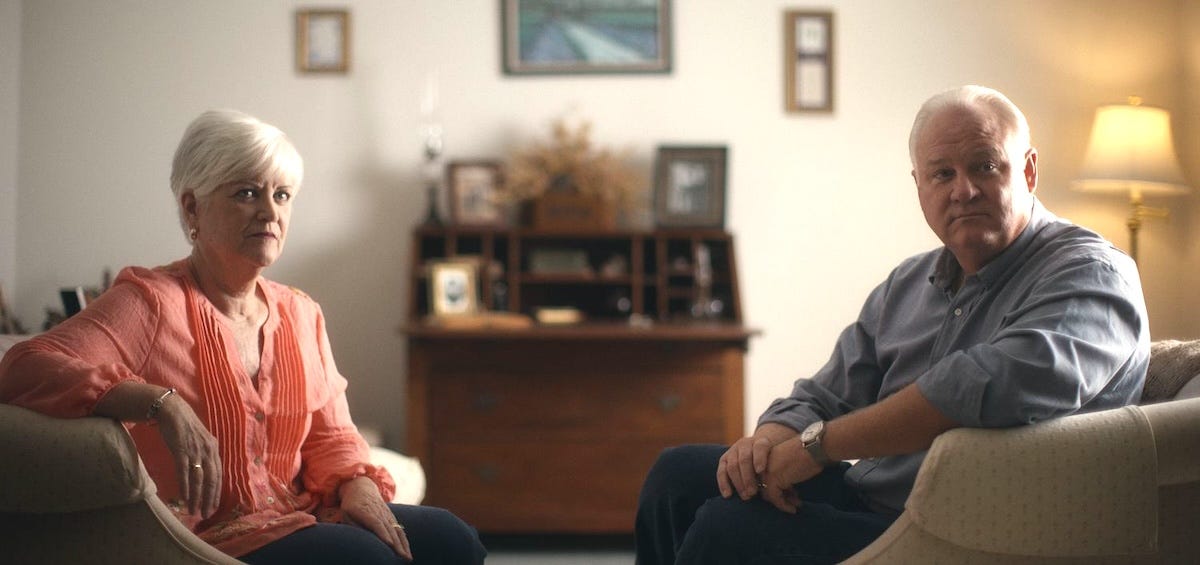
‘A Toxic Love Story’: 5 Things We Learned From Netflix’s New True-Crime Doc

Written by Paul Moon

The documentary explores the case of a U.S. Deputy Marshall and his wife who claimed they were being harassed. But the reality was much darker

Uncategorized Comments are off
23 July 2026

‘A Toxic Love Story’: 5 Things We Learned From Netflix’s New True-Crime Doc

Written by Paul Moon

The documentary explores the case of a U.S. Deputy Marshall and his wife who claimed they were being harassed. But the reality was much darker

Uncategorized Comments are off
22 July 2026

‘My Grandfather Charles Manson’ Review

Written by Paul Moon

Just when you think we don’t need another documentary about Charles Manson, here comes one that nobody else could have possibly made before. Actress and filmmaker Sophia Maddox found out a few years ago (thanks to Ancestry.com) that she’s the granddaughter of Manson. She teamed up with producer Alexandra Orton (both women are making their feature directorial debut with this film) to explore her discovery, with My Grandfather Charles Manson being the documented result. She learns more about the notorious cult leader and worries about what she might have inherited from him, but she also comes to understand Manson beyond the sensational.

My Grandfather Charles Manson presents a very complex personal journey that deals with the old debate on nature versus nurture. Maddox interviews experts on Manson as well as his friends and enemies. She certainly finds a lot of unsavory information, yet also becomes particularly interested in his unfortunate childhood, which surely had some effect on how he turned out. At times, she seems like she might start being a Manson apologist, but she really just wants to confirm he wasn’t a monster through genetics so she can feel better about herself. She also uses this film to examine her relationship with her father, who was born from a brief affair Manson had in the ‘50s.

There’s plenty here for the Manson curious or broader true-crime enthusiast, but it’s primarily about Maddox investigating herself and concepts like passed-down trauma, healing from wounded spaces, and parentification. She meets with her psychiatrist. She argues with Orton on screen about what the film is doing to her. It’s a heavy psychological quest, the sort that’s hard to enjoy as you wonder if it’s actually a healthy project to be encouraging as an engaged witness. But I still found it engrossing as a real, raw trauma drama. I also hope Maddox is going to be okay.

Uncategorized Comments are off
22 July 2026

‘American Pachuco: The Legend Of Luis Valdez’ Review

Written by Paul Moon

I love a unique and creatively done narration. Edward James Olmos lends his voice to this documentary in character as “El Pachuco,” reprising his breakout stage role from Luis Valdez’s 1979 play Zoot Suit. The idea is perfectly executed, fitting the film’s tone and elevating it above the usual biographical fare. For those wanting the conventional elements, too, it’s otherwise a mix of archival footage and talking heads (including Olmos as himself) celebrating its subject.

American Pachuco: The Legend of Luis Valdez profiles the titular playwright and filmmaker, best known to mainstream audiences for writing and directing La Bamba. In a centerpiece interview, Valdez tells most of his own story and explains the meaning of much of his work. Olmos’s “Pachuco” provides more historical and cultural context, such as the origin of the term “Chicano” and the background of the Zoot Suit Riots. And he does so in a way that gives the documentary a distinct attitude.

As a kid, I went to see La Bamba a few times, helping make it a hit without any awareness of how difficult it was to get made or the importance of its success. I came away with a greater appreciation for the movie beyond being your average music biopic, both for how personal it was for Valdez and for its depiction of the divide between cultural identity and assimilation. The documentary also delivers some much-needed education on the Chicano Civil Rights Movement and Chicano theater.

Uncategorized Comments are off
22 July 2026

‘American Pachuco: The Legend Of Luis Valdez’ Review

Written by Paul Moon

I love a unique and creatively done narration. Edward James Olmos lends his voice to this documentary in character as “El Pachuco,” reprising his breakout stage role from Luis Valdez’s 1979 play Zoot Suit. The idea is perfectly executed, fitting the film’s tone and elevating it above the usual biographical fare. For those wanting the conventional elements, too, it’s otherwise a mix of archival footage and talking heads (including Olmos as himself) celebrating its subject.

American Pachuco: The Legend of Luis Valdez profiles the titular playwright and filmmaker, best known to mainstream audiences for writing and directing La Bamba. In a centerpiece interview, Valdez tells most of his own story and explains the meaning of much of his work. Olmos’s “Pachuco” provides more historical and cultural context, such as the origin of the term “Chicano” and the background of the Zoot Suit Riots. And he does so in a way that gives the documentary a distinct attitude.

As a kid, I went to see La Bamba a few times, helping make it a hit without any awareness of how difficult it was to get made or the importance of its success. I came away with a greater appreciation for the movie beyond being your average music biopic, both for how personal it was for Valdez and for its depiction of the divide between cultural identity and assimilation. The documentary also delivers some much-needed education on the Chicano Civil Rights Movement and Chicano theater.

Uncategorized Comments are off
22 July 2026

‘My Grandfather Charles Manson’ Review

Written by Paul Moon

Just when you think we don’t need another documentary about Charles Manson, here comes one that nobody else could have possibly made before. Actress and filmmaker Sophia Maddox found out a few years ago (thanks to Ancestry.com) that she’s the granddaughter of Manson. She teamed up with producer Alexandra Orton (both women are making their feature directorial debut with this film) to explore her discovery, with My Grandfather Charles Manson being the documented result. She learns more about the notorious cult leader and worries about what she might have inherited from him, but she also comes to understand Manson beyond the sensational.

My Grandfather Charles Manson presents a very complex personal journey that deals with the old debate on nature versus nurture. Maddox interviews experts on Manson as well as his friends and enemies. She certainly finds a lot of unsavory information, yet also becomes particularly interested in his unfortunate childhood, which surely had some effect on how he turned out. At times, she seems like she might start being a Manson apologist, but she really just wants to confirm he wasn’t a monster through genetics so she can feel better about herself. She also uses this film to examine her relationship with her father, who was born from a brief affair Manson had in the ‘50s.

There’s plenty here for the Manson curious or broader true-crime enthusiast, but it’s primarily about Maddox investigating herself and concepts like passed-down trauma, healing from wounded spaces, and parentification. She meets with her psychiatrist. She argues with Orton on screen about what the film is doing to her. It’s a heavy psychological quest, the sort that’s hard to enjoy as you wonder if it’s actually a healthy project to be encouraging as an engaged witness. But I still found it engrossing as a real, raw trauma drama. I also hope Maddox is going to be okay.

Uncategorized Comments are off
22 July 2026

You Had to Be There Trailer Highlights the Year’s Funniest Doc

Written by Paul Moon

They call it a dumb idea more than once in You Had to Be There, but making a documentary about the 1972 Toronto production of Godspell inevitably strikes comedy gold.

Get your first look at the trailer for this rollicking documentary about a landmark production in the history of Canadian comedy. You Had to Be There: How the Toronto Godspell Ignited the Comedy Revolution, Spread Love & Overalls, and Created a Community That Changed the World (in a Canadian Kind of Way) tells how lightning struck when a generation of Canadian comedic icons, minus John Candy, happened to be in the same production at the same time. It’s all history and laughs from there.

Godspell ’72 participants including Eugene Levy, Martin Short, Jayne Eastwood, Andrea Martin, Victor Garber, Paul Shaffer, Dave Thomas, Avril Chown, and Rudy Webb for an essential portrait of pop culture lore. Directed by Nick Davis, the film creates an oral history of the Godspell production and of a formative movement that helped rouse Toronto from its slumber. But the array of voices also come together for a distinctly Canadian affair as the participants reflect upon why some talents from the same play ride the wave of success to Hollywood, why some stay and build the local scene, and why others take different paths.

Interviewees including Stephen Schwartz, Janeane Garofalo, Mike Myers, and Lin-Manuel Miranda add further context to the production’s impact and legacy. Moreover, with stories of the Godspell ’72 play peppering recent docs like John Candy: I Like Me and Marty: Life Is Short, the film gives the fullest story of a generation of talent getting its flowers. And with interviewees like these, You Had to Be There is also just a whole lot of fun!

“The good vibes and company give everyone in the cast credit for collective greatness,” I wrote while reviewing You Had to Be There at TIFF last fall. “Without any of these performers adding to the secret sauce of Godspell ’72, one can only imagine how comedy might have shaped up in the years that followed from Saturday Night Live to SCTV to Schitt’s Creek. The documentary offers a hugely entertaining record of Canadian cultural history worthy of time and celebration. And, in perhaps the most Canadian trait ever, it’s an American production.” Read more about the film in our interviews with Davis and Garber/Shaffer.

You Had to Be There begins its theatrical run in New York on September 18 with a rollout across subsequent cities and home video platforms to follow.

The post You Had to Be There Trailer Highlights the Year’s Funniest Doc appeared first on POV Magazine.

Uncategorized Comments are off
22 July 2026

Indie Specialized Box Office Chart: ‘American Pachuco: The Legend of Luis Valdez’ Has Impressive Film Forum Launch for a Doc

Written by Paul Moon

american-pachuco.jpg?w=650

The self-released film brought in roughly $7,500 from its single screen opening in New York City.

Uncategorized Comments are off
19 July 2026

What Is It Like To Be An Owl?

Written by Paul Moon

In 1974, the philosopher Thomas Nagel asked a famous question about consciousness: “What Is It Like to Be a Bat?”

Nagel chose the bat because, as a fellow mammal, we readily accept that it possesses consciousness, in the sense that it is like something to be a bat. A bat has subjective experience.1

But he also chose the bat because it is so weird and alien to us — humans can’t echolocate, for example, or fly — that even if we knew every scientific fact about bat biology, we’d still lack access to what it actually feels like to be one. As Nagel put it, we can rely only on our own experience to provide “the basic material for our imagination, whose range is therefore limited.”

Every documentary begins with an impossible ambition: to understand what it is like to be someone — or something — other than yourself. Telling the truth about the experience of any other being is never easy. You never really know if you are getting it right. But at least with human subjects, you can ask them, “What is it like to be you?” You can ask them, “Did I get that right?”

There’s a reason so many people at Q&As will ask a documentarian, “What did [subject of film] think about the film?” They’re looking, in a way, for a fact-check on the whole enterprise of the filmmaker having tried to represent what it is like to be the subject.

With an animal protagonist, the mystery is even more irresolvable. There are no interviews, and no explanations. Just the best available scientific understanding, close observations of behavior, and ultimately, your own imagination.

This is the challenge I found myself facing when an owl named Flaco escaped from the Central Park Zoo, and immediately became the most captivating protagonist I’ve ever encountered in real life. This owl, who had lived in captivity his whole life, was now suddenly free. He had begun writing his own story. My job became to try, however imperfectly, to tell it.

What is it like to be an owl? The question announced itself to anyone who saw him on the sidewalk near the Bergdorf Goodman on Fifth Avenue.

But we weren’t just asking it about owls in general — we were asking it about Flaco. An individual, with his own personal history, his own individual temperament, and his own subjective experience. That’s the invitation at the heart of Wild Inside: to get to know one extraordinary individual, on an extraordinary quest… who just happens to be an owl.

That said, the first step in avoiding the mistake of anthropomorphism is remembering Flaco is, in fact, not a human but an owl. One must try to understand the owl’s world: his umwelt. This wonderfully German word refers to the distinct perceptual reality of a species, deriving from their unique biological abilities.

And so, I asked embarrassingly basic questions of esteemed scientists over many months as I learned about owl biology.2 I was delighted to learn that owls, with their forward-facing eyes fixed inside their sockets and their long-range vision, probably see the world not so differently from a birder with binoculars glued to the face. This parallel vision became a visual motif throughout Wild Inside… especially because it so often seemed Flaco was watching us as much as we were watching him.

Still 4 - WILD INSIDE_Image courtesy of Sandbox Films_Photographer: David Lei.jpg

Photo credit: David Lei

Ultimately nothing compared, however, to learning about Flaco alongside the birders, with their long-term, patient, careful observations of not just Flaco, but of other wild owls. What I most want for viewers of Wild Inside is to spend time with Flaco, getting to know this individual bird, instead of simply learning facts about owls from human narrators.

Fortunately, Flaco kept doing things nobody expected — not the scientists, not the birders, and certainly not me. Every time we thought we’d figured him out, he’d surprise us again. That unpredictability is what makes him endlessly fascinating — but it also makes him especially vulnerable to our human interpretations.

It’s easy to anthropomorphize an owl: unlike other birds, they have those wonderfully human round heads and forward-facing eyes. Most of the time, it doesn’t hurt us or the animal to project little stories onto them. Sometimes, it does. It’s important to think about the difference. If audiences leave the theater arguing about what Flaco was thinking or feeling, or about when our natural tendency to anthropomorphize helps or hurts Flaco or other animals — I’ll consider that a success.

But it’s also important to not go too far in our desire to not anthropomorphize. People act as though there are only two possibilities: projecting human emotions onto animals, or refusing to imagine anything at all. It is possible to be empathetic and caring, and not pretend we are living in an animated movie. And, just as it is in our relations with other humans, imagination is the cornerstone of empathy.

I hear my friend’s father died. My ability to imagine what it is like to experience profound loss allows me to guess my friend is feeling something like that, and I thus empathize. This use of imagination isn’t a moral failure, nor is it a departure from the truth. Why should this be any different with non-human animals?

Still 5 - WILD INSIDE_Image courtesy of Sandbox Films_Photographer: .jpg

The harder issues arise when we get into story, the domain of meaning and narrative. It is probably the case that humans are truly unique in their story-making obsession.3 Based on some scientific research, I might assume Flaco has some idea of past, present, and future — those are certainly some of the basic ingredients for a narrative. But how about symbolism? Allegory? These are human concerns.

And humans really, really, really care about the meaning and narrative of Flaco’s story. Even the trailer has now been watched over a million times (“those are organic views,” she adds with pride, “meaning not paid.”). And judging by the heat in those comments sections, people can’t stop arguing about what Flaco’s story means to them. If you know me, you know that debate is what got me into this movie, as much as Flaco’s captivating orange eyes.

What is it like to be an owl? What is it like to be Richard Nixon? To be a Satanist? To be Kenny G? To be a kidney donor? A scam artist from the 1920s? A children’s music performer? A sufferer of a contested illness?

Ultimately, I don’t really know! I barely know what it is like to be myself, most days. (I’m very tired.) But with these films… it doesn’t usually feel like it’s my choice to either make or not make them. Most of them — the best ones — sort of demand to exist. They choose me. And then I just do the best I can, with equal parts hope and humility.

I hope Flaco would think I did a good job with his story — if Flaco could even have a thought like that! Maybe the most I could hope for is that he might understand in some owly way that I love him, and that the film comes from that place of love.

The thing I hope audiences take away isn’t a lesson about the science of owls or the ethics of captivity (although those things are in the film and they’re amazing). It’s the feeling of having deeply gotten to know this one owl named Flaco.

Wild Inside is coming out in less than 2 weeks!

We made this film for movie theaters, and put endless care into making sure it rewards you for seeing it on the biggest screen possible.

I know the streaming era has trained us to think every movie in theaters will show up online a few weeks later. Not this one. HBO hasn’t announced an airdate yet, but it’s looking like February 2027 — many, many months from now.

If you want to meet Flaco this year, here’s how:

• WORLD PREMIERE is in Central Park on 7/29. It is free, but please RSVP, as we anticipate space will be limited due to demand. It’s going to be such a special night under the stars, and my dear friend Jad Abumrad is hosting the Q&A.

• Tickets on sale for IFC Center, opening 7/31. More special guests being added soon to my four Q&A screenings, including Busy Phillipps, Marshall Curry and Kate Erbland. We’re also doing birdwatching tours of the Village after some screenings.

• I’m also doing Q&As in Brooklyn, Queens, Rosendale, Saugerties, San Francisco, Berkeley, Boston… a few other places I’m not remembering, and some Zoom Q&As too. And more are being added all the time.

• More theaters in US & Canada can be seen at FlacoDocumentary.com (more being added every week). Request a screening, sign up for email updates, etc.

• Find us on Instagram and here we are on Letterboxd!

1

He wrote, “if one travels too far down the phylogenetic tree, people gradually shed their faith that there is experience there at all,” which is true as far as “faith” goes, but anyone who’s read An Immense World or The Light-Eaters knows that people are simply wrong on that last point.

2

On this topic and other aspects of the science of owls, I recommend the book What an Owl Knows.

3

This is the view of Noah Yuval Harari, memorably set forth in his book Sapiens. He believes, and I see no reason to disagree, that it is the human propensity to storytelling that truly sets us apart from the rest of the animals. Stories are what allow us to cooperate on a mass scale in an endlessly flexible, malleable way. He uses the example of bees as a counterexample: the teamwork of bees is entirely genetic and fixed. If a new environmental threat arises, a beehive cannot gather to collectively vote out the queen and form a republic overnight. In Harari’s view, bees could never invent a world-changing story like human rights— err, bee rights! Now, other aspects of art — such as beauty — are another matter; if you don’t think birds care about beauty, you’re simply not paying attention to reality. On that topic, please read Richard Prum’s book The Evolution of Beauty — it’ll blow your mind.

Uncategorized Comments are off
19 July 2026

What Is It Like To Be An Owl?

Written by Paul Moon

In 1974, the philosopher Thomas Nagel asked a famous question about consciousness: “What Is It Like to Be a Bat?”

Nagel chose the bat because, as a fellow mammal, we readily accept that it possesses consciousness, in the sense that it is like something to be a bat. A bat has subjective experience.1

But he also chose the bat because it is so weird and alien to us — humans can’t echolocate, for example, or fly — that even if we knew every scientific fact about bat biology, we’d still lack access to what it actually feels like to be one. As Nagel put it, we can rely only on our own experience to provide “the basic material for our imagination, whose range is therefore limited.”

Every documentary begins with an impossible ambition: to understand what it is like to be someone — or something — other than yourself. Telling the truth about the experience of any other being is never easy. You never really know if you are getting it right. But at least with human subjects, you can ask them, “What is it like to be you?” You can ask them, “Did I get that right?”

There’s a reason so many people at Q&As will ask a documentarian, “What did [subject of film] think about the film?” They’re looking, in a way, for a fact-check on the whole enterprise of the filmmaker having tried to represent what it is like to be the subject.

With an animal protagonist, the mystery is even more irresolvable. There are no interviews, and no explanations. Just the best available scientific understanding, close observations of behavior, and ultimately, your own imagination.

This is the challenge I found myself facing when an owl named Flaco escaped from the Central Park Zoo, and immediately became the most captivating protagonist I’ve ever encountered in real life. This owl, who had lived in captivity his whole life, was now suddenly free. He had begun writing his own story. My job became to try, however imperfectly, to tell it.

What is it like to be an owl? The question announced itself to anyone who saw him on the sidewalk near the Bergdorf Goodman on Fifth Avenue.

But we weren’t just asking it about owls in general — we were asking it about Flaco. An individual, with his own personal history, his own individual temperament, and his own subjective experience. That’s the invitation at the heart of Wild Inside: to get to know one extraordinary individual, on an extraordinary quest… who just happens to be an owl.

That said, the first step in avoiding the mistake of anthropomorphism is remembering Flaco is, in fact, not a human but an owl. One must try to understand the owl’s world: his umwelt. This wonderfully German word refers to the distinct perceptual reality of a species, deriving from their unique biological abilities.

And so, I asked embarrassingly basic questions of esteemed scientists over many months as I learned about owl biology.2 I was delighted to learn that owls, with their forward-facing eyes fixed inside their sockets and their long-range vision, probably see the world not so differently from a birder with binoculars glued to the face. This parallel vision became a visual motif throughout Wild Inside… especially because it so often seemed Flaco was watching us as much as we were watching him.

Still 4 - WILD INSIDE_Image courtesy of Sandbox Films_Photographer: David Lei.jpg

Photo credit: David Lei

Ultimately nothing compared, however, to learning about Flaco alongside the birders, with their long-term, patient, careful observations of not just Flaco, but of other wild owls. What I most want for viewers of Wild Inside is to spend time with Flaco, getting to know this individual bird, instead of simply learning facts about owls from human narrators.

Fortunately, Flaco kept doing things nobody expected — not the scientists, not the birders, and certainly not me. Every time we thought we’d figured him out, he’d surprise us again. That unpredictability is what makes him endlessly fascinating — but it also makes him especially vulnerable to our human interpretations.

It’s easy to anthropomorphize an owl: unlike other birds, they have those wonderfully human round heads and forward-facing eyes. Most of the time, it doesn’t hurt us or the animal to project little stories onto them. Sometimes, it does. It’s important to think about the difference. If audiences leave the theater arguing about what Flaco was thinking or feeling, or about when our natural tendency to anthropomorphize helps or hurts Flaco or other animals — I’ll consider that a success.

But it’s also important to not go too far in our desire to not anthropomorphize. People act as though there are only two possibilities: projecting human emotions onto animals, or refusing to imagine anything at all. It is possible to be empathetic and caring, and not pretend we are living in an animated movie. And, just as it is in our relations with other humans, imagination is the cornerstone of empathy.

I hear my friend’s father died. My ability to imagine what it is like to experience profound loss allows me to guess my friend is feeling something like that, and I thus empathize. This use of imagination isn’t a moral failure, nor is it a departure from the truth. Why should this be any different with non-human animals?

Still 5 - WILD INSIDE_Image courtesy of Sandbox Films_Photographer: .jpg

The harder issues arise when we get into story, the domain of meaning and narrative. It is probably the case that humans are truly unique in their story-making obsession.3 Based on some scientific research, I might assume Flaco has some idea of past, present, and future — those are certainly some of the basic ingredients for a narrative. But how about symbolism? Allegory? These are human concerns.

And humans really, really, really care about the meaning and narrative of Flaco’s story. Even the trailer has now been watched over a million times (“those are organic views,” she adds with pride, “meaning not paid.”). And judging by the heat in those comments sections, people can’t stop arguing about what Flaco’s story means to them. If you know me, you know that debate is what got me into this movie, as much as Flaco’s captivating orange eyes.

What is it like to be an owl? What is it like to be Richard Nixon? To be a Satanist? To be Kenny G? To be a kidney donor? A scam artist from the 1920s? A children’s music performer? A sufferer of a contested illness?

Ultimately, I don’t really know! I barely know what it is like to be myself, most days. (I’m very tired.) But with these films… it doesn’t usually feel like it’s my choice to either make or not make them. Most of them — the best ones — sort of demand to exist. They choose me. And then I just do the best I can, with equal parts hope and humility.

I hope Flaco would think I did a good job with his story — if Flaco could even have a thought like that! Maybe the most I could hope for is that he might understand in some owly way that I love him, and that the film comes from that place of love.

The thing I hope audiences take away isn’t a lesson about the science of owls or the ethics of captivity (although those things are in the film and they’re amazing). It’s the feeling of having deeply gotten to know this one owl named Flaco.

Wild Inside is coming out in less than 2 weeks!

We made this film for movie theaters, and put endless care into making sure it rewards you for seeing it on the biggest screen possible.

I know the streaming era has trained us to think every movie in theaters will show up online a few weeks later. Not this one. HBO hasn’t announced an airdate yet, but it’s looking like February 2027 — many, many months from now.

If you want to meet Flaco this year, here’s how:

• WORLD PREMIERE is in Central Park on 7/29. It is free, but please RSVP, as we anticipate space will be limited due to demand. It’s going to be such a special night under the stars, and my dear friend Jad Abumrad is hosting the Q&A.

• Tickets on sale for IFC Center, opening 7/31. More special guests being added soon to my four Q&A screenings, including Busy Phillipps, Marshall Curry and Kate Erbland. We’re also doing birdwatching tours of the Village after some screenings.

• I’m also doing Q&As in Brooklyn, Queens, Rosendale, Saugerties, San Francisco, Berkeley, Boston… a few other places I’m not remembering, and some Zoom Q&As too. And more are being added all the time.

• More theaters in US & Canada can be seen at FlacoDocumentary.com (more being added every week). Request a screening, sign up for email updates, etc.

• Find us on Instagram and here we are on Letterboxd!

1

He wrote, “if one travels too far down the phylogenetic tree, people gradually shed their faith that there is experience there at all,” which is true as far as “faith” goes, but anyone who’s read An Immense World or The Light-Eaters knows that people are simply wrong on that last point.

2

On this topic and other aspects of the science of owls, I recommend the book What an Owl Knows.

3

This is the view of Noah Yuval Harari, memorably set forth in his book Sapiens. He believes, and I see no reason to disagree, that it is the human propensity to storytelling that truly sets us apart from the rest of the animals. Stories are what allow us to cooperate on a mass scale in an endlessly flexible, malleable way. He uses the example of bees as a counterexample: the teamwork of bees is entirely genetic and fixed. If a new environmental threat arises, a beehive cannot gather to collectively vote out the queen and form a republic overnight. In Harari’s view, bees could never invent a world-changing story like human rights— err, bee rights! Now, other aspects of art — such as beauty — are another matter; if you don’t think birds care about beauty, you’re simply not paying attention to reality. On that topic, please read Richard Prum’s book The Evolution of Beauty — it’ll blow your mind.

Uncategorized Comments are off
← Older posts
Newer posts →

B&H Search Engine Banner


B&H Photo - Video - Pro Audio


© Copyright 2022 by Zen Violence Films LLC, all rights reserved. To read the site privacy policy and ethics statement, click here.