
Last year, the Academy sent a memo reminding Oscar voters that documentaries are eligible for nominations not just in their own category but across others, including Best Picture — something the Oscars has never achieved.
Can you believe that in the Academy’s 97-year history, no documentary has ever been nominated for the Best Picture Oscar? Odds are some of the most acclaimed non-fiction work of the year, especially “Once Upon A Time in Harlem,” somehow won’t pull off a historic surprise.
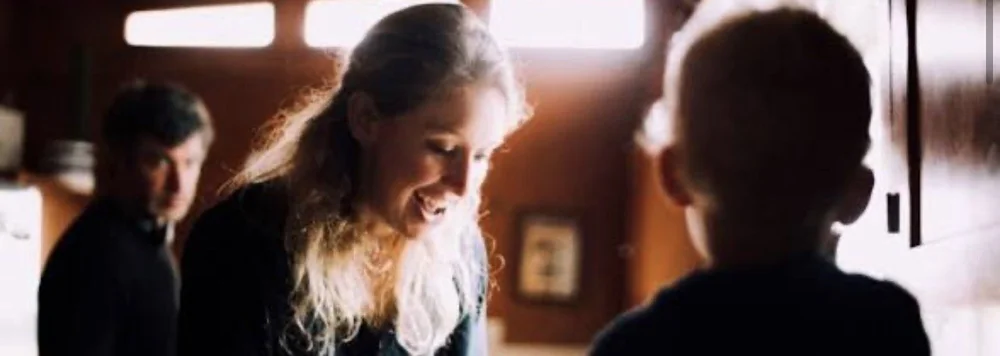
However, here come Nathan Fielder, and co-director Lance Oppenheim, who has become the toast of Telluride with his meta Elizabeth Holmes doc “You Can See Everything” earning the best reviews of the fest — 92 on Metacritic — and now you have many of the trades’ Oscar experts sounding the alarm on Fielder/Oppenheim’s film potentially making history.
It’s been confirmed by Variety that A24 will be campaigning “You Can See Everything” for best picture consideration, including Variety, TheWrap and THR. Is there a legitimate chance that Fielder’s 174-minute doc cracks the top 10? It’s too early to tell. Every year, much-buzzed films out of Telluride either deflate weeks later, or accentuate the momentum.
The premise alone—Holmes inviting a film crew into her life just 37 days before reporting to prison, with the project ultimately spanning three years—suggests this is going to be something much stranger than a conventional true-crime documentary. And Fielder’s involvement, given how extreme and unpredictable his previous work can be, is obviously resulting in questions of whether this is even a full-fledged doc since “You Can See Everything” is actually a hybrid. According to reports, it’s 90 minutes of a documentary, and then 90 minutes of ..something else entirely.
It’ll be interesting to see how this turns out. There has been much acclaimed non-fiction these last 40 years which warranted a best picture nom but failed to do so, including “The Thin Blue Line,” “Roger & Me,” “Hoop Dreams,” “Bowling for Columbine,” “The Fog Of Warz,” “Grizzly Man,” and “The Act of Killing.”
It remains a glaring omission that no documentary has ever been recognized in Best Picture, especially in the 21st century, when nonfiction filmmaking has become increasingly prominent, with Netflix further boosting visibility, albeit with mostly trashy nonfiction works. Hell, we’ve even had animation crack the best picture lineup, three, to be precise: “Beauty and the Beast,” “Up” and “Toy Story 3.”
Why does nonfiction continue to be overlooked? Is it because documentaries don’t dominate the cultural conversation as much? Fielder and Oppenheim might finally have cracked the code with this film — but is it even a doc?