
An Update to the NonFiction Core Application 3.1: Adding Optional GenAI Questions and Field Resources
Hajnal Molnar-…
Fri, 06/13/2025 – 12:31

An Update to the NonFiction Core Application 3.1: Adding Optional GenAI Questions and Field Resources
Hajnal Molnar-…
Fri, 06/13/2025 – 12:31
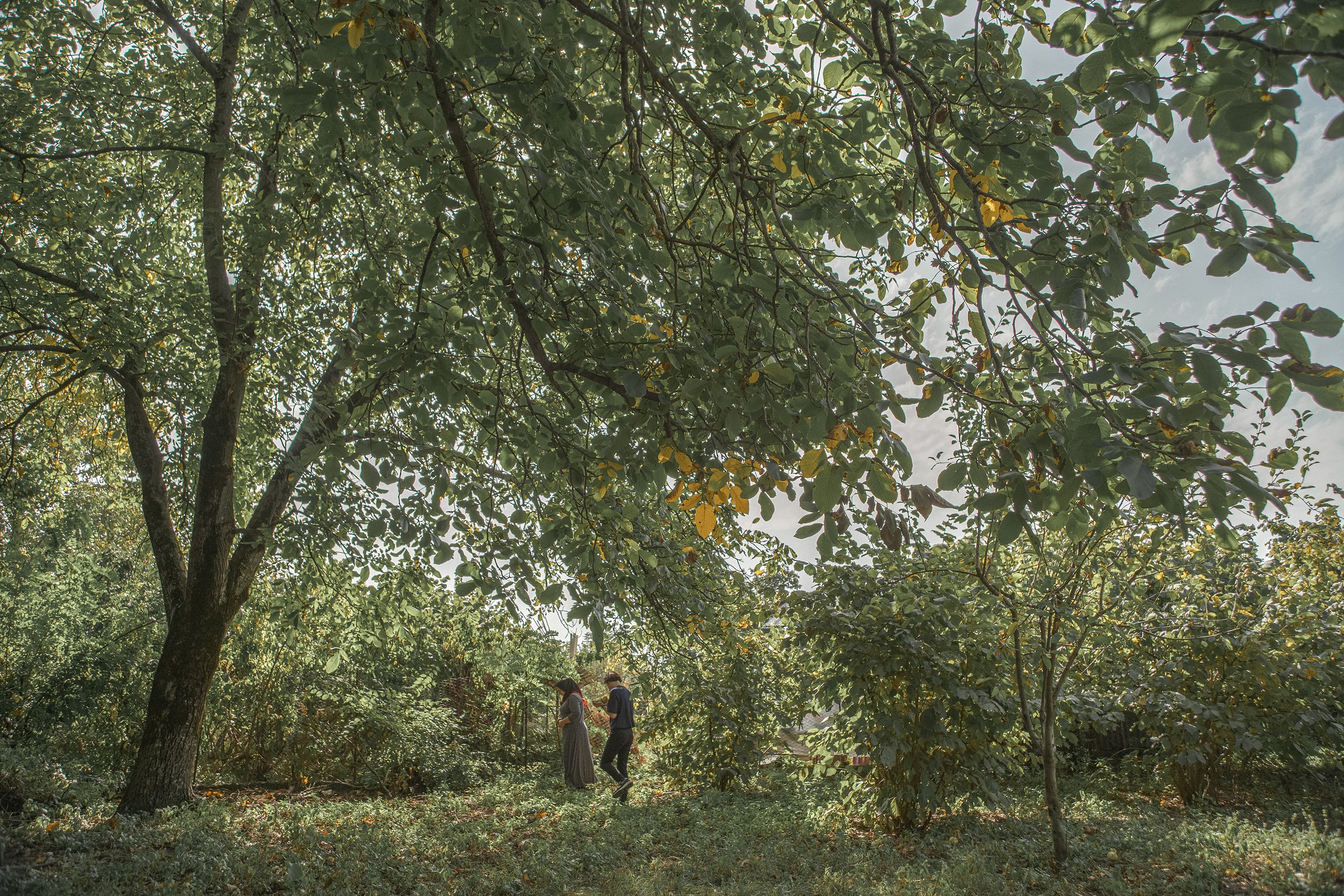
“Fear Can Also Be Powerful for Creation, Not Just for Destruction”: Déni Oumar Pitsaev on his Cannes Prize-Winner ‘Imago’
Nicolas Rapold
Fri, 06/13/2025 – 12:59
“Fear Can Also Be Powerful for Creation, Not Just for Destruction”: Déni Oumar Pitsaev on his Cannes Prize-Winner ‘Imago’
Nicolas Rapold
Fri, 06/13/2025 – 12:59
An Update to the NonFiction Core Application 3.1: Adding Optional GenAI Questions and Field Resources
Hajnal Molnar-…
Fri, 06/13/2025 – 12:31
The Documentary Organization of Canada (DOC) recently announced the appointment of Julian Carrington as its new executive director. He assumed the position on June 9, taking over for Sarah Spring following several years of growth for the organization devoted to advocating on the behalf of Canadian documentary creatives. (DOC founded POV in 1990, but the publication has functioned as an independent entity since 2010.)
Carrington previously worked at DOC by managing its Festival Concierge service, a program offering guidance to DOC members when it comes to navigating the festival system and developing the strategies to maximize the their festival runs.
More recently, he served as the managing director for the Racial Equity Media Collective (REMC), an advocacy group that holds the Canadian sector accountable for equitable representation of and opportunities for Indigenous and racialized creatives. He’s also a veteran player at Hot Docs, having juggled positions on the industry side and film programming side, including serving as an International Programmer for this year’s festival and as the curator for the popular For Viola series at Hot Docs Ted Rogers Cinema, which offers free screenings of films that showcase BIPOC perspectives—docs that often don’t find space on Toronto screens.
The appointment arrived at a pivotal moment for DOC’s advocacy and the Canadian screen sector more broadly. The recent CRTC hearings about Bill C-11, the Online Broadcasting Act, saw DOC and other industry bodies argue for the protection of long-form documentary under the category of Programs of National Interest, which is at risk of being weakened or eliminated under the Bill, while definitions of “Canadian content” can potentially limit the stories told by Canadian creatives. But it’s a challenge that Carrington said he’s happy to carry on.
POV spoke with Carrington on his second day on the job to learn more about his background in the documentary sphere and what he hopes to achieve during his tenure at DOC.
MG: Marc Glassman
PM: Pat Mullen
JC: Julian Carrington
This interview has been edited for brevity and clarity.
MG: You are coming to this role with various experiences in the doc sphere, including DOC’s Festival Concierge. Do you think the Concierge job raised your profile?
JC: To an extent, but what it really did was cement my understanding that the documentary community is where I feel at home. Prior to stepping into that role, I had a background in festival programming and film criticism, but not with a focus on documentary. I had been at TIFF prior to that as a programming associate. TIFF is a massive festival and features documentaries, but is primarily oriented towards features and to high profile features at that. That exposed me to a side of the industry that is more commercial, more driven by the promise of fame and fortune, and that can attract a certain ambitious individual. Whereas, once I stepped into that role at DOC and got to know more filmmakers in the documentary community, I felt a sense of belonging in that documentary filmmakers tend to be very values driven, very socially and politically conscious. Those values resonated with me.
In terms of raising my profile within the documentary community, it did do that and it offered me the chance to get to know documentary filmmakers across the country. I had a monthly newsletter and frequent webinars with DOC members. That did get my name and my face out into that community. But as much as anything, it was the recognition that this was a space of shared values and a recognition that I had perhaps insights to offer having been inside the festival world and, frankly, recognizing that it wasn’t always set up to best serve filmmakers.
PM: Coming to DOC after your work at REMC seems like a natural transition because that was more of an advocacy role. What are some things you learned in that role that DOC can help address within the industry?
JC: REMC definitely required me to develop a skillset around advocacy. That was not previously something I had done, certainly professionally. My work at REMC familiarized me with processes like CRTC consultations. Of course, this has been a very consequential period in Canadian broadcasting policy since the passage of the Online Streaming Act. So much of my work at REMC in the last two years involved engaging in that process and filing written interventions, going to Gatineau to appear in front of the commission as a hearing presenter, and navigating the practical questions of formatting and framing: What makes for a persuasive argument in front of this body? What combination of data and anecdote do you need offer to give them a narrative and a human perspective on what can sometimes be an abstract issue?
At REMC, I was advocating on behalf of racialized creators in the Canadian screen industry, and my mandate at DOC is different. But one of the things that did draw me to DOC is that it has an established membership across the country, which is now around 1500 filmmakers. REMC was a much smaller organization. It didn’t necessarily have that same obvious grassroots community, so while we would find ways to partner with entities like BIPOC TV and Film or Reelworld, organizations that have constituencies of grassroots filmmakers, that [community] is built in at DOC. There’s a mechanism where we can directly connect to the membership to inform our advocacy stances. I recognize that as someone who has not spent my career making films myself, I want to ensure that I’m advocating based on the practical lived concerns of filmmakers. But now a significant portion of DOC’s membership is comprised of Indigenous and racialized people, and that’s a product of a membership category that DOC introduced recently where filmmakers who are not previously members and who are from racialized and Indigenous communities can become members for free. That has been recently expanded to a three-year membership offer.
That has really transformed the composition of DOC’s membership, and DOC has undertaken a commitment to center equity in its advocacy work in addition to its broader advocacy on behalf of the documentary community. I’m moving to an organization that could be a further vehicle to advocate for those communities that I was advocating for on behalf of REMC.
MG: Were you involved in [DOC Board Chair] Min Sook Lee’s representation of DOC at the CRTC in the last couple of weeks? Had you been consulted in that?
JC: No, there was a decision made that, until I started, DOC wouldn’t call upon me in that way. And I have to say given that it was Min’s first effort in that context, she did fantastically well. You could see that the commission was rapt and really engaged with what she had to say.
MG: Presumably will be following up on what she did, and what Sarah Spring had done before that?
JC: It’s right into the deep end, in a sense. There’s a deadline coming up to file final replies in the matter of the Canadian content hearings and consultations. I will be building on Sarah and Min’s work in that I will be continuing the advocacy positions that they have set forth. The process now is to review the submissions and interventions that were made by other parties and find areas of alignment that we want to accentuate, noting, for instance, that the Directors Guild of Canada, the Indigenous Screen Office, the CMPA, and the NFB were similarly unequivocal that Programming of National Interest is essential to maintain. That was one of DOC’s key advocacy positions. I’m looking for corroboration reinforcement to accentuate to the CRTC on that issue and a few others. Then there’s another hearing coming up in early July, which is about market conditions and is part of this broader effort to modernize the Canadian broadcasting industry. But that’s a new set of issues to me because REMC was not previously involved on that particular question, whereas on the question of Canadian content, REMC had been involved and I participated in the hearings in that context.
MG: Given the intense changes that are happening in the United States with Trump, is there a hope or from DOC and like-minded organizations that there can be a re-invigoration of online film content that would articulate a Canadian position in documentary?
JC: It doesn’t harm our arguments to the CRTC that U.S.-based streamers cannot be relied upon to make the investments in drama and long-form documentary that are necessary to sustain those forms. Those forms are recognized as being risky, expensive forms that benefit from regulatory support because they’re not always best supported via market forces alone, particularly for long-form documentary. When you look to the U.S. and you see that political documentaries, however strong—films like Union or No Other Land, literally the Oscar winner—are not finding homes on those streaming platforms, that speaks to the reticence of those platforms to engage in programming that is perceived as political or polarizing. So, clearly, if the CRTC ever believed that those streamers didn’t need to be regulated to support these kinds of programs, we see that’s very much not the case.
I’m hoping that these proceedings and events south of the border, as troubling as they are, can be a catalyst to underscore the necessity of support for this form of programming. And also recognizing that documentary in Canada has always been partly about nation building and about reinforcing our sense of ourselves as a country and our values. Recognition of non-commercial mandates to support programming that is outspoken, that is reflective of the diversity of the country—that’s crucially important now. That is an unavoidable realization that is dawning here.
PM: From your work as an international programmer, are there things that you’ve seen other countries doing that we could learn from regarding the Canadian content conversation?
JC: Whether from my programming activity or even some of the research that I undertake to understand other national contexts to inform my advocacy, certainly France is the envy of the world in this particular regard. They’ve implemented a 20% levy on streamers that requires them to reinvest 20% of their French revenues, which is far and away the highest such levy that I’m aware of in the world. The French have a long and enviable history of ensuring robust support, whether from theatrical exhibitors or now streamers. That is very much a point of reference and a point of aspiration for us.
I will be going to Sheffield DocFest where I’ll be on a panel about how the documentary industry can leverage policy advocacy and regulations to ensure the continued viability, particularly of that long-form creative documentary that is so risky to produce. It’s been striking to see how in the UK, they’re actually much earlier in the effort to mobilize an advocacy community on behalf of documentary creators. The Documentary Film Council is a relatively new entity that was established within the last few years. That entity is presenting this panel. In the UK, the decision was made by their government not to place a levy on streamers, which is a blow potentially to the industry there and was a decision, as I understand it, premised on the idea that the streamers already invest healthily in production in the UK. But that’s a bit of an illusion. The UK industry is in some ways very enviable and UK screen culture is widely exported, but when you look at the projects that are finding investment over there, long-form documentaries are in crisis. BBC Storyville, as I understand it, is the only remaining broadcast strand that has a specific mandate to support long-form doc and their budgets are ever-shrinking.
So while the big studios and streamers are happy to shoot in the UK and there are enough cultural properties so that British culture doesn’t feel as imperilled as Canadian culture does, it’s still a commercially oriented industry. Especially in the non-fiction space, it’s very factual, infotainment-led, programming as opposed to that creative critical long-form documentary. So that conversation is really about how organizations like DOC, the Documentary Alliance of Europe, the DFC in the UK, and folks like Abby Sun in the States at IDA can figure out how to strategize across borders.
MG: You were involved with Hot Docs for a number of years in various industry events. Where do you see Hot Docs now going forward in terms of their role in all this and their role in the industry?
JC: I am stepping into the role at DOC with a long history at Hot Docs. I was on the industry team for a number of years. I’ve also programmed for the festival. I’ve programmed for the cinema. I know Hot Docs very well, and I still have friends and colleagues who work there. There’s no doubt among doc makers of the importance of Hot Docs as a platform. Everybody wants Hot Docs to thrive and succeed. I see my role at DOC as an opportunity to provide constructive support to Hot Docs. I would love for DOC to be able to continue as a source of constructive accountability to Hot Docs. We’ve seen Hot Docs struggle obviously over the last two years, or particularly last year [previous]. Part of that struggle was perhaps due to governance being less robust than it might’ve been.
From my point of view, there’s a real role for the documentary community to play in contributing to the governance of Hot Docs and ensuring that grassroots perspective is foregrounded. Increasingly, when you look at distribution around documentary, the importance of that grassroots support is so obvious. Docs don’t have the marketing profile of [dramatic] features and don’t get opportunities for reviews, even to the degree that they used to. But in the absence of that media ecosystem, it’s clear that it’s increasingly important to do community outreach and to connect audiences with the docs that they may not even know are there waiting for them. But if you do let people know that those films are there, docs have the advantage. They have a disadvantage in terms of marketing profile, but the advantage of currency, of timeliness, of urgency, of relating to people’s lives in a way that is often very direct and often inspires real passionate engagement.
MG: Do you feel that Hot Docs—the new Hot Docs, if you will—has responded to questions of elitism and racism, real valid criticisms that you had raised in the recent past?
JC: It’s early days, but the signs are promising. Obviously, with the appointment of Diana Sanchez, you have someone who is local and knows the Canadian industry, knows the Toronto industry. She herself is a programmer who knows the importance of curation, of intentional curation, and finds meaning in providing a platform and opportunities to filmmakers. And she herself is of Latin American origin, and so is bringing that perspective to bear as well.
Even in the specific instance of a film like The Encampments, which I screened as part of the For Viola series at the end of May, that film has faced challenges finding exhibition, especially in Toronto. Really, For Viola was the one opportunity that was presented to the distributors where they had received rejections from many other spaces. It wasn’t the first option. They wanted to open this enormously profitable documentary in a standard commercial release, but that was not forthcoming to them. So, the For Viola screening, although it was a free community screening, I presented it to them as a way to create awareness and buzz around the film and engage with the community. Then that could pave the way for further commercial exhibition engagements. Hot Docs initially was not particularly interested in booking the film for further engagements. But after the great success of that screening, which was sold out with over 600 folks, [received] a standing ovation throughout the credits with folks from the Toronto student encampments present, I think it really clicked as to not only how special the film is, but also [showed] that clear community interest in stories of that nature. Hot Docs has subsequently added two screenings, one later this week, one in early July. That, to me, signals clear responsiveness to community.
PM: Are you going to be able to continue series For Viola in this role?
JC: My understanding is that because DOC is in a position of accountability towards Hot Docs, I will not be able to undertake any contract work for Hot Docs. What that means for the future For Viola is something that I have to discuss with them. I would love to find ways to continue to be involved with the series, but what that means is not clear to me at this moment.
MG: Historically, a lot of the financing for DOC came through profits that were negotiated from Hot Docs. [DOC founded Hot Docs in 1993, but separated in 1996 to operate independently.] I’m assuming Hot Docs hasn’t been making any money, and yet DOC is obviously doing well. Can you talk a bit about the financing of DOC now?
JC: We have been fortunate under Sarah Spring to benefit from her savvy skillset in this regard. As a producer, raising funding is certainly something she’s had plenty of experience doing, so we’ve been able to find support from entities like the Inspirit Foundation, from the Canada Council, and my understanding is that we are now coming up on potential eligibility for operational funding from the Canada Council—you need to receive funding on a project basis for a number of years before you can be eligible for consistent operational funding.
Regarding Hot Docs and their licensing fee to DOC, DOC made the decision, given Hot Docs’ sensitive situation last year, to defer that payment. But now that Hot Docs is on stronger footing, that payment will be forthcoming again. That’s a big one. Membership dues are solid and DOC’s membership has grown. A priority will be to make sure that many of those members who joined in recent years as free members find sufficient value in the organization and find that it represents their interests, find that it’s offering them things that they feel are worth continuing to pay for. DOC undertakes regular research reports on the state of the documentary industry, and we can seek financing from the likes of Telefilm, the Canada Media Fund and so forth for those projects. We have a few ways that we’re making sure that we’re on solid ground financially.
PM: I know you’ve only been on the job a day so we won’t hold you to what you say too hard, but what do you see as key goals in the next year for DOC?
JC: The immediate priorities are, again, the ongoing CRTC process. That’s so crucial, such a rare opportunity to influence policy that will potentially oblige big players in our industry to either offer financial supports to documentary or mandate certain forms of data collection that will help us to understand the composition of the industry in more granular detail. Likewise the relationship with Hot Docs is something that we want to continue to solidify. I feel like my prior relationships there are an asset. This is about working constructively and supportively because at the end of the day, the interests of DOC and the interests Hot Docs, surely they are aligned. That’s only to the betterment of Canadian documentary filmmakers.
A priority for DOC is engaging with the NFB. They have recently shared a strategic plan for input, and I’m looking forward to continuing to work closely with the NFB to ensure that the interests of grassroots independent filmmakers across the country are accounted for. That’s another area where we’ve seen some promising strides made. In my prior capacity at REMC, it was notable that the NFB was one of the few entities in Canada to commit to equity targets. For instance, they made the commitment that by 2025, 30% of their programs would be directed by equity deserving filmmakers. Few other entities, despite the progress we’ve seen, have made that kind of firm commitment. The healthier the NFB, the better things are for documentary filmmakers across the country because that ultimately has been such a precious institution for the advancement of documentary in Canada.
MG: Looking at the whole landscape of production in Canada and the documentary community, what would you like to see happen in the next six months?
JC: The CRTC took a preliminary position in the consultation on Canadian content that Programs of National Interest no longer needed to be mandated. Currently, broadcasters have to allocate a certain percentage of their expenditures into Programs of National Interest, including dramas and long-form documentaries. The initial position that that mandate was no longer necessary was very alarming. It felt as though it was not the perspective of a body that is engaging on a daily basis with the market realities of the moment. The rationale that was offered—that the market is addressing these form of programming; that streamers primarily are making dramas and long form documentaries—is a reflection of where the market was a few years ago.
There was a period of time where the streamers, particularly as they were really trying to build their libraries, were acquiring documentaries hand over fist. There was this widely publicized boom, but that time is over and we’re seeing again that the streamers are not acquiring documentaries in anything like the volume that they were, but the ones that they are choosing to make themselves are heavily skewing towards celebrity profiles and true crime. I’m concerned that the commission is looking at numbers and seeing the streamers are investing in this form of content in a robust way. But when you look at the actual types of films that are being made, it’s clear to me that we really still need those mandates to support critical, independent, outspoken programming that is often at odds with commercial imperatives. That is the loud and clear first priority that I hope the CRTC will attend to. I hope that they will receive the message that [their] presumption is not supported by key players in the industry.
Also, as someone who’s come to Canada from another country, who has strong connections to the UK and to Barbados as well as Canada, I have always valued Canada as a country where people can come from far and wide and don’t have to diminish the aspect of their identity that might be rooted in another place. On the issue of Canadian content in particular, I hope the CRTC will arrive at a definition that respects the diaspora identities that many Canadians hold, and also recognizes the economic opportunity there. If we realize that there’s potentially a global audience beyond our borders, empowering Canadian creators to tell stories that will resonate globally is, from my point of view, an ethical or political imperative, but also makes great sense. Those protections for Programming of National Interest and a definition that allows Canadian creators to embrace that multicultural identity would be two key outcomes that I would love to see.
The post DOC’s Julian Carrington Steps into Executive Director Role at Key Moment appeared first on POV Magazine.
James Charles Grodin might not be the first name that arises when one asks for a list of Hollywood’s leading men. However, Grodin gets a welcome reappraisal in Charles Grodin: Rebel with a Cause. The documentary by James L. Freedman screens as the closing night selection of this year’s Toronto Jewish Film Festival. (June 15 at Hot Docs Ted Rogers Cinema, including a virtual Q&A with Freedman and Grodin’s wife, Elissa.) It’s a touching tribute to the actor who passed in 2021 at age 86, but also a fitting reminder of the daily acts one can perform to be a mensch.
 Director James L. Freedman with Ellen Burstyn | Blind Date Productions
It’s an opportunity for audiences to share a collective laugh while revisiting the career of an under-sung comic great. Rebel with a Cause tours through Grodin’s filmography with memorable performances both big and small in films like The Heartbreak Kid (1972), Midnight Run (1988), Catch-22 (1970), Beethoven (1992), and dramas like Rosemary’s Baby (1968), as well as turns on Broadway like Same Time Next Year (1975) that further showed off his range both dramatic and comedic. Grodin’s esteem is evident as Freedman collects a Hollywood who’s who to reminisce about the late actor. Academy Award winners like Ellen Burstyn, who co-starred with Grodin in Same Time Next Year, his Midnight Run co-star Robert De Niro, and Catch-22 co-star Alan Arkin are among the notable interviewees. As are comedic titans like Elaine May, Steve Martin, Carol Burnett, and Martin Short, just to name a few.
As Freedman explores the humble upbringing that instilled an underdog’s fight in Grodin, Rebel with a Cause playfully leads to perhaps the actor’s two greatest roles. On one hand, the film finds some of its biggest laughs as it revisits Grodin’s late night persona as a humorously antagonistic guest star on talk shows. An archival treasure trove offers laugh-a-minute clips of the act that convinced audiences he was the biggest jerk who graced a TV studio. Perhaps Grodin’s deadpan ability to persuade the audience and hosts like Johnny Carson offers the best proof of his acting chops. But for gravitas, the film finds his selfless choice to step away from Hollywood as his most significant role.
Freedman bookends the film by observing Grodin’s last act as an activist for wrongfully incarcerated Americans, particularly women who were put behind bars for crimes they didn’t commit. His story comes full circle as his campaign for people let down by the system drew results far more rewarding that any Hollywood accolades could inspire. Freedman assembles voices of women who were finally exonerated thanks to Grodin’s friendship and tireless advocacy. The celebrity interviews might hook audiences in, but these stories offer the most illuminating insights into a life well-lived.
POV spoke with James L. Freedman via Zoom ahead of the closing night of TJFF.
POV: Pat Mullen
JF: James L. Freedman
This interview has been edited for brevity and clarity.
POV: Why look at Charles Grodin’s life now? Was it the news of his passing or was there an event that inspired the documentary?
JF: I had always been a big Charles Grodin fan ever since I saw him in The Heartbreak Kid, which is just hilarious. Then I had the privilege when I was younger to see him and Ellen Burstyn on Broadway in Same Time Next Year. I remember my mother getting me his first book, and I was looking around for a new subject and he came up somehow. When I learned how he saved all these wrongly convicted women, mostly young mothers of colour with young children, I said, “Oh my God, this is incredible.” My previous films have similar themes. My last film was Carl Laemmle [2019], which played the Toronto Jewish Film Festival, and that was about a guy who founded Universal Studios and saved 300 Jewish families in Germany. So it’s someone who’s very accomplished in their chosen field and then beyond mensch-like in their private life.
POV: It was interesting seeing the parallels that Laemmle and Grodin had in their careers and lives. Are those themes at the forefront when you choose a story?
JF: I look for people who have both things. My first film, Glickman [2013], was about the sportscaster Marty Glickman. He was one of two Jewish runners not allowed to run in the ’36 Berlin Olympics because American Nazi sympathizing officials wanted to placate Hitler. That had a whole other element to it, and he was just great as a sports broadcaster. The other thing is that I started as a comedy writer and it [making a film on [Grodin] gave me a chance to do a lot of comedy in the film. To see it with an audience and see them laughing, and to also bring back all these great artists from his time, whether it’s [Mike] Nichols and [Elaine] May–a lot of people today don’t know who Nichols and May are, which is stunning to me. But unless you’re like The Beatles or Taylor Swift—and we won’t know for 40 or 50 years—you have your time and that’s kind of it, no matter how big you are. So, to bring these people who I have so much respect for and to bring their work to the public, maybe someone looks at an old Nichols and May clip and watches their films or whatever it films. That was an unexpected pleasure that I had making this film. I got to bring all these people I had the utmost respect for to the public, and Charles Grodin’s interaction with them,
POV: There’s quite the cast of interviewees. Was there someone who was a particular highlight to sit down and talk with?
JF: They were all great in their own way. The toughest one to get was Elaine May because she just doesn’t do these. She wouldn’t even do one on her own film for Mike Nichols that she directed. Her producer begged her to do it. She didn’t want to do that. That took a year, and she was just wonderful. We’ve become friends, and I see her when I go to New York. She’s just a genius. Many of them were wonderful. I don’t want to say any names. I’ll leave people out. They’re used to being on camera and they know how to articulate what they feel.
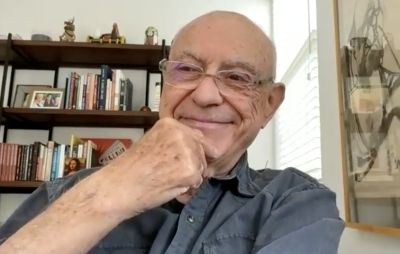 Alan Arkin in Rebel with a Cause | Blind Date Productions
POV: When did you get a chance to speak with Alan Arkin? This film must be among his final interviews.
JF: It may be his final interview. In fact, I wanted to interview Alan and go down to San Diego to his home. But the tail end of COVID was going on and his doctors wouldn’t allow a film crew in, so we did a Zoom call. It was delight to talk to him. I’ve been a huge Alan Arkin fan my whole life, and if this is his last interview, I’m proud that this film has it.
After the interview was over, I had 10 more minutes with him and we’re speaking and he’s telling me about having met Groucho Marx and all these people, and it was terrific.
POV: You mentioned earlier that you saw Grodin on stage in Same Time Next Year. How was it revisiting that performance? Do you recall that night when you saw it?
JF: Pat, I saw that in 1975 and, to this day, that’s one of the greatest nights in the theatre I’ve ever had in my life. Those two were magical together. Ellen Burstyn told me this story when Grodin would go on these talk shows—he was always doing this act—and it was a guest host for Johnny Carson, David Steinberg. In the pre-interview, Grodin says to have David ask him about not having been cast in the movie version of Same Time Next Year, which had Ellen Burstyn, but it also had Grodin’s friend, Alan Alda. So David Steinberg innocently asked him the question on the air, and Ellen Burstyn told me that Charles Grodin pretended that he didn’t know this news. He just on the air was saying, “What do you mean I’m not being cast in this movie? I was in the play. I was great in the play. Who’d they pick?” And then, “Alan Alda,” and David Steinberg was squirming in this chair. Ellen Burstyn was watching this on TV laughing so hard. Here was Grodin again, doing what he did best when he went on the talk shows.
 Charles Grodin in Midnight Run | TJFF
POV: We get a sense in the film that Grodin’s peers really respected him, and he had a lot of versatility as both a dramatic and comedic actor, but he didn’t hit the same level of leading man status as Robert De Niro or Steve Martin or Martin Short. What did making this story teach you about the Hollywood star system?
JF: I think it had to do with the quirkiness of his character. I would say the same thing about Albert Brooks as well. Albert Brooks in his own films was a leading man, but in the other films, was really not quite a leading man. He was comic relief. Grodin was so brilliant in that role that maybe after The Heartbreak Kid made him a star, then he did 11 Harrowhouse [1974], which failed. He said he stopped getting offers for leading man roles. But I don’t know how much screen time he has in Heaven Can Wait. [Grodin points to the DVD of Heaven Can Wait strategically placed on my shelf behind me.] I spoke to Warren Beatty about the movie, and he just said Grodin and Dyan Cannon as well brought so much comedy to their scenes that it just lifted the whole movie up. I bet he’s not even in 25% of the movie, but it’s just amazing how funny he is. You never really know what the studios are thinking, but that’s my guess.
POV: His signature role may have been the cantankerous talk show guest, as you referenced earlier. How did you decide which of all those appearances to include?
JF: That was a pleasure. Here’s the problem with that stuff. There’s so many funny bits that he did on Letterman and Carson, but you need time to set them up. You don’t have that time in a documentary. If you have 90 minutes for your whole film, you can’t take 15 to 20 seconds to set up the clip and then show it. You really need the whole clip to be over by then. So that cut a lot of really great stuff out. I had seen a lot of these things on my own. Forget making the movie! Before I even thought of making the movie, I’d watch when Grodin was on Carson or Letterman. I always tuned in and so did all my friends. You just find stuff that made you laugh and it’s like a jigsaw puzzle when you say, “This doesn’t really work here. Oh, that’s a short thing. That would work right in the trailer. Oh, this is a longer piece I can have as the heart and the middle of the talk show section chapter of the film.”
POV: We see later in the film how Grodin lost his own show in the 1990s when he didn’t want to jump on the O.J. bandwagon and instead focus on more important issues that were getting lost in the news. What do you think that says about Grodin that he put social issues and principles ahead of the demands of his career in such a cutthroat field?
JF: I look for a thread that goes through all my films. So my first film, Glickman was really about what happens when an 18-year-old’s dreams are crushed by racism and prejudice. Do they overcome it or does it just bury them for the rest of their lives? In Marty Glickman’s case, he rose above it. Carl Laemmle had the constant theme of being a German-American and what happens when World War I hits and all of a sudden Germany’s the enemy. And for Grodin, you could see in high school before the civil rights movement even hit the United States in a big way in ’54 with Brown versus the Board of Education. You see that he is caring about the Black students in his class and getting elected president eight times. [Twice annually across all four years of school.]
Then you see with the Simon & Garfunkel special that he was concerned with social issues. He wanted to be a journalism major, and he got waylaid into an acting career. And then the last 20 years of his life, he didn’t work [in film and television] very much of at all. He was visiting these women in prison every weekend. Think about that. Most celebrities, they put their name to something and they see someone once or twice. He was seeing them every weekend. His wife said he hurt as if it was happening to him when he saw injustice. I don’t think he could help himself. I think he saw a wrong and felt the need to try and right it.
 Courtesy of TJFF
POV: If you’d had the chance to interview Grodin for this film, what might you have asked him?
JF: It was kind of answered by him and other people through his writing, but to him, he wanted to be known for social justice work much more [than acting]. If you think about it, you get a person out of prison, how much bigger is that than a movie? As many people may be touched by that movie, it’s not a human life. That’s what he wanted to be noted for, and that’s what I would’ve asked him: What are you most proud of having done in your life? I guess that would be it. And then if he would’ve invited me to one of his soirées when he was hanging out with all those people! I would’ve loved to have joined for that.
POV: That would’ve been fun. With this film being the closing night selection of TJFF, it gives audiences the last message of the festival. What’s something you hope people can take with them from Grodin’s story?
JF: I hope they’re thoroughly entertained and laugh a lot. I hope it makes them think that he was one person and he did a lot. It’s amazing what one person can do if they put their mind to it and that maybe it makes them think a little bit about helping someone else on the smallest level. You don’t have to work for 20 years to get someone out of prison. You can bring a neighbour some food if they’re an elderly woman or a man who needs help, or you can just do things to help your fellow man. Charles Grodin was a mensch.
The post Charles Grodin Documentary Salutes a Mensch from the Movies appeared first on POV Magazine.
Netflix’s new documentary details the doomed dive that killed five people, including the submersible’s creator, Stockton Rush
Netflix’s new documentary details the doomed dive that killed five people, including the submersible’s creator, Stockton Rush
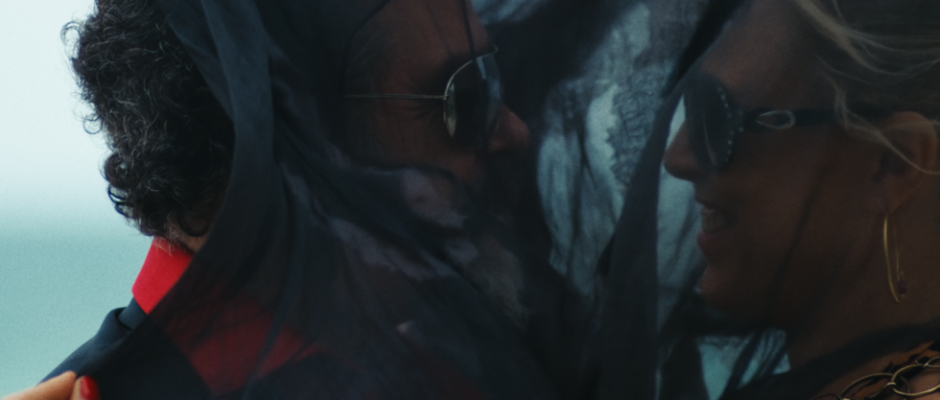
Joe Coleman and Whitney Ward are having a big summer. The reigning king and queen of the Coney Island Mermaid Parade also are known as two of the most original figures in a New York underground scene that flourished in the 1970s and ‘80s, and they continue to thrive as artists, performers and personalities. Coleman, a visionary painter, curated the sprawling “Carnival” group show at Deitch Projects, on view through June 28, which more than lives up to Coleman’s evocation of “a profane, holy place where the private desires, fantasies and fears of a society are given uninhibited free expression.” […]
The post “But Then My Obsession Went to Darker Things: Joe Coleman and Whitney Ward on Being Subjects in the Tribeca-Premiering Doc, How Dark My Love first appeared on Filmmaker Magazine.

Exclusive: Music documentaries “It’s Never Over, Jeff Buckley” and “Monk in Pieces” will both of their NYC premieres at the 2025 edition of the festival.