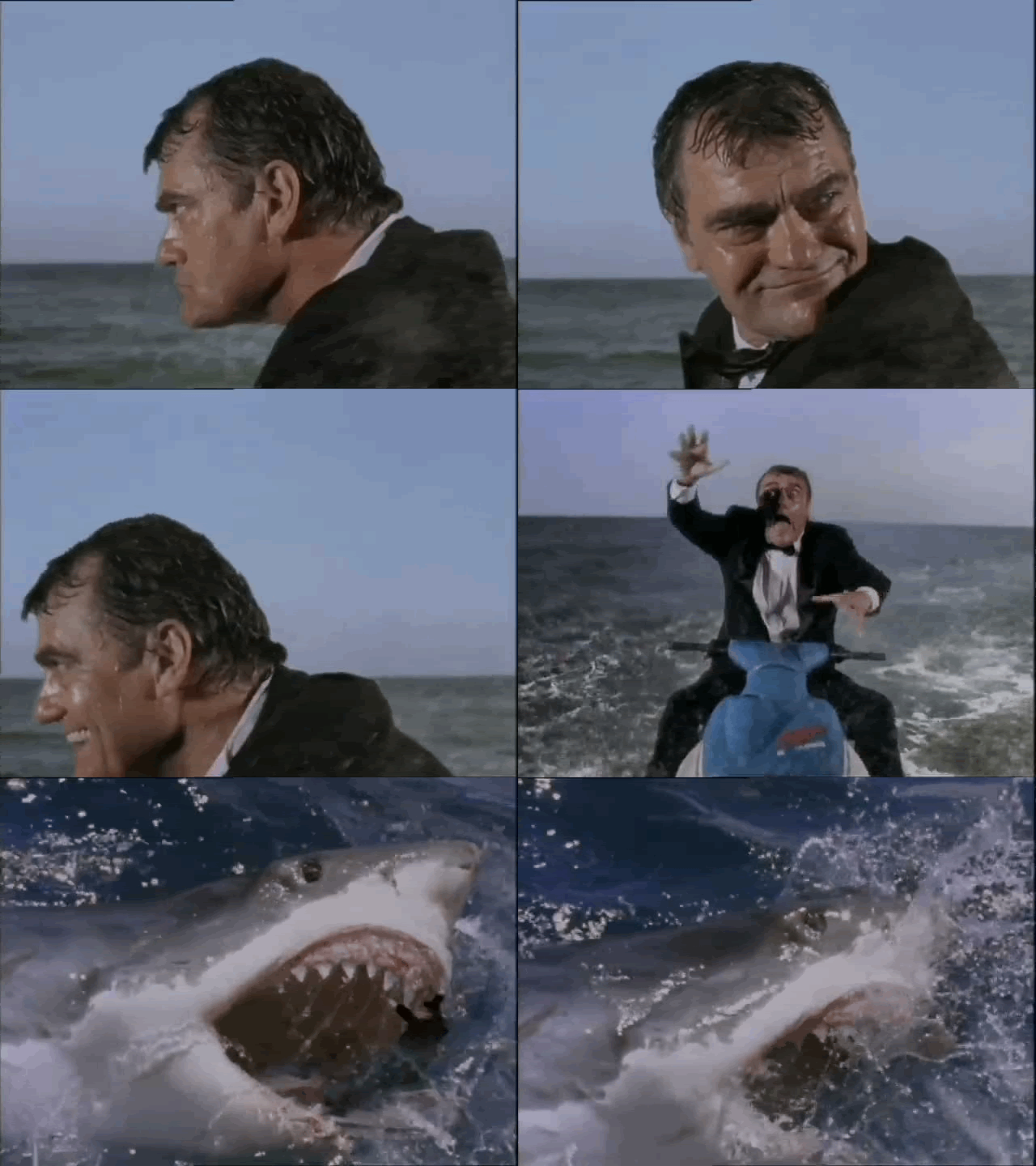
Anyone who knows me knows I’ve watched Shark Attack 3: Megalodon more than any other movie. I love shark movies. I love creature movies. I love horror. I love b horror. I adore comedies. I’ll definitely do a comedy-horror. I love sci fi too, and the occasional cop-on-the-edge movie. If I am not sure what movie to watch, I’ll watch one of the Alien movies, one of the Predator movies, one of the Nightmare on Elm Street movies, any Stephen King adaptation of any quality, Trancers or I Come In Peace.
Over the past week, I watched The Reef, Dangerous Animals, Beast of War and The Meg. In case you don’t know, those are all shark attack movies. Some are considered classics of the form, some I have seen them more than once, but in my heart, none of them can touch the cinematic perfection of Shark Attack 3.
Since I started writing this post, I watched Orca, which is a shark attack movie, but with an orca. It wasn’t great! But the first 20 minutes were delightful and the score is fabulous (Ennio Morricone!).
I am clearly not alone in loving shark attack movies. The demand for them remains pretty constant. So a steady stream of them get made.
By focusing on shark attack movies, I really just mean to offer the purest example I can think of what I mean by “genre filmmaking.”
A genre film addresses a certain set of foregrounded, well-known expectations about what kind of movie you’re watching. The pleasure of genre goes beyond the obvious comforts of seeing the genre elements repeated, although that can be a delight. When pressed to explain why I love a certain type of movie1, I once said, “I love a movie where there’s a scene at the morgue, and the guy doing the autopsy is eating a sandwich.”
But the pleasures also have to do with how this particular filmmaker will answer to (or choose to ignore) the many constraints of genre. A comedy has a happy ending. The mystery will be solved in a detective film. Certain aesthetics, types of shots… a million more examples. Genre doesn’t have to be cheap, or phoned-in, or low quality. It’s more that the overall business model doesn’t require high budgets and most of it exists in the low-budget realm.
Genre films tend to be more market-forward and economically resilient, even in tough times. These movies would rather aim to engage directly with audiences over looking for critic acclaim, although sometimes you get both, as with Sinners and Weapons this year.
I am not interested in making a horror film — with the exception of a shot-for-shot remake of Shark Attack 3 which I would definitely do if anyone wants to pay for that, just say the word, I will start tomorrow and it would be the honor of my life. Generally, ideas around “genre” are more associated with fiction traditions. So what does any of this have to do with documentary film?
And no, “documentary” is not a genre. I do think there are clearly genres within documentary. True crime, celebrity/IP, and music documentaries all come to mind. I started to wonder how much I, a documentary filmmaker in 2026, could benefit from thinking like a genre filmmaker.