
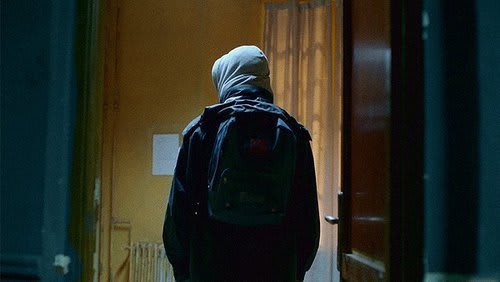
Just in case I haven’t written enough about The Imposter, here is an interview with Bart Layton, the director of this phenomenal crime-film documentary that I really can’t stop thinking about. Of course, that quality made talking with Layton all the more desirable and satisfying. We could have discussed this doc, about a 23-year-old European who passed himself off as a missing teen in Texas, and perhaps nonfiction cinema in general, all day. He’s one of the guys who really knows what’s what.
Almost as much as watching docs, I love having conversations with filmmakers who give us such fascinating nonfiction stories and display such a knack for telling them – not to mention who understand what’s so deeply stimulating and provocative about the medium as a whole and therefore their contribution to it. Hopefully, you enjoy reading it at least half as much as I enjoyed having it.
I tried to keep the talk as spoiler-free as possible, so I apologize if I ruin anything for people who haven’t yet seen the film.
This film is built around interviews with some of the most unreliable witnesses I’ve ever seen in a documentary. And so, since you stick solely to their words, they’re basically unreliable narrators. Was it always your idea to work with such tricky storytelling?
Well, no, because obviously when you enter into something like this, you don’t know. You can’t predict what kind of responses you’re going to get. You can’t necessarily predict what exactly the story is that you’re going to be told. Of course, I’d read about it and had a good idea, but I think that’s very different. When you see something reported, written down, it’s very different from looking a person in the eye and hearing them tell their stories.
I think – and this might be what you’re getting at with this idea of unreliable narrators – normally in documentary filmmaking, you set out in pursuit of this objective truth in some way. With this, it was totally different, because as soon as I sat down with Frederic [Bourdin], “The Imposter,” I realized he is a master manipulator, and he tells you this story, and you find yourself getting drawn into it. At the same time that you’re very aware that this guy is not a reliable, credible witness, you have these emotional responses to him because that’s what he does.
So that really was a key thing for me in terms of the structure. I felt like that was a really big part of this story. I didn’t feel like it should be filtered. What would be really interesting would be to allow the audience to experience that. For them to be on the receiving end of his manipulation, in a way. You become aware that he’s telling you this story, and you sit with him and feel sympathetic towards him at times, and you begin to understand that this is sort of twisted logic. You realize that you’re kind of falling for it.
This isn’t necessarily an investigative film where you’re going to find one neat answer. Actually, what there is are four or possibly five different versions of the same events. Subjective versions of the truth, if you know what I mean. That was what the story was. That was a really interesting way to try and tell this.
We went on this quite interesting and often quite bewildering journey in making this, going from one interview one day, convinced you knew exactly what happened, to the next interview with the opposite opinion. That is quite an unusual thing to experience, and so I felt like that was something I wanted to try and reflect, to recreate for the audience on some level.
You are confronted by unreliable witnesses, but you know that. The first thing he tells you effectively is, “I’m a liar, and this is how I lie.” And you go on that journey with him, and we all fall victim to him in a way. Does that make sense?
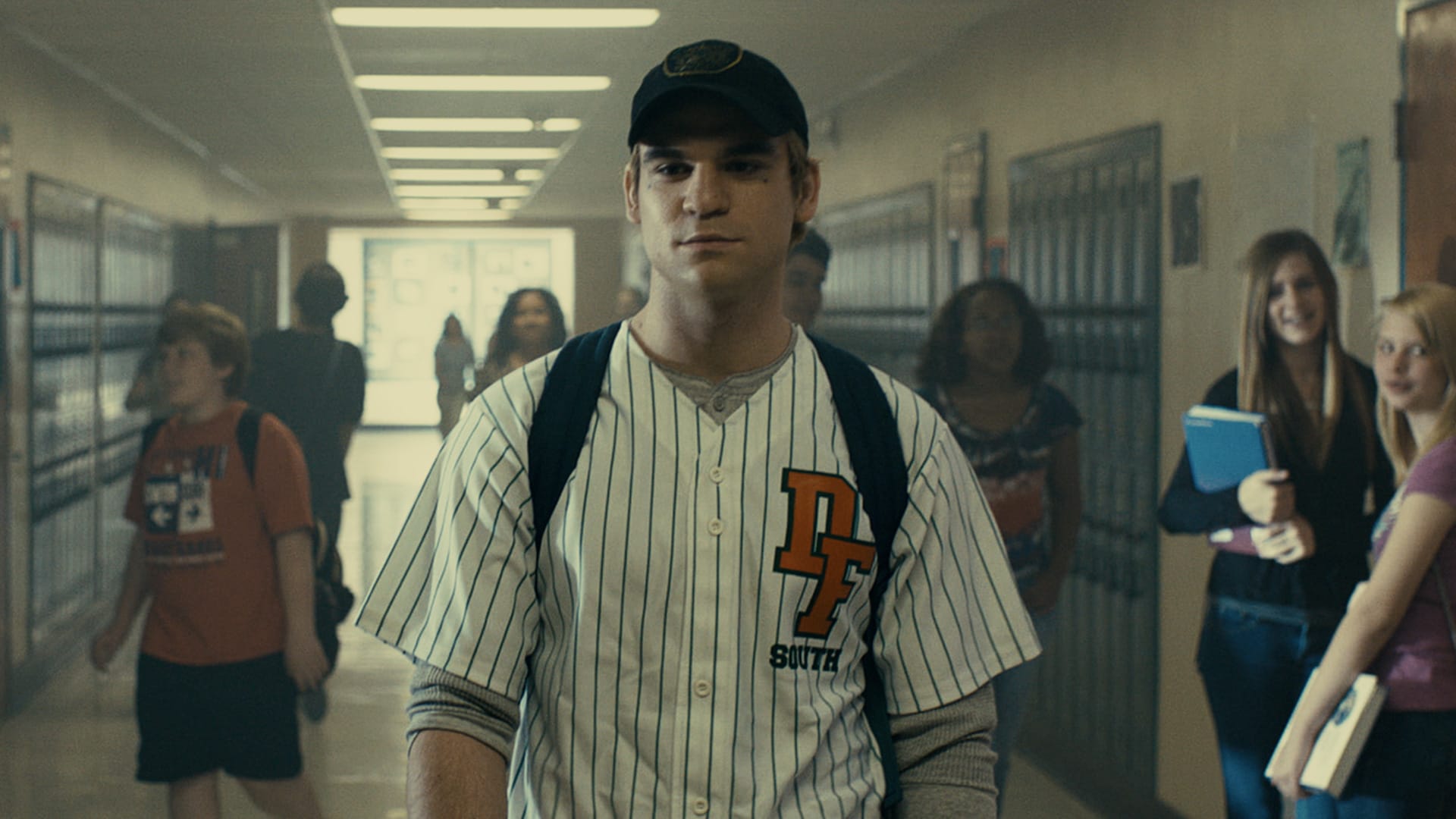
Do you think audiences should be trusted with the ability to understand that maybe not everything they’re hearing is the truth? There is some finger-pointing in the film, for instance, that is hard to shake at the end.
I think you make a really good point. Ultimately, like you say, you have to look at where these allegations come from, but at the same time, Frederic isn’t the only person in the film who makes that allegation. I think a lot of it is this idea that we all believe what we choose to believe. Yes, on one level, there are these allegations. And you’ve got to remember, at one time, there was an investigation that was launched. You hear the FBI agent say they used a polygraph. We all know that a polygraph is totally meaningless, effectively. But not only that, they gave the polygraph three times until [the test taker] failed it.
All of these things speak volumes, really. You’re right. We’re relying on audiences to navigate their way through a minefield of information. My experience so far is that the vast majority of audiences have got it. What the big debate is, when people come out of the movie, is not really what happened to Nicholas Barclay. It’s why did this family choose to accept this person into their lives, and how much of that is to do with a desperate willingness to believe something that you need to be true. It’s not just about his deception. It’s about self-deception as well.
My experience is people have judged that quite well. They understand. And the final shot of the film is this empty hole in the ground. It’s intended to be a metaphor for the fact that there isn’t a neat answer to this. There’s this hole which we all fill with our own conclusions and versions of what happened. I hope people get that. Of course, those allegations are made, but they’re in the public domain. They’ve been made before. And as you saw, the FBI took them seriously. But it’s also clear they don’t have any more information than we do.
Nonfics is a reader-supported publication. To receive new posts and support my work, consider becoming a free or paid subscriber.
There is also an issue of trust with subjects. With well-produced docs like this that focus on telling a good story rather than delivering a certain objective truth, participants can get upset, as we’ve seen with Errol Morris’s films Tabloid and The Thin Blue Line, both of which came to mind while I watched The Imposter.
That’s a great compliment. I’m not sure it’s justified, but it’s a lovely thing to say.
Is that a concern for you, or was it a concern while making it, that your subjects might dislike the way they’re portrayed?
It was a concern, but there was a big article in New Yorker magazine written about this case, and I think it’s fair to say the family is reflected in a much more negative way in that. You don’t hear from them. Of course, they’re reported, but most people come away feeling it’s an open/shut thing that the family had some knowledge of something very sinister, that there had been foul play or whatever. The majority of people who come out of this film don’t come away with that conclusion. They come away with this big debate, which is more accurate.
Of course, the family were concerned that in doing this, there would be a repeat of the New Yorker. They’d read that, and they didn’t approve of it at all. But when we showed them the film, they said that it was honest and fair and true to their experience. Ultimately, you try to balance it out. I know that there were things in it that they really wanted to say, which they ultimately got the opportunity to say. I think they were very pleased that they did.
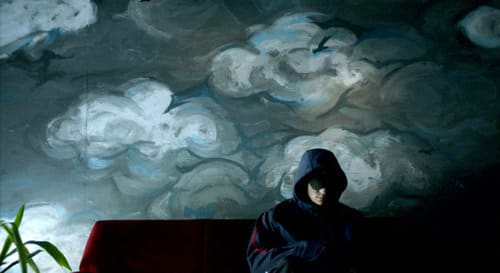
How did you convince everyone to participate? Did the family know that Bourdin would be so prominent or even featured in the film? He almost comes across as the star, whether you like him or not.
I think they felt he comes out of the film in a way that he deserves to, ultimately. You go on this journey with him, but at the same time, you know from the very beginning that he’s a manipulative liar, and at the very end, you know he’s a manipulative liar. I think the family felt that was a fairly accurate portrait. I think most people get a sense of what he’s like.
What I wanted was for the audience to be receiving it. I wanted you as a viewer to interact with him on some level, similar to the way I interacted with him in the interview, where I’m thinking, “Am I getting manipulated?” That question is something that I wanted to defer onto the audience. This is why he looks straight down the lens. He looks you in the eye. He’s slightly larger in the frame. The motivation being to give you, the viewer, a more direct contact with him.
I think there’s a good chance of some viewers accepting him as a kind of hero, or antihero, or at least a “cool” kind of criminal. I kept getting a Usual Suspects thing with him, like he was a mythical character along the lines of Keyser Soze.
I’m sure. As you might notice, The Usual Suspects was sort of a reference point in the film as well. He is a kind of a Verbal Kint character, isn’t he? So, are you wondering if people will walk away with admiration for him?
I don’t know about admiration. I’m mostly just fascinated with him, which is neither positive nor negative. I didn’t think of him as a terrible, terrible person. But I don’t think of anyone in the film as the heroes or villains or good guys or bad guys. Partly because they’re real people and partly because you just don’t know if you can trust anyone’s story.
I think that’s right, and I think what you identify is a difference between fiction and documentary. It’s worth saying that there was a fictionalized version of this film called The Chameleon. And it is much more black and white. I haven’t seen it. I didn’t make it all the way through, but it was pretty much black and white. The family is painted as murderers. Of course, documentary and reality isn’t black and white. It never is. There’s a lot of grey area. People say they wish there was a neat conclusion to this, less ambiguity, but life isn’t like that.
And it’s not as fun when you leave the theater and don’t have anything to talk about with the person you’ve been sitting next to.
I completely agree. There’s a way of making this film that is very different, which I wouldn’t have been interested in doing. That is a kind of investigative documentary into the disappearance of Nicholas Barclay and also into [the question of] how did this guy manage to get access to the United States. I think that’s a much less interesting film.
With this film, what I wanted to do was take you on the journey that all of these people go on. They tell you the stories they want you to hear. And the documentary is really about deciphering it. You do go on all of these people’s journeys. You go on the sister’s journey. People aren’t screaming at the screen going, “How could you be so gullible?” They’re thinking, “Wow. How extraordinary that these people could be so blinded by the need to believe something.” I think that’s where it gets really interesting and where it gets bigger than one story.
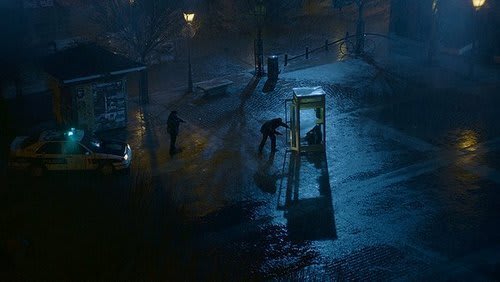
I want to talk about the production style, particularly the reenactments. It seems to be brought over from your television work, specifically Locked Up Abroad, which I’ve seen a bit of.
Well, that was a series that I created a long time ago. I directed the first ones, but haven’t for a while.
But that series has some similar reenactment stuff in it.
It does, but I think this film is on a completely different level, really. With this sort of stuff, you can’t take TV and try to upscale it and hope that it will work for cinema. People just won’t buy it. You have to set out with a totally different set of objectives. You have to actually be cinematic and feel like a movie. Of course, there are similarities, but I hope that it looks quite different.
Thanks for reading Nonfics! This post is public so feel free to share it.
But reenactments are becoming more accepted in documentary cinema, where they used to be primarily just a part of true crime reality shows like America’s Most Wanted. And this film and James Marsh’s films, to which The Imposter has been compared, are produced by Simon Chinn, so I’m not sure if that’s just something he’s interested in. I’m curious what his role is like for this particular film, actually.
To be honest, I had conceived of the structure and the look of the film before. Part of the reason Simon came on board was because he had this track record with Man on Wire, and people felt there were similarities because it was about a French guy, and I was planning on doing these high-end dramatizations.
I was something of an unknown quantity from an investor point of view. I think people liked that he would bring that experience to it. Simon was a great source of support and experience in the edit, but he wasn’t involved in the way in which it was structured or shot. He’s an executive producer.
James Marsh is someone I know really well and whose movies I really like. I think both of us feel that there is a perception… that drama in documentary is a dirty word. There’s this perception that that makes it less of a documentary. That may be right, but I think rules are… I don’t know who writes them.
This kind of objectivity, unless you’re going to make a documentary with a piece of CCTV footage, which is unedited, I’m not quite sure how anyone imagines you’re going to get some kind of objective truth. There are subjective decisions. And this film is all about subjectivity. You’ve got all these different people telling you these different things.
What I wanted to do with the drama was, if a great storyteller tells you a great story, you have a visual experience. You have a kind of movie that plays out in your head. That was what I was trying to visualize. So with my dramatization, which is why I wouldn’t call them reenactments or reconstructions or anything like that, I was trying to make you aware as a viewer that it’s not like I’m trying to say this is what must have happened, a kind of forensic reconstruction of events.
With those scenes where you get the overlap between the interview and the drama, part of the intention is to make you aware that you are spending time in someone’s story. You’re spending time in someone’s memory. In their version of the events. So there were little motifs. For example, when you come into one of these scenes, you come in with a POV shot, or you come in over someone’s shoulder or following their hand along the wall, or whatever. The idea with that is it’s kind of like a shorthand for saying, “This is whose story you’re in.”
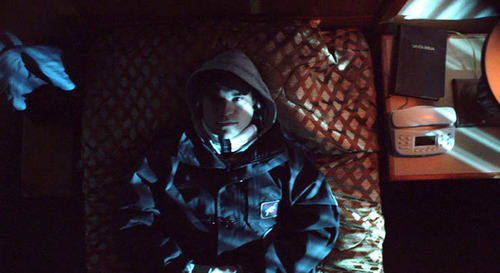
That’s one of the reasons I thought of The Thin Blue Line, and this is probably the best nonfiction film since to deal with that Rashomon-like idea of subjective memory and perspective. Part of it is the dramatizations. In The Thin Blue Line, each visualization is a little bit different from the one before, because it’s supposed to be illustrating the latest interviewee’s version of the events.
One of the interesting things about that, what Errol was trying to do was, in a way, find a bigger truth. Using reconstruction, he was trying to find this kind of bigger, more accurate truth than all of the unsatisfactory accounts. Whereas with these dramatizations, they’re not trying to identify a different truth. They’re trying to illustrate the story that this person wants you to hear.
You’ve obviously thought about the film a lot.
Yeah. It’s definitely one of my favorite documentaries of the year. Even if there were things that I hated about it, or whatever, just the fact that it makes me think makes me love it.
If anything, what were the things that you hated about it?
There’s nothing that I hate about it. The only issue I’ve had with the film, really, is that I can’t stop thinking about certain things said in the film that have made me come away with clouded judgments of certain characters, and I think there is some danger to having these ideas and presumptions put in the audience’s heads. [To be perfectly obscure for readers who haven’t seen it.]
That’s interesting, but that is also not the general consensus for most people. Most people’s thesis is that they were so desperate to believe. They were willfully blinded in a way. I get what you’re saying, but hopefully, after this conversation, you begin to see some of the thinking around the way in which those accounts are presented. Otherwise, the alternative is you take this thesis that this person or these people are bad, fundamentally. Then you refuse to present the audience with anything that goes against that thesis. You don’t allow him to tell his sob story about his childhood, or don’t let him tell you anything that lets him off. That is more dangerous.
I just hate that in America, even though people are legally innocent until proven guilty, media-wise, we tend to focus on guilt first. As soon as someone is suspected of something or put on trial, in our minds, we think guilt before innocence.
That’s very true. Whenever those big newspaper headlines talk about someone’s alleged guilt, it’s difficult for you to then see them as a completely innocent individual after that. You’re right. But I think when you come towards the end of the fil,m you’ve spent two-thirds of the way not even considering [guilt]. Then you get this turn of events and consider that, and you’re reminded again of where the allegation came from. I don’t have more information than you do about that.
I’m really excited to see what you do next, because this is basically your debut feature, right?
Yeah, it is. I mean, I’ve made feature-length documentaries, much more serious BBC/Channel 4 sort of stuff, in addition to other things. But I’m still interested in challenging the conventions of the genres, and I think there is a lot of stuff written and spoken about documentary that is naive.
So, are you interested in sticking with documentary? A lot of people with this kind of storytelling talent with documentary often get wooed into fiction.
I’m woo-able. But I always come back to this idea that when there are these kinds of stories, which are stranger than fiction, that there is something really important about preserving the truth. That’s what makes this story so extraordinary. I don’t think it could be better as a fictionalized version. Anything can happen in the movie world. People climb walls and fly. But almost stranger things happen in the real world, and I’m quite interested in figuring out how that comes about.
Well, then, go find another one of these stories that I can’t even believe I’ve never heard.
I am working on one at the moment. An American story. It’ll blow your mind.
This interview was originally published on the Documentary Channel Blog.