
This November, before the first frost came, I planted bulbs in the garden. I planted a fair amount of bulbs. Okay, I planted 800 bulbs.
I may have taken it a bit far.
Despite many gardening years past, I never planted bulbs before. I just never got around to learning about it. But this year, I didn’t want gardening season to end, and I realized I could make gardening season start earlier next year if I planted bulbs.
I spent weeks researching, planning, making drawings, and mooning over catalogue pictures. I labored over bloom progression and color stories (see below). I planted a bulb everywhere I could conceivably plant a bulb. Again: I planted 800 bulbs.
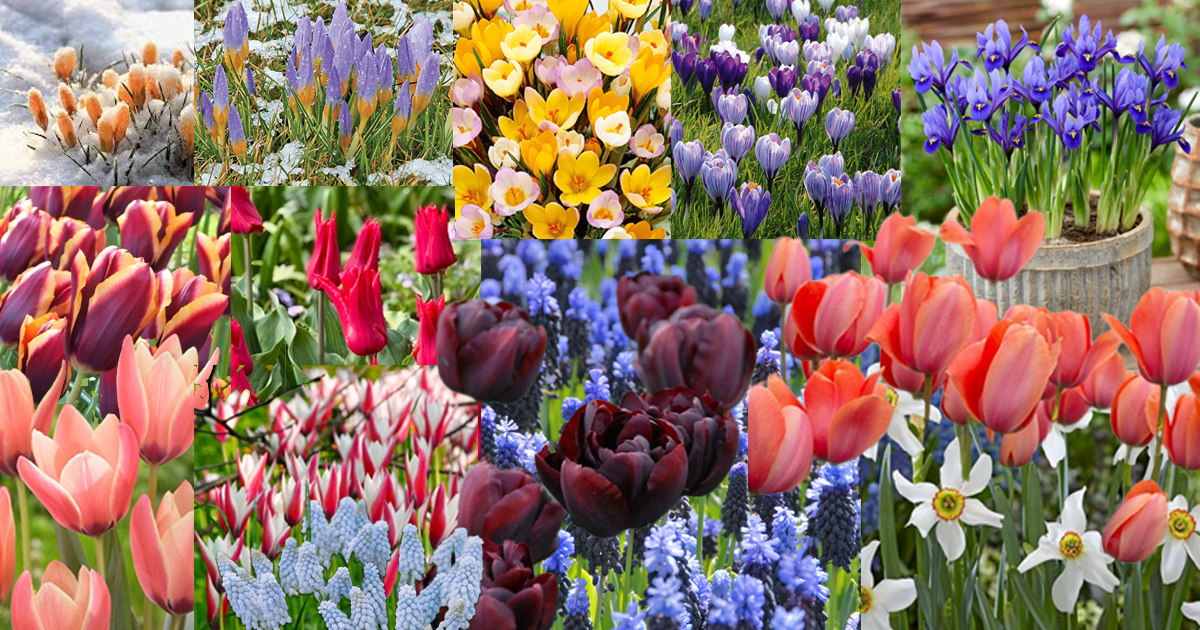
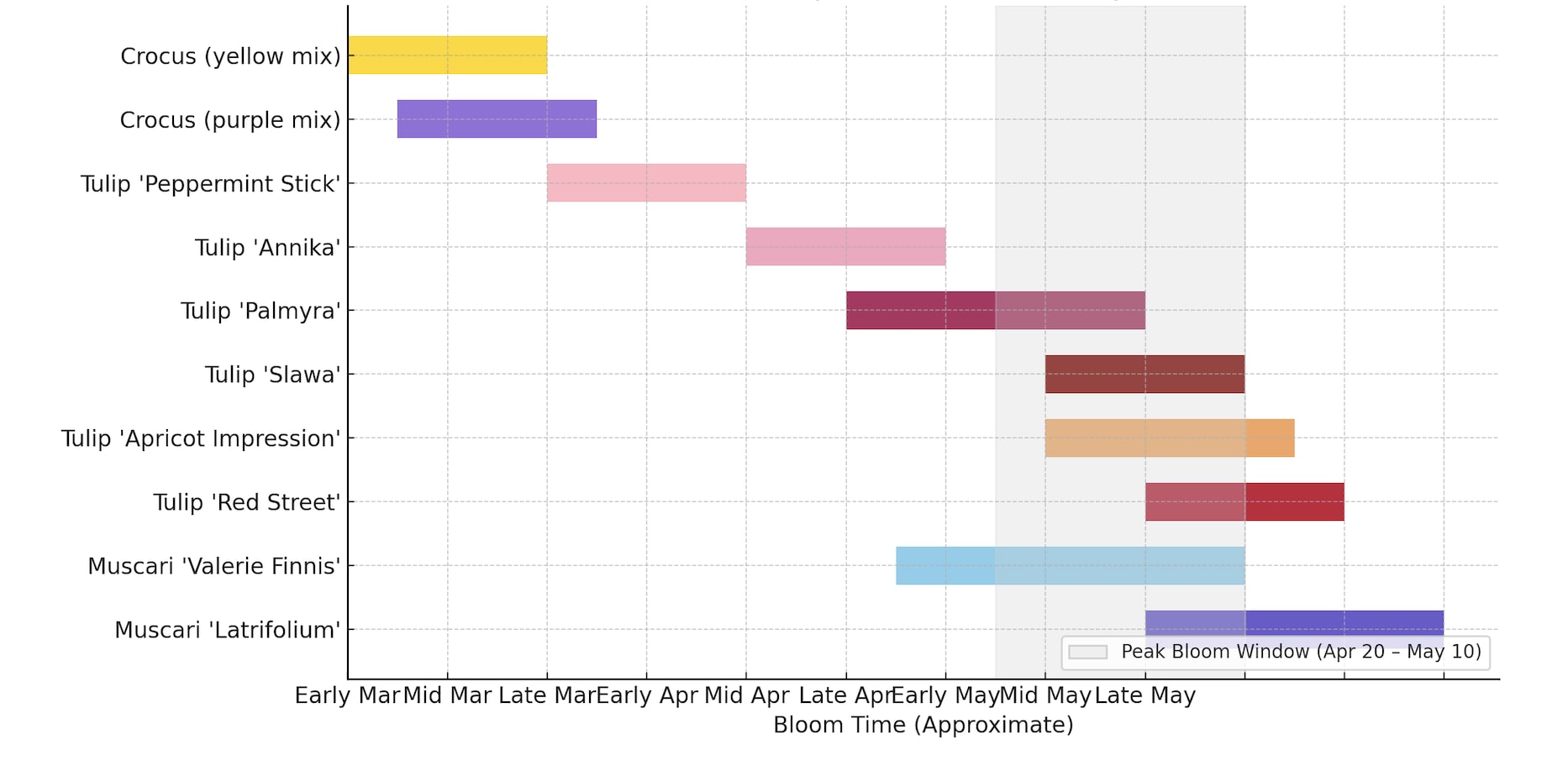
The other day I was asking myself, “… why live, though?” and the answer came quick and easy: because I have to see my tulips!
Sorry, is that too dark? Well, at least where I live, winter is literally dark! Perhaps you are also a winter melancholic and you might enjoy a dark winter playlist? Here is one I made called “it’s death to be alone in winter”.
I’m fine, it’s fine; it’s just winter.
Planting these bulbs changed how I think about what it means to garden in winter.
It used to be that winter came on and I’d just forget about the garden. If I thought about my garden at all, it was just to hope my perennials survived the winter and came back in the spring. (They usually do. Yet it always feels like a miracle!) I put no thought into what the plants were actually doing in winter, and how I might help them along. But the bulbs changed all that.
I learned that tulips (and all my other bulbs) don’t just “survive” winter; they have to go through the winter cycle in order to bloom. They need a real, cold winter, at least 10 weeks where the soil temperature is under 45 degrees. They stay buried in the freezing darkness of the earth, turning starches into sugars to feed the nascent flowers. This miserable cold serves a purpose by telling them what time it is.
I realized this was true of all my other plants, my perennials. They’re not just frozen in place doing nothing, or dead. It’s just the action has all moved underground.
I started to think about katabasis and anabasis again, the underworld journey structure I relied on for Confessions of a Good Samaritan. Katabasis: the hero journeys to the underworld, a downward journey into a dark, chaotic, dangerous unknown. Anabasis: the hero returns, the upward march toward the light of wisdom. Death/rebirth, down/up. You can’t have the latter without the former.
I am thinking about my plants every day now: how can I give them the protection they need to survive those chaotic depths of hell—I mean, winter? I am thinking about all of this as I move my garden containers out of the wind blast zone. As I put down a layer of cedar mulch. As I wrap them in burlap.
I am inspired by the infinite brilliance of these living things, how they know now is not the time to show off, but instead a time to put down roots and store up energy; a time for patience, introspection, and protection; a time for anticipation, tidying up and planning for the spring.
I don’t think creative lives are that different. There are seasons for output and seasons for going underground. Seasons where the work looks dormant from the outside but is quietly reorganizing itself below the surface. You don’t get to skip the winter and still expect a spring.
So if this is a cold, dark, unglamorous moment for you, in your work, your thinking, your ambitions, or just life in general: it may just be the necessary cold that tells you what time it is.
Happy New Year. May whatever you’re tending survive the winter, and surprise you when it comes back up. I can’t wait to see what you all have in store.