
European documentary cinema is experiencing a paradoxical moment. Production is rising to record levels even as financing structures grow more fragile, public broadcasters retreat and political pressure intensifies across parts of the continent. The result is a field that is simultaneously shrinking and expanding—economically constrained yet creatively emboldened, geographically fragmented yet more interconnected than ever. What emerges is not a crisis of documentary itself, but a profound reshaping of its geography: where films are made, how they are financed, which stories travel and which voices struggle to be heard.
According to the European Audiovisual Observatory’s 2025 edition of Focus – World Film Market Trends, European film production continued to grow for the fourth consecutive year. In 2024, 2,514 feature films were produced across 36 markets, including 957 documentaries, which was up from 922 in 2023 and well above the 2019 pre-pandemic peak. Documentary now accounts for more than a third of Europe’s feature output. Yet behind these impressive numbers lies a more fragile reality.
Shrinking Budgets, Fragile Pipelines
Across Europe, public broadcasters—the historic backbone of documentary financing—are downsizing or restructuring. Even in territories long considered stable, including the Nordic countries, commissioning budgets are tightening. In Italy, Germany, France and Central-Eastern Europe, producers report longer development phases, delayed commitments and smaller licence fees. The shift is structural rather than cyclical.
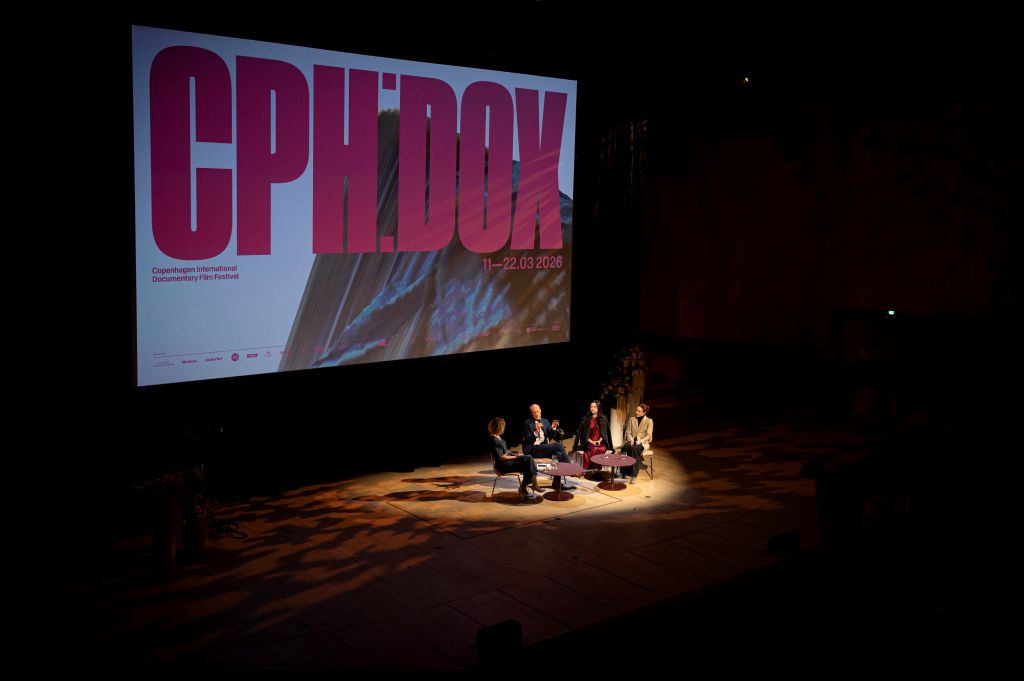
CPH:DOX Head of Industry Mara Gourd-Mercado sees the trend as both long-term and accelerating. “What we see is maybe not new but has accentuated in the last few years. Financiers come in later and later in the process,” she explains. “Producers have financed out of pocket all the development and sometimes the beginning of the production. What makes documentaries great is having the time to develop a relationship with your characters, and because financiers come in later, we’re losing that part.”
That loss is artistic as well as economic. Observational cinema, character-driven work and long-term investigative projects all depend on time. When producers must self-finance early shooting, the risk shifts onto individuals rather than institutions. Smaller companies are pushed out; only those with reserves survive. The geography of production narrows toward countries with stronger funds and away from more precarious regions.
The delay in financing also feeds into a culture of caution. “Everybody wants a sure ticket that this is going to be a successful documentary,” Gourd-Mercado notes, “but nobody knows that until it comes out. You need to take those risks.” Without serious risk-taking, she argues, the ecosystem becomes fragile and the films of tomorrow risk losing originality and depth.
Ove Rishøj Jensen, producer and documentary expert at the Nordisk Film & TV Fond, describes similar uncertainty from a funding perspective. “We are seeing a lot of countries cutting back in funding, and a lot of restructuring in both film funding and broadcasters,” he says. “It’s very unpredictable in terms of getting things commissioned. Public broadcasting cannot be what it has been for the last seventy years—it needs to adapt to the media landscape we’re in.”
In practice, that adaptation means rethinking mandates, experimenting with digital-first releases and prioritising content with clear audience appeal. For documentary producers, it often means building ever more complex co-productions. Long the foundation of European documentary, co-productions are now less a creative opportunity than a survival strategy. Jensen calls it “the base of documentary filmmaking in Europe,” a strength that reflects collaboration but also dependence on shared resources.
A Politicized Landscape
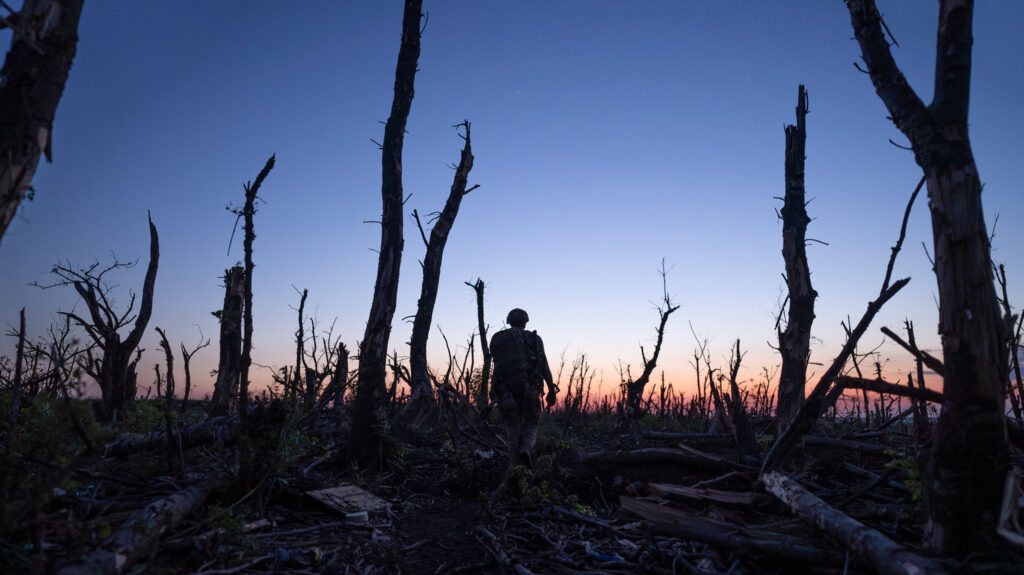
While financing tightens, European documentary is becoming more politically engaged. From Ukraine to Palestine, from migration routes in the Mediterranean to labour exploitation in global supply chains, filmmakers are confronting urgent geopolitical realities. Ukraine alone continues to generate a steady stream of feature documentaries on the war—roughly five to ten per year—alongside dozens of shorts and hybrid works. Films such as Mstyslav Chernov’s 2000 Meters to Andriivka, projects emerging from the Tabor collective and testimonies like Alisa Kovalenko’s My Dear Theo or Olha Zhurba’s Songs of Slow Burning Earth are not only chronicles of invasion and resistance, but also reflections on memory, language and survival. They map a country’s trauma in real time while contributing to Europe’s cultural archive of war.
Elsewhere, documentaries are addressing democratic erosion, climate collapse, migration, and systemic discrimination with renewed urgency. In the Nordic countries, films like The Helsinki Effect or The Dialogue Police turn the camera inward, examining the contradictions of welfare states and the tensions between liberal ideals and social reality. Across Southern Europe, filmmakers are documenting labour precarity (Ketevan Vashagashvili’s 9-Month Contract), tourism-driven gentrification (Steve Krikris’ Super Paradise) and environmental damage (Robin Petré’s Only on Earth), while Central-Eastern European directors continue to explore historical memory and post-communist identity (for example, Radu Jude’s humorous Eight Postcards from Utopia or Vladena Sandu’s autobiographic hybrid Memory).
The political climate across Europe is also affecting storytelling conditions. In countries such as Hungary, Slovakia, Turkey, Serbia and Italy, public media environments have become more restrictive. Cultural institutions face pressure, funding decisions are scrutinized and programming can become contentious. Yet filmmakers are not retreating. Instead, they adapt financing strategies, partner internationally, or shoot discreetly. Angeliki Vergou, head of AGORA, the Thessaloniki International Documentary Festival’s industry sidebar, notes that in a climate of rising nationalism and censorship, filmmakers are “still trying to support their stories without adapting them and resist censorship. They try to find other funding resources and many times resort to guerrilla film shooting.” The persistence of politically engaged documentary suggests a field driven by necessity rather than comfort.
Gourd-Mercado points to Denmark as a comparatively privileged locale, where strong democratic traditions still allow filmmakers to tackle uncomfortable subjects. But she emphasises that across Europe, polarization and political pressure shape financing and circulation. Festivals must therefore become spaces for dialogue—places where films can provoke discussion even when national contexts become hostile.
The Rise of Hybrid Forms
Formally, European documentary is evolving rapidly. Hybrid works combining fiction techniques, performance, animation, or essayistic storytelling are increasingly prominent at festivals. One recent emblematic case is Igor Bezinović’s Fiume o Morte!, which tells the story of Gabriele D’Annunzio’s raid on Fiume and blends archival reconstruction, staged sequences and contemporary testimony into a playful yet rigorous historical inquiry. Crowned Best Documentary at the European Film Awards in January, it demonstrated how hybrid language can expand the reach of political cinema.
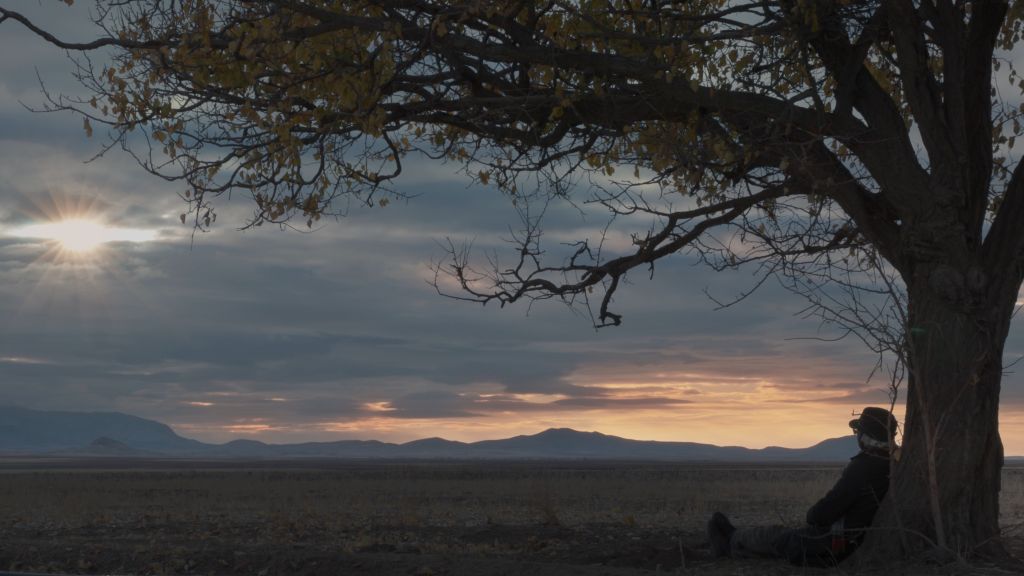
At the same time, classical observational cinema retains enormous power. Intimate portraits like Mohammadreza Eyni and Sara Khaki’s Cutting Through Rocks (co-produced by Dutch and German partners) or patient yet hard-hitting social studies on extreme poverty such as Monica Strømdahl’s Flophouse America (a co-production between Norway and the Netherlands) remind audiences of the emotional depth that can emerge from long-term immersion. These films show that innovation in documentary is not only technological or formal—it can also be ethical, rooted in the filmmaker’s relationship with subjects.
The coexistence of hybrid experimentation and traditional observation suggests a field expanding its vocabulary rather than abandoning its roots. European documentary continues to absorb influences from art cinema, theatre, television and digital media while maintaining its commitment to lived reality. The geography of style is as varied as the continent itself.
Artificial intelligence looms as a structural concern rather than a stylistic trend, as filmmakers worry about authorship, consent and the manipulation of archival material. In the meantime, European policymakers are attempting to address these issues through legislation such as the EU’s AI Act. Gourd-Mercado notes that AI is “affecting everything from democracy and elections to surveillance,” making it unavoidable in documentary discourse even if its creative use remains cautious.
Nordics as Laboratory
Despite funding pressures, the Nordic region remains a core laboratory for European documentary. Festivals like CPH:DOX, Göteborg, DocPoint, Tempo and Nordisk Panorama consistently showcase films engaging with global crises while examining internal social tensions. This dual gaze—outward toward geopolitical issues and inward toward welfare-state contradictions—has become a defining feature of Nordic documentary.
Jensen admits the region is still “in a fairly good position, even though we are also experiencing setbacks… it’s getting more complicated to get things through because the media landscape is shifting.” Nordic funds often act as late-stage partners, ensuring productions can reach completion. Their support allows ambitious films to be made even when broadcasters hesitate.
But the Nordic model also illustrates Europe’s broader dilemma. Strong public systems sustain ambitious filmmaking, but restructuring forces producers to rethink strategies. As commissioning slows, producers increasingly seek partners in other continents or choose alternative sources including equities. Geography becomes fluid, with films crossing borders at every stage of production.
New Centres of Gravity
Traditional hubs like Amsterdam’s IDFA still shape the documentary landscape, but new centres of gravity are emerging. Thessaloniki is strengthening its role in the Euro-Mediterranean region, hosting projects from Southeast Europe, North Africa and the Middle East. In 2024, Tallinn Black Nights introduced a dedicated documentary competition, expanding Northern Europe’s festival map. From Nyon’s Visions du Réel to Kosovo’s Dokufest and from Sheffield to Florence’s Popoli, regional festivals continue to nurture local networks.
Thessaloniki’s Vergou emphasises the importance of cross-regional collaboration. “Co-production remains one of the most effective ways to make documentaries in Europe,” she says, “but we need more genuine pathways between South and North, East and West. Smaller markets, fewer resources, more at stake—that creative necessity can be a strength.” She also stresses fair co-production: equal creative voice, not merely financial partnerships dominated by larger countries.
Festivals and markets are increasingly seen as infrastructure rather than luxury. Vergou labels gatherings like AGORA as places where producers meet broadcasters, sales agents meet directors and unexpected partnerships form. “What makes gatherings like this valuable is not just the meetings that happen in the program, but the ones that happen in the corridor, over a cup of coffee, between a Greek director and a Norwegian producer who would never otherwise cross paths,” she insists. “That is where ideas take shape. Industry events are where the whole value chain meets—and where the industry recalibrates what stories deserve to be told and how.”
Esther Bannenberg, head of Berlinale’s DocSalon, highlights the role of collective frameworks. Panels and collaborations between festivals, she notes, help connect artistic ambition with practical financing and distribution strategies. Festival alliances create shared networks that expand screening opportunities and support talent development. In a fragmented market, collaboration becomes survival.
A Fractured Market
Yet the market itself is fragmenting. Jensen observes that feature-length documentaries once pitched simultaneously to broadcasters and film funds now face diverging expectations. “Television is going more in a television direction,” he explains, “meaning that some films doing well at festivals don’t work for broadcast anymore. The market is becoming more fractured.”
This fracture affects themes as well. Financiers increasingly demand clear topics and identifiable audiences. Jensen notes that “more abstract films dealing with human relations in general are becoming difficult to finance.” Projects now often train a spotlight on a single issue—climate activism, gender rights, labour conflict—to attract targeted support. While this clarity can aid marketing, it risks narrowing the range of stories told.
Platforms complicate the picture further. Gourd-Mercado sees streamers as “a part of the pipeline” and “a distribution channel,” yet warns their golden age has passed. Vergou argues platforms can help audiences discover documentaries, but problems arise when they privilege their own data-driven productions and impose globalised formats. Bannenberg adds that while platforms offer visibility for local stories, they operate within global business logic that may not align with regional ecosystems.
Impact and Audience Reach
One of the field’s central questions is audience reach. Even as production increases, many documentaries struggle to find viewers. Impact campaigns are becoming essential, especially for politically sensitive films. Gourd-Mercado believes impact strategies are “there to stay,” but stresses the need to build structures for screenings in places where films cannot safely be shown. Digital platforms alone are insufficient when repression limits access.
She gives examples of films about journalists in Georgia or dissidents in Hong Kong, asking how audiences in those places can see them without risk. Documentary, she says, can be “a tool for building citizenship and upholding democracy.” If audiences cannot access films, that civic function disappears.
Predictably, festivals again play a crucial role. They create visibility, attract press attention and enable films to travel. They also serve as testing grounds for new distribution strategies—from pop-up screenings to community outreach.
Lessons Across the Atlantic, A Continent in Transformation
European documentary’s collaborative model still offers a clear lesson for North America. As Gourd-Mercado notes, co-production forces filmmakers to confront different perspectives and avoid creative echo chambers. At the same time, she argues that Europe could learn from North America’s greater appetite for “innovation and disruption.” Europe’s structures are strong but often rigid; North America’s are flexible but less collaborative. The dialogue between these approaches may shape the next phase of global documentary practice.
Ultimately, the geography of European documentary is defined less by borders than by networks consisting of funding bodies, festivals, broadcasters and creative communities. Ukrainian war diaries now sit beside Scandinavian labour studies, Mediterranean migration stories alongside Baltic memory films. Each project charts a fragment of a continent in flux.
From panel discussions to late-night cocktails, the same concerns surface again and again: shrinking budgets, cautious commissioners, fragmented audiences. Yet filmmakers remain determined; arguably they are more militant than in many years. They adapt financing strategies, experiment with form and push politically urgent stories into public spaces, even as the conditions for doing so grow more precarious.
European documentary is entering a new phase marked by structural uncertainty and creative urgency. Its geography is shifting toward new centres, new alliances and new narrative forms. If the ecosystem can adapt through fairer co-production models, renewed audience engagement and stronger collaboration, the present crisis may yet become a catalyst for reinvention rather than decline.
Across the European festival circuit, the transformation is visible in real time. The map of European documentary is being redrawn not only by institutions, but by filmmakers who refuse silence.
That tension surfaced vividly at the latest Berlinale, where jury president Wim Wenders suggested filmmakers should “stay out of politics,” remarks that triggered a wider backlash over the festival’s stance on the war in Gaza. Indian author Arundhati Roy withdrew from the event in protest, more than 80 filmmakers signed an open letter criticising the festival’s perceived silence and The Voice of Hind Rajab helmer Kaouther Ben Hania refused a collateral award. The controversy, unfolding across press conferences, red carpets and industry panels, showed how debates about artistic responsibility and geopolitics now permeate every layer of the ecosystem, well beyond the non-fiction sector.
In the end, geography is not just about territory. It is about relationships, memory and imagination. European documentary continues to chart these connections—film by film, border by border, story by story.
This story originally appeared in issue #125 as part of a three-article series on the state of documentary production. Read more on the states of Canadian documentary and U.S.A. production/financing.
The post Fault Lines & Frontiers: Mapping the Evolving Geography of European Documentary appeared first on POV Magazine.