• News
  • Videos
  • Adobe Premiere Tips
  • About
  • FocusPulling.com
Menu
  • News
  • Videos
  • Adobe Premiere Tips
  • About
  • FocusPulling.com

Author Description

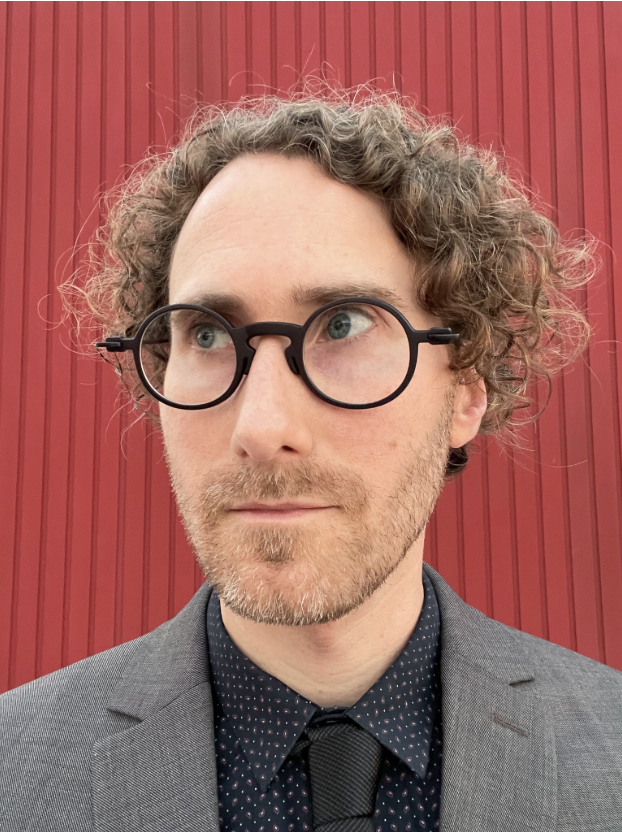
Paul Moon
Connect on Facebook Connect on Twitter Connect on Linkedin

H. Paul Moon is a filmmaker based in New York City and Washington, D.C. whose works concentrate on the performing arts. Major films include “Sitka: A Piano Documentary” about the craftsmanship of Steinway pianos, “Quartet for the End of Time” about Olivier Messiaen’s transcendent WWII composition, and an acclaimed feature film about the life and music of American composer Samuel Barber that premiered on PBS. Moon has created music videos for numerous composers including Moondog, Susan Botti and Angélica Negrón, and three opera films set in a community garden. His film “The Passion of Scrooge” was awarded “Critic's Choice” by Opera News as a “thoroughly enjoyable film version, insightfully conceived and directed” with “first-rate and remarkably illustrative storytelling.” Further highlights include works featured in exhibitions at the Nevada Museum of Art and the City Museum of New York, PBS television broadcasts, and best of show awards in over a dozen international film festivals.

22 May 2026

Greg Kinnear on Acting, AI, and Why Movies Still Matter

Written by Paul Moon

Oscar-nominated actor Greg Kinnear has been a fixture of film and television for decades, bringing warmth, wit, and emotional depth to beloved classics like “As Good as It Gets,” “You’ve Got Mail,” and “Little Miss Sunshine.” Most recently, he stars in “Margo’s Got Money Troubles,” the acclaimed new television series that recently wrapped its first season.

In this episode, Greg Kinnear reflects on his circuitous path from radio and talk shows to becoming one of Hollywood’s most recognizable actors. He explains why he believes that same path may no longer exist in today’s entertainment industry. He opens up about the changing economics of Hollywood in the age of AI and the collapse of the industry’s “middle class.” Funny, thoughtful, and philosophical, Kinnear shares why he still believes there’s something fundamentally human about great acting that technology can’t replicate.

Uncategorized Comments are off
22 May 2026

New doc: How Rafael Kubelik kept contact with Czech Philharmonic

Written by Paul Moon

For 40 years after his flight from Prague, Rafael Kubelik was a non-person in his home country.

But players in his orchestra, the Czech Philharmonic, now reveal that he stayed in touch with them, one way or another.

A revealing interview by our partners at OperaPlus.

The post New doc: How Rafael Kubelik kept contact with Czech Philharmonic appeared first on Slippedisc.

Uncategorized Comments are off
22 May 2026

‘How We Grieve’ Trailer: PBS Doc Series Produced by Rachel Bloom Preps Us for Our Turn in the Urn

Written by Paul Moon

How-We-Grieve-PBS-documentary-series-Sea

Exclusive: Filmmakers and siblings Meghan and Justin Ross’ latest project explores how people process their fear of the end and why we avoid talking about it — particularly in an Arab family like theirs.

Uncategorized Comments are off
21 May 2026

Interview: Felipe Bustos Sierra On ‘Everybody To Kenmure Street’

Written by Paul Moon

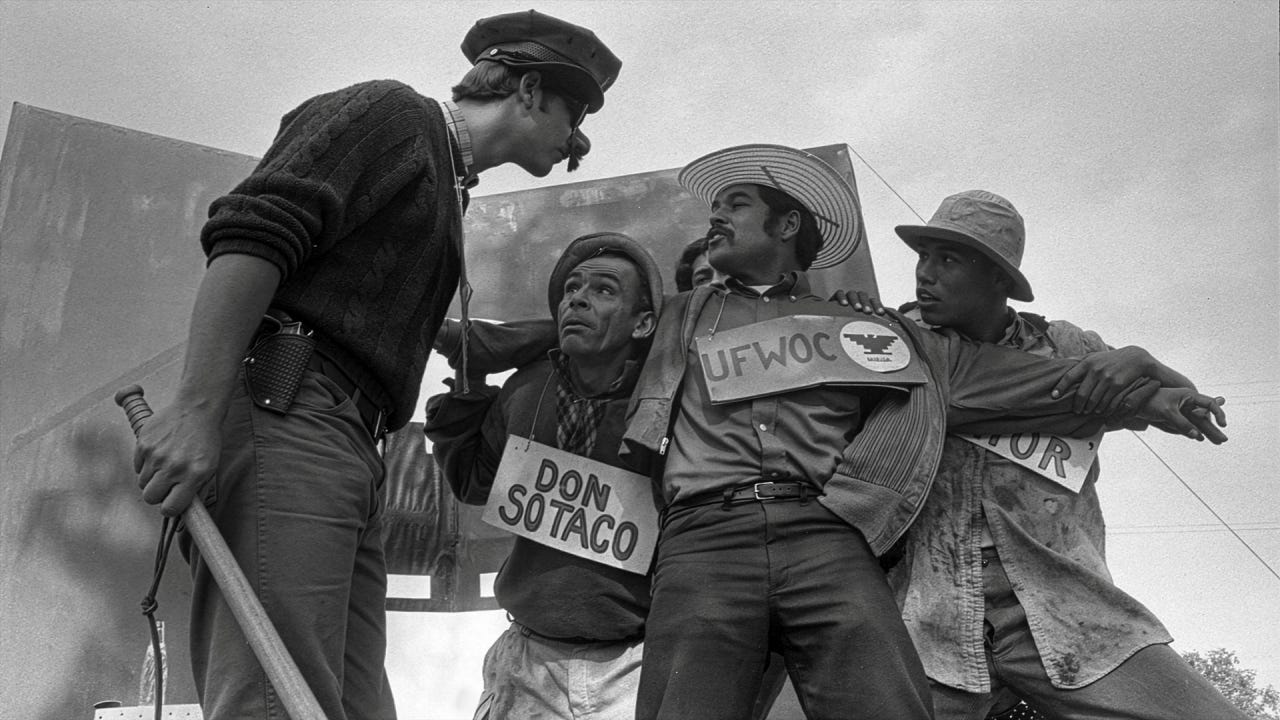
Everybody to Kenmure Street is the documentary we all need right now, for its inspirational showcase of solidarity and effective peaceful protest, as well as for its refreshingly creative choices that blend crowdsourced footage, aesthetically conscious interviews, historical context, and staged elements featuring familiar actors. The award-winning film is primarily about an impromptu demonstration of community action responding to a deportation raid in Glasgow in May 2021. Thousands of locals surrounded a van holding two of their neighbors, blocking its departure. One man even stationed himself underneath the van to keep it from moving at all. Spoiler alert: the protest was successful, resulting in the release of the two men.

The film is concentrated on that singular event in that singular location, but it’s also about anywhere in the world that could use some hope and harmony. It’s a reminder that protests work and, more importantly, communities can make an impact when they come together, not allowing those in power to divide them. It’s a reminder of the allies who are there with you in the present and throughout the past as you challenge morally corrupt authorities. Everybody to Kenmure Street is a call for everyone to watch and experience the Kenmure Street protest as if seeing it or being part of it as it unfolds. I recommend doing so in the theater for an optimally intimate and collective appreciation of the story and the artistry involved in its telling.

Felipe Bustos Sierra is the central artist behind Everybody to Kenmure Street. The filmmaker is himself an immigrant residing in Scotland, having been born and raised in Belgium, and is the son of an exiled Chilean immigrant. His first feature, Nae Pasaran, was about Scottish factory workers who went on strike in solidarity with Chileans during the Pinochet dictatorship. Everybody to Kenmure Street is his second feature and continues some of the same themes. This week, I spoke to Bustos Sierra about the new documentary, the impact it’s had on him and its various audiences, and some of the fresh ideas behind its production. Below is our conversation, mostly in full, edited for clarity.

Nonfics is a reader-supported publication. To receive new posts and support my work, consider becoming a free or paid subscriber.

I read that before the day that you document in the film, you had given up on protests. Did you immediately change your mind after the event, or while making the film, or since making the film?

I’d lost faith in mass protest. Bodies on the street. It didn’t feel like it was having the impact it used to have anymore. Part of it was the research for my previous film, Nae Pasaran, and talking to civil servants in the UK government’s Home Office and Foreign Office. One of the comments that stayed with me was at the Foreign Office. In London, a million people walked past their window during the protest of the War in Iraq, back in the day. Their reaction was that somebody just basically shut the only window that was open to cover the noise they were making. It didn’t seem to have any sort of register in their consciousness. There’s that quote from Kwame Ture that peaceful protest only works if your position registers some kind of consciousness.

There is something different about Kenmure Street. They’re not just protesting in the street. They’re physically blocking the streets, so they became a force to be reckoned with. But [my loss of faith had] stopped me from going. I just assumed if there was any sort of resistance, it’d be cleared very quickly and very violently. That’d been the case for this sort of peaceful, silent vigil in the run-up to Kenmure Street. Or, that by the time enough people turned up to make a difference, the van would have gone. I guess that was the information I had first thing in the morning. Then, watching it unfold on social media, I realized something different was happening.

At first, my thinking was not to make a documentary about this. My first instinct was how did I miss out on this physically. I didn’t express my solidarity. I didn’t get to feel what people felt that day as a massive expression of collective joy. They all got to feel something they created themselves. I will never feel that. That’s something I’ve never gotten to feel in my life. Few people get to feel that in their lives. Part of making the film was working out: what did I miss that I hadn’t seen before? And do we need to change our perspective on how we look at protests? But also, is there maybe a way to emotionally connect to what happened that day through making a film about it? That first week of doing research and talking to people who lived in my neighborhood, I was very charged up, and by the end, I was like, there was a different way to talk about protests in our day and age.


Read more

Uncategorized Comments are off
21 May 2026

Interview: Felipe Bustos Sierra On ‘Everybody To Kenmure Street’

Written by Paul Moon

Everybody to Kenmure Street is the documentary we all need right now, for its inspirational showcase of solidarity and effective peaceful protest, as well as for its refreshingly creative choices that blend crowdsourced footage, aesthetically conscious interviews, historical context, and staged elements featuring familiar actors. The award-winning film is primarily about an impromptu demonstration of community action responding to a deportation raid in Glasgow in May 2021. Thousands of locals surrounded a van holding two of their neighbors, blocking its departure. One man even stationed himself underneath the van to keep it from moving at all. Spoiler alert: the protest was successful, resulting in the release of the two men.

The film is concentrated on that singular event in that singular location, but it’s also about anywhere in the world that could use some hope and harmony. It’s a reminder that protests work and, more importantly, communities can make an impact when they come together, not allowing those in power to divide them. It’s a reminder of the allies who are there with you in the present and throughout the past as you challenge morally corrupt authorities. Everybody to Kenmure Street is a call for everyone to watch and experience the Kenmure Street protest as if seeing it or being part of it as it unfolds. I recommend doing so in the theater for an optimally intimate and collective appreciation of the story and the artistry involved in its telling.

Felipe Bustos Sierra is the central artist behind Everybody to Kenmure Street. The filmmaker is himself an immigrant residing in Scotland, having been born and raised in Belgium, and is the son of an exiled Chilean immigrant. His first feature, Nae Pasaran, was about Scottish factory workers who went on strike in solidarity with Chileans during the Pinochet dictatorship. Everybody to Kenmure Street is his second feature and continues some of the same themes. This week, I spoke to Bustos Sierra about the new documentary, the impact it’s had on him and its various audiences, and some of the fresh ideas behind its production. Below is our conversation, mostly in full, edited for clarity.

Nonfics is a reader-supported publication. To receive new posts and support my work, consider becoming a free or paid subscriber.

I read that before the day that you document in the film, you had given up on protests. Did you immediately change your mind after the event, or while making the film, or since making the film?

I’d lost faith in mass protest. Bodies on the street. It didn’t feel like it was having the impact it used to have anymore. Part of it was the research for my previous film, Nae Pasaran, and talking to civil servants in the UK government’s Home Office and Foreign Office. One of the comments that stayed with me was at the Foreign Office. In London, a million people walked past their window during the protest of the War in Iraq, back in the day. Their reaction was that somebody just basically shut the only window that was open to cover the noise they were making. It didn’t seem to have any sort of register in their consciousness. There’s that quote from Kwame Ture that peaceful protest only works if your position registers some kind of consciousness.

There is something different about Kenmure Street. They’re not just protesting in the street. They’re physically blocking the streets, so they became a force to be reckoned with. But [my loss of faith had] stopped me from going. I just assumed if there was any sort of resistance, it’d be cleared very quickly and very violently. That’d been the case for this sort of peaceful, silent vigil in the run-up to Kenmure Street. Or, that by the time enough people turned up to make a difference, the van would have gone. I guess that was the information I had first thing in the morning. Then, watching it unfold on social media, I realized something different was happening.

At first, my thinking was not to make a documentary about this. My first instinct was how did I miss out on this physically. I didn’t express my solidarity. I didn’t get to feel what people felt that day as a massive expression of collective joy. They all got to feel something they created themselves. I will never feel that. That’s something I’ve never gotten to feel in my life. Few people get to feel that in their lives. Part of making the film was working out: what did I miss that I hadn’t seen before? And do we need to change our perspective on how we look at protests? But also, is there maybe a way to emotionally connect to what happened that day through making a film about it? That first week of doing research and talking to people who lived in my neighborhood, I was very charged up, and by the end, I was like, there was a different way to talk about protests in our day and age.


Read more

Uncategorized Comments are off
21 May 2026

IDA Member Spotlight: Tia Lessin

Written by Paul Moon

TL_Headshot2.jpeg

IDA Member Spotlight: Tia Lessin
idastaff
Thu, 05/21/2026 – 08:42

Uncategorized Comments are off
21 May 2026

IDA Member Spotlight: Tia Lessin

Written by Paul Moon

TL_Headshot2.jpeg

IDA Member Spotlight: Tia Lessin
idastaff
Thu, 05/21/2026 – 08:42

Uncategorized Comments are off
19 May 2026

Avedon Review: Ron Howard’s Fashionable Doc Portrait

Written by Paul Moon

Avedon

(USA, 104 min.)

Dir. Ron Howard

Prod. Sara Bernstein, Brian Grazer, Ron Howard, Darcie Reisler, Dallas Brennan Rexer, Justin Wilkes


The images are iconic. Fashion models, movie stars, oil workers, and denizens of Andy Warhol’s factory scene. Often captured in stark black and white, shot with an ungainly, bellowed camera capturing 8”x10” images, Richard Avedon’s photography helped define the 20th century thanks to decades of pushing the boundaries.

Ron Howard’s highly sympathetic portrait of the man is both straightforward and effective, stripping Avedon down to his constituent elements with similar rigour that the photographer’s art reflects. There are a slew of talking-head conversations from collaborators, subjects, and family members alike, as well as vintage interview footage by the central subject that is effectively repurposed in this contemporary telling.

Avedon’s story is wrapped in his iconoclastic attitude towards his own imagery. This is a photographer who found beauty in the flawed, helping transform the staid, often static sights that proceeded his milieu to embrace movement and amplify subtle elements of humanity within the still frames. Most associated with his covers for the leading magazines of the age, his vision was so powerfully embraced that all these years later it simply feels that this is the way this type of photography was always done.

Like Howard’s 2024 film about Jim Henson, there’s a clear appreciation for the subject’s creativity, while still allowing for a more nuanced look at the person behind the camera. Avedon’s complicated relationship with his father and his relationship with his sister, including the role his veneration of her beauty and subsequent feelings of guilt about her eventual breakdown, or even his struggle to maintain marriages, are, of course, quite typical for such films about successful men and those they abandon along the way.

Yet even these elements, superficially commonplace, are presented in ways that embrace the contradictions, refusing to mirror the black and white contrast of the photos and more readily revel in the grey. Avedon’s controlling nature, his use (and, through today’s perspective, abuse) of his assistant’s contributions, and even the way he’d manipulate his subjects, makes for a complex articulation of what it took to get these particular images.

Some of Avedon’s pioneering work is quite revelatory. The story of him being sent to Paris to help resuscitate the garment and craft industries, for example, is fascinating to witness. Howard shows us how the camera both bolstered deeper truths about the beauty of the region, while being equally engaged in complete fabrications, as if there people draped in glamorous gowns traipsed the streets of a bombed-out French capital.

Avedon was well aware of the camera’s ability to lie, and his discussion of borrowed dogs and fake smiles to mask troubling family life shows that even snapshots are overt modes of manipulation. Yet rather than presented as some sort of critique, if anything, it indicates what the very role of such an artist is: the master manipulator taking light, shadow, and circumstance to reveal, often against the overt wishes of the subject, something deeper.

While some of the images that were shocking for their time have been softened through years and familiarity, other photos feel as electric as they did when first printed. There’s a deeply cinematic modality to the way Avedon photographed, and that element elevates Howard’s documentary even further, allowing even still moments to feel as if they are flowing with movement.

Many of Avedon collaborators and colleagues, from Isabella Rossellini, Tina Brown, Twiggy Lawson, Calvin Klein, and Diane Arbus, each provide a differing facet on how they interacted with the sometimes mercurial man. One particularly effective element is the refusal to segregate Avedon’s overtly commercial work from his other photographs, all playing fundamental roles in developing his aesthetic, with the former funding his more avant garde explorations and granting him the economic freedom to pursue his art.

From his collaborations with the likes of James Baldwin, through to his photography of generals during Vietnam and political figures like Reagan, Obama, Kissinger, and Carter, we are witness to the vast breadth of his gaze. Avedon’s negative reaction to criticism is also on display, as is his own vulnerability, which was often hidden. It’s a paradoxical element for a man so clearly unafraid to make others uncomfortable in order to achieve a given image, but the fact remains that despite his seemingly cool air there was much in the way of self-doubt at the core of his personality.

Fashion photography feels inherently ephemeral, a fleeting moment captured only to be replaced by the novel that’s inevitably to proceed. Yet through Avedon’s lens, these moments were not simply frozen in time, but they were captured with the vitality and movement of the moment, transcending the intention of showcasing a given look or style. They instead provide deeper insight into the model, the artistry of the garment’s creation, and the keen eye of the person capturing the photograph. It’s these disparate elements, never one overpowering the other, that grants Howard’s film much of its success, providing a nuanced, detailed, and entirely compelling, yet unabashedly celebratory look at Avedon’s art and the legacy he left behind.

Avedon premiered at the 2026 Cannes Film Festival.

The post Avedon Review: Ron Howard’s Fashionable Doc Portrait appeared first on POV Magazine.

Uncategorized Comments are off
19 May 2026

Groundswell Wins Golden Globe Documentary Prize at Cannes

Written by Paul Moon

Groundswell won this year’s Golden Globes Prize for Documentary in Partnership with Artemis Rising Foundation at the Cannes Film Festival. The award was announced last night at a festival event. Directors Joshua Tickell and Rebecca Tickell shared the award for their film about climate activists and the movement for carbon sequestration in the fight to correct climate change. The Tickells were also recognized for “their longstanding contributions to documentary storytelling and distinctive artistic voice.” The award carries a purse of €10,000, courtesy of the Artemis Rising Foundation.

The Tickells previously tackled issues of climate change in documentaries like Common Ground (2023) and Kiss the Ground (2020), both about regenerative practices in agriculture. Their films frequently harness the power of celebrity activists as A-listers use their platforms to advocate for the environment. Notable participants in Groundswell include Demi Moore, Prince William, and Woody Harrelson.

“In a world where hope feels audacious, Joshua and Rebecca Tickell shine out for their dedication to telling stories that draw audiences in and inspire us with real solutions,” noted the jury in a statement. “Their films consistently match an artist’s vision with a passionate heart for the next generations. Their impressive track record of creative work connects us more deeply to the world around us, and points consistently to the urgent questions shaping our collective future.”

This year’s jury included Golden Globes President, Helen Hoehne; producer and Founder of Artemis Rising Foundation, Regina K. Scully; producer and Co-Founder of Impact Partners, Geralyn White Dreyfous; Founder and CEO of Think-Film Impact Production, Danielle Turkov Wilson; and actor and producer Kelvin Harrison Jr., who presented the prize to the Tickells at the event.

“Documentary is a genre with incredible staying power, and one that is accelerating. It is such an honour to receive this award – this is an exceptional moment where, as the world gets worse, people are more interested in solving the environmental crisis,” said Joshua Tickell upon accepting the award.

“This is the most important issue of our time. Stabilizing the climate needs to be our number one agenda, and storytelling for us is the way to do that – because storytelling shapes our live,” added Rebecca Tickell. “This film is not just a story, it is a mission. The future belongs to the next generation, we made this film for them.” The Tickells’ daughter Athena was present at the event and noted that the family all contracted Typhoid during production, “but it was worth it.”

Groundswell marked the second year that the Golden Globes Prize for Documentary in Partnership with Artemis Rising Foundation was presented in order to recognize the art of non-fiction. Last year’s festival saw Eugene Jarecki take home the prize for his Julian Assange doc The Six Billion Dollar Man. The partnership also recognized documentary at the 2025 Venice Film Festival where Ross McElwee’s Remake won the award.

“We are thrilled to be highlighting the Golden Globes’ and Artemis Rising Foundation’s shared commitment to elevating documentary storytelling on a global stage with this prize,” said Hoehne in a statement. “Audiences today need and are looking for stories with truth and meaning, and documentaries are a vital form of film.”

The post Groundswell Wins Golden Globe Documentary Prize at Cannes appeared first on POV Magazine.

Uncategorized Comments are off
18 May 2026

‘He Was Outspoken From a Place of Love’: Steven Soderbergh on His John Lennon Doc

Written by Paul Moon

The director opens up about making his film on John Lennon’s final interview, why that conversation still resonates, and his use of AI as a creative tool

Uncategorized Comments are off
← Older posts
Newer posts →

B&H Search Engine Banner


B&H Photo - Video - Pro Audio


© Copyright 2022 by Zen Violence Films LLC, all rights reserved. To read the site privacy policy and ethics statement, click here.