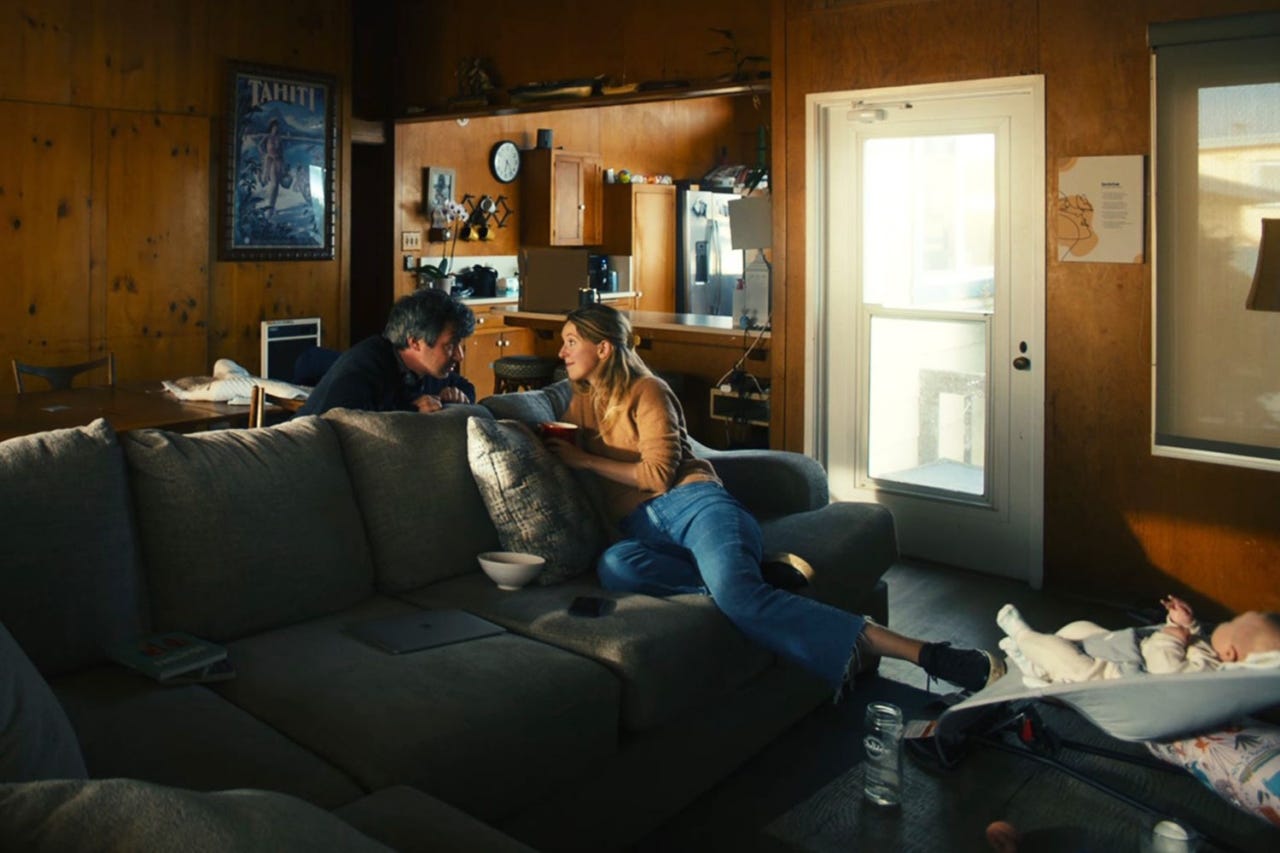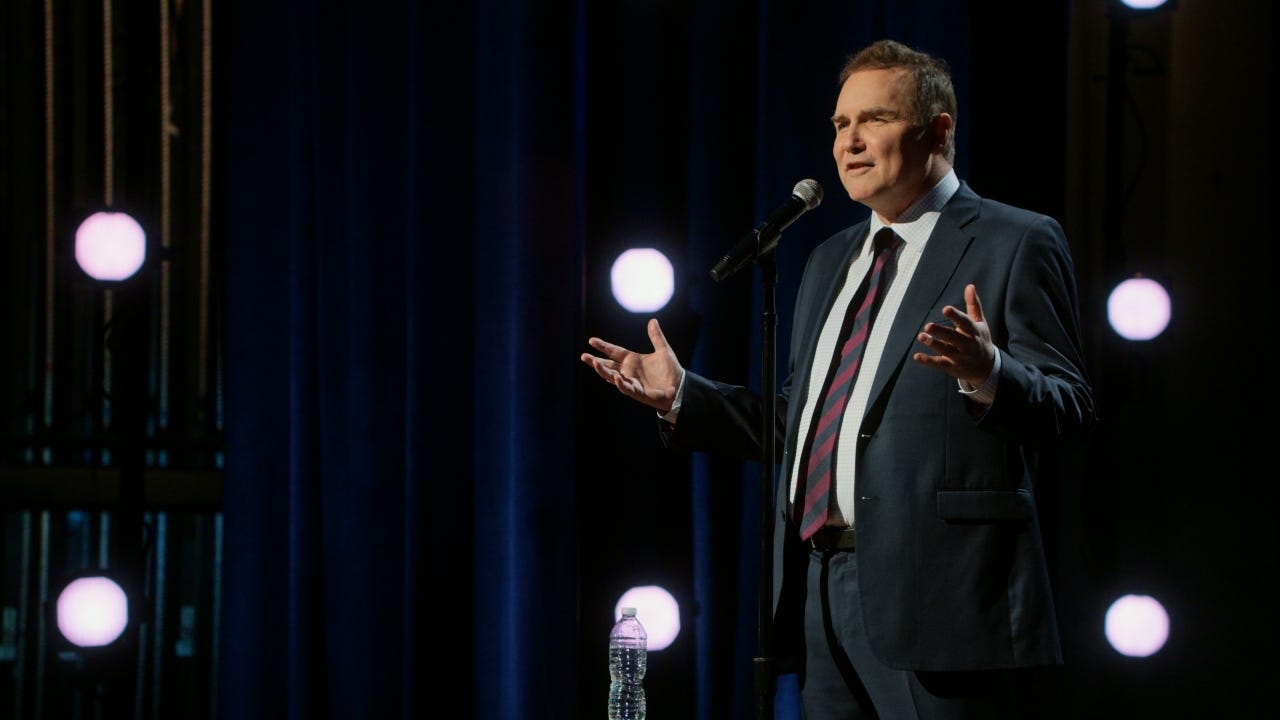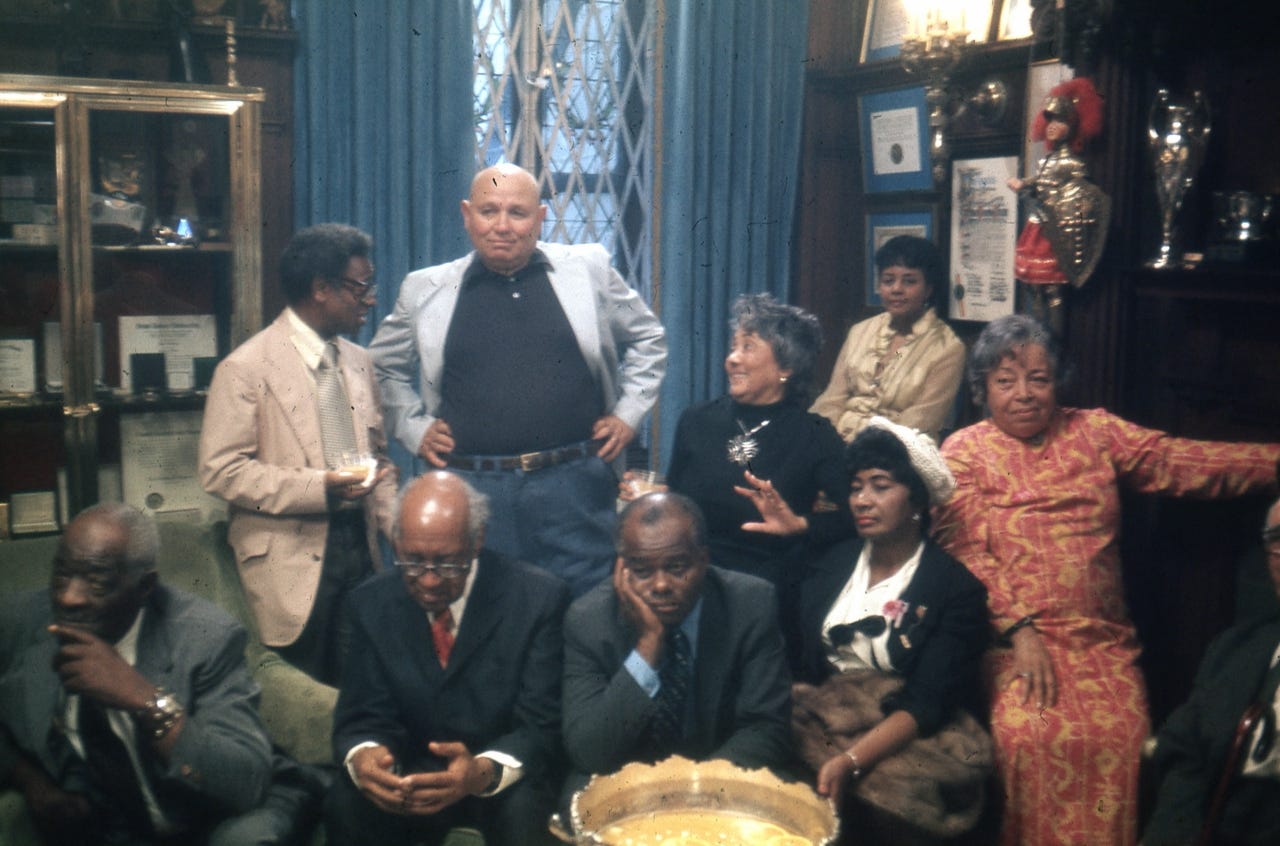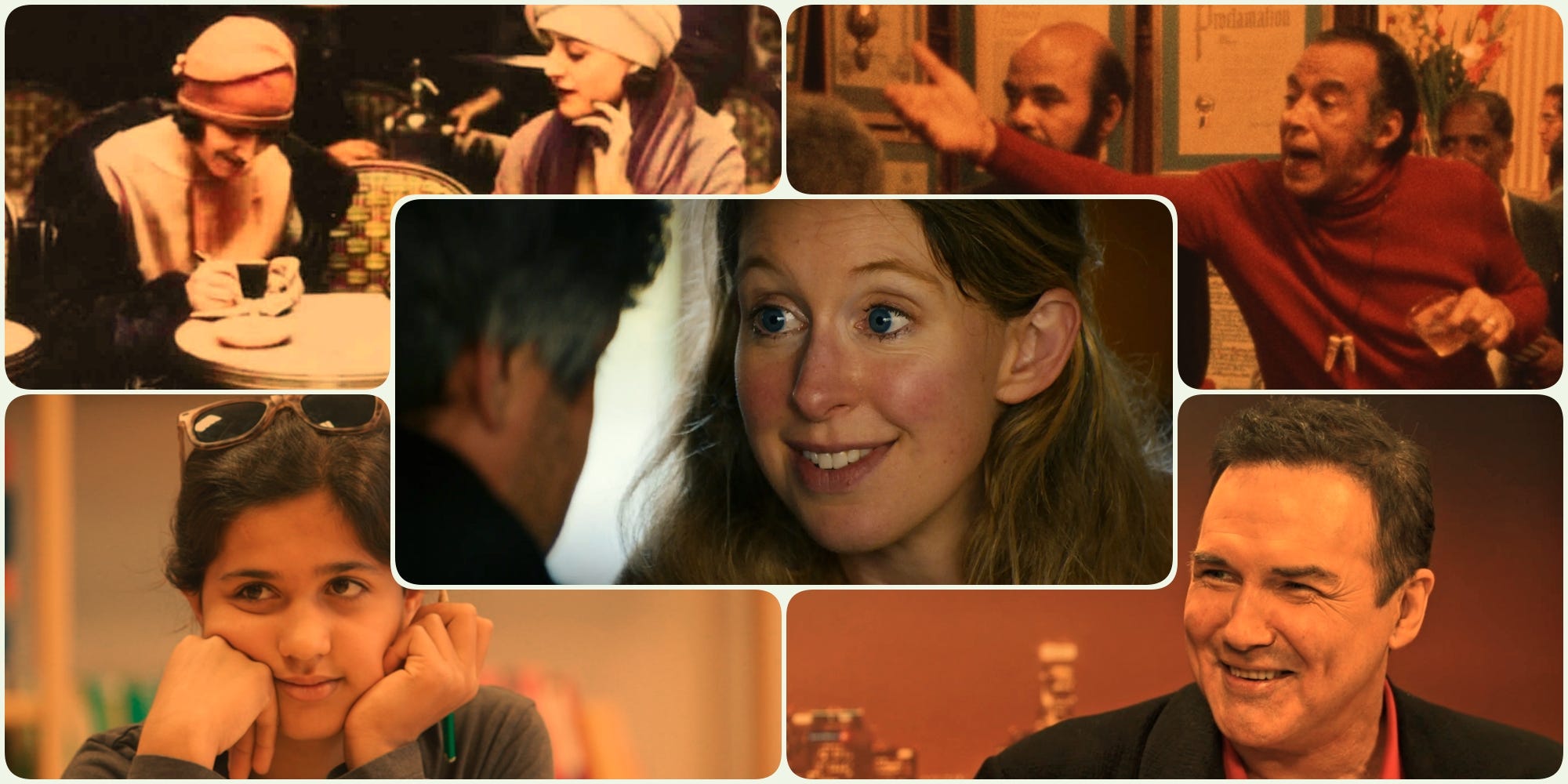
• News
  • Videos
  • Adobe Premiere Tips
  • About
  • FocusPulling.com
Menu
  • News
  • Videos
  • Adobe Premiere Tips
  • About
  • FocusPulling.com

Author Description

Paul Moon
Connect on Facebook Connect on Twitter Connect on Linkedin

H. Paul Moon is a filmmaker based in New York City and Washington, D.C. whose works concentrate on the performing arts. Major films include “Sitka: A Piano Documentary” about the craftsmanship of Steinway pianos, “Quartet for the End of Time” about Olivier Messiaen’s transcendent WWII composition, and an acclaimed feature film about the life and music of American composer Samuel Barber that premiered on PBS. Moon has created music videos for numerous composers including Moondog, Susan Botti and Angélica Negrón, and three opera films set in a community garden. His film “The Passion of Scrooge” was awarded “Critic's Choice” by Opera News as a “thoroughly enjoyable film version, insightfully conceived and directed” with “first-rate and remarkably illustrative storytelling.” Further highlights include works featured in exhibitions at the Nevada Museum of Art and the City Museum of New York, PBS television broadcasts, and best of show awards in over a dozen international film festivals.

13 July 2026

Fault Lines & Frontiers: Mapping the Evolving Geography of European Documentary

Written by Paul Moon

European documentary cinema is experiencing a paradoxical moment. Production is rising to record levels even as financing structures grow more fragile, public broad­casters retreat and political pressure intensifies across parts of the continent. The result is a field that is simultaneously shrinking and expanding—economically constrained yet creatively emboldened, geographically fragmented yet more interconnected than ever. What emerges is not a crisis of documentary itself, but a profound reshaping of its geography: where films are made, how they are financed, which stories travel and which voices struggle to be heard.

According to the European Audiovisual Observatory’s 2025 edition of Focus – World Film Market Trends, European film production contin­ued to grow for the fourth consecutive year. In 2024, 2,514 feature films were produced across 36 markets, including 957 documentaries, which was up from 922 in 2023 and well above the 2019 pre-pandemic peak. Documentary now accounts for more than a third of Europe’s feature output. Yet behind these impressive numbers lies a more fragile reality.

Shrinking Budgets, Fragile Pipelines

Across Europe, public broadcasters—the historic backbone of docu­mentary financing—are downsizing or restructuring. Even in territories long considered stable, including the Nordic countries, commissioning budgets are tightening. In Italy, Germany, France and Central-Eastern Europe, producers report longer development phases, delayed commit­ments and smaller licence fees. The shift is structural rather than cyclical.

Photo by Ida Guldbæk Arentsen. Courtesy of CPDH: DOX

CPH:DOX Head of Industry Mara Gourd-Mercado sees the trend as both long-term and accelerating. “What we see is maybe not new but has accentuated in the last few years. Financiers come in later and later in the process,” she explains. “Producers have financed out of pocket all the development and sometimes the beginning of the production. What makes documentaries great is having the time to develop a rela­tionship with your characters, and because financiers come in later, we’re losing that part.”

That loss is artistic as well as economic. Observational cinema, character-driven work and long-term investigative projects all depend on time. When producers must self-finance early shooting, the risk shifts onto individuals rather than institutions. Smaller companies are pushed out; only those with reserves survive. The geography of produc­tion narrows toward countries with stronger funds and away from more precarious regions.

The delay in financing also feeds into a culture of caution. “Everybody wants a sure ticket that this is going to be a successful documentary,” Gourd-Mercado notes, “but nobody knows that until it comes out. You need to take those risks.” Without serious risk-taking, she argues, the ecosystem becomes fragile and the films of tomorrow risk losing origi­nality and depth.

Ove Rishøj Jensen, producer and documentary expert at the Nordisk Film & TV Fond, describes similar uncertainty from a funding perspec­tive. “We are seeing a lot of countries cutting back in funding, and a lot of restructuring in both film funding and broadcasters,” he says. “It’s very unpredictable in terms of getting things commissioned. Public broadcasting cannot be what it has been for the last seventy years—it needs to adapt to the media landscape we’re in.”

In practice, that adaptation means rethinking man­dates, experimenting with digital-first releases and prioritising content with clear audience appeal. For documentary producers, it often means building ever more complex co-productions. Long the foundation of European documentary, co-productions are now less a creative opportunity than a survival strategy. Jensen calls it “the base of documentary filmmaking in Europe,” a strength that reflects collaboration but also dependence on shared resources.

A still from 2000 Meters to Andriivka by Mstyslav Chernov, an official selection of the 2025 Sundance Film Festival. Courtesy of Sundance Institute | photo by Mstyslav Chernov

A Politicized Landscape

While financing tightens, European documentary is becoming more politically engaged. From Ukraine to Palestine, from migration routes in the Mediterranean to labour exploitation in global supply chains, film­makers are confronting urgent geopolitical realities. Ukraine alone continues to generate a steady stream of fea­ture documentaries on the war—roughly five to ten per year—alongside dozens of shorts and hybrid works. Films such as Mstyslav Chernov’s 2000 Meters to Andriivka, proj­ects emerging from the Tabor collective and testimonies like Alisa Kovalenko’s My Dear Theo or Olha Zhurba’s Songs of Slow Burning Earth are not only chronicles of invasion and resistance, but also reflections on memory, language and survival. They map a country’s trauma in real time while contributing to Europe’s cultural archive of war.

Elsewhere, documentaries are addressing democratic erosion, climate collapse, migration, and systemic discrimination with renewed urgency. In the Nordic countries, films like The Helsinki Effect or The Dialogue Police turn the camera inward, examining the contradictions of welfare states and the tensions between liberal ideals and social reality. Across Southern Europe, filmmakers are documenting labour precarity (Ketevan Vashagashvili’s 9-Month Contract), tourism-driven gentrification (Steve Krikris’ Super Paradise) and environmental damage (Robin Petré’s Only on Earth), while Central-Eastern European directors continue to explore historical memory and post-communist identity (for example, Radu Jude’s humorous Eight Postcards from Utopia or Vladena Sandu’s autobiographic hybrid Memory).

The political climate across Europe is also affecting storytelling conditions. In countries such as Hungary, Slovakia, Turkey, Serbia and Italy, public media environments have become more restrictive. Cultural institutions face pressure, funding decisions are scrutinized and pro­gramming can become contentious. Yet filmmakers are not retreating. Instead, they adapt financing strategies, partner internationally, or shoot discreetly. Angeliki Vergou, head of AGORA, the Thessaloniki International Documentary Festival’s industry sidebar, notes that in a climate of rising nationalism and censorship, filmmakers are “still trying to support their stories without adapting them and resist censorship. They try to find other funding resources and many times resort to guer­rilla film shooting.” The persistence of politically engaged documentary suggests a field driven by necessity rather than comfort.

Gourd-Mercado points to Denmark as a comparatively privileged locale, where strong democratic traditions still allow filmmakers to tackle uncomfortable subjects. But she emphasises that across Europe, polarization and political pressure shape financing and circulation. Festivals must therefore become spaces for dialogue—places where films can provoke discussion even when national contexts become hostile.

The Rise of Hybrid Forms

Formally, European documentary is evolving rapidly. Hybrid works combining fiction techniques, performance, animation, or essayistic storytelling are increasingly prominent at festivals. One recent emblematic case is Igor Bezinović’s Fiume o Morte!, which tells the story of Gabriele D’Annunzio’s raid on Fiume and blends archival reconstruction, staged sequences and contemporary testimony into a playful yet rigorous historical inquiry. Crowned Best Documentary at the European Film Awards in January, it demonstrated how hybrid language can expand the reach of political cinema.

A wide shot shows a person sitting with her back to a tree, watching the sunset across a field.
Cutting Through Rocks | Sara Khaki

At the same time, classical observational cinema retains enormous power. Intimate portraits like Mohammadreza Eyni and Sara Khaki’s Cutting Through Rocks (co-produced by Dutch and German partners) or patient yet hard-hitting social studies on extreme poverty such as Monica Strømdahl’s Flophouse America (a co-production between Norway and the Netherlands) remind audiences of the emotional depth that can emerge from long-term immersion. These films show that innovation in documentary is not only technological or formal—it can also be ethical, rooted in the filmmaker’s relationship with subjects.

The coexistence of hybrid experimentation and traditional observa­tion suggests a field expanding its vocabulary rather than abandoning its roots. European documentary continues to absorb influences from art cinema, theatre, television and digital media while maintaining its commitment to lived reality. The geography of style is as varied as the continent itself.

Artificial intelligence looms as a structural concern rather than a stylistic trend, as filmmakers worry about authorship, consent and the manipulation of archival material. In the meantime, European policy­makers are attempting to address these issues through legislation such as the EU’s AI Act. Gourd-Mercado notes that AI is “affecting everything from democracy and elections to surveillance,” making it unavoidable in documentary discourse even if its creative use remains cautious.

Embed from Getty Images

Nordics as Laboratory

Despite funding pressures, the Nordic region remains a core labora­tory for European documentary. Festivals like CPH:DOX, Göteborg, DocPoint, Tempo and Nordisk Panorama consistently showcase films engaging with global crises while examining internal social tensions. This dual gaze—outward toward geopolitical issues and inward toward welfare-state contradictions—has become a defining feature of Nordic documentary.

Jensen admits the region is still “in a fairly good posi­tion, even though we are also experiencing setbacks… it’s getting more complicated to get things through because the media landscape is shifting.” Nordic funds often act as late-stage partners, ensuring productions can reach completion. Their support allows ambitious films to be made even when broadcasters hesitate.

But the Nordic model also illustrates Europe’s broader dilemma. Strong public systems sustain ambi­tious filmmaking, but restructuring forces producers to rethink strategies. As commissioning slows, produc­ers increasingly seek partners in other continents or choose alternative sources including equities. Geography becomes fluid, with films crossing borders at every stage of production.

New Centres of Gravity

Traditional hubs like Amsterdam’s IDFA still shape the documentary landscape, but new centres of gravity are emerging. Thessaloniki is strengthening its role in the Euro-Mediterranean region, hosting projects from Southeast Europe, North Africa and the Middle East. In 2024, Tallinn Black Nights introduced a dedicated documentary competition, expanding Northern Europe’s festival map. From Nyon’s Visions du Réel to Kosovo’s Dokufest and from Sheffield to Florence’s Popoli, regional festivals continue to nurture local networks.

Thessaloniki’s Vergou emphasises the importance of cross-regional collaboration. “Co-production remains one of the most effective ways to make documentaries in Europe,” she says, “but we need more genuine pathways between South and North, East and West. Smaller markets, fewer resources, more at stake—that creative necessity can be a strength.” She also stresses fair co-production: equal creative voice, not merely financial partnerships dominated by larger countries.

Festivals and markets are increasingly seen as infrastructure rather than luxury. Vergou labels gatherings like AGORA as places where pro­ducers meet broadcasters, sales agents meet directors and unexpected partnerships form. “What makes gatherings like this valuable is not just the meetings that happen in the program, but the ones that hap­pen in the corridor, over a cup of coffee, between a Greek director and a Norwegian producer who would never otherwise cross paths,” she insists. “That is where ideas take shape. Industry events are where the whole value chain meets—and where the industry recalibrates what stories deserve to be told and how.”

Esther Bannenberg, head of Berlinale’s DocSalon, highlights the role of collective frameworks. Panels and collaborations between festivals, she notes, help connect artistic ambition with practical financing and distribution strategies. Festival alliances create shared networks that expand screening opportunities and support talent development. In a fragmented market, collaboration becomes survival.

A Fractured Market

Yet the market itself is fragmenting. Jensen observes that feature-length documentaries once pitched simultaneously to broadcasters and film funds now face diverging expectations. “Television is going more in a television direction,” he explains, “meaning that some films doing well at festivals don’t work for broadcast anymore. The market is becoming more fractured.”

This fracture affects themes as well. Financiers increasingly demand clear topics and identifiable audiences. Jensen notes that “more abstract films dealing with human relations in general are becoming difficult to finance.” Projects now often train a spotlight on a single issue—climate activism, gender rights, labour conflict—to attract targeted support. While this clarity can aid marketing, it risks narrowing the range of stories told.

Platforms complicate the picture further. Gourd-Mercado sees stream­ers as “a part of the pipeline” and “a distribution channel,” yet warns their golden age has passed. Vergou argues platforms can help audiences discover documentaries, but problems arise when they privilege their own data-driven productions and impose globalised formats. Bannenberg adds that while platforms offer visibility for local stories, they operate within global business logic that may not align with regional ecosystems.

Impact and Audience Reach

One of the field’s central questions is audience reach. Even as produc­tion increases, many documentaries struggle to find viewers. Impact campaigns are becoming essential, especially for politically sensitive films. Gourd-Mercado believes impact strategies are “there to stay,” but stresses the need to build structures for screenings in places where films cannot safely be shown. Digital platforms alone are insufficient when repression limits access.

She gives examples of films about journalists in Georgia or dissidents in Hong Kong, asking how audiences in those places can see them with­out risk. Documentary, she says, can be “a tool for building citizenship and upholding democracy.” If audiences cannot access films, that civic function disappears.

Predictably, festivals again play a crucial role. They create visibility, attract press attention and enable films to travel. They also serve as test­ing grounds for new distribution strategies—from pop-up screenings to community outreach.

Lessons Across the Atlantic, A Continent in Transformation

European documentary’s collaborative model still offers a clear lesson for North America. As Gourd-Mercado notes, co-production forces film­makers to confront different perspectives and avoid creative echo cham­bers. At the same time, she argues that Europe could learn from North America’s greater appetite for “innovation and disruption.” Europe’s structures are strong but often rigid; North America’s are flexible but less collaborative. The dialogue between these approaches may shape the next phase of global documentary practice.

Ultimately, the geography of European documentary is defined less by borders than by networks consisting of funding bodies, festivals, broadcasters and creative communities. Ukrainian war diaries now sit beside Scandinavian labour studies, Mediterranean migration stories alongside Baltic memory films. Each project charts a fragment of a continent in flux.

From panel discussions to late-night cocktails, the same concerns surface again and again: shrinking budgets, cautious commissioners, fragmented audiences. Yet filmmakers remain determined; arguably they are more militant than in many years. They adapt financing strategies, experiment with form and push politically urgent stories into public spaces, even as the conditions for doing so grow more precarious.

European documentary is entering a new phase marked by structural uncertainty and creative urgency. Its geography is shifting toward new centres, new alliances and new narrative forms. If the ecosystem can adapt through fairer co-production models, renewed audience engage­ment and stronger collaboration, the present crisis may yet become a catalyst for reinvention rather than decline.

Across the European festival circuit, the transformation is visible in real time. The map of European documentary is being redrawn not only by institutions, but by filmmakers who refuse silence.

That tension surfaced vividly at the latest Berlinale, where jury presi­dent Wim Wenders suggested filmmakers should “stay out of politics,” remarks that triggered a wider backlash over the festival’s stance on the war in Gaza. Indian author Arundhati Roy withdrew from the event in protest, more than 80 filmmakers signed an open letter criticising the festival’s perceived silence and The Voice of Hind Rajab helmer Kaouther Ben Hania refused a collateral award. The controversy, unfolding across press conferences, red carpets and industry panels, showed how debates about artistic responsibility and geopolitics now permeate every layer of the ecosystem, well beyond the non-fiction sector.

In the end, geography is not just about territory. It is about relation­ships, memory and imagination. European documentary continues to chart these connections—film by film, border by border, story by story.

This story originally appeared in issue #125 as part of a three-article series on the state of documentary production. Read more on the states of Canadian documentary and U.S.A. production/financing.

The post Fault Lines & Frontiers: Mapping the Evolving Geography of European Documentary appeared first on POV Magazine.

Uncategorized Comments are off
10 July 2026

This Week In Documentary

Written by Paul Moon

Last week, I was working a side job as a background actor (I can’t say on what), so it was fitting that two of the documentaries I watched and reviewed for this newsletter were about making movies. Not only that, but they are both first-person style films. One of them is a fairly simple making-of documentary, while the other is about much more than the production process. The other trend apparent in this week’s highlights is documentaries related to the current conflict(s) in the Middle East. Nothing about my life last week connects to those. That I know of. I didn’t have time to screen them.

Without further ado, below are this week’s documentary highlights, followed by daily listings for all known releases and broadcasts, along with a brief look at what’s coming soon for doc fans (including the latest films by Maite Alberdi and Mark Pellington). Please consider becoming a paid subscriber to receive more in-depth highlights and reviews in the future, plus full access to special posts like our best-of lists, and to give me more time to watch more (if not everything) available. If you have a doc needing coverage or a mention, you can now reach us at nonficseditor (at) gmail.

Nonfics Picks Of The Week: Remake (2025)

If you’ve never seen any of Ross McElwee’s documentaries, you’d better start binging (the essentials are on Kanopy, and some of those are also on OVID). His latest, Remake, is like the Avengers: Infinity War of first-person documentaries in that you need to do a lot of homework, specifically viewing a lot of other films, beforehand. Also, according to my new interview with McElwee, his next, possibly final feature would be his Avengers: Endgame, more reflective and summative than anything else. I think Remake is partly there, as it looks back and features clips from almost all of the installments in his first-person film oeuvre, including the one that still hasn’t been released.

Remake, which focuses on McElwee’s son, Adrian, who died of an accidental drug overdose a decade ago, is mostly in conversation with the director’s previous feature, Photographic Memory. It also heavily references his breakthrough 1985 film, Sherman’s March, which was optioned for a fictional adaptation. McElwee was planning on documenting the production of that remake, and Adrian was hoping to work on the Hollywood project in some capacity. Remake is the resulting document of neither of those things panning out, one of them expiring, and Adrian tragically passing away. It’s a film full of mournful reflection and regret, yet it doesn’t play too sorrowfully.

McElwee is still the sharpest documentarian in the first-person film space, and Remake is as consciously engaging as any of his works. But it also feels his most personal and dependent. It’s appreciated best, if not only, if you’ve seen his previous documentaries and gotten to know him and his family along the way. It’s especially heartbreaking for fans who watched Adrian be born and then grow up on screen. Like all of McElwee’s films, though, this one is more analytical than emotional, packed with intelligent commentary and visual motifs. It also has some glaring redundancies, reusing clips and statements from the past and even within the film itself.

Remake will be released in theaters on Friday, July 10, 2026, via Music Box Films.


Other Documentary Highlights

Do You Love Me

Churchill’s Island (1941)

This week marks the 85th anniversary of Churchill’s Island, which was first released in Canada on July 13, 1941, as part of the National Film Board’s Carry On Canada series. The 21-minute film later became the inaugural Oscar winner in the Best Documentary (Short Subject) category. Earlier this year, I wrote about how and why Churchill’s Island made Academy Awards history, defeating 10 other documentaries in contention. Many of them were similarly focused on World War II, but this one took a more positive approach and likely appealed to voters for that reason post-Pearl Harbor. I wrote, “The optimistic propaganda of Churchill’s Island signals victory on the horizon, indicating that they have shown the Nazis they won’t be defeated. The British will keep coming, defensively, offensively, through building, rebuilding, and restoring. The Germans, on the other hand, are seen in apparent desperation training for suicide missions.”

Churchill’s Island is available to stream on OVID, Filmzie, Tubi, and the National Film Board of Canada website.

Coroner To The Stars (2025)

The titular coroner, Dr. Thomas Noguchi, is currently 99 years old. I don’t know how old he was when he was interviewed for Coroner to the Stars, but he was old enough to be thankful he was still alive and able to tell his own story. I prefer having biographical documentary subjects tell their own stories, or at least as much as firsthand familiarity benefits (they can’t be the only ones telling their own stories). It’s the difference between a listing of timeline points and achievements and a sharing of the experience of going through those points and realizing those achievements.

As L.A. County’s Chief Medical Examiner, Noguchi was involved in the autopsies and death investigations of such celebrities as Marilyn Monroe, Natalie Wood, John Belushi, William Holden, Robert F. Kennedy, and Sharon Tate. He’s been a significant part of true-crime history, even proposing the idea of Tate and friends’ murders being cult-related before the Manson Family discovery and arrests were made. His accounts of just these cases (the documentary is fairly brief and brisk, leaving us wanting more stories) are done with terrific recollection and conviction.

His life story is also filled with obstacles involving his race, as a Japanese-American, political scrutiny for sticking to his often-controversial conclusions, and media attention, the last of which was partly of his own doing. For those old enough to remember the TV series Quincy, you’ll be fascinated to see how much he inspired Jack Klugman’s white-washed character. Coroner to the Stars is a swift survey of a long life that revolved around death. And despite all he has seen, he still gets emotional about losing a loved one, notably his ex-wife, with whom he reconciled before she passed.

Coroner to the Stars will be released digitally on Tuesday, July 14, 2026.

Do You Love Me (2025) & Jocelyne Saab Documentaries

This week’s filmmaker in focus is paired with a documentary that is relevant in content and distribution. The late Lebanese director Jocelyne Saab is the subject of a retrospective at New York City’s Metrograph theater titled “Jocelyne Saab: Letters from Lebanon.” The program, running throughout this weekend, includes The Beirut Trilogy, which consists of the 1976 short Beirut, Never Again, the 1978 medium-length documentary Letter from Beirut, and the 1983 short Beirut, My City.

They’re also showing her 1995 docufiction hybrid Once Upon a Time, Beirut, her 1975 documentary feature Lebanon in Turmoil, paired with the 1976 short South Lebanon: History of a Besieged Village, and the 1982 short Lebanese, Hostages of Their City, which is showing with one of her dramas, The Razor’s Edge. As far as I can tell, none of these films are otherwise available in the U.S., so this is a special opportunity to see the war-torn nation as she portrayed it in the ‘70s, ‘80s, and ‘90s.

While that program is going on in one auditorium, another at the Metrograph will be showing Do You Love Me, a newer documentary feature by Lana Daher that looks at Beirut, Lebanon, through film and TV footage and photographs shot over the last 70 years. Saab can apparently be seen in some of that footage, too. This film seems relevant and important given the ongoing war in Lebanon, though that’s probably narrow-minded, given there have been on-and-off conflicts spanning the last 85 years.

Do You Love Me will be released, and “Jocelyne Saab: Letters from Lebanon” will begin, on Friday, July 10, 2026, at the Metrograph in New York City.

Kevin Keating Documentaries

Another filmmaker worth highlighting this week is Kevin Keating, whom I learned from the DOC NYC Monday Memo died back on May 3. He was best known as a cinematographer, and in that role, he shot parts of such Oscar-winning classics as Barbara Kopple’s Harlan County U.S.A. (available to stream on The Criterion Channel and HBO Max) and American Dream (coming soon to the Criterion Collection) and Leon Gast’s When We Were Kings (The Criterion Channel). Earlier, he worked on the Maysles brothers’ Gimme Shelter (The Criterion Channel and HBO Max) and Cinda Firestone’s Attica (currently unavailable). Keating also directed two documentaries, Hells Angels Forever, which is currently unavailable, and Giuliani Time, which is available to stream on Fawesome and Cineverse.

The March To War: Iran, Israel, And The USA (2026)

Whether you’re able to see the Lebanese films at the Metrograph this weekend or not, another documentary to watch this week offers additional insight into the ongoing conflict in the Middle East. The three-part series The March to War: Iran, Israel, and the USA even links back to the era of Jocelyn Saab’s coverage, suggesting that the current war began in 1982. That’s in Part 2. The first installment provides background on Israel’s relationship with the U.S. and on Iranian history pre-Revolution. The third part looks at the effort to stop Iran’s nuclear program. I haven’t seen the series yet, but I have high expectations, given Icarus Films is the distributor.

The March to War: Iran, Israel, and the USA begins exclusively streaming on OVID on Friday, July 10, 2026.

Moana (1926)

We highlighted this film at the beginning of the year as it turned 100. Now the 1926 Moana is this week’s Doc Option, as an alternative to Disney’s new live-action remake of their 2016 animated feature of the same name. The nonfiction feature is the one directed by Robert Flaherty and best known for being erroneously attributed as the first to be called a “documentary” film. Here’s an excerpt from our review of Moana (specifically the 1975 re-release with sound):

“It’s gorgeous. The film is ostensibly the story of a young man named Moana, who is on the verge of recognized adulthood according to Samoan custom. Yet while his milestones are marked with great care, he is mostly used as a narrative device in order to feature the way of life of the people of Savai’i. The sounds of the ocean do wonders to enervate the pristine fishing scenes, including a particularly memorable capture of a giant sea turtle. Sandalwood, smoke, spray, and unsettlingly large crabs become vivid and immersive in this classic of ethnographic nonfiction.”

Moana is in the public domain and can be found on many parts of the internet. Moana (with sound) is available to stream on HBO Max and Kanopy.

Mockbuster (2025)

I wonder how many aspiring filmmakers will see Mockbuster and become the next director for The Asylum. Anthony Firth’s documentary feature follows him as he makes his feature debut with a low-budget B-movie called The Land That Time Forgot. He admits that all he had to do was email the infamous “mockbuster” studio and ask if he could take the helm of one of their schlocky projects, and they agreed without ever asking to see his previous work (most of which was directing corporate videos). The catch, to Firth’s dismay, was that he had to do it quickly and artlessly.

Firth was smart to make this documentary alongside his work on The Land That Time Forgot, not just because he got two feature directorial credits simultaneously, but because he also got to express himself with Mockbuster while being creatively limited on the Asylum job. The documentary is not especially inventive, nor does it showcase any particular vision or identity in its directing, but it’s certainly all Firth’s. As a story, even in the making-of space, it’s fairly unique, enough that it doesn’t matter that Firth has little memorable insight into the experience.

He monologues a lot in ways that sound like he’s wrapping up with conclusions, and then he keeps going, yet when it truly ends, I can’t tell how much he has learned or changed. If either film is to be a calling card for more work, the likability and flexibility he presents with both (I assume he had more frustrating moments than he shares) may help. His wide-eyed lack of sophistication and constant amusement may not. The documentary is much more appealing as a film about The Asylum, their process, and their attitude about movies and the industry as a whole than Firth’s specific journey with them. I’d love to see how others’ experiences compare to his.

Mockbuster will be released in theaters and on digital on Friday, July 10, 2026, via Giant Pictures.

Awards Highlights

Emmy Nominations

Nominations for the 78th annual Primetime Emmy Awards were announced last week, with several documentaries among the honored television programs in the Creative Arts Emmy bunch. Many of them are celebrity-focused, including the personal feature My Mom Jayne: A Film by Mariska Hargitay (available to stream on HBO Max), which is up for Outstanding Documentary or Nonfiction Special, Outstanding Cinematography for a Nonfiction Program, and Outstanding Directing for a Documentary/Nonfiction Program. The last of those recognizes Mariska Hargitay, who is also this year’s Emmy Awards host, in her directorial debut.

Other titles in that top nonfiction feature category include John Candy: I Like Me (Prime Video), Marty, Life is Short (Netflix), Mel Brooks: The 99 Year Old Man! (HBO Max), and Ocean with David Attenborough (Hulu). Documentary series nominees include Mr. Scorsese (Apple TV), Rafa (Netflix), Sean Combs: The Reckoning (Netflix), The Yogurt Shop Murders (HBO Max), and Ken Burns’s The American Revolution (PBS). There’s also the Exceptional Merit in Documentary Filmmaking category, which only has two nominees: The Tale of Silyan (Hulu) and The Librarians (PBS and Kanopy).

Judd Apatow and Michael Bonfiglio’s film Mel Brooks: The 99 Year Old Man! tied for the most nominations for a documentary with six. In addition to Outstanding Documentary or Nonfiction Special, it appears in the categories recognizing its direction, editing, original music score, sound editing, and sound mixing. The other documentary with six nominations was Ocean with David Attenborough, additionally recognized for its cinematography, original music score, sound editing, sound mixing, and narration. Sir David Attenborough actually, unsurprisingly, appears twice in that last category, as he’s also nominated for narrating Netflix’s A Gorilla Story: Told By David Attenborough.

Subscribe now


Documentary Release Calendar 7/10/26 – 7/16/26

Mockbuster

Friday, July 10, 2026

Baby Doe (2025) – A true-crime documentary about a woman accused of murdering her newborn baby. (In Theaters)

Do You Love Me (2025) – A documentary feature about Beirut, Lebanon. (In Theaters)

The March to War: Iran, Israel, and the USA (2026) – A three-part docuseries about the American and Israeli war against Iran. (OVID)

The Metro-Goldwyn-Mayer Story (1951) – A medium-length documentary presenting footage from new MGM movies of that year. (TCM)

Mockbuster – A documentary feature by Anthony Frith about his experience making a B-movie for The Asylum. (In Theaters and VOD)

Remake (2025) – A first-person documentary feature by Ross McElwee about the death of his son and an attempt to remake his classic film Sherman’s March as a narrative feature. *NONFICS PICK* (In Theaters)

Saturday, July 11, 2026

Dark Side of the Ring Season 7, Episode 2: “Jeff Jarrett & the Battle for TNA: Part 2” – The latest installment of a docuseries that shares the darkest stories of professional wrestling. (Vice)

The Real Murders of Atlanta Season 4, Episode 1: “Officer Down” – The return of an Atlanta-focused true-crime docuseries. This installment involves a gunned-down police officer. (Oxygen)

Sunday, July 12, 2026

The Food That Built America Season 7, Episode 12: “Let’s Get Cracker-ing” – The latest installment of a docuseries about popular American foods. This episode involves innovations in crackers. (History)

Hazardous History with Henry Winkler Season 2, Episode 12: “Insane Inventions” – The latest installment of a docuseries about dangerous toys and household items that used to be common. This episode involves disastrous gadgets and other inventions. (History)

In the Eye of the Storm Season 4, Episode 3: “Monster in Michigan” – The latest installment of a docuseries about natural disasters. This episode involves a rare EF-3 tornado. (Discovery Channel)

The Salisbury Poisonings: A Spy Next Door (2026) – A documentary feature about the 2018 poisoning of Russian/British double agent Sergei Skripal and his daughter. (CNN)

Monday, July 13, 2026

Flood (2025) – A documentary by Katy Scoggin in which she reconnects with her estranged, Evanglical science teacher father. Presented as an episode of Independent Lens. (PBS)

Football Headliners (1955) – A short film highlighting significant college football games played in 1955. (TCM)

History’s Greatest Machines with Dolph Lundgren Episode 7: “Rocket Science” – The latest installment of a docuseries about the machines that shaped our world. This episode involves rockets. (History)

It Looks Like Rain (1945) – A short film about the tools used to forecast the weather. (TCM)

Lethally Blonde Season 2, Episode 7: “Burlesque and Blood” – The latest installment of a true-crime docuseries involving people pursuing beauty and fame. This episode involves a murdered French Quarter dancer. (Investigation Discovery)

Murder 101 (2026) – A three-part true-crime docuseries about high schoolers who helped to solve a murder case. (Prime Video)

Storm (1943) – A short documentary about the tools the U.S. Weather Bureau uses to warn farmers about hazardous storms. (TCM)

Tuesday, July 14, 2026

Coroner to the Stars (2025) – A documentary feature about Dr. Thomas Noguchi, the former chief medical examiner for Los Angeles County, who performed autopsies on many celebrities. (VOD)

Dark Side of the Ring Season 7, Episode 3: “Jeff Jarrett & the Battle for TNA: Part 3” – The latest installment of a docuseries that shares the darkest stories of professional wrestling. (Vice)

Expedition Unknown Season 17, Episode 4: “Sunken City of Pirates” – The latest installment of a docuseries that follows an archaeologist looking for lost artifacts. (Discovery)

Homestead Rescue: Intervention Season 1, Episode 1 – The debut episode of a docuseries that follows wilderness living experts as they save lives. (Discovery)

Once Upon a Time in Space Episode 1: “America First” – A four-part docuseries about the space race. This installment involves the Moon landing and the introduction of the Space Shuttle. (PBS)

The Proof is Out There: Unexplained Edition Season 2, Episode 7: “Signs from Space” – The latest installment of a docuseries about strange phenomena captured on camera. (History)

Quarterback Season 3 – The return of an anthology docuseries about NFL quarterbacks. (Netflix)

The Real Wolf of Wall Street (2026) – A three-part docuseries about Jordan Belfort, whose story was dramatized in the movie The Wolf of Wall Street. (Paramount+)

The Secret of Skinwalker Ranch Season 7, Episode 9: “Up in Smoke” – The latest installment of a docuseries about UFO phenomena at the Skinwalker Ranch. (History)

That’s Entertainment! (1974) – A feature documentary showcasing moments from classic MGM musicals. (TCM)

That’s Entertainment, Part II (1976) – A sequel documentary showcasing more moments from classic MGM musicals. (TCM)

That’s Entertainment! III (1994) – A sequel documentary showcasing more moments from classic MGM musicals. (TCM)

Bergman’s Video Parts 1-3: “Humor,” “Death,” & “Adventure” – The first three episodes of a docuseries in which today’s filmmakers discuss the legacy of Ingmar Bergman. (OVID)

Wednesday, July 15, 2026

911: Did the Killer Call? Season 2, Episode 1 – The return of a true-crime docuseries about cases where the murderer is on the 911 call. (Investigation Discovery)

Bergman’s Video Parts 4-6: “Silence,” “Fear,” & “Exclusion” – The second half of a docuseries in which today’s filmmakers discuss the legacy of Ingmar Bergman. (OVID)

Body Cam Season 11, Episode 1 – The return of a docuseries that depicts law enforcement officers on the job via their body cams. (Investigation Discovery)

Duck and Cover (1952) – A short instructional film on how to survive a nuclear attack. (TCM)

ER: Caught on Camera Season 1, Episode 2 – The latest installment of a docuseries in which medical patients recall experiences in hospital emergency rooms. (TLC)

Thursday, July 16, 2026

Scott Peterson: The New Evidence (2026) – A true-crime documentary with an update on the 2002 murder of Laci Peterson and her unborn son. (A&E)

Surviving Earth Episode 6: “When the Oceans Shrank” – The sixth installment of an eight-part docuseries about extinct creatures. This episode involves early fish. (NBC)

Share Nonfics


Sneak Peek At What’s Coming Soon

7/17 – American Pachuco: The Legend of Luis Valdez – A documentary feature about the titular activist and filmmaker. (In Theaters)

7/22 – My Grandfather Charles Manson – A documentary about Charles Manson’s granddaughter, Sophia Maddox. Watch the new trailer for the film below. (Hulu)

7/29 – Eons: Life and Death on Pangea – A six-part docuseries on the mass-extinction event known as the “Great Dying.” (PBS)

8/2 – Decades in Sports – A six-part docuseries executive produced by Tom Hanks about milestones in sports in America. (CNN)

8/12 – An Eye for an Eye – A documentary feature about a woman convicted of killing her husband and now facing execution under Sharia law. Watch the new trailer for the film below. (In Theaters)

8/13 – A Child of My Own – A documentary feature by two-time Oscar-nominated director Maite Alberdi (The Mole Agent; The Eternal Memory) about a woman who faked her pregnancy. (Netflix)

8/14 – American Doctor – A documentary feature about three doctors of different religious backgrounds working in wartorn Gaza. Watch the new trailer for the film below. (In Theaters)

8/20 – Novak Djokovic: The Wolf in Winter – A documentary feature about tennis star Novak Djokovic. (Prime Video)

8/26 – Crows Are White – A documentary feature about a monk who prefers heavy metal and ice cream over meditation. Watch the new trailer for the film below. (In Theaters)

9/4 – Barbara Forever – A documentary feature executive-produced by Kristen Stewart about the pioneering lesbian filmmaker Barbara Hammer. (In Theaters)

9/11 – This Is Buzz – A documentary feature directed by Mark Pellington (U2 3D) about the 1990s MTV series Buzz. Watch the new trailer for the film below. (In Theaters)

9/25 – Unzipped – A 4K restoration re-release of a 1995 documentary feature that follows fashion designer Isaac Mizrahi as he launches a new line. (In Theaters)

9/26 – Ai Weiwei’s Turandot – A documentary feature about Ai Weiwei’s production of Turandot at the Rome Opera House. (In Theaters)

Nonfics is a reader-supported publication. To receive new posts and support my work, consider becoming a free or paid subscriber.


Uncategorized Comments are off
10 July 2026

This Week In Documentary

Written by Paul Moon

Last week, I was working a side job as a background actor (I can’t say on what), so it was fitting that two of the documentaries I watched and reviewed for this newsletter were about making movies. Not only that, but they are both first-person style films. One of them is a fairly simple making-of documentary, while the other is about much more than the production process. The other trend apparent in this week’s highlights is documentaries related to the current conflict(s) in the Middle East. Nothing about my life last week connects to those. That I know of. I didn’t have time to screen them.

Without further ado, below are this week’s documentary highlights, followed by daily listings for all known releases and broadcasts, along with a brief look at what’s coming soon for doc fans (including the latest films by Maite Alberdi and Mark Pellington). Please consider becoming a paid subscriber to receive more in-depth highlights and reviews in the future, plus full access to special posts like our best-of lists, and to give me more time to watch more (if not everything) available. If you have a doc needing coverage or a mention, you can now reach us at nonficseditor (at) gmail.

Nonfics Picks Of The Week: Remake (2025)

If you’ve never seen any of Ross McElwee’s documentaries, you’d better start binging (the essentials are on Kanopy, and some of those are also on OVID). His latest, Remake, is like the Avengers: Infinity War of first-person documentaries in that you need to do a lot of homework, specifically viewing a lot of other films, beforehand. Also, according to my new interview with McElwee, his next, possibly final feature would be his Avengers: Endgame, more reflective and summative than anything else. I think Remake is partly there, as it looks back and features clips from almost all of the installments in his first-person film oeuvre, including the one that still hasn’t been released.

Remake, which focuses on McElwee’s son, Adrian, who died of an accidental drug overdose a decade ago, is mostly in conversation with the director’s previous feature, Photographic Memory. It also heavily references his breakthrough 1985 film, Sherman’s March, which was optioned for a fictional adaptation. McElwee was planning on documenting the production of that remake, and Adrian was hoping to work on the Hollywood project in some capacity. Remake is the resulting document of neither of those things panning out, one of them expiring, and Adrian tragically passing away. It’s a film full of mournful reflection and regret, yet it doesn’t play too sorrowfully.

McElwee is still the sharpest documentarian in the first-person film space, and Remake is as consciously engaging as any of his works. But it also feels his most personal and dependent. It’s appreciated best, if not only, if you’ve seen his previous documentaries and gotten to know him and his family along the way. It’s especially heartbreaking for fans who watched Adrian be born and then grow up on screen. Like all of McElwee’s films, though, this one is more analytical than emotional, packed with intelligent commentary and visual motifs. It also has some glaring redundancies, reusing clips and statements from the past and even within the film itself.

Remake will be released in theaters on Friday, July 10, 2026, via Music Box Films.


Other Documentary Highlights

Do You Love Me

Churchill’s Island (1941)

This week marks the 85th anniversary of Churchill’s Island, which was first released in Canada on July 13, 1941, as part of the National Film Board’s Carry On Canada series. The 21-minute film later became the inaugural Oscar winner in the Best Documentary (Short Subject) category. Earlier this year, I wrote about how and why Churchill’s Island made Academy Awards history, defeating 10 other documentaries in contention. Many of them were similarly focused on World War II, but this one took a more positive approach and likely appealed to voters for that reason post-Pearl Harbor. I wrote, “The optimistic propaganda of Churchill’s Island signals victory on the horizon, indicating that they have shown the Nazis they won’t be defeated. The British will keep coming, defensively, offensively, through building, rebuilding, and restoring. The Germans, on the other hand, are seen in apparent desperation training for suicide missions.”

Churchill’s Island is available to stream on OVID, Filmzie, Tubi, and the National Film Board of Canada website.

Coroner To The Stars (2025)

The titular coroner, Dr. Thomas Noguchi, is currently 99 years old. I don’t know how old he was when he was interviewed for Coroner to the Stars, but he was old enough to be thankful he was still alive and able to tell his own story. I prefer having biographical documentary subjects tell their own stories, or at least as much as firsthand familiarity benefits (they can’t be the only ones telling their own stories). It’s the difference between a listing of timeline points and achievements and a sharing of the experience of going through those points and realizing those achievements.

As L.A. County’s Chief Medical Examiner, Noguchi was involved in the autopsies and death investigations of such celebrities as Marilyn Monroe, Natalie Wood, John Belushi, William Holden, Robert F. Kennedy, and Sharon Tate. He’s been a significant part of true-crime history, even proposing the idea of Tate and friends’ murders being cult-related before the Manson Family discovery and arrests were made. His accounts of just these cases (the documentary is fairly brief and brisk, leaving us wanting more stories) are done with terrific recollection and conviction.

His life story is also filled with obstacles involving his race, as a Japanese-American, political scrutiny for sticking to his often-controversial conclusions, and media attention, the last of which was partly of his own doing. For those old enough to remember the TV series Quincy, you’ll be fascinated to see how much he inspired Jack Klugman’s white-washed character. Coroner to the Stars is a swift survey of a long life that revolved around death. And despite all he has seen, he still gets emotional about losing a loved one, notably his ex-wife, with whom he reconciled before she passed.

Coroner to the Stars will be released digitally on Tuesday, July 14, 2026.

Do You Love Me (2025) & Jocelyne Saab Documentaries

This week’s filmmaker in focus is paired with a documentary that is relevant in content and distribution. The late Lebanese director Jocelyne Saab is the subject of a retrospective at New York City’s Metrograph theater titled “Jocelyne Saab: Letters from Lebanon.” The program, running throughout this weekend, includes The Beirut Trilogy, which consists of the 1976 short Beirut, Never Again, the 1978 medium-length documentary Letter from Beirut, and the 1983 short Beirut, My City.

They’re also showing her 1995 docufiction hybrid Once Upon a Time, Beirut, her 1975 documentary feature Lebanon in Turmoil, paired with the 1976 short South Lebanon: History of a Besieged Village, and the 1982 short Lebanese, Hostages of Their City, which is showing with one of her dramas, The Razor’s Edge. As far as I can tell, none of these films are otherwise available in the U.S., so this is a special opportunity to see the war-torn nation as she portrayed it in the ‘70s, ‘80s, and ‘90s.

While that program is going on in one auditorium, another at the Metrograph will be showing Do You Love Me, a newer documentary feature by Lana Daher that looks at Beirut, Lebanon, through film and TV footage and photographs shot over the last 70 years. Saab can apparently be seen in some of that footage, too. This film seems relevant and important given the ongoing war in Lebanon, though that’s probably narrow-minded, given there have been on-and-off conflicts spanning the last 85 years.

Do You Love Me will be released, and “Jocelyne Saab: Letters from Lebanon” will begin, on Friday, July 10, 2026, at the Metrograph in New York City.

Kevin Keating Documentaries

Another filmmaker worth highlighting this week is Kevin Keating, whom I learned from the DOC NYC Monday Memo died back on May 3. He was best known as a cinematographer, and in that role, he shot parts of such Oscar-winning classics as Barbara Kopple’s Harlan County U.S.A. (available to stream on The Criterion Channel and HBO Max) and American Dream (coming soon to the Criterion Collection) and Leon Gast’s When We Were Kings (The Criterion Channel). Earlier, he worked on the Maysles brothers’ Gimme Shelter (The Criterion Channel and HBO Max) and Cinda Firestone’s Attica (currently unavailable). Keating also directed two documentaries, Hells Angels Forever, which is currently unavailable, and Giuliani Time, which is available to stream on Fawesome and Cineverse.

The March To War: Iran, Israel, And The USA (2026)

Whether you’re able to see the Lebanese films at the Metrograph this weekend or not, another documentary to watch this week offers additional insight into the ongoing conflict in the Middle East. The three-part series The March to War: Iran, Israel, and the USA even links back to the era of Jocelyn Saab’s coverage, suggesting that the current war began in 1982. That’s in Part 2. The first installment provides background on Israel’s relationship with the U.S. and on Iranian history pre-Revolution. The third part looks at the effort to stop Iran’s nuclear program. I haven’t seen the series yet, but I have high expectations, given Icarus Films is the distributor.

The March to War: Iran, Israel, and the USA begins exclusively streaming on OVID on Friday, July 10, 2026.

Moana (1926)

We highlighted this film at the beginning of the year as it turned 100. Now the 1926 Moana is this week’s Doc Option, as an alternative to Disney’s new live-action remake of their 2016 animated feature of the same name. The nonfiction feature is the one directed by Robert Flaherty and best known for being erroneously attributed as the first to be called a “documentary” film. Here’s an excerpt from our review of Moana (specifically the 1975 re-release with sound):

“It’s gorgeous. The film is ostensibly the story of a young man named Moana, who is on the verge of recognized adulthood according to Samoan custom. Yet while his milestones are marked with great care, he is mostly used as a narrative device in order to feature the way of life of the people of Savai’i. The sounds of the ocean do wonders to enervate the pristine fishing scenes, including a particularly memorable capture of a giant sea turtle. Sandalwood, smoke, spray, and unsettlingly large crabs become vivid and immersive in this classic of ethnographic nonfiction.”

Moana is in the public domain and can be found on many parts of the internet. Moana (with sound) is available to stream on HBO Max and Kanopy.

Mockbuster (2025)

I wonder how many aspiring filmmakers will see Mockbuster and become the next director for The Asylum. Anthony Firth’s documentary feature follows him as he makes his feature debut with a low-budget B-movie called The Land That Time Forgot. He admits that all he had to do was email the infamous “mockbuster” studio and ask if he could take the helm of one of their schlocky projects, and they agreed without ever asking to see his previous work (most of which was directing corporate videos). The catch, to Firth’s dismay, was that he had to do it quickly and artlessly.

Firth was smart to make this documentary alongside his work on The Land That Time Forgot, not just because he got two feature directorial credits simultaneously, but because he also got to express himself with Mockbuster while being creatively limited on the Asylum job. The documentary is not especially inventive, nor does it showcase any particular vision or identity in its directing, but it’s certainly all Firth’s. As a story, even in the making-of space, it’s fairly unique, enough that it doesn’t matter that Firth has little memorable insight into the experience.

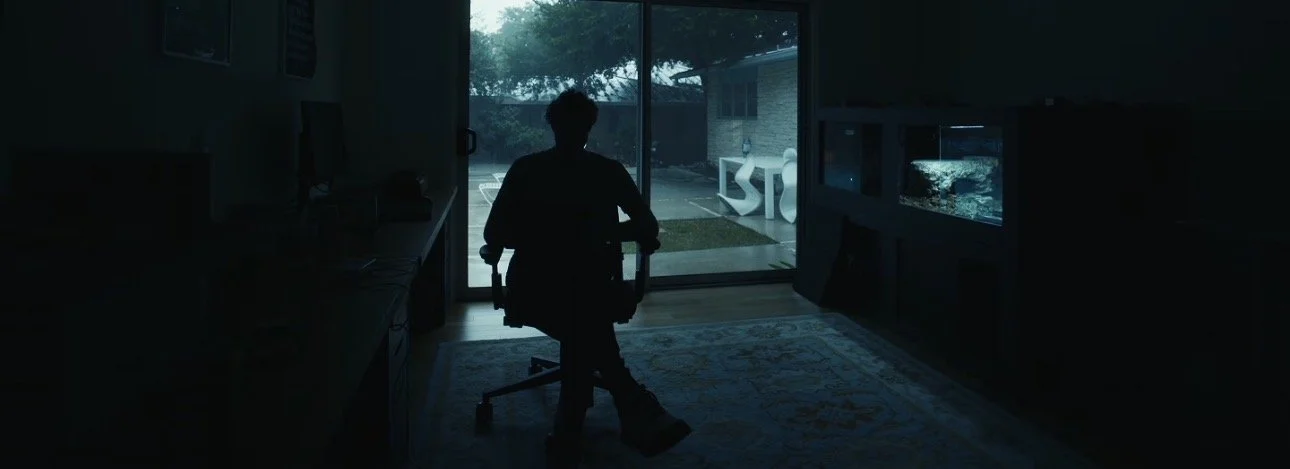
He monologues a lot in ways that sound like he’s wrapping up with conclusions, and then he keeps going, yet when it truly ends, I can’t tell how much he has learned or changed. If either film is to be a calling card for more work, the likability and flexibility he presents with both (I assume he had more frustrating moments than he shares) may help. His wide-eyed lack of sophistication and constant amusement may not. The documentary is much more appealing as a film about The Asylum, their process, and their attitude about movies and the industry as a whole than Firth’s specific journey with them. I’d love to see how others’ experiences compare to his.

Mockbuster will be released in theaters and on digital on Friday, July 10, 2026, via Giant Pictures.

Awards Highlights

Emmy Nominations

Nominations for the 78th annual Primetime Emmy Awards were announced last week, with several documentaries among the honored television programs in the Creative Arts Emmy bunch. Many of them are celebrity-focused, including the personal feature My Mom Jayne: A Film by Mariska Hargitay (available to stream on HBO Max), which is up for Outstanding Documentary or Nonfiction Special, Outstanding Cinematography for a Nonfiction Program, and Outstanding Directing for a Documentary/Nonfiction Program. The last of those recognizes Mariska Hargitay, who is also this year’s Emmy Awards host, in her directorial debut.

Other titles in that top nonfiction feature category include John Candy: I Like Me (Prime Video), Marty, Life is Short (Netflix), Mel Brooks: The 99 Year Old Man! (HBO Max), and Ocean with David Attenborough (Hulu). Documentary series nominees include Mr. Scorsese (Apple TV), Rafa (Netflix), Sean Combs: The Reckoning (Netflix), The Yogurt Shop Murders (HBO Max), and Ken Burns’s The American Revolution (PBS). There’s also the Exceptional Merit in Documentary Filmmaking category, which only has two nominees: The Tale of Silyan (Hulu) and The Librarians (PBS and Kanopy).

Judd Apatow and Michael Bonfiglio’s film Mel Brooks: The 99 Year Old Man! tied for the most nominations for a documentary with six. In addition to Outstanding Documentary or Nonfiction Special, it appears in the categories recognizing its direction, editing, original music score, sound editing, and sound mixing. The other documentary with six nominations was Ocean with David Attenborough, additionally recognized for its cinematography, original music score, sound editing, sound mixing, and narration. Sir David Attenborough actually, unsurprisingly, appears twice in that last category, as he’s also nominated for narrating Netflix’s A Gorilla Story: Told By David Attenborough.

Subscribe now


Documentary Release Calendar 7/10/26 – 7/16/26

Mockbuster

Friday, July 10, 2026

Baby Doe (2025) – A true-crime documentary about a woman accused of murdering her newborn baby. (In Theaters)

Do You Love Me (2025) – A documentary feature about Beirut, Lebanon. (In Theaters)

The March to War: Iran, Israel, and the USA (2026) – A three-part docuseries about the American and Israeli war against Iran. (OVID)

The Metro-Goldwyn-Mayer Story (1951) – A medium-length documentary presenting footage from new MGM movies of that year. (TCM)

Mockbuster – A documentary feature by Anthony Frith about his experience making a B-movie for The Asylum. (In Theaters and VOD)

Remake (2025) – A first-person documentary feature by Ross McElwee about the death of his son and an attempt to remake his classic film Sherman’s March as a narrative feature. *NONFICS PICK* (In Theaters)

Saturday, July 11, 2026

Dark Side of the Ring Season 7, Episode 2: “Jeff Jarrett & the Battle for TNA: Part 2” – The latest installment of a docuseries that shares the darkest stories of professional wrestling. (Vice)

The Real Murders of Atlanta Season 4, Episode 1: “Officer Down” – The return of an Atlanta-focused true-crime docuseries. This installment involves a gunned-down police officer. (Oxygen)

Sunday, July 12, 2026

The Food That Built America Season 7, Episode 12: “Let’s Get Cracker-ing” – The latest installment of a docuseries about popular American foods. This episode involves innovations in crackers. (History)

Hazardous History with Henry Winkler Season 2, Episode 12: “Insane Inventions” – The latest installment of a docuseries about dangerous toys and household items that used to be common. This episode involves disastrous gadgets and other inventions. (History)

In the Eye of the Storm Season 4, Episode 3: “Monster in Michigan” – The latest installment of a docuseries about natural disasters. This episode involves a rare EF-3 tornado. (Discovery Channel)

The Salisbury Poisonings: A Spy Next Door (2026) – A documentary feature about the 2018 poisoning of Russian/British double agent Sergei Skripal and his daughter. (CNN)

Monday, July 13, 2026

Flood (2025) – A documentary by Katy Scoggin in which she reconnects with her estranged, Evanglical science teacher father. Presented as an episode of Independent Lens. (PBS)

Football Headliners (1955) – A short film highlighting significant college football games played in 1955. (TCM)

History’s Greatest Machines with Dolph Lundgren Episode 7: “Rocket Science” – The latest installment of a docuseries about the machines that shaped our world. This episode involves rockets. (History)

It Looks Like Rain (1945) – A short film about the tools used to forecast the weather. (TCM)

Lethally Blonde Season 2, Episode 7: “Burlesque and Blood” – The latest installment of a true-crime docuseries involving people pursuing beauty and fame. This episode involves a murdered French Quarter dancer. (Investigation Discovery)

Murder 101 (2026) – A three-part true-crime docuseries about high schoolers who helped to solve a murder case. (Prime Video)

Storm (1943) – A short documentary about the tools the U.S. Weather Bureau uses to warn farmers about hazardous storms. (TCM)

Tuesday, July 14, 2026

Coroner to the Stars (2025) – A documentary feature about Dr. Thomas Noguchi, the former chief medical examiner for Los Angeles County, who performed autopsies on many celebrities. (VOD)

Dark Side of the Ring Season 7, Episode 3: “Jeff Jarrett & the Battle for TNA: Part 3” – The latest installment of a docuseries that shares the darkest stories of professional wrestling. (Vice)

Expedition Unknown Season 17, Episode 4: “Sunken City of Pirates” – The latest installment of a docuseries that follows an archaeologist looking for lost artifacts. (Discovery)

Homestead Rescue: Intervention Season 1, Episode 1 – The debut episode of a docuseries that follows wilderness living experts as they save lives. (Discovery)

Once Upon a Time in Space Episode 1: “America First” – A four-part docuseries about the space race. This installment involves the Moon landing and the introduction of the Space Shuttle. (PBS)

The Proof is Out There: Unexplained Edition Season 2, Episode 7: “Signs from Space” – The latest installment of a docuseries about strange phenomena captured on camera. (History)

Quarterback Season 3 – The return of an anthology docuseries about NFL quarterbacks. (Netflix)

The Real Wolf of Wall Street (2026) – A three-part docuseries about Jordan Belfort, whose story was dramatized in the movie The Wolf of Wall Street. (Paramount+)

The Secret of Skinwalker Ranch Season 7, Episode 9: “Up in Smoke” – The latest installment of a docuseries about UFO phenomena at the Skinwalker Ranch. (History)

That’s Entertainment! (1974) – A feature documentary showcasing moments from classic MGM musicals. (TCM)

That’s Entertainment, Part II (1976) – A sequel documentary showcasing more moments from classic MGM musicals. (TCM)

That’s Entertainment! III (1994) – A sequel documentary showcasing more moments from classic MGM musicals. (TCM)

Bergman’s Video Parts 1-3: “Humor,” “Death,” & “Adventure” – The first three episodes of a docuseries in which today’s filmmakers discuss the legacy of Ingmar Bergman. (OVID)

Wednesday, July 15, 2026

911: Did the Killer Call? Season 2, Episode 1 – The return of a true-crime docuseries about cases where the murderer is on the 911 call. (Investigation Discovery)

Bergman’s Video Parts 4-6: “Silence,” “Fear,” & “Exclusion” – The second half of a docuseries in which today’s filmmakers discuss the legacy of Ingmar Bergman. (OVID)

Body Cam Season 11, Episode 1 – The return of a docuseries that depicts law enforcement officers on the job via their body cams. (Investigation Discovery)

Duck and Cover (1952) – A short instructional film on how to survive a nuclear attack. (TCM)

ER: Caught on Camera Season 1, Episode 2 – The latest installment of a docuseries in which medical patients recall experiences in hospital emergency rooms. (TLC)

Thursday, July 16, 2026

Scott Peterson: The New Evidence (2026) – A true-crime documentary with an update on the 2002 murder of Laci Peterson and her unborn son. (A&E)

Surviving Earth Episode 6: “When the Oceans Shrank” – The sixth installment of an eight-part docuseries about extinct creatures. This episode involves early fish. (NBC)

Share Nonfics


Sneak Peek At What’s Coming Soon

7/17 – American Pachuco: The Legend of Luis Valdez – A documentary feature about the titular activist and filmmaker. (In Theaters)

7/22 – My Grandfather Charles Manson – A documentary about Charles Manson’s granddaughter, Sophia Maddox. Watch the new trailer for the film below. (Hulu)

7/29 – Eons: Life and Death on Pangea – A six-part docuseries on the mass-extinction event known as the “Great Dying.” (PBS)

8/2 – Decades in Sports – A six-part docuseries executive produced by Tom Hanks about milestones in sports in America. (CNN)

8/12 – An Eye for an Eye – A documentary feature about a woman convicted of killing her husband and now facing execution under Sharia law. Watch the new trailer for the film below. (In Theaters)

8/13 – A Child of My Own – A documentary feature by two-time Oscar-nominated director Maite Alberdi (The Mole Agent; The Eternal Memory) about a woman who faked her pregnancy. (Netflix)

8/14 – American Doctor – A documentary feature about three doctors of different religious backgrounds working in wartorn Gaza. Watch the new trailer for the film below. (In Theaters)

8/20 – Novak Djokovic: The Wolf in Winter – A documentary feature about tennis star Novak Djokovic. (Prime Video)

8/26 – Crows Are White – A documentary feature about a monk who prefers heavy metal and ice cream over meditation. Watch the new trailer for the film below. (In Theaters)

9/4 – Barbara Forever – A documentary feature executive-produced by Kristen Stewart about the pioneering lesbian filmmaker Barbara Hammer. (In Theaters)

9/11 – This Is Buzz – A documentary feature directed by Mark Pellington (U2 3D) about the 1990s MTV series Buzz. Watch the new trailer for the film below. (In Theaters)

9/25 – Unzipped – A 4K restoration re-release of a 1995 documentary feature that follows fashion designer Isaac Mizrahi as he launches a new line. (In Theaters)

9/26 – Ai Weiwei’s Turandot – A documentary feature about Ai Weiwei’s production of Turandot at the Rome Opera House. (In Theaters)

Nonfics is a reader-supported publication. To receive new posts and support my work, consider becoming a free or paid subscriber.
Uncategorized Comments are off
10 July 2026

This Week In Documentary

Written by Paul Moon

Last week, I was working a side job as a background actor (I can’t say on what), so it was fitting that two of the documentaries I watched and reviewed for this newsletter were about making movies. Not only that, but they are both first-person style films. One of them is a fairly simple making-of documentary, while the other is about much more than the production process. The other trend apparent in this week’s highlights is documentaries related to the current conflict(s) in the Middle East. Nothing about my life last week connects to those. That I know of. I didn’t have time to screen them.

Without further ado, below are this week’s documentary highlights, followed by daily listings for all known releases and broadcasts, along with a brief look at what’s coming soon for doc fans (including the latest films by Maite Alberdi and Mark Pellington). Please consider becoming a paid subscriber to receive more in-depth highlights and reviews in the future, plus full access to special posts like our best-of lists, and to give me more time to watch more (if not everything) available. If you have a doc needing coverage or a mention, you can now reach us at nonficseditor (at) gmail.

Nonfics Picks Of The Week: Remake (2025)

If you’ve never seen any of Ross McElwee’s documentaries, you’d better start binging (the essentials are on Kanopy, and some of those are also on OVID). His latest, Remake, is like the Avengers: Infinity War of first-person documentaries in that you need to do a lot of homework, specifically viewing a lot of other films, beforehand. Also, according to my new interview with McElwee, his next, possibly final feature would be his Avengers: Endgame, more reflective and summative than anything else. I think Remake is partly there, as it looks back and features clips from almost all of the installments in his first-person film oeuvre, including the one that still hasn’t been released.

Remake, which focuses on McElwee’s son, Adrian, who died of an accidental drug overdose a decade ago, is mostly in conversation with the director’s previous feature, Photographic Memory. It also heavily references his breakthrough 1985 film, Sherman’s March, which was optioned for a fictional adaptation. McElwee was planning on documenting the production of that remake, and Adrian was hoping to work on the Hollywood project in some capacity. Remake is the resulting document of neither of those things panning out, one of them expiring, and Adrian tragically passing away. It’s a film full of mournful reflection and regret, yet it doesn’t play too sorrowfully.

McElwee is still the sharpest documentarian in the first-person film space, and Remake is as consciously engaging as any of his works. But it also feels his most personal and dependent. It’s appreciated best, if not only, if you’ve seen his previous documentaries and gotten to know him and his family along the way. It’s especially heartbreaking for fans who watched Adrian be born and then grow up on screen. Like all of McElwee’s films, though, this one is more analytical than emotional, packed with intelligent commentary and visual motifs. It also has some glaring redundancies, reusing clips and statements from the past and even within the film itself.

Remake will be released in theaters on Friday, July 10, 2026, via Music Box Films.


Other Documentary Highlights

Do You Love Me

Churchill’s Island (1941)

This week marks the 85th anniversary of Churchill’s Island, which was first released in Canada on July 13, 1941, as part of the National Film Board’s Carry On Canada series. The 21-minute film later became the inaugural Oscar winner in the Best Documentary (Short Subject) category. Earlier this year, I wrote about how and why Churchill’s Island made Academy Awards history, defeating 10 other documentaries in contention. Many of them were similarly focused on World War II, but this one took a more positive approach and likely appealed to voters for that reason post-Pearl Harbor. I wrote, “The optimistic propaganda of Churchill’s Island signals victory on the horizon, indicating that they have shown the Nazis they won’t be defeated. The British will keep coming, defensively, offensively, through building, rebuilding, and restoring. The Germans, on the other hand, are seen in apparent desperation training for suicide missions.”

Churchill’s Island is available to stream on OVID, Filmzie, Tubi, and the National Film Board of Canada website.

Coroner To The Stars (2025)

The titular coroner, Dr. Thomas Noguchi, is currently 99 years old. I don’t know how old he was when he was interviewed for Coroner to the Stars, but he was old enough to be thankful he was still alive and able to tell his own story. I prefer having biographical documentary subjects tell their own stories, or at least as much as firsthand familiarity benefits (they can’t be the only ones telling their own stories). It’s the difference between a listing of timeline points and achievements and a sharing of the experience of going through those points and realizing those achievements.

As L.A. County’s Chief Medical Examiner, Noguchi was involved in the autopsies and death investigations of such celebrities as Marilyn Monroe, Natalie Wood, John Belushi, William Holden, Robert F. Kennedy, and Sharon Tate. He’s been a significant part of true-crime history, even proposing the idea of Tate and friends’ murders being cult-related before the Manson Family discovery and arrests were made. His accounts of just these cases (the documentary is fairly brief and brisk, leaving us wanting more stories) are done with terrific recollection and conviction.

His life story is also filled with obstacles involving his race, as a Japanese-American, political scrutiny for sticking to his often-controversial conclusions, and media attention, the last of which was partly of his own doing. For those old enough to remember the TV series Quincy, you’ll be fascinated to see how much he inspired Jack Klugman’s white-washed character. Coroner to the Stars is a swift survey of a long life that revolved around death. And despite all he has seen, he still gets emotional about losing a loved one, notably his ex-wife, with whom he reconciled before she passed.

Coroner to the Stars will be released digitally on Tuesday, July 14, 2026.

Do You Love Me (2025) & Jocelyne Saab Documentaries

This week’s filmmaker in focus is paired with a documentary that is relevant in content and distribution. The late Lebanese director Jocelyne Saab is the subject of a retrospective at New York City’s Metrograph theater titled “Jocelyne Saab: Letters from Lebanon.” The program, running throughout this weekend, includes The Beirut Trilogy, which consists of the 1976 short Beirut, Never Again, the 1978 medium-length documentary Letter from Beirut, and the 1983 short Beirut, My City.

They’re also showing her 1995 docufiction hybrid Once Upon a Time, Beirut, her 1975 documentary feature Lebanon in Turmoil, paired with the 1976 short South Lebanon: History of a Besieged Village, and the 1982 short Lebanese, Hostages of Their City, which is showing with one of her dramas, The Razor’s Edge. As far as I can tell, none of these films are otherwise available in the U.S., so this is a special opportunity to see the war-torn nation as she portrayed it in the ‘70s, ‘80s, and ‘90s.

While that program is going on in one auditorium, another at the Metrograph will be showing Do You Love Me, a newer documentary feature by Lana Daher that looks at Beirut, Lebanon, through film and TV footage and photographs shot over the last 70 years. Saab can apparently be seen in some of that footage, too. This film seems relevant and important given the ongoing war in Lebanon, though that’s probably narrow-minded, given there have been on-and-off conflicts spanning the last 85 years.

Do You Love Me will be released, and “Jocelyne Saab: Letters from Lebanon” will begin, on Friday, July 10, 2026, at the Metrograph in New York City.

Kevin Keating Documentaries

Another filmmaker worth highlighting this week is Kevin Keating, whom I learned from the DOC NYC Monday Memo died back on May 3. He was best known as a cinematographer, and in that role, he shot parts of such Oscar-winning classics as Barbara Kopple’s Harlan County U.S.A. (available to stream on The Criterion Channel and HBO Max) and American Dream (coming soon to the Criterion Collection) and Leon Gast’s When We Were Kings (The Criterion Channel). Earlier, he worked on the Maysles brothers’ Gimme Shelter (The Criterion Channel and HBO Max) and Cinda Firestone’s Attica (currently unavailable). Keating also directed two documentaries, Hells Angels Forever, which is currently unavailable, and Giuliani Time, which is available to stream on Fawesome and Cineverse.

The March To War: Iran, Israel, And The USA (2026)

Whether you’re able to see the Lebanese films at the Metrograph this weekend or not, another documentary to watch this week offers additional insight into the ongoing conflict in the Middle East. The three-part series The March to War: Iran, Israel, and the USA even links back to the era of Jocelyn Saab’s coverage, suggesting that the current war began in 1982. That’s in Part 2. The first installment provides background on Israel’s relationship with the U.S. and on Iranian history pre-Revolution. The third part looks at the effort to stop Iran’s nuclear program. I haven’t seen the series yet, but I have high expectations, given Icarus Films is the distributor.

The March to War: Iran, Israel, and the USA begins exclusively streaming on OVID on Friday, July 10, 2026.

Moana (1926)

We highlighted this film at the beginning of the year as it turned 100. Now the 1926 Moana is this week’s Doc Option, as an alternative to Disney’s new live-action remake of their 2016 animated feature of the same name. The nonfiction feature is the one directed by Robert Flaherty and best known for being erroneously attributed as the first to be called a “documentary” film. Here’s an excerpt from our review of Moana (specifically the 1975 re-release with sound):

“It’s gorgeous. The film is ostensibly the story of a young man named Moana, who is on the verge of recognized adulthood according to Samoan custom. Yet while his milestones are marked with great care, he is mostly used as a narrative device in order to feature the way of life of the people of Savai’i. The sounds of the ocean do wonders to enervate the pristine fishing scenes, including a particularly memorable capture of a giant sea turtle. Sandalwood, smoke, spray, and unsettlingly large crabs become vivid and immersive in this classic of ethnographic nonfiction.”

Moana is in the public domain and can be found on many parts of the internet. Moana (with sound) is available to stream on HBO Max and Kanopy.

Mockbuster (2025)

I wonder how many aspiring filmmakers will see Mockbuster and become the next director for The Asylum. Anthony Firth’s documentary feature follows him as he makes his feature debut with a low-budget B-movie called The Land That Time Forgot. He admits that all he had to do was email the infamous “mockbuster” studio and ask if he could take the helm of one of their schlocky projects, and they agreed without ever asking to see his previous work (most of which was directing corporate videos). The catch, to Firth’s dismay, was that he had to do it quickly and artlessly.

Firth was smart to make this documentary alongside his work on The Land That Time Forgot, not just because he got two feature directorial credits simultaneously, but because he also got to express himself with Mockbuster while being creatively limited on the Asylum job. The documentary is not especially inventive, nor does it showcase any particular vision or identity in its directing, but it’s certainly all Firth’s. As a story, even in the making-of space, it’s fairly unique, enough that it doesn’t matter that Firth has little memorable insight into the experience.

He monologues a lot in ways that sound like he’s wrapping up with conclusions, and then he keeps going, yet when it truly ends, I can’t tell how much he has learned or changed. If either film is to be a calling card for more work, the likability and flexibility he presents with both (I assume he had more frustrating moments than he shares) may help. His wide-eyed lack of sophistication and constant amusement may not. The documentary is much more appealing as a film about The Asylum, their process, and their attitude about movies and the industry as a whole than Firth’s specific journey with them. I’d love to see how others’ experiences compare to his.

Mockbuster will be released in theaters and on digital on Friday, July 10, 2026, via Giant Pictures.

Awards Highlights

Emmy Nominations

Nominations for the 78th annual Primetime Emmy Awards were announced last week, with several documentaries among the honored television programs in the Creative Arts Emmy bunch. Many of them are celebrity-focused, including the personal feature My Mom Jayne: A Film by Mariska Hargitay (available to stream on HBO Max), which is up for Outstanding Documentary or Nonfiction Special, Outstanding Cinematography for a Nonfiction Program, and Outstanding Directing for a Documentary/Nonfiction Program. The last of those recognizes Mariska Hargitay, who is also this year’s Emmy Awards host, in her directorial debut.

Other titles in that top nonfiction feature category include John Candy: I Like Me (Prime Video), Marty, Life is Short (Netflix), Mel Brooks: The 99 Year Old Man! (HBO Max), and Ocean with David Attenborough (Hulu). Documentary series nominees include Mr. Scorsese (Apple TV), Rafa (Netflix), Sean Combs: The Reckoning (Netflix), The Yogurt Shop Murders (HBO Max), and Ken Burns’s The American Revolution (PBS). There’s also the Exceptional Merit in Documentary Filmmaking category, which only has two nominees: The Tale of Silyan (Hulu) and The Librarians (PBS and Kanopy).

Judd Apatow and Michael Bonfiglio’s film Mel Brooks: The 99 Year Old Man! tied for the most nominations for a documentary with six. In addition to Outstanding Documentary or Nonfiction Special, it appears in the categories recognizing its direction, editing, original music score, sound editing, and sound mixing. The other documentary with six nominations was Ocean with David Attenborough, additionally recognized for its cinematography, original music score, sound editing, sound mixing, and narration. Sir David Attenborough actually, unsurprisingly, appears twice in that last category, as he’s also nominated for narrating Netflix’s A Gorilla Story: Told By David Attenborough.

Subscribe now


Documentary Release Calendar 7/10/26 – 7/16/26

Mockbuster

Friday, July 10, 2026

Baby Doe (2025) – A true-crime documentary about a woman accused of murdering her newborn baby. (In Theaters)

Do You Love Me (2025) – A documentary feature about Beirut, Lebanon. (In Theaters)

The March to War: Iran, Israel, and the USA (2026) – A three-part docuseries about the American and Israeli war against Iran. (OVID)

The Metro-Goldwyn-Mayer Story (1951) – A medium-length documentary presenting footage from new MGM movies of that year. (TCM)

Mockbuster – A documentary feature by Anthony Frith about his experience making a B-movie for The Asylum. (In Theaters and VOD)

Remake (2025) – A first-person documentary feature by Ross McElwee about the death of his son and an attempt to remake his classic film Sherman’s March as a narrative feature. *NONFICS PICK* (In Theaters)

Saturday, July 11, 2026

Dark Side of the Ring Season 7, Episode 2: “Jeff Jarrett & the Battle for TNA: Part 2” – The latest installment of a docuseries that shares the darkest stories of professional wrestling. (Vice)

The Real Murders of Atlanta Season 4, Episode 1: “Officer Down” – The return of an Atlanta-focused true-crime docuseries. This installment involves a gunned-down police officer. (Oxygen)

Sunday, July 12, 2026

The Food That Built America Season 7, Episode 12: “Let’s Get Cracker-ing” – The latest installment of a docuseries about popular American foods. This episode involves innovations in crackers. (History)

Hazardous History with Henry Winkler Season 2, Episode 12: “Insane Inventions” – The latest installment of a docuseries about dangerous toys and household items that used to be common. This episode involves disastrous gadgets and other inventions. (History)

In the Eye of the Storm Season 4, Episode 3: “Monster in Michigan” – The latest installment of a docuseries about natural disasters. This episode involves a rare EF-3 tornado. (Discovery Channel)

The Salisbury Poisonings: A Spy Next Door (2026) – A documentary feature about the 2018 poisoning of Russian/British double agent Sergei Skripal and his daughter. (CNN)

Monday, July 13, 2026

Flood (2025) – A documentary by Katy Scoggin in which she reconnects with her estranged, Evanglical science teacher father. Presented as an episode of Independent Lens. (PBS)

Football Headliners (1955) – A short film highlighting significant college football games played in 1955. (TCM)

History’s Greatest Machines with Dolph Lundgren Episode 7: “Rocket Science” – The latest installment of a docuseries about the machines that shaped our world. This episode involves rockets. (History)

It Looks Like Rain (1945) – A short film about the tools used to forecast the weather. (TCM)

Lethally Blonde Season 2, Episode 7: “Burlesque and Blood” – The latest installment of a true-crime docuseries involving people pursuing beauty and fame. This episode involves a murdered French Quarter dancer. (Investigation Discovery)

Murder 101 (2026) – A three-part true-crime docuseries about high schoolers who helped to solve a murder case. (Prime Video)

Storm (1943) – A short documentary about the tools the U.S. Weather Bureau uses to warn farmers about hazardous storms. (TCM)

Tuesday, July 14, 2026

Coroner to the Stars (2025) – A documentary feature about Dr. Thomas Noguchi, the former chief medical examiner for Los Angeles County, who performed autopsies on many celebrities. (VOD)

Dark Side of the Ring Season 7, Episode 3: “Jeff Jarrett & the Battle for TNA: Part 3” – The latest installment of a docuseries that shares the darkest stories of professional wrestling. (Vice)

Expedition Unknown Season 17, Episode 4: “Sunken City of Pirates” – The latest installment of a docuseries that follows an archaeologist looking for lost artifacts. (Discovery)

Homestead Rescue: Intervention Season 1, Episode 1 – The debut episode of a docuseries that follows wilderness living experts as they save lives. (Discovery)

Once Upon a Time in Space Episode 1: “America First” – A four-part docuseries about the space race. This installment involves the Moon landing and the introduction of the Space Shuttle. (PBS)

The Proof is Out There: Unexplained Edition Season 2, Episode 7: “Signs from Space” – The latest installment of a docuseries about strange phenomena captured on camera. (History)

Quarterback Season 3 – The return of an anthology docuseries about NFL quarterbacks. (Netflix)

The Real Wolf of Wall Street (2026) – A three-part docuseries about Jordan Belfort, whose story was dramatized in the movie The Wolf of Wall Street. (Paramount+)

The Secret of Skinwalker Ranch Season 7, Episode 9: “Up in Smoke” – The latest installment of a docuseries about UFO phenomena at the Skinwalker Ranch. (History)

That’s Entertainment! (1974) – A feature documentary showcasing moments from classic MGM musicals. (TCM)

That’s Entertainment, Part II (1976) – A sequel documentary showcasing more moments from classic MGM musicals. (TCM)

That’s Entertainment! III (1994) – A sequel documentary showcasing more moments from classic MGM musicals. (TCM)

Bergman’s Video Parts 1-3: “Humor,” “Death,” & “Adventure” – The first three episodes of a docuseries in which today’s filmmakers discuss the legacy of Ingmar Bergman. (OVID)

Wednesday, July 15, 2026

911: Did the Killer Call? Season 2, Episode 1 – The return of a true-crime docuseries about cases where the murderer is on the 911 call. (Investigation Discovery)

Bergman’s Video Parts 4-6: “Silence,” “Fear,” & “Exclusion” – The second half of a docuseries in which today’s filmmakers discuss the legacy of Ingmar Bergman. (OVID)

Body Cam Season 11, Episode 1 – The return of a docuseries that depicts law enforcement officers on the job via their body cams. (Investigation Discovery)

Duck and Cover (1952) – A short instructional film on how to survive a nuclear attack. (TCM)

ER: Caught on Camera Season 1, Episode 2 – The latest installment of a docuseries in which medical patients recall experiences in hospital emergency rooms. (TLC)

Thursday, July 16, 2026

Scott Peterson: The New Evidence (2026) – A true-crime documentary with an update on the 2002 murder of Laci Peterson and her unborn son. (A&E)

Surviving Earth Episode 6: “When the Oceans Shrank” – The sixth installment of an eight-part docuseries about extinct creatures. This episode involves early fish. (NBC)

Share Nonfics


Sneak Peek At What’s Coming Soon

7/17 – American Pachuco: The Legend of Luis Valdez – A documentary feature about the titular activist and filmmaker. (In Theaters)

7/22 – My Grandfather Charles Manson – A documentary about Charles Manson’s granddaughter, Sophia Maddox. Watch the new trailer for the film below. (Hulu)

7/29 – Eons: Life and Death on Pangea – A six-part docuseries on the mass-extinction event known as the “Great Dying.” (PBS)

8/2 – Decades in Sports – A six-part docuseries executive produced by Tom Hanks about milestones in sports in America. (CNN)

8/12 – An Eye for an Eye – A documentary feature about a woman convicted of killing her husband and now facing execution under Sharia law. Watch the new trailer for the film below. (In Theaters)

8/13 – A Child of My Own – A documentary feature by two-time Oscar-nominated director Maite Alberdi (The Mole Agent; The Eternal Memory) about a woman who faked her pregnancy. (Netflix)

8/14 – American Doctor – A documentary feature about three doctors of different religious backgrounds working in wartorn Gaza. Watch the new trailer for the film below. (In Theaters)

8/20 – Novak Djokovic: The Wolf in Winter – A documentary feature about tennis star Novak Djokovic. (Prime Video)

8/26 – Crows Are White – A documentary feature about a monk who prefers heavy metal and ice cream over meditation. Watch the new trailer for the film below. (In Theaters)

9/4 – Barbara Forever – A documentary feature executive-produced by Kristen Stewart about the pioneering lesbian filmmaker Barbara Hammer. (In Theaters)

9/11 – This Is Buzz – A documentary feature directed by Mark Pellington (U2 3D) about the 1990s MTV series Buzz. Watch the new trailer for the film below. (In Theaters)

9/25 – Unzipped – A 4K restoration re-release of a 1995 documentary feature that follows fashion designer Isaac Mizrahi as he launches a new line. (In Theaters)

9/26 – Ai Weiwei’s Turandot – A documentary feature about Ai Weiwei’s production of Turandot at the Rome Opera House. (In Theaters)

Nonfics is a reader-supported publication. To receive new posts and support my work, consider becoming a free or paid subscriber.

Uncategorized Comments are off
09 July 2026

FilmLight Colour Awards 2026 opens call for entries with expanded ‘Spotlight & Documentary’ category

Written by Paul Moon

The FilmLight Colour Awards, in co-operation with ToruńCAMERIMAGE, has officially opened its sixth edition, calling for entries to celebrate the craft of colour grading. This year’s competition sees the introduction of several changes, designed to bring a sharper focus to the creative minds behind the world’s most visually striking projects.

Entries are open to colourists working on any grading platform, with a final submission deadline of 31 July 2026.

Spotlight on Independents and Documentaries

Reflecting a core mission to support independent cinema, the Spotlight category has been renamed and expanded to ‘Spotlight & Documentary’. The aim is to actively encourage and amplify non-fiction submissions, celebrating the critical role colourists play in carving out the visual identities of both low-budget narratives and real-world stories. Key criteria for this category include a total production budget of less than $3 million USD and a minimum duration of 70 minutes for feature films and 50 minutes for documentaries.

In total, the 2026 awards will honour outstanding work across five categories:

  • Theatrical Feature
  • TV Series / Episodic
  • Commercial
  • Spotlight & Documentary
  • Emerging Talent – for music video or commercial projects from colourists aged 18-30 with no more than 5 years of professional experience.

Industry Recognition

Reflecting on the growing stature of the craft, acclaimed director and 2025 Jury Guest of Honour, Park Chan-wook, noted: “In the process of making a film, the role of the colourist has become increasingly important and everyone recognises that reality. Yet despite that awareness they have been very few awards like this. That has always felt unfortunate, so I am truly glad such recognition now exists.”

All submissions will be independently evaluated by an esteemed global jury of celebrated cinematographers, colourists, and industry experts. The 2026 winners will be unveiled and showcased this November at a dedicated ceremony during the ToruńCAMERIMAGE festival.

Less than one month left to submit

With less than one month remaining before entries close on 31 July 2026, colourists and production facilities are encouraged to submit their work soon.

The awards are led and organised by FilmLight, in conjunction with ToruńCAMERIMAGE. It’s also supported by the AFC (French Society of Cinematographers), AMC (Mexican Society of Cinematographers), ASC (American Society of Cinematographers), BSC (British Society of Cinematographers), BVK (German Society of Cinematographers), CNSC (Chinese Society of Cinematographers), CSI (Colourist Society International), ISC (Indian Society of Cinematographers), ShotDeck (fully-searchable cinematic image library), and more.

For full eligibility rules, category guidelines, or to submit a project, please visit the official awards platform: www.flccawards.org

The post FilmLight Colour Awards 2026 opens call for entries with expanded ‘Spotlight & Documentary’ category appeared first on Cinematography World.

Uncategorized Comments are off
09 July 2026

Best & Worst Camera Brands for Battery Longevity | Steadicam Documentary Backed by Coppola | ARRI ALEXA 35 Live Xtreme – Focus Check ep124

Written by Paul Moon

We settle a question every filmmaker has cursed at some point: which camera brands actually let your batteries last — and which strand you the moment you upgrade? Nino goes brand by brand, ranking the best and worst for battery longevity, from Canon’s decade-proof LP-E6 to the fragmentation that leaves Insta360 owners buying new cells with every generation.

Then: the man who invented the stabilized camera. Garrett Brown — the mind behind the Steadicam — is finally getting a documentary backed by Francis Ford Coppola, and it’s a reminder of just how much one person changed the way movies move. Plus ARRI’s new Alexa 35 Live Xtreme, a tiny $200 pocket camera that came out of nowhere, a new electronic variable ND, fresh lights from Godox, iPhone lenses from Tilta, and the free, filmmaker-built apps quietly reshaping post-production.

This episode is sponsored by Hollyland — check it out at 40:39.


Apple Podcasts Apple Podcasts


Spotify Spotify


Amazon Music Amazon Music


PlayerFM PlayerFM


iHeart Radio iHeart Radio


YouTube YouTube

Your Camera Lasts Only as Long as You Can Buy Its Battery: Camera Battery Compatibility, Brand by Brand

(07:17 in the episode)

Read more: https://www.cined.com/your-camera-lasts-only-as-long-as-you-can-buy-its-battery-camera-battery-compatibility-brand-by-brand/

Sparked by a conversation with Philip Bloom about Insta360 discontinuing batteries for its five-year-old ONE R and ONE RS modular cameras, Nino set out to audit battery longevity across the entire camera industry, brand by brand. Insta360 comes out worst, changing battery standards with nearly every camera generation, while DJI has improved markedly, standardizing its Action Extreme battery across the Osmo Action 3 through 6 and Osmo 360, and keeping newer Mini and Air drone batteries backward compatible. Canon remains the benchmark: its LP-E6 platform, launched with the 5D Mark II, has evolved through the LP-E6N, LP-E6NH, and LP-E6P while keeping the same physical form factor to this day. Sony, Panasonic, Fujifilm, GoPro, and Blackmagic Design each get their own breakdown, covering everything from the NP-FZ100 and new NP-SA100 standards to Panasonic’s confusingly similar BLK22 and BLJ31 cells and GoPro’s Enduro naming mess across the HERO9 through HERO13 Black generations.

Image Credit: Garrett Brown with the Steadicam. Image courtesy of Garrett Brown

Steadicam Documentary “Thank You Mr. Brown” Enters Production, Backed by Francis Ford Coppola

(41:43 in the episode)

Read more: https://www.cined.com/steadicam-documentary-thank-you-mr-brown-enters-production-backed-by-francis-ford-coppola/

A new documentary from director Andrew Schwartz traces the life of Garrett Brown, the inventor of the Steadicam, from its first major use in 1976’s Rocky through The Shining and beyond. The pitch trailer shows just how experimental Brown’s earliest rigs looked, and now the project has a high-profile backer in Francis Ford Coppola. Nino and Felix also touch on Brown’s other invention, the SkyCam/FlyCam broadcast rig, and Steadicam’s ongoing legacy in a gimbal-dominated industry.

ARRI ALEXA 35 Live Xtreme Announced – Up to 8x HFR via SDI, 480fps, Baseband Slow Motion

(48:16 in the episode)

Read more: https://www.cined.com/arri-alexa-35-live-xtreme-announced-up-to-8x-hfr-via-sdi-480fps-baseband-slow-motion/

ARRI has merged its two ALEXA 35 spin-offs into one camera, combining the high-speed capability of the ALEXA 35 Xtreme with the live-broadcast SDI workflow of the ALEXA 35 Live. The result is built for sports and live production, offering up to 480fps baseband slow motion alongside the large-sensor dynamic range that typical broadcast cameras lack, though at a dynamic range cost compared to the ALEXA 35’s normal shooting modes.

AulGo Pocket Camera Hits Kickstarter – 4K Sony Sensor, 6-Axis EIS, 56g Body

(52:24 in the episode)

Read more: https://www.cined.com/aulgo-pocket-camera-hits-kickstarter-4k-sony-sensor-6-axis-eis-56g-body/

From little-known manufacturer TriLife comes a tiny magnetic pocket camera built around a 1/2.9-inch Sony IMX486 sensor, six-axis electronic stabilization, and a $200 price point. Nino stumbled across the Kickstarter campaign by accident and flags it as a pure news item — CineD has no relationship with TriLife and hasn’t tested the camera — but the form factor and versatility, including magnetic mounting for dashboard and vehicle shots, make it worth watching.

Sony Teases a New RX10 – First Bridge Camera Update in Nearly a Decade

(55:55 in the episode)

Read more: https://www.cined.com/sony-teases-a-new-rx10-first-bridge-camera-update-in-nearly-a-decade/

Sony is reviving its long-dormant RX10 superzoom line for the first time since the RX10 IV launched back in 2017. Few details are official yet, but expect a fixed 24–600mm equivalent zoom and S-Log3 recording to carry over, part of a broader industry trend back toward purpose-built, single-focal-range cameras as an alternative to smartphones.

Image Credit: Kippertie

KipperTie LCcineND Now Available – Remote Controllable 4×5.65” Electronic ND Filter

(58:30 in the episode)

Read more: https://www.cined.com/kippertie-lccinend-now-available-remote-controllable-4×5-65-electronic-nd-filter/

Built on Swedish company LC Tech’s electronic variable ND technology, KipperTie’s new drop-in filter covers a 1.5 to 5-stop range in a standard 4×5.65-inch matte box tray, with app or follow-focus-motor remote control. It isn’t cheap at roughly $2,340, and it does require its own battery, but it’s a rare implementation of variable ND in a professional matte box format.

KNOWLED PL600 RF and PL1200 RF Announced – Nine-Band PaletteLab Engine, 92% Rec.2020, IP65 Weatherproofing

(01:02:30 in the episode)

Read more: https://www.cined.com/knowled-pl600-rf-and-pl1200-rf-announced-palettelab-rgbww-engine-92-rec-2020-ip65-weatherproofing/

Godox’s KNOWLED brand has announced two all-in-one COB point-source fixtures built around a new nine-band PaletteLab color engine, claiming a CRI of 98 and TLCI of 99. Both the 600W PL600 RF and 1,200W PL1200 RF are IP65 weatherproof with built-in power supplies, trading some weight for one less cable to rig, and are priced at around $2,000 and $3,500, respectively.

Tilta iPhone Lenses Bring Fisheye, Macro, Wide, and Telephoto Glass for T-Mount

(01:08:45 in the episode)

Read more: https://www.cined.com/tilta-iphone-lenses-bring-fisheye-macro-wide-and-telephoto-glass-for-t-mount/

Tilta has added four add-on lenses — an 8mm fisheye, 16mm wide, 10x macro, and 40mm telephoto — to its Chronos smartphone accessory ecosystem, priced between $69 and $89. They require a Chronos case and use Tilta’s own T-mount locking interface rather than a universal standard, so compatibility outside the Chronos system isn’t guaranteed.

Vimeo and FiLMiC Pro Owner Bending Spoons Surges in $1.68 Billion Nasdaq IPO Debut

(01:12:31 in the episode)

Read more: https://www.cined.com/vimeo-and-filmic-pro-owner-bending-spoons-surges-in-1-68-billion-nasdaq-ipo-debut/

Bending Spoons, the Italian holding company behind Vimeo, FiLMiC Pro, and WeTransfer, is now publicly traded after a Nasdaq debut that briefly pushed shares up more than 40%. As a public company, Bending Spoons will face more pressure from shareholders, which could mean faster feature updates but also more aggressive monetization of the products it owns.

Boris FX Acquires iZotope – RX, Ozone, Neutron, and Nectar Join the Post-Production Toolmaker

(01:15:02 in the episode)

Read more: https://www.cined.com/boris-fx-acquires-izotope-rx-ozone-neutron-and-nectar-join-the-post-production-toolmaker/

Visual effects and compositing company Boris FX, known for Mocha, has acquired audio tools maker iZotope from Native Instruments. Existing iZotope licenses for RX, Ozone, Neutron, and Nectar are unaffected, and Boris FX says it plans to keep investing in new development across the audio lineup.

Image Credit: Beat App

Beat App Introduced – Free Mac Tool for Story Development and Shoot Planning

(01:17:05 in the episode)

Read more: https://www.cined.com/beat-app-introduced-free-mac-tool-for-story-development-and-shoot-planning/

Beat is a free, vibe-coded Mac app for node-based story development, moodboarding, and shoot planning, letting filmmakers connect story beats, locations, and characters on a visual canvas, and even plan blocking directly over location scouting photos. It also connects to Claude via MCP for an AI assistant inside the project.

Clip Sweeper v2 Now Available – Free Mac App for Cleaning Video Project Drives

(01:21:28 in the episode)

Read more: https://www.cined.com/clip-sweeper-v2-now-available-free-mac-app-for-cleaning-video-project-drives/

Also free and vibe-coded, Clip Sweeper v2 scans hard drives specifically for unused footage inside Premiere Pro and DaVinci Resolve projects and can compress clips you want to archive rather than delete — useful as storage prices keep climbing.

Artemis Studio for Mac – Chemical Wedding’s Desktop Companion to Its Director’s Viewfinder App

(01:22:52 in the episode)

Read more: https://www.cined.com/artemis-studio-for-mac-chemical-weddings-desktop-companion-to-its-directors-viewfinder-app/

Chemical Wedding, maker of the Artemis Director’s Viewfinder app, has renamed its desktop companion (formerly Artemis Gallery) to Artemis Studio. It syncs with the iOS app via iCloud, letting teams build and export shot lists, storyboards, camera data, and sun position information between phone and desktop.

DaVinci Resolve 21.0.2 Released – Keyframe Fixes, Retime Curve Improvements, and Better Fusion Vertical Transitions

(01:24:39 in the episode)

Read more: https://www.cined.com/davinci-resolve-21-0-2-released-keyframe-fixes-retime-curve-improvements-and-better-fusion-vertical-transitions/

Blackmagic Design’s latest point update brings keyframe and retime curve fixes, improved Fusion vertical transitions, and better NVIDIA decode performance for H.264 and H.265 footage, alongside a matching update for Fusion Studio.

You can watch and listen to the full video episode of Focus Check ep124 embedded above, and find all episodes on Apple Podcasts, Spotify, and wherever else you get your podcasts.

Uncategorized Comments are off
08 July 2026

Interview: Ross McElwee On ‘Photographic Memory’

Written by Paul Moon

This interview was originally published on the Documentary Channel Blog in 2012.

I was afraid I wasn’t going to get an interview with Ross McElwee, one of my favorite documentary filmmakers. And I was also afraid that I would get one. Whether it’s because I sometimes put my foot in my mouth or act too much like a fanboy with artists I admire, there can always be the chance that I’ll come across as annoying. Or, maybe I just imagine it that way.

Well, I did get to talk to McElwee last Friday, which is when his new film, Photographic Memory, opened in New York. It’s a wonderful personal first-person work that examines the director’s relationship with his son (whose birth we witnessed in Time Indefinite) and his own young adulthood, including a search for an old flame (an affair that’s interesting to think of in the context of McElwee’s most noteworthy film, the classic Sherman’s March). And I do think it went better than I could have hoped.

This is part one of our conversation, in which McElwee and I talked candidly with one another about the new film, how its inception and process were different than with previous projects, the way it sort of passes a torch, and also how fans of his are into visiting locations from his documentaries. After reading, check out part two here.


Read more

Uncategorized Comments are off
08 July 2026

Interview: Ross McElwee On ‘Photographic Memory’

Written by Paul Moon

This interview was originally published on the Documentary Channel Blog in 2012.

I was afraid I wasn’t going to get an interview with Ross McElwee, one of my favorite documentary filmmakers. And I was also afraid that I would get one. Whether it’s because I sometimes put my foot in my mouth or act too much like a fanboy with artists I admire, there can always be the chance that I’ll come across as annoying. Or, maybe I just imagine it that way.

Well, I did get to talk to McElwee last Friday, which is when his new film, Photographic Memory, opened in New York. It’s a wonderful personal first-person work that examines the director’s relationship with his son (whose birth we witnessed in Time Indefinite) and his own young adulthood, including a search for an old flame (an affair that’s interesting to think of in the context of McElwee’s most noteworthy film, the classic Sherman’s March). And I do think it went better than I could have hoped.

This is part one of our conversation, in which McElwee and I talked candidly with one another about the new film, how its inception and process were different than with previous projects, the way it sort of passes a torch, and also how fans of his are into visiting locations from his documentaries. After reading, check out part two here.


Read more

Uncategorized Comments are off
08 July 2026

Interview: Ross McElwee On the Next Generation Of First-Person Filmmakers, And Documenting The ‘Sherman’s March’ Remake

Written by Paul Moon

This interview was originally published on the Documentary Channel Blog in 2012.

In the first part of my recent interview with Ross McElwee, we discussed his new film, Photographic Memory, and how it fits into his career, both as an autobiographical documentarian and as someone with an oeuvre of work that stands on its own outside of its personal relevance. You can read about that and more here.

In the second half of our conversation, we talked about those he’s taught and influenced (including Nina Davenport, Mark Meatto and Michael Moore), as well as his collaborators on this new film. And I asked about what we can look forward to next, either something currently in the works or a past film still unreleased (his previous documentary, In Paraguay, has been held from distribution for personal reasons). And I was reminded that, as strange an idea as it is, Sherman’s March is being remade by Hollywood. So, he provides a teeny update on that.


Read more

Uncategorized Comments are off
08 July 2026

Interview: Ross McElwee On the Next Generation Of First-Person Filmmakers, And Documenting The ‘Sherman’s March’ Remake

Written by Paul Moon

This interview was originally published on the Documentary Channel Blog in 2012.

In the first part of my recent interview with Ross McElwee, we discussed his new film, Photographic Memory, and how it fits into his career, both as an autobiographical documentarian and as someone with an oeuvre of work that stands on its own outside of its personal relevance. You can read about that and more here.

In the second half of our conversation, we talked about those he’s taught and influenced (including Nina Davenport, Mark Meatto and Michael Moore), as well as his collaborators on this new film. And I asked about what we can look forward to next, either something currently in the works or a past film still unreleased (his previous documentary, In Paraguay, has been held from distribution for personal reasons). And I was reminded that, as strange an idea as it is, Sherman’s March is being remade by Hollywood. So, he provides a teeny update on that.


Read more

Uncategorized Comments are off
← Older posts
Newer posts →

B&H Search Engine Banner


B&H Photo - Video - Pro Audio


© Copyright 2022 by Zen Violence Films LLC, all rights reserved. To read the site privacy policy and ethics statement, click here.