The series is set to release soon on BLK Prime
One year after the Oscars introduced its first official “documentary” category, Best Documentary (Short Subject), that award disappeared. In its place, a more broadly encompassing category, Best Documentary, appeared and also lasted only one year. Today, that category is considered the first instance of the Academy Award for Best Documentary Feature, but that shouldn’t be the case. Of the whopping 25 nominees1 for Best Documentary at the 15th Academy Awards held in 1943, only two would qualify as “features” by the organization’s rules despite both still being under an hour. The other 23 are all shorter than 30 minutes. Of those, 17 are shorter than 20 minutes, and four have a runtime of less than 10 minutes.
With so many nominees, it’s no wonder that four of the films tied for the Oscar for Best Documentary: The Battle of Midway, Kokoda Front Line!, Moscow Strikes Back, and Why We Fight: Prelude to War. It’s also for the benefit of Academy Awards history that half of these winners were the two medium-length documentaries that would qualify as features by the official Oscar rules. Moscow Strikes Back was originally a true feature, running anywhere from 66 to 110 minutes in its various forms released in the Soviet Union. When it was reworked for American audiences, with English-language narration by actor Edward G. Robinson, the documentary was only 55 minutes long. That would be the version that the Academy recognized.
Nonfics is a reader-supported publication. To receive new posts and support my work, consider becoming a free or paid subscriber.
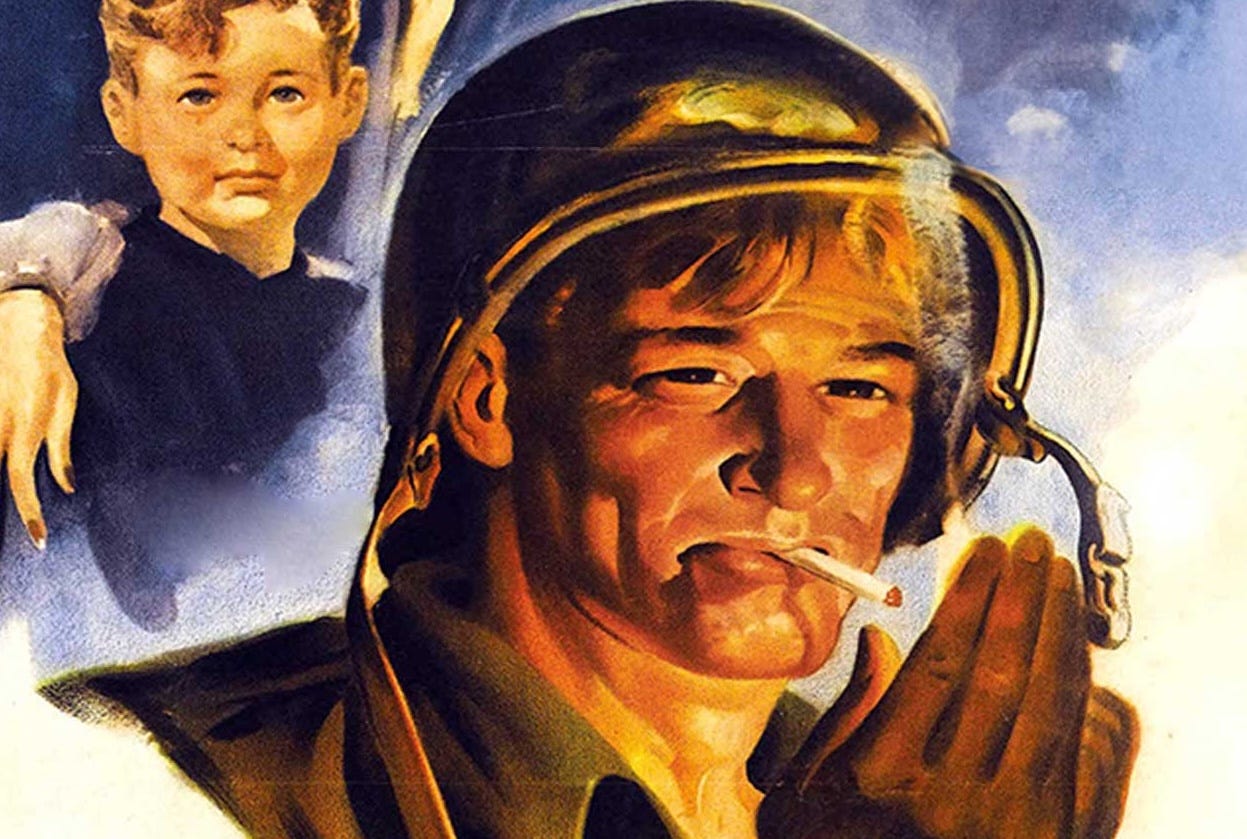
All four winners are also World War II propaganda films. Nearly all of the 25 nominees were either directly about the war or had some relevance. The two about agriculture, one about income tax (starring Donald Duck), and another about people with loose lips sinking ships tied back to the war effort in some way. Only one of the nominees, a nature film about bird migrations titled High Over the Borders, had nothing to do with World War II. Among the winners, I’ve previously declared The Battle of Midway is the best American propaganda film of all time. I wrote that the John Ford-helmed Technicolor short “makes the viewer feel the fight, to see what it’s like to be a soldier who may not even himself know or comprehend the specifics of each mission, and the sensation can be much more inspiring than something more informative.”
One year after the Oscars introduced its first official “documentary” category, Best Documentary (Short Subject), that award disappeared. In its place, a more broadly encompassing category, Best Documentary, appeared and also lasted only one year. Today, that category is considered the first instance of the Academy Award for Best Documentary Feature, but that shouldn’t be the case. Of the whopping 25 nominees1 for Best Documentary at the 15th Academy Awards held in 1943, only two would qualify as “features” by the organization’s rules despite both still being under an hour. The other 23 are all shorter than 30 minutes. Of those, 17 are shorter than 20 minutes, and four have a runtime of less than 10 minutes.
With so many nominees, it’s no wonder that four of the films tied for the Oscar for Best Documentary: The Battle of Midway, Kokoda Front Line!, Moscow Strikes Back, and Why We Fight: Prelude to War. It’s also for the benefit of Academy Awards history that half of these winners were the two medium-length documentaries that would qualify as features by the official Oscar rules. Moscow Strikes Back was originally a true feature, running anywhere from 66 to 110 minutes in its various forms released in the Soviet Union. When it was reworked for American audiences, with English-language narration by actor Edward G. Robinson, the documentary was only 55 minutes long. That would be the version that the Academy recognized.
Nonfics is a reader-supported publication. To receive new posts and support my work, consider becoming a free or paid subscriber.
All four winners are also World War II propaganda films. Nearly all of the 25 nominees were either directly about the war or had some relevance. The two about agriculture, one about income tax (starring Donald Duck), and another about people with loose lips sinking ships tied back to the war effort in some way. Only one of the nominees, a nature film about bird migrations titled High Over the Borders, had nothing to do with World War II. Among the winners, I’ve previously declared The Battle of Midway is the best American propaganda film of all time. I wrote that the John Ford-helmed Technicolor short “makes the viewer feel the fight, to see what it’s like to be a soldier who may not even himself know or comprehend the specifics of each mission, and the sensation can be much more inspiring than something more informative.”
One year after the Oscars introduced its first official “documentary” category, Best Documentary (Short Subject), that award disappeared. In its place, a more broadly encompassing category, Best Documentary, appeared and also lasted only one year. Today, that category is considered the first instance of the Academy Award for Best Documentary Feature, but that shouldn’t be the case. Of the whopping 25 nominees1 for Best Documentary at the 15th Academy Awards held in 1943, only two would qualify as “features” by the organization’s rules despite both still being under an hour. The other 23 are all shorter than 30 minutes. Of those, 17 are shorter than 20 minutes, and four have a runtime of less than 10 minutes.
With so many nominees, it’s no wonder that four of the films tied for the Oscar for Best Documentary: The Battle of Midway, Kokoda Front Line!, Moscow Strikes Back, and Why We Fight: Prelude to War. It’s also for the benefit of Academy Awards history that half of these winners were the two medium-length documentaries that would qualify as features by the official Oscar rules. Moscow Strikes Back was originally a true feature, running anywhere from 66 to 110 minutes in its various forms released in the Soviet Union. When it was reworked for American audiences, with English-language narration by actor Edward G. Robinson, the documentary was only 55 minutes long. That would be the version that the Academy recognized.
Nonfics is a reader-supported publication. To receive new posts and support my work, consider becoming a free or paid subscriber.
All four winners are also World War II propaganda films. Nearly all of the 25 nominees were either directly about the war or had some relevance. The two about agriculture, one about income tax (starring Donald Duck), and another about people with loose lips sinking ships tied back to the war effort in some way. Only one of the nominees, a nature film about bird migrations titled High Over the Borders, had nothing to do with World War II. Among the winners, I’ve previously declared The Battle of Midway is the best American propaganda film of all time. I wrote that the John Ford-helmed Technicolor short “makes the viewer feel the fight, to see what it’s like to be a soldier who may not even himself know or comprehend the specifics of each mission, and the sensation can be much more inspiring than something more informative.”
Back when it felt like winter would never end, I wrote several newsletters about gardening. I first wrote about gardening in winter, when there’s tons of work to do, but none of it is visible to others. The second one was about gardening in spring, when everything is still frustratingly brown and barren, but it’s important not to rush things.
I wrote something in the latter that makes me cringe a little to read now:
And let’s not lie: we do all this not-so-glamorous work for the bloom season.
Well, lemme tell ya —
It’s bloom season, b*tches.
And now that it’s here, Summer Penny has a few words for Winter Penny.
Bloom season is indeed the best.
First of all, the “let’s not lie” part above is true. It is obviously gratifying to finally get to share your work with the audience after the months and years of mostly below-ground toil.
I am so far having a fairly awesome version of peak bloom: 1500 people came out to watch Wild Inside under a beautiful moon at our extremely special world premiere in Central Park. Every Q&A screening this weekend at IFC is sold out (and we’re in the largest theater!). It looks like the theatrical is off to a roaring success. Apparently audiences have been bursting into applause during the closing credits, even at screenings where I’m not there. All reviews have been incredible. We’ve booked 75 theaters so far, with more coming all the time. Fall film festivals are starting to come knocking with very attractive offers.
These events — these outcomes — are all incredible and I am floored and grateful and kind of just loving life at the moment. (Even if I’m really behind on some other stuff. Sorry, people sitting in my inbox.)
BUT!
Here come the buts…
Bloom season is fleeting.
Soak it up, Summer Penny, because this stuff won’t last long!!!
Producer Gabriel has reminded me several times over the past few days to stop and actually notice what’s happening. “Take it in,” he keeps saying. He knows me well enough to know that by next week I’ll be worrying about something else. That’s just how my brain works. It’s actually how most of our brains mostly work; welcome to the hedonic treadmill, my friends.
Even if you end up with a giant hit and a months-long victory lap, the number of days you’ll spend being publicly applauded will never compare to the number of days you spent banging your head against creative problems, researching, fundraising, editing, problem-solving, getting rejected, changing your mind, feeling lost, getting rejected some more, and generally doing all the behind-the-scenes work that is required to will a movie into existence.
Nobody will be clapping for you while you’re doing any of that.
Not a lot of it will be visible to others in a way where you’re going to get credit for it.
Bloom season isn’t up to you anyway.
And here’s the other thing about bloom season: you don’t actually control it.
I have watched entire release strategies evaporate as a result of one brief email.
A gardener learns this pretty quickly. You prepare the soil, and water, and fertilize. You do everything you’re supposed to do. Then the weather gets a vote. So do the insects. So does timing, and luck, and all kinds of conditions and contingencies.
A year ago, if you’d asked me what bloom season for Wild Inside was going to look like, I would have given you a very different picture from what it’s actually looking like. You don’t control the conditions out there — not the marketplace, not the opinions of others, not your competition, none of it.
Bloom season may never come at all, or not in the way you imagined.
Rare is the bloom season that could be called “an unqualified success.” Many are in fact extremely disappointing.
I had one summer where I put every ounce of my love and care (and money) into a massive crop of heirloom tomatoes and then — about 2 days before peak harvest was to begin— it was all totally wiped out by a hurricane. Even in great bloom seasons like the one I am having this summer, there is powdery mildew all over my honeysuckle, that dahlia never took off, and I still can’t tell if I am over-watering or under-watering my wandflower.
So given all of the above…
here’s the question Summer Penny wants to ask Winter Penny:
If bloom season is really the only reward you are chasing, and it comes so rarely and randomly and not for very long… why garden at all?
The Work is the Reward
The work — what you do, day in and day out — is the only part that really belongs to you, be that in the depths of winter or at peak bloom. The work is there every morning.
Having gotten to make Wild Inside feels like the honor of a lifetime. It was a joyful production, hard as hell, but steeped in a feeling of magic and serendipity at every turn. I felt confident in my vision of the film and certain about its purpose and need to exist. I got to make the film with the best execs and the best funders, alongside all my most trusted and beloved creative collaborators.
I wanted to make movies. Here I am, making movies. And yet, I am perfectly capable of spending years making movies while my predominant cognitive experience is worrying about whether I will ever get to make movies.
What I mean, of course, is: will I get to make the next one? Will I please my funders enough that they’d want to invest in another Penny Lane movie? Will enough people see this one? Will enough people like it? Will my career get bigger, or smaller, or disappear entirely?
These are not imaginary concerns! Creative careers are precarious. Movies are an expensive artform, and I can’t make them on my own. I can’t simply announce that external validation is meaningless and then pay my rent with my newfound inner peace. Access to capital, box office, awards, festivals, reviews — all of those things can matter enormously (if in different ways on different projects, and at different points in one’s career). But I’m trying to remember what they matter for.
For example, I want this movie to “succeed” (in the externally determined ways — I already think it’s a success creatively) because I want to make another movie.
That’s it.
That’s the whole game.
Which brings us to my inevitable conclusion:
Yes, I would love it if you would check the website to see if Wild Inside is playing near you, and buy a ticket. Or hell, buy three, and treat some friends to a fun time out at the movies!
Because every ticket sold, every Letterboxd review, every poster or hat or mug purchased makes it more possible for me to keep doing the work. And even though I haven’t gotten a paycheck in like six months and I’m even closer to total financial ruin than ever, I LOVE THIS FILM AND I AM SO THRILLED TO SHARE IT WITH YOU!!! And I want to wake up a year from now deeply enmeshed in yet another surprising, delightful, impossible documentary that is ruining my life and simultaneously giving me a reason to live.
The film is expanding beyond NYC starting Tuesday August 4 in celebration of International Owl Awareness Day. Here are some screenings I will be attending to do Q&As:
Tuesday 8/4 7:15 PM Boston, MA (Coolidge Theater)
Wednesday 8/5 Bronxville, NY 7:30 PM (Picturehouse Bronxville)
Thursday 8/6 7:15PM Brooklyn, NY (Nitehawk Prospect Park)
Friday 8/7 Montclair, NJ (The Clairidge)
Saturday 8/8 3:30 PM San Francisco, CA (The Roxie)
Sunday 8/9 2:15 PM Berkeley, CA (Rialto Cinemas Elmwood)
Sunday 8/9 4:30 PM San Rafael, CA (Rafael Film Center)
Wednesday 8/12 7:30 PM Washington DC (Avalon Theater)
Thursday 8/13 Rosendale, NY (Rosendale Theater)
Thursday 8/13 + Saturday 8/15 Rochester, NY (The Little Theater) PRE-RECORDED Q&A
Friday 8/14 7:00 PM Saugerties, NY (Upstate Films: Orpheum Theater)
Sunday 8/16 12:00 PM Milwaukee, WI (The Oriental Theater) VIRTUAL LIVE Q&A
Sunday 8/16 5:30 PM Toronto, CAN (Hot Docs Bloor) VIRTUAL LIVE Q&A
Sunday 8/16 + Tuesday 8/18 Cincinnati, OH (Cincinnati World Cinema) PRE-RECORDED Q&A ***this booking is not confirmed yet; save the date, but check the website***
Monday 8/17 7:00 PM Westchester (Jacob Burns)
Tuesday 8/18 6:00 PM Queens, NY (Low Cinema)
Wednesday 8/19 6:00 PM Queens, NY (Low Cinema)
Thursday 8/27 Rockland ME (Camden)
Thursday 9/10 Chatham NY (Crandell Theater)
Friday 9/11 Catskill NY (Community Theater)
Back when it felt like winter would never end, I wrote several newsletters about gardening. I first wrote about gardening in winter, when there’s tons of work to do, but none of it is visible to others. The second one was about gardening in spring, when everything is still frustratingly brown and barren, but it’s important not to rush things.
I wrote something in the latter that makes me cringe a little to read now:
And let’s not lie: we do all this not-so-glamorous work for the bloom season.
Well, lemme tell ya —
It’s bloom season, b*tches.
And now that it’s here, Summer Penny has a few words for Winter Penny.
Bloom season is indeed the best.
First of all, the “let’s not lie” part above is true. It is obviously gratifying to finally get to share your work with the audience after the months and years of mostly below-ground toil.
I am so far having a fairly awesome version of peak bloom: 1500 people came out to watch Wild Inside under a beautiful moon at our extremely special world premiere in Central Park. Every Q&A screening this weekend at IFC is sold out (and we’re in the largest theater!). It looks like the theatrical is off to a roaring success. Apparently audiences have been bursting into applause during the closing credits, even at screenings where I’m not there. All reviews have been incredible. We’ve booked 75 theaters so far, with more coming all the time. Fall film festivals are starting to come knocking with very attractive offers.
These events — these outcomes — are all incredible and I am floored and grateful and kind of just loving life at the moment. (Even if I’m really behind on some other stuff. Sorry, people sitting in my inbox.)
BUT!
Here come the buts…
Bloom season is fleeting.
Soak it up, Summer Penny, because this stuff won’t last long!!!
Producer Gabriel has reminded me several times over the past few days to stop and actually notice what’s happening. “Take it in,” he keeps saying. He knows me well enough to know that by next week I’ll be worrying about something else. That’s just how my brain works. It’s actually how most of our brains mostly work; welcome to the hedonic treadmill, my friends.
Even if you end up with a giant hit and a months-long victory lap, the number of days you’ll spend being publicly applauded will never compare to the number of days you spent banging your head against creative problems, researching, fundraising, editing, problem-solving, getting rejected, changing your mind, feeling lost, getting rejected some more, and generally doing all the behind-the-scenes work that is required to will a movie into existence.
Nobody will be clapping for you while you’re doing any of that.
Not a lot of it will be visible to others in a way where you’re going to get credit for it.
Bloom season isn’t up to you anyway.
And here’s the other thing about bloom season: you don’t actually control it.
I have watched entire release strategies evaporate as a result of one brief email.
A gardener learns this pretty quickly. You prepare the soil, and water, and fertilize. You do everything you’re supposed to do. Then the weather gets a vote. So do the insects. So does timing, and luck, and all kinds of conditions and contingencies.
A year ago, if you’d asked me what bloom season for Wild Inside was going to look like, I would have given you a very different picture from what it’s actually looking like. You don’t control the conditions out there — not the marketplace, not the opinions of others, not your competition, none of it.
Bloom season may never come at all, or not in the way you imagined.
Rare is the bloom season that could be called “an unqualified success.” Many are in fact extremely disappointing.
I had one summer where I put every ounce of my love and care (and money) into a massive crop of heirloom tomatoes and then — about 2 days before peak harvest was to begin— it was all totally wiped out by a hurricane. Even in great bloom seasons like the one I am having this summer, there is powdery mildew all over my honeysuckle, that dahlia never took off, and I still can’t tell if I am over-watering or under-watering my wandflower.
So given all of the above…
here’s the question Summer Penny wants to ask Winter Penny:
If bloom season is really the only reward you are chasing, and it comes so rarely and randomly and not for very long… why garden at all?
The Work is the Reward
The work — what you do, day in and day out — is the only part that really belongs to you, be that in the depths of winter or at peak bloom. The work is there every morning.
Having gotten to make Wild Inside feels like the honor of a lifetime. It was a joyful production, hard as hell, but steeped in a feeling of magic and serendipity at every turn. I felt confident in my vision of the film and certain about its purpose and need to exist. I got to make the film with the best execs and the best funders, alongside all my most trusted and beloved creative collaborators.
I wanted to make movies. Here I am, making movies. And yet, I am perfectly capable of spending years making movies while my predominant cognitive experience is worrying about whether I will ever get to make movies.
What I mean, of course, is: will I get to make the next one? Will I please my funders enough that they’d want to invest in another Penny Lane movie? Will enough people see this one? Will enough people like it? Will my career get bigger, or smaller, or disappear entirely?
These are not imaginary concerns! Creative careers are precarious. Movies are an expensive artform, and I can’t make them on my own. I can’t simply announce that external validation is meaningless and then pay my rent with my newfound inner peace. Access to capital, box office, awards, festivals, reviews — all of those things can matter enormously (if in different ways on different projects, and at different points in one’s career). But I’m trying to remember what they matter for.
For example, I want this movie to “succeed” (in the externally determined ways — I already think it’s a success creatively) because I want to make another movie.
That’s it.
That’s the whole game.
Which brings us to my inevitable conclusion:
Yes, I would love it if you would check the website to see if Wild Inside is playing near you, and buy a ticket. Or hell, buy three, and treat some friends to a fun time out at the movies!
Because every ticket sold, every Letterboxd review, every poster or hat or mug purchased makes it more possible for me to keep doing the work. And even though I haven’t gotten a paycheck in like six months and I’m even closer to total financial ruin than ever, I LOVE THIS FILM AND I AM SO THRILLED TO SHARE IT WITH YOU!!! And I want to wake up a year from now deeply enmeshed in yet another surprising, delightful, impossible documentary that is ruining my life and simultaneously giving me a reason to live.
The film is expanding beyond NYC starting Tuesday August 4 in celebration of International Owl Awareness Day. Here are some screenings I will be attending to do Q&As:
Tuesday 8/4 7:15 PM Boston, MA (Coolidge Theater)
Wednesday 8/5 Bronxville, NY 7:30 PM (Picturehouse Bronxville)
Thursday 8/6 7:15PM Brooklyn, NY (Nitehawk Prospect Park)
Friday 8/7 Montclair, NJ (The Clairidge)
Saturday 8/8 3:30 PM San Francisco, CA (The Roxie)
Sunday 8/9 2:15 PM Berkeley, CA (Rialto Cinemas Elmwood)
Sunday 8/9 4:30 PM San Rafael, CA (Rafael Film Center)
Wednesday 8/12 7:30 PM Washington DC (Avalon Theater)
Thursday 8/13 Rosendale, NY (Rosendale Theater)
Thursday 8/13 + Saturday 8/15 Rochester, NY (The Little Theater) PRE-RECORDED Q&A
Friday 8/14 7:00 PM Saugerties, NY (Upstate Films: Orpheum Theater)
Sunday 8/16 12:00 PM Milwaukee, WI (The Oriental Theater) VIRTUAL LIVE Q&A
Sunday 8/16 5:30 PM Toronto, CAN (Hot Docs Bloor) VIRTUAL LIVE Q&A
Sunday 8/16 + Tuesday 8/18 Cincinnati, OH (Cincinnati World Cinema) PRE-RECORDED Q&A ***this booking is not confirmed yet; save the date, but check the website***
Monday 8/17 7:00 PM Westchester (Jacob Burns)
Tuesday 8/18 6:00 PM Queens, NY (Low Cinema)
Wednesday 8/19 6:00 PM Queens, NY (Low Cinema)
Thursday 8/27 Rockland ME (Camden)
Thursday 9/10 Chatham NY (Crandell Theater)
Friday 9/11 Catskill NY (Community Theater)
UPDATE: Yellow Veil Pictures picked up the documentary and is planning an August 28 theatrical release. The trailer is also now online.
EARLIER: The Exorcist franchise has grown to six films, with a seventh arriving, maybe in 2027. While the series has had its highs and lows, the original 1973 classic remains untouchable in the eyes of most. “The Exorcist III” earned a dedicated cult following, but the rest of the sequels have largely been seen in a negative light.
Then there’s “Exorcist II: The Heretic.” Released in 1977, John Boorman’s follow-up was famously savaged by critics. Gene Siskel called it “the worst major motion picture I’ve seen in almost eight years,” and William Friedkin, who directed the first Exorcist, reportedly walked out of a 40-minute preview saying it was “the worst… I have ever seen, really, and that’s saying a lot.” Test audiences were similarly hostile; one screening nearly descended into chaos. Commercially, it fared no better, earning just over $30M compared to the original’s $193M.
However, what tends to go untackled is that ‘Exorcist II’ wasn’t a typical sequel. David Kittredge’s new documentary, “Boorman and the Devil,” argues that it was a bold experiment in storytelling. The film, which premiered at the Venice Film Festival, combines meticulous research with a lyrical, almost poetic sensibility. Kittredge covers the troubled production, while also placing Boorman’s vision in the context of his entire career.
And what a career he’s had. At 92, Boorman—likely retired—is the visionary behind like “Point Blank,” “Deliverance,” “Excalibur,” “Hope & Glory,” and “The General.” A true old-school master, his work continues to resonate decades later. Not ‘Exorcist II,’ which remains the black sheep of his career.
A standout element of the documentary is its recreation of mid-1970s Hollywood—the tail end of the New Hollywood era that began in 1967 with films like “Bonnie and Clyde” and culminated with “Star Wars” in 1977. Through interviews with Boorman, Linda Blair, the late Louise Fletcher, and key crew members, Kittredge delves into the film’s creative ambitions and the missteps that earned it infamy. A cleverly memorable montage captures a variety of opinions on whether Exorcist II is “good,” offering insight into its controversial legacy.
The case Kittredge makes is compelling: ‘Exorcist II’ isn’t a lazy cash-in, but a subversive, near-experimental film that challenges the formula of Friedkin’s original. Its ambitions align it with other daring, misunderstood films of the 1970s. Even Martin Scorsese expressed admiration, defending the film in a Film Comment essay:
I like the first Exorcist, because of the Catholic guilt I have, and because it scared the hell out of me; but “The Heretic” surpasses it. The movie still deserved better than it got.
Such praise contrasts sharply with the film’s critical reception, which remains harsh even today: Rotten Tomatoes scores it at 10%, with reviewers dismissing it as “silly” and “atrocious.” On IMDb, it has an atrocious 3.8/10 user score. Yet “Boorman and the Devil” invites a new perspective, showing the artistry, ambition, and human effort behind a film once written off as a disaster.
After seeing it years ago, and brushing it off as disposable, I decided to check out the film again. My honest opinion? The film is very imperfect, but it is never boring. It stands less as a failed horror film and more as a curious artifact of 1970s New Hollywood.
No matter how flawed “Exorcist II: The Heretic” may be, it occupies a curious space far above most legacy sequels. A misunderstood oddity. The film’s sheer ambition and audacious narrative risks make it an endlessly fascinating rewatch. Boorman wasn’t content to simply replicate the shock value or commercial success of Friedkin’s original; he aimed for something more subversive.
The film completely rejects visceral horror. Instead, we get wild dream sequences, desert landscapes, locust swarms, and spiritual quests that feel closer to the mystical than to horror. It’s rather cosmic, in fact. Add to that Ennio Morricone’s operatic score, wildly stylized set pieces, and experimental use of the then-new Steadicam, and you get a sequel that feels like a meditation on faith, fear, and transcendence. I wonder if David Lynch ever saw this film—I wouldn’t be surprised if he liked it.
At first, I thought people weren’t as excited as I was to hear Barbara Kopple talk about her Oscar-winning documentary American Dream: I got to IFC Center only a half-hour early for the event, which included a screening and a Q&A, and was surprised to find that I was the first to arrive. It was a big difference from the night before, when I showed up to