
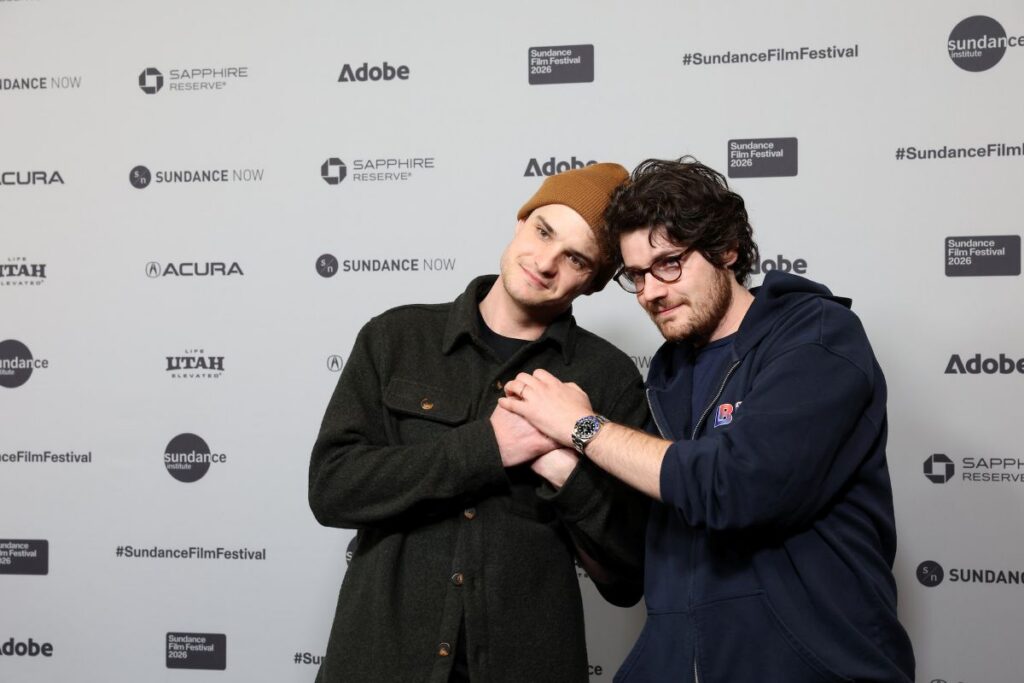
“My son, we don’t know where he’ll grow up,” says filmmaker Daniel Roher. “We live in California right now, but the Great Wild North is very important to me and something that I hope my son appreciates as he gets older.”
Roher answers a question about what it means to raise a child in a landscape that looks very different to the one in which he grew up. Back in the late 1980s and early 1990s, kids only knew the analogue age. Facebook didn’t exist until those kids were old enough to legally drink instead of preparing for their university finals, but now with the digital revolution of artificial intelligence (AI), a prospective parent has to ask if their kid will ever get to attend university at all—and will they even have job prospects afterwards or a habitable world?
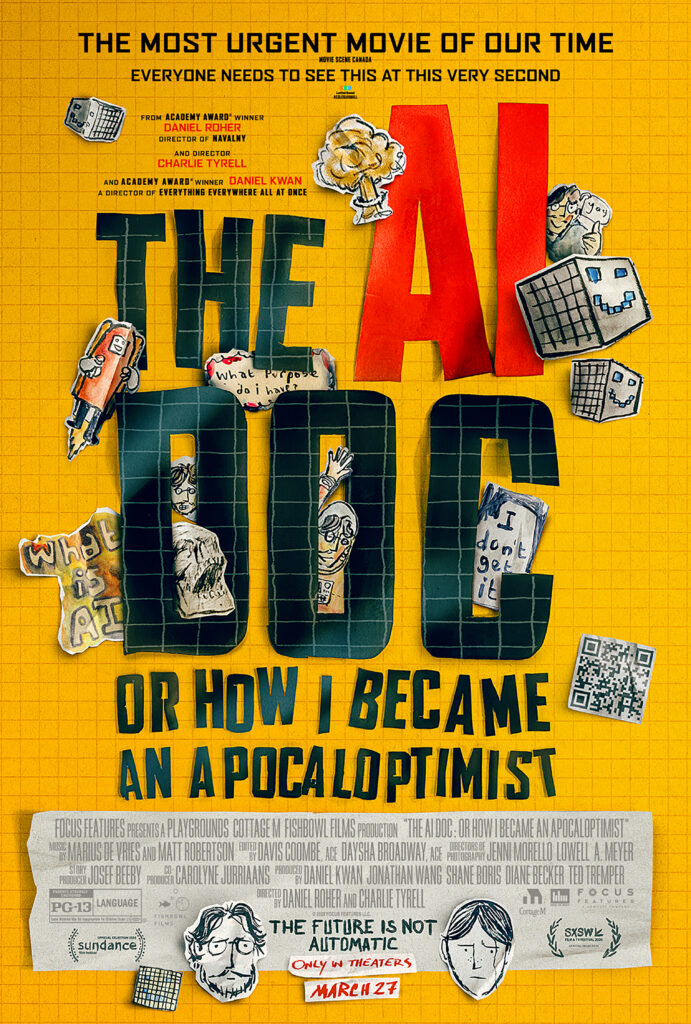
The Oscar-winning director of Navalny asks some of life’s toughest questions in The AI Doc: Or How I Became an Apocaloptimist. Roher joins forces with fellow Toronto native Charlie Tyrell (Broken Orchestra) to ask if bringing a child into the world amid the AI revolution presents a dangerously naïve task or a smart one.
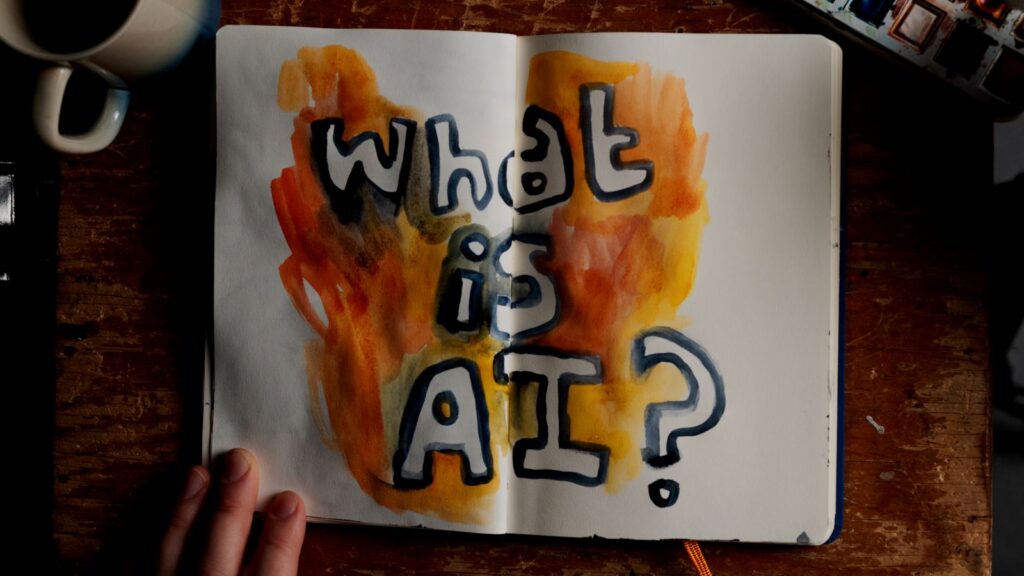
Figures from across the field explain what AI actually is in layman’s terms best they can, and offer radically divergent opinions about the threats and opportunities it represents. Some talking heads say the Doomsday alarm’s already ringing, while others position AI as a radical liberator from the commitments of menial labour, like writing emails or performing repetitive tasks. However, each interview pivots the story as Roher and his wife, actor/filmmaker Caroline Lindy, find their anxieties about parenting spinning about as quickly as the AI race develops.
However, The AI Doc takes a pragmatic approach to the existential crisis at hand. Roher and Tyrell make a fair case that however one embraces or resists AI, it’s already here. Instead, the film emphasizes the need for sound ethical practices to inform its development and integration into daily life in way that’s equitable and both economically and environmentally safe. Much like parenting, these are questions to which ChatGPT lacks the answers among the word salad it tosses when things get complicated. Fortunately, the directors process the case with far more smarts and whit.
POV spoke with Roher and Tyrell via Zoom ahead of The AI Doc’s theatrical release.
POV: Pat Mullen
DR: Daniel Roher
CT: Charlie Tyrell
This interview has been edited for brevity and clarity.
POV: Daniel, now that you’ve been both two experiences with the film, what is more complicated: understanding how AI works or how a baby works?
DR: Babies are very straightforward, so I would say AI. A baby has three or four things that it wants or needs. Like, “I’m hungry, I’m thirsty, I’m stinky. I want a hug.” Once you get the manual down pat for a little baby, it’s straightforward. Now, as the baby grows up, that’s a different story. The skillset of the baby expands, the consciousness of the baby expands, the personhood of the baby expands. As soon as baby’s not a baby anymore, you’ve got a little guy running around with thoughts and opinions of his own. AI is perhaps similar, but much more dense and complicated and frightening and esoteric and spiritual and technical and intimidating. I’d say easier to be a parent and have a baby than it is to wrap your head around AI.
POV: Charlie, do you mind me asking, what is your own perspective about bringing a kid into the world right now? Or was there a different question you had as an access point to the world of AI similar to how Daniel was looking at the question of parenting?
CT: It was kind of the same. Daniel’s kid and my kid were [born] a week apart. All the anxieties and all the questions that Daniel asked, and all the concerns he had—all the panic-attack-driven existential crises he had, I also had. I’m just glad that I had them off camera.
I’ll second what Daniel said about understanding a baby. I’ve had to make the joke during this whole production that my kid has been the easiest part of my life. He sleeps, he eats, and he communicates when he needs something. I was completely driven by the same questions. The only other thing on top of that is another one that Daniel had: As a filmmaker, what’s going to change in that landscape? That’s something I’ve been internalizing a lot and trying to figure out.
POV: How have developments in AI shaped what you guys do as filmmakers?
CT: I can speak to one of the negative things that I feel is happening. This isn’t necessarily just AI, but technology in general: It’s just speeding things up so much. There’s this pressure to feel like you have to create at a pace that’s maybe not a suitable pace for everyone. It’s decreasing the timelines that things are expected now. And it’s also decreasing the duration in which we appreciate things and digest them and have a conversation about them before we move on to the next thing. That needs to be addressed and changed. We need to find a way to slow down a bit because if we keep speeding up, then our heads are all going to blow up.
DR: I use AI as a research tool when I’m writing something. It can be very helpful in that capacity. But beyond that, it hasn’t yet integrated into my life in any meaningful way day-to-day beyond that function. I anticipate that it’s coming. I don’t know how much longer we’ll be making movies in a traditional sense, but while we have the luxury of getting hundreds of people together and actors and cinematographers and producers and all of these people in service of a common vision, telling a story, that’s a really cool thing to get to do. I’m lucky that I at least get to make another one, but I’m anxious for the future, thinking about how it’s impacting the film business right now.
POV: Is it too early to get a sense of impact?
DR: I think it’s going to change really quickly though, Pat. There’ll be less people who are able are empowered to make stuff. There will be fewer writers. There will be fewer cinematographers, directors, fewer things will get made and there’ll be a contraction. That is upsetting and scary. There’s going to be a lot of people who won’t get to live their dreams in a traditional sense, which is upsetting.
POV: In the film, someone makes a comment about the pace at which AI evolves. Where was AI when you started the film compared to where we are now? How much have you seen it grow in the process?
CT: I can speak to the image generation, which you were seeing [beginning] in September 2023. You were seeing image outputs that were like these dream or nightmarish versions of thoughts that you might have. Things that you could type out and say, “Hey, make me an image of this thing.” And the images definitely looked like the thing, but with that same exercise now, when you say, “I have an idea, let me type it out, let me see what the image generates,” the fidelity of the image is so much stronger. Mistakes like the sixth finger on a person are so rarely happening. Now it’s so much more convincing and so much more refined than it was back then.
DR: When we started making the movie, the experts we were talking to were telling us, “Look out for the next two years.” You’re going to start seeing unemployment. You’re going to start hearing about people losing their jobs. It’s going to start being politicized. People will start discussing how these technologies will be used in autonomous warfare or in surveillance and that’ll occupy the public consciousness. It’ll be a hot-button political issue—all of these “what ifs” when we started are now dominating the headline today, almost like clockwork. That’s been uncomfortable to see unfold in real time.
POV: Can you talk about the choice not to use AI in the animated sequences? Was there ever a conversation about putting into ChatGPT some prompts for animated interludes, compared to the handcrafted work we see in the film?
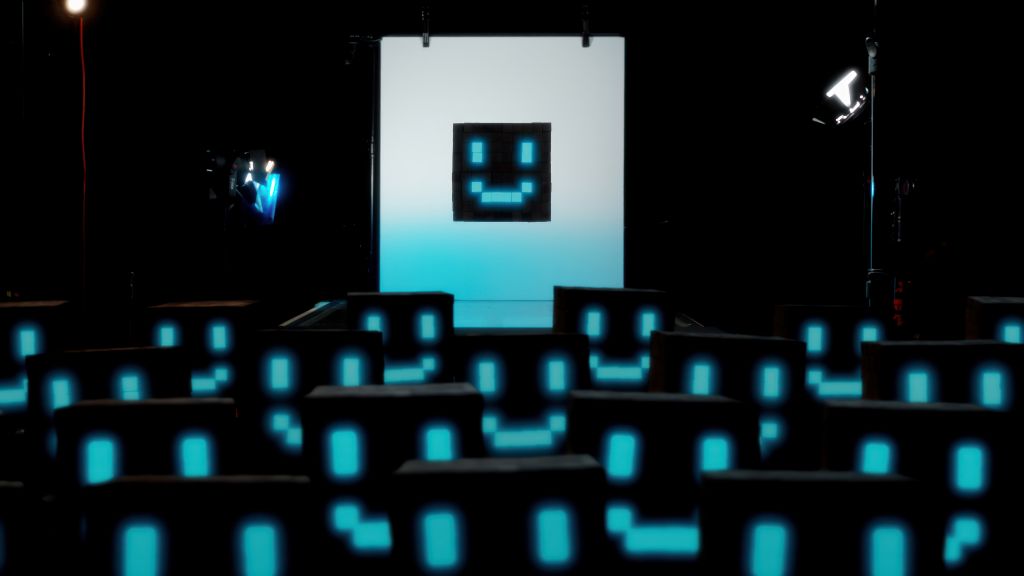
CT: We wanted to make a really handmade and therefore human made film. Part of it was to be antithetical to the digital space, and to AI, to show things that have that messiness of humans, which is more endearing and warm: fingerprints on a puppet, little mistakes, and little errors. It’s just an aesthetic choice. It’s a way to create a different connections to an audience, to give a platform for introspection for Daniel’s character in the film, as well as more emotional representation. Like the panic attack with his parents, when cycling through all of his drawings super rapidly, that’s a great way to illustrate an existential crisis. It’s a very emotion. By using things by hand, humans who are ultimately pretty tactile and pretty sensory, it helps create that connective tissue for the audience.
POV: There are lots of conversations in the documentary space about the role of AI, especially generative AI. Will there ever be a way for generative AI to have an ethical place in film?
DR: I think it’s tricky. I don’t know what the use case would be. I guess you can think of doing an AI voiceover or something like Morgan Neville got in hot water for with the Anthony Bourdain doc a couple years ago. The guidelines and ethics of these conversations should revolve around the agency of the viewer to understand what they’re looking at and having the full context. If you’re trying to pass something off as authentic and it’s not, that should just be understood as taboo and inappropriate, the same as we do now with plagiarism. But if there’s a big marker on screen that’s like, “This is AI generated,” and it’s intended to be an aesthetic choice and it makes sense, I’m more open to that. But it’s a case that every filmmaker has to be critical and thoughtful about as they’re designing the approach.
CT: The Andy Warhol Diaries from a few years ago created his voice with a large language model. It had the disclaimer at the top, but that’s an artist who was always in his time using new devices and technology, so it fit there. Darren Aronofsky’s film [On This Day…1776] is entirely AI generated. To echo what Daniel said, it’s going to be up to audiences’ tastes and desires. If people are really craving certain stories that can be produced faster, cheaper, and more precisely with AI general imagery, someone’s going to take advantage of that in the marketplace and someone’s going to start creating those. If they find an audience, then they’re going to keep making them and that may grow or may be niche. As with most films that we make, if people want something, someone will make it. It’s going to be up to audiences to decide that. We can decide if it’s a taboo thing, if it’s a cool thing, or if it’s just going to be what takes over. We don’t know.
 POV: Are there questions that you would have liked to have asked Elon Musk or Mark Zuckerberg about where their platforms are heading with the AI?
DR: I think the same line of questioning that we had for all the other CEOs. Those guys are unique in so far as that Zuckerberg was on the forefront of social media. The ‘mis-intended use’ cases for social media were pretty devastating [as the film includes testimony from parents whose kids died by suicide after being prompted by AI], so I’d be curious to know how those guys are thinking about this.
CT: With Zuckerberg and especially Elon Musk, the social media thing is a huge question mark because AI is all over X with Grok. I don’t use Facebook anymore, but it’s infiltrated there. Google’s doing it as well. If you search something, here’s the AI answer first. If you’re trying to use Google Docs, here’s the AI companion that, personally, I didn’t ask for and suddenly it’s there. And with social media, that’s even trickier territory because they can just decide to put it in there. It’s not like people get to vote on what features are added to their social media streams. They just show up.
It’s also scary the things that it can find or the things that AI gets mixed up and says with such confidence. People get their news of what’s happening somewhere else in the world in five seconds and, if it looks convincing, it is convincing. So many people are digesting things as fact when it’s the wrong information.
POV: We all grew up as kids of the late ’80s and early ’90s with things that your kids won’t necessarily grow up with because of digital revolutions and new technology. What are some things from your childhood that you hope your kids get a chance to rediscover, or that you worry they might not get to appreciate?
DR: Heritage Minutes.
CT: The outdoors, the Canadian outdoors specifically, spaces where you go and there’s so much to take in that there is no desire to go to your technology, whether that’s a smartphone or the Gourb. Interacting with the natural world and that’s slow time. I think it’s important to know slow time, and I’m grateful for having learned it. Maybe I didn’t appreciate it when I was a kid as much as I do now, but it’s a corny Canadian dad answer to say, “Just go outside and touch grass.”
DR: It’s important to know a great J-stroke, right?
The AI Doc: Or How I Became an Apocaloptimist opens in theatres on March 27.
The post How The AI Doc Brings a Human Touch to an Existential Crisis appeared first on POV Magazine.